Kirjojen hintavertailu. Mukana 11 238 995 kirjaa ja 12 kauppaa.

Kirjahaku

Etsi kirjoja tekijän nimen, kirjan nimen tai ISBN:n perusteella.

1000 tulosta hakusanalla Kenneth Stuart

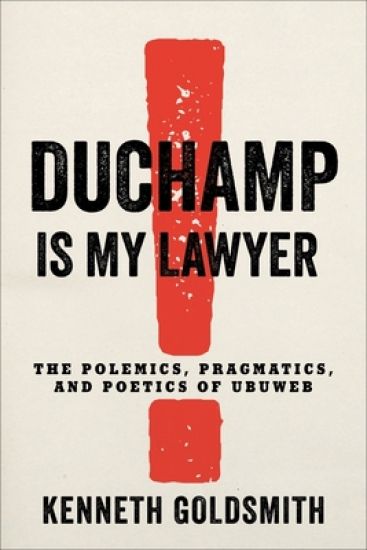
Duchamp Is My Lawyer

Duchamp Is My Lawyer

Kenneth Goldsmith

Columbia University Press
2020
pokkari
In 1996, during the relatively early days of the web, Kenneth Goldsmith created UbuWeb to post hard-to-find works of concrete poetry. What started out as a site to share works from a relatively obscure literary movement grew into an essential archive of twentieth- and twenty-first-century avant-garde and experimental literature, film, and music. Visitors around the world now have access to both obscure and canonical works, from artists such as Kara Walker, Yoko Ono, Pauline Oliveros, Samuel Beckett, Marcel Duchamp, Cecil Taylor, Glenn Ligon, William Burroughs, and Jean-Luc Godard.In Duchamp Is My Lawyer, Goldsmith tells the history of UbuWeb, explaining the motivations behind its creation and how artistic works are archived, consumed, and distributed online. Based on his own experiences and interviews with a variety of experts, Goldsmith describes how the site navigates issues of copyright and the ways that UbuWeb challenges familiar configurations and histories of the avant-garde. The book also portrays the growth of other “shadow libraries” and includes a section on the artists whose works reflect the aims, aesthetics, and ethos of UbuWeb. Goldsmith concludes by contrasting UbuWeb’s commitment to the free-culture movement and giving access to a wide range of artistic works with today’s gatekeepers of algorithmic culture, such as Netflix, Amazon, and Spotify.

Man, the State, and War

Man, the State, and War

Kenneth Waltz; Stephen M. Walt

Columbia University Press
2018
sidottu
What are the causes of war? How might the world be made more peaceful? In this landmark work of international relations theory, first published in 1959, the eminent realist scholar Kenneth N. Waltz offers a foundational analysis of the nature of conflict between states. He explores works by both classic political philosophers, such as St. Augustine, Hobbes, Kant, and Rousseau, and modern psychologists and anthropologists to discover ideas intended to explain war among states and related prescriptions for peace. Waltz influentially distinguishes among three “images” of the origins of war: those that blame individual leaders or human nature, those rooted in states’ internal composition, and those concerning the structure of the international system. With a foreword by Stephen M. Walt on the legacy and continued relevance of Waltz’s work, this anniversary edition brings new life to a perennial international relations classic.
Man, the State, and War

Man, the State, and War

Kenneth Waltz; Stephen M. Walt

Columbia University Press
2018
pokkari
What are the causes of war? How might the world be made more peaceful? In this landmark work of international relations theory, first published in 1959, the eminent realist scholar Kenneth N. Waltz offers a foundational analysis of the nature of conflict between states. He explores works by both classic political philosophers, such as St. Augustine, Hobbes, Kant, and Rousseau, and modern psychologists and anthropologists to discover ideas intended to explain war among states and related prescriptions for peace. Waltz influentially distinguishes among three “images” of the origins of war: those that blame individual leaders or human nature, those rooted in states’ internal composition, and those concerning the structure of the international system. With a foreword by Stephen M. Walt on the legacy and continued relevance of Waltz’s work, this anniversary edition brings new life to a perennial international relations classic.
A Companion to The Story of the Stone

A Companion to The Story of the Stone

Kenneth Hsien-Yung Pai; Susan Chan Egan

Columbia University Press
2021
sidottu
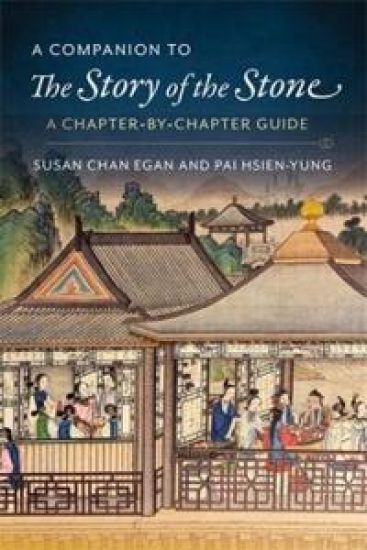
The Story of the Stone (also known as Dream of the Red Chamber) is widely held to be the greatest work of Chinese literature, beloved by readers ever since it was first published in 1791. The story revolves around the young scion of a mighty clan who, instead of studying for the civil service examinations, frolics with his maidservants and girl cousins. The narrative is cast within a mythic framework in which the protagonist’s rebellion against Confucian strictures is guided by a Buddhist monk and a Taoist priest. Embedded in the novel is a biting critique of imperial China’s political and social system.This book is a straightforward guide to a complex classic that was written at a time when readers had plenty of leisure to sort through the hundreds of characters and half a dozen subplots that weave in and out of the book’s 120 chapters. Each chapter of the companion summarizes and comments on each chapter of the novel. The companion provides English-speaking readers—whether they are simply dipping into this novel or intent on a deep analysis of this masterpiece—with the cultural context to enjoy the story and understand its world.The book is keyed to David Hawkes and John Minford’s English translation of The Story of the Stone and includes an index that gives the original Chinese names and terms.
A Companion to The Story of the Stone

A Companion to The Story of the Stone

Kenneth Hsien-Yung Pai; Susan Chan Egan

Columbia University Press
2021
pokkari
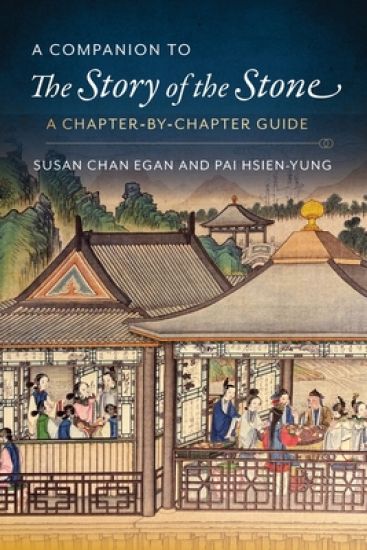
The Story of the Stone (also known as Dream of the Red Chamber) is widely held to be the greatest work of Chinese literature, beloved by readers ever since it was first published in 1791. The story revolves around the young scion of a mighty clan who, instead of studying for the civil service examinations, frolics with his maidservants and girl cousins. The narrative is cast within a mythic framework in which the protagonist’s rebellion against Confucian strictures is guided by a Buddhist monk and a Taoist priest. Embedded in the novel is a biting critique of imperial China’s political and social system.This book is a straightforward guide to a complex classic that was written at a time when readers had plenty of leisure to sort through the hundreds of characters and half a dozen subplots that weave in and out of the book’s 120 chapters. Each chapter of the companion summarizes and comments on each chapter of the novel. The companion provides English-speaking readers—whether they are simply dipping into this novel or intent on a deep analysis of this masterpiece—with the cultural context to enjoy the story and understand its world.The book is keyed to David Hawkes and John Minford’s English translation of The Story of the Stone and includes an index that gives the original Chinese names and terms.
Sex in City Plants, Animals, Fungi, and More

Sex in City Plants, Animals, Fungi, and More

Kenneth D. Frank; Jonathan Silvertown

Columbia University Press
2022
sidottu
Cities pose formidable obstacles to nonhuman life. Vast expanses of asphalt and concrete are inhospitable to plants and animals; traffic noise and artificial light disturb natural rhythms; sewage and pollutants imperil existence. Yet cities teem with life: In rowhouse neighborhoods, tiny flowers bloom from cracks in the sidewalk. White clover covers lawns, its seeds dispersed by shoes and birds. Moths flutter and spiders weave their webs near electric lights. Sparrows and squirrels feast on the scraps people leave behind. Pairs of red-tailed hawks nest on window ledges. How do wild plants and animals in urban areas find mates? How do they navigate the patchwork of habitats to reproduce while avoiding inbreeding? In what ways do built environments enable or inhibit mating?This book explores the natural history of sex in urban bacteria, fungi, plants, and nonhuman animals. Kenneth D. Frank illuminates the reproductive behavior of scores of species. He examines topics such as breeding systems, sex determination, sex change, sexual conflict, sexual trauma, sexually transmitted disease, sexual mimicry, sexual cannibalism, aphrodisiacs, and lost sex. Frank offers a guide to urban reproductive diversity across a range of conditions, showing how understanding of sex and mating furthers the appreciation of biodiversity. He presents reproductive diversity as elegant but vulnerable, underscoring the consequences of human activity. Featuring compelling photographs of a multitude of life forms in their city habitats, this book provides a new lens on urban natural history.
Sex in City Plants, Animals, Fungi, and More

Sex in City Plants, Animals, Fungi, and More

Kenneth D. Frank; Jonathan Silvertown

Columbia University Press
2022
pokkari
Cities pose formidable obstacles to nonhuman life. Vast expanses of asphalt and concrete are inhospitable to plants and animals; traffic noise and artificial light disturb natural rhythms; sewage and pollutants imperil existence. Yet cities teem with life: In rowhouse neighborhoods, tiny flowers bloom from cracks in the sidewalk. White clover covers lawns, its seeds dispersed by shoes and birds. Moths flutter and spiders weave their webs near electric lights. Sparrows and squirrels feast on the scraps people leave behind. Pairs of red-tailed hawks nest on window ledges. How do wild plants and animals in urban areas find mates? How do they navigate the patchwork of habitats to reproduce while avoiding inbreeding? In what ways do built environments enable or inhibit mating?This book explores the natural history of sex in urban bacteria, fungi, plants, and nonhuman animals. Kenneth D. Frank illuminates the reproductive behavior of scores of species. He examines topics such as breeding systems, sex determination, sex change, sexual conflict, sexual trauma, sexually transmitted disease, sexual mimicry, sexual cannibalism, aphrodisiacs, and lost sex. Frank offers a guide to urban reproductive diversity across a range of conditions, showing how understanding of sex and mating furthers the appreciation of biodiversity. He presents reproductive diversity as elegant but vulnerable, underscoring the consequences of human activity. Featuring compelling photographs of a multitude of life forms in their city habitats, this book provides a new lens on urban natural history.
The Republican Evolution

The Republican Evolution

Kenneth Janda

Columbia University Press
2022
sidottu
The Republican Party was founded in 1854 to oppose slavery and its spread to new territories and states. Today, under the sway of Donald Trump, it is hardly recognizable as the party of Lincoln or even the party of Eisenhower. How and why has the Republican Party changed so drastically?Kenneth Janda sheds new light on the Republican Party’s transformations, drawing on a wide range of quantitative and qualitative evidence. He examines nearly three thousand planks from every Republican platform since 1856 as well as candidate statements and historical sources, tracing the evolution of the party’s positions on topics such as states’ rights, trade, taxation, regulation, law and order, immigration, environmental protection, and voting rights. Janda argues that the GOP has gone through three main phases over the course of its history, transforming from a party committed to governance to one vehemently opposed to government. In its first several decades, the Republican Party emphasized national authority and economic development. By the late 1920s, Republicans had begun downplaying the role of government in favor of a new philosophy steeped in free markets. The nomination of Barry Goldwater in 1964 marked a key turning point. Since then, the party has endorsed states’ rights, opposed civil rights, and become increasingly ethnocentric. Richly documented with scores of figures and tables, The Republican Evolution offers new perspective on how the GOP became an antigovernment party—and whether it can step back from the brink of authoritarianism.
The Republican Evolution

The Republican Evolution

Kenneth Janda

Columbia University Press
2022
pokkari
The Republican Party was founded in 1854 to oppose slavery and its spread to new territories and states. Today, under the sway of Donald Trump, it is hardly recognizable as the party of Lincoln or even the party of Eisenhower. How and why has the Republican Party changed so drastically?Kenneth Janda sheds new light on the Republican Party’s transformations, drawing on a wide range of quantitative and qualitative evidence. He examines nearly three thousand planks from every Republican platform since 1856 as well as candidate statements and historical sources, tracing the evolution of the party’s positions on topics such as states’ rights, trade, taxation, regulation, law and order, immigration, environmental protection, and voting rights. Janda argues that the GOP has gone through three main phases over the course of its history, transforming from a party committed to governance to one vehemently opposed to government. In its first several decades, the Republican Party emphasized national authority and economic development. By the late 1920s, Republicans had begun downplaying the role of government in favor of a new philosophy steeped in free markets. The nomination of Barry Goldwater in 1964 marked a key turning point. Since then, the party has endorsed states’ rights, opposed civil rights, and become increasingly ethnocentric. Richly documented with scores of figures and tables, The Republican Evolution offers new perspective on how the GOP became an antigovernment party—and whether it can step back from the brink of authoritarianism.
The Forgotten Borough

The Forgotten Borough

Kenneth M. Gold

Columbia University Press
2023
sidottu
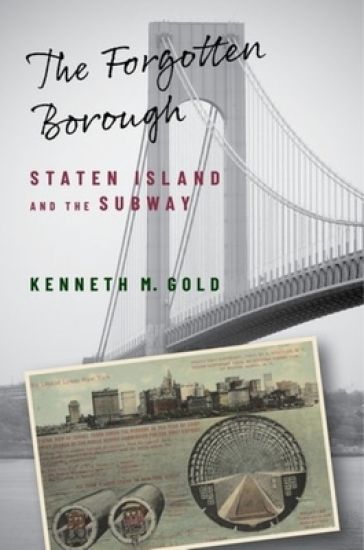
What sets Staten Island apart from the rest of New York City? The island’s identity has in part been defined in opposition to the city, its physical and cultural differences, and the perception of neglect by city government. It has long been whiter, wealthier, less populated, and more politically conservative. And despite many attempts over the years, Staten Island is not connected by the subway to any of the other four boroughs.Kenneth M. Gold argues that the lack of a subway connection has deeply shaped Staten Island’s history and identity. He chronicles decades of recurrent efforts to build a rail link, using this history to explore the borough’s fraught relationship with New York City as a whole. The Forgotten Borough ranges from when Staten Island first contemplated joining the city in the 1890s to the opening of the Verrazzano-Narrows Bridge in 1964, highlighting pivotal moments when the construction of a subway appeared possible. The economics and engineering of tunnel construction, the difficulty of uniting Staten Islanders around a single solution, competition from the other boroughs, and resistance from powerful corporations and public authorities all undermined a rapid transit connection. Gold demonstrates that the failure to establish a rail link during this period caused Staten Island to diverge culturally, demographically, and politically from the other four boroughs. Drawing on extensive archival research, The Forgotten Borough shows how transportation infrastructure and politics shed new light on urban history.
The Forgotten Borough

The Forgotten Borough

Kenneth M. Gold

Columbia University Press
2023
pokkari
What sets Staten Island apart from the rest of New York City? The island’s identity has in part been defined in opposition to the city, its physical and cultural differences, and the perception of neglect by city government. It has long been whiter, wealthier, less populated, and more politically conservative. And despite many attempts over the years, Staten Island is not connected by the subway to any of the other four boroughs.Kenneth M. Gold argues that the lack of a subway connection has deeply shaped Staten Island’s history and identity. He chronicles decades of recurrent efforts to build a rail link, using this history to explore the borough’s fraught relationship with New York City as a whole. The Forgotten Borough ranges from when Staten Island first contemplated joining the city in the 1890s to the opening of the Verrazzano-Narrows Bridge in 1964, highlighting pivotal moments when the construction of a subway appeared possible. The economics and engineering of tunnel construction, the difficulty of uniting Staten Islanders around a single solution, competition from the other boroughs, and resistance from powerful corporations and public authorities all undermined a rapid transit connection. Gold demonstrates that the failure to establish a rail link during this period caused Staten Island to diverge culturally, demographically, and politically from the other four boroughs. Drawing on extensive archival research, The Forgotten Borough shows how transportation infrastructure and politics shed new light on urban history.