Kirjojen hintavertailu. Mukana 11 699 587 kirjaa ja 12 kauppaa.

Kirjahaku

Etsi kirjoja tekijän nimen, kirjan nimen tai ISBN:n perusteella.

1000 tulosta hakusanalla Lars A. Cramer

The Stillness of the World Before Bach: Poetry

The Stillness of the World Before Bach: Poetry

Lars Gustafsson

New Directions Publishing Corporation
1988
nidottu
Lars Gustafsson, one of Sweden’s leading men of letters, is known in the English-speaking world primarily for his novels and short stories, but he is also a distinguished poet with ten discrete volumes published to date in addition to the collective edition of his work for the years 1950-1980. In The Stillness of the World Before Bach: New Selected Poems, readers will recognize in Gustafsson’s verse the playful erudition and imaginative philosophizing that give his fiction its unique appeal. Gustafsson, writes editor Christopher Middleton, “has remained distinctively a poet, insofar as his novels and essays usually combine exploratory and fabulous features with keen observation, a fascination with character in conflict as the subjective (or existential) axis of history, and a delight in story for its own complex or simple sake.” The selections for The Stillness of the World Before Bach were made by Christopher Middleton of the University of Texas at Austin in close association with the author, with whom he also collaborated for his own versions of many of the poems. Other translations were contributed by Robin Fulton, Philip Martin Yvonne L. Sandstroem, and Harriett Watts.
Elegies and Other Poems

Elegies and Other Poems

Lars Gustafsson

New Directions Publishing Corporation
2000
nidottu
Lars Gustafsson is one of Sweden's leading and most prolific men of letters; a poet, philosopher, and fiction writer with dozens of books to his credit since his literary debut, at the age of twenty, in 1956. Although known in the English-speaking world primarily for his novels, Gustafsson is nevertheless one of the most frequently translated of contemporary Swedish poets. Elegies and Other Poems is a companion volume to The Stillness of the World before Bach (New Directions, 1988). As in that earlier volume, editor Christopher Middleton has made his selection from several of the poet's books and included his own translations as well as those of others, Yvonne Sandstroem, Bill Brookshire, and Philip Martin. Readers of Gustafsson's fiction will recognize in his verse the elegant mix of intellect and sheer play, the ruminations of a mind that apprehends humanity in the riddles of the universe.
Microcosm and Mediator

Microcosm and Mediator

Lars Thunberg

Open Court Publishing Co ,U.S.
1999
nidottu
One of the outstanding Christian thinkers of all time, Maximus the Confessor (ca. 580-662) exerted a powerful formative influence on the Church when it was still one and undivided. Maximus left his stamp on Christianity as it is now recognized by all three broad streams of Christian faith: Eastern Orthodox, Roman Catholic, and Protestant. Yet for centuries the detailed study of Maximus's writings was neglected. The first edition of Thunberg's Microcosm and Mediator (1965) helped to transform this situation of indifference into one of intense interest in Maximus and the subtleties of his thinking. This new edition has been revised and expanded, with updated references and bibliographies. The focus of Microcosm and Mediator is Maximus's anthropology, his highly developed general reflections on human nature. Maximus understands man as, not only a being - a microcosm - who reflects the constitution of the created universe, but also as a being - a mediator - created in the image of God, whose task it is, in Christ, to reconcile the spiritual and the sensible into one homogeneous unity.
The Political Economy of Mercantilism

The Political Economy of Mercantilism

Lars Magnusson

CRC Press Inc
2018
nidottu
Since the days of Adam Smith, Mercantilism has been a hotly debated issue. Condemned at the end of the 18th century as a "false" system of economic thinking and political practice, it has returned paradoxically to the forefront in regard to issues such as the creation of economic growth in developing countries. This concept is often used in order to depict economic thinking and economic policy in early modern Europe; its meaning and content has been highly debated for over two hundred years. Following on from his 1994 volume Mercantilism – The Shaping of an Economic Language, this new book from Lars Magnusson presents a more synthetic interpretation of Mercantilism not only as a theoretical system, but also as a system of political economy. This book incorporates samples of material from the 1994 publication alongside new material, ordered in a new set of chapters and up-date discussions on mercantilism up to the present day. Tracing the development of a particular political economy of Mercantilism in a period of nascent state making in Western and Continental Europe from the 16th to the 18th century, the book describes how European rulers regarded foreign trade and industrialisation as a means to achieve power and influence amidst international competition over trades and markets. Returning to debates concerning whether Mercantilism was a system of power or of wealth, Magnusson argues that it is in fact was both, and that contemporaries almost without exception saw these goals as interconnected. He also emphasises that Mercantilism was an all-European issue in a time of trade wars and the struggle for international power and recognition. In examining these issues, this book offers an unrivalled modern synthesis of Mercantilist ideas and practices.
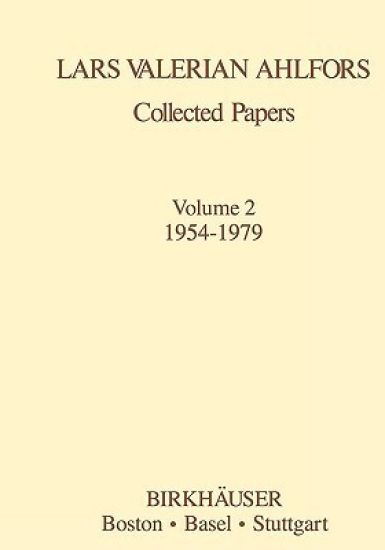
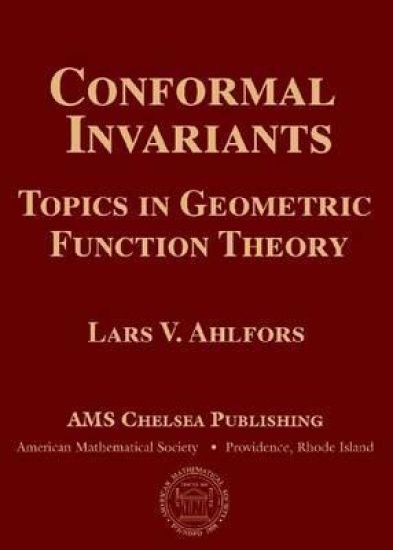
Collected Papers Vol 2: 1954-1979

Collected Papers Vol 2: 1954-1979

Lars V. Ahlfors

Birkhauser Boston Inc
1982
nidottu
When first confronted with the prospect of having my collected papers published, I felt both awe and confusion, but I calmed down when I realized that the purpose was not to honor the author, but to be of service to the mathematical community. If young scholars of a future generation should desire to find out what some mathematicians of the twentieth century were up to, they would indeed have reason to be thankful if spared the need to seek this information from a multi­ tude of sources. As an introduction it seems polite and useful to begin with a brief outline of my life, especially as related to my professional activity. I was born the eighteenth of April 1907 in Helsingfors, Finland. My father was a professor of mechanical engineering at the Poly technical Institute. My mother died in childbirth when I was born. At the time of my early childhood Finland was under Russian sovereignty, but with a certain degree of autonomy, sometimes observed and sometimes disregarded by the czar who was, by today's standards, a relatively benevolent despot. Civil servants, including professors, were able to enjoy a fairly high standard of living, a condition that was to change radically during World War I and the Russian revolution that followed.
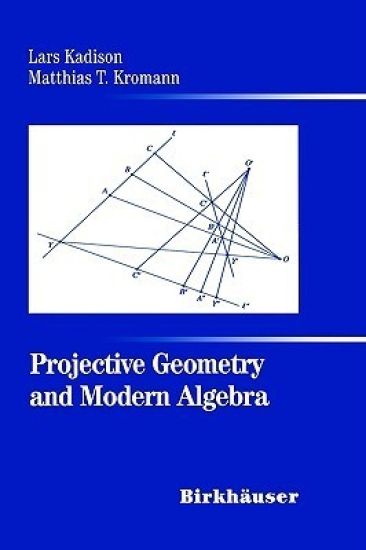
Projective Geometry and Modern Algebra

Projective Geometry and Modern Algebra

Lars Kadison; Matthias T. Kromann

Birkhauser Boston Inc
1996
sidottu
This work serves as an introduction to the theory of projective geometry. Techniques and concepts of modern algebra are presented for their role in the study of projective geometry. Topics covered include: affine and projective planes; homogeneous co-ordinates; and Desargues' theorem.
Notions of Convexity

Notions of Convexity

Lars Hörmander

Birkhauser Boston Inc
2006
nidottu
The term convexity used to describe these lectures given at the Univer­ sity of Lund in 1991-92 should be understood in a wide sense. Only Chap­ ters I and II are devoted to convex sets and functions in the traditional sense of convexity. The following chapters study other kinds of convexity which occur in analysis. Most prominent is the pseudo-convexity (plurisubh- monicity) in the theory of functions of several complex variables discussed in Chapter IV. It relies on the theory of subharmonic functions in R^, so Chapter III is devoted to subharmonic functions in R"^ for any n. Existence theorems for constant coefficient partial differential operators in R'^ are re­ lated to various kinds of convexity conditions, depending on the operator. Chapter VI gives a survey of the rather incomplete results which are known on their geometrical meaning. There are also natural classes of "convex" functions related to subgroups of the linear group, which specialize to sev­ eral of the notions already mentioned. They are discussed in Chapter V. The last chapter. Chapter VII, is devoted to the conditions for solvability of microdifferential equations, which can also be considered as a branch of convexity theory. The whole chapter is an exposition of a part of the thesis of J.-M. Trepreau.
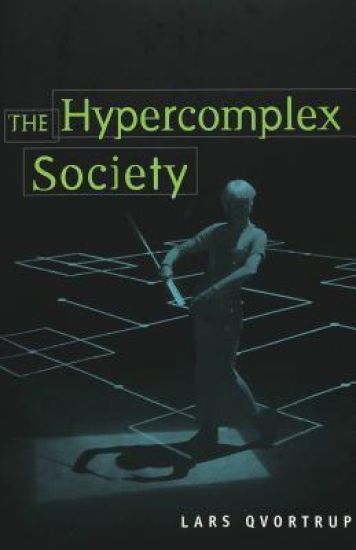
The Hypercomplex Society

The Hypercomplex Society

Lars Qvortrup

Peter Lang Publishing Inc
2003
nidottu
Should today's society be termed an information or a network society? This book provides an alternative choice--the hypercomplex society, which is a critical, complex-theoretical understanding of society whose growing level of social complexity represents the basic challenge of our current society. This original understanding of society is presented through a historical analysis of the emergence of the current state of hypercomplexity and polycentrism. The functioning of communication, mass media, and the public sphere in the hypercomplex society is also analyzed and the Internet is characterized as a communication infrastructure particularly shaped by the hypercomplex society. The book concludes with a cultural self-observation of the hypercomplex society.
Skills, not Just Diplomas

Skills, not Just Diplomas

Lars Sondergaard; Mamta Murthi

World Bank Publications
2011
nidottu
Future growth in the countries in Eastern Europe and Central Asia (ECA) will increasingly depend on innovation. And innovation requires skills. This makes it important, as countries plan for recovery, to undertake reforms to reduce the skills shortages that the previous growth episode exposed. Education systems have a very important role to play in creating the right skills. But education systems in the region fall short of the demands of their economies in two major ways. The first is that despite high levels of enrollment they do not produce enough graduates with the right skills. Students graduate with diplomas, not with skills, because the quality of the education for many students is poor. In large part this is because education systems remain focused on providing an excellent education to a few at the expense of improving the quality of learning for the majority. Moreover, the systems are still making the transition from teaching the basics to inculcating higher order skills such as critical-thinking and problem solving. The second way in which education systems fall short is that outside of a few countries in the EU there are few opportunities for adults to retrain, or acquire new skills. This book argues that generating more of the right skills requires a fundamental change of approach in the education systems in the region so that they aim for, and deliver, higher quality education for the vast majority of students ("not just diplomas but skills"). To start with, education systems need to "turn the lights on" and take seriously the measurement of what students actually learn as opposed to measurement of the inputs into the education process on the implicit assumption that learning follows. Policy makers also need to move away from the focus on inputs and processes and increase the emphasis on incentives.
Mathematics and Mathematicians

Mathematics and Mathematicians

Lars Garding

AMERICAN MATHEMATICAL SOCIETY
1997
sidottu
Discusses about mathematics in Sweden between 1630 and 1950. This book tells the story of how continental mathematics came to Sweden, how it was received, and how it inspired new results. It also contains a biography of Gosta Mittag-Leffler, the father of Swedish mathematics, who introduced the Weierstrassian theory of analytic functions.
Some Points in Analysis and Their History

Some Points in Analysis and Their History

Lars Garding

Amer Mathematical Society
1997
pokkari
This book is a collection of small essays containing the history and the proofs of some important and interesting theorems of analysis and partial differential operators in this century. Most of the results in the book are associated with Swedish mathematicians. Also included are the Tarski-Seidenberg theorem and Wiener's classical results in harmonic analysis and a delightful essay on the impact of distributions in analysis. All mathematical points are fully explained, but some require a certain mature understanding from the reader. This book is a well-written, simple work that offers full mathematical treatment, along with insight and fresh points of view.
New Examples of Frobenius Extensions

New Examples of Frobenius Extensions

Lars Kadison

Amer Mathematical Society
1999
pokkari
This volume is based on the author's lecture courses to algebraists at Munich and at Goteborg. He presents, for the first time in book form, a unified approach from the point of view of Frobenius algebras/extensions to diverse topics, such as Jones' subfactor theory, Hopf algebras and Hopf subalgebras, the Yang-Baxter Equation and 2-dimensional topological quantum field theories. Other Features: Initial steps toward a theory of non commutative ring extensions; Self-contained sections on Azumaya algebras and strongly separable algebras; Applications and generalizations of Morita theory and Azumaya algebra due to Hirata and Sugano; and, Understanding the text requires no prior background in Frobenius algebras or Hopf algebras. An index and a thorough list of further references are included. There is an appendix giving a brief historical guide to the literature.
Tattoo Traditions of Asia

Tattoo Traditions of Asia

Lars Krutak

UNIVERSITY OF HAWAI'I PRESS
2024
sidottu
For millennia, tattoos have documented the history of humanity one painful mark at a time. They form a visual language on the skin, expressing an individual’s desires and fears as well as cultural values, family ties, and spiritual beliefs on the surfaces of the body. The Indigenous peoples of Asia have created some of the world’s oldest and most distinctive tattoos, but their many contributions to body art and practice have been largely overlooked. Tattoo Traditions of Asia is the first single volume dedicated to the anthropological study of an ancient cultural practice and artform that spans many countries and societies, ancestral lands, and contemporary communities across the continent and its islands. This richly illustrated survey combines the author's twenty years of fieldwork, interviewing hundreds of Indigenous tattoo bearers and contemporary tattoo practitioners, with painstaking research conducted in obscure archives throughout the region and elsewhere to break new ground on one of the least-understood mediums of Indigenous Asian expressive culture—a vital tradition to be celebrated, an inspirational story told in skin and ink.
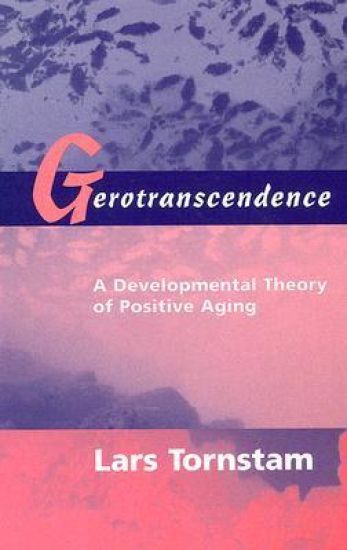
Gerotranscendence

Gerotranscendence

Lars Tornstam

Springer Publishing Co Inc
2005
sidottu
Given the 2006 GREAT GERONTOLOGY AWARD for outstanding contribution to gerontological research by the Swedish Gerontological Society Received a VALUE GROUND AWARD from the journal Aldreomsorg (Old Age Care) Expanding upon his earlier writings, Dr. Tornstam's latest book explores the need for new theories in gerontology and sets the stage for the development of his theory of gerotranscendence. This theory was developed to address what the author sees as a perpetual mismatch between present theories in social gerontology and existing empirical data. The development towards gerotranscendence can involve some overlooked developmental changes that are related to increased life satisfaction, as self-described by individuals. The gerotranscendent individual typically experiences a redefinition of the Self and of relationships to others and a new understanding of fundamental existential questions: The individual becomes less self-occupied and at the same time more selective in the choice of social and other activities. There is an increased feeling of affinity with past generations and a decreased interest in superfluous social interaction. The individual might also experience a decrease in interest in material things and a greater need for solitary "meditation." Positive solitude becomes more important. There is also often a feeling of cosmic communion with the spirit of the universe, and a redefinition of time, space, life and death. Gerotranscendence does NOT imply any state of withdrawal or disengagement, as sometimes erroneously believed. It is not the old disengagement theory in new disguise. Rather, it is a theory that describes a developmental pattern beyond the old dualism of activity and disengagement. The author supports his theory with insightful qualitative in-depth interviews with older persons and quantitative studies. In addition, Tornstam illustrates the practical implications of the theory of gerotranscendence for professionals working with older adults in care settings. A useful Appendix contains suggestions of how to facilitate personal development toward gerotranscendence.
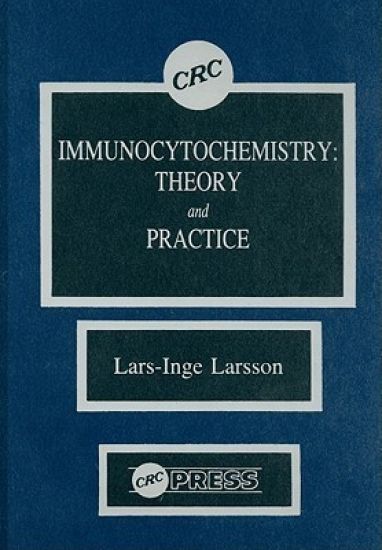
Immunocytochemistry

Immunocytochemistry

Lars-Inge Larsson

CRC Press Inc
1988
sidottu
A complete and balanced overview of all aspects of immunocytochemistry is presented providing a clear understanding of their impact on experiment. All available techniques and many diagnostic and research applications are included, as well as practical step-by-step instructions for carrying out recommended methods. Intended for the novice as well as the experienced researchers.
Control of Microstructures and Properties in Steel Arc Welds
Control of Microstructures and Properties in Steel Arc Welds provides an overview of the most recent developments in welding metallurgy. Topics discussed include common welding processes, the thermal cycle during welding, defects that may occur during the welding process, the metallurgy of the material, metallurgical processes in the heat-affected zone and the fused metal, and the relationship between microstructures and mechanical properties. The book's final chapter presents examples of welded joints, illustrating how modern theories are capable of predicting the microstructure and properties of these joints. This book is an excellent resource for welding engineers, metallurgists, materials scientists, and others interested in the subject.