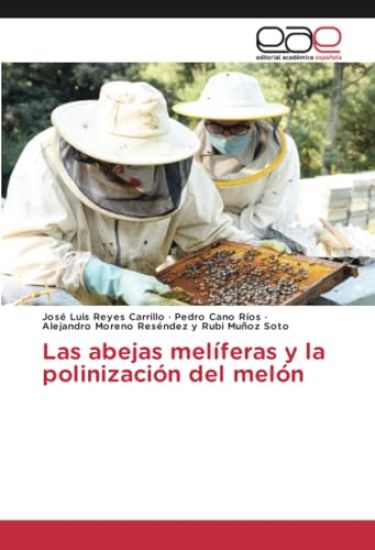
Esta obra comparte conocimientos con agricultores y apicultores que los llevar n a alcanzar la m xima calidad y rendimiento del cultivo de mel n. Explora factores cuyo control incide en la polinizaci n ap cola como las labores de cultivo, consideraciones ed ficas, nutricionales y el control de malezas, plagas y enfermedades que lo perjudican; tambi n aborda temas sobre el patr n y cantidad de captura del polen, la distribuci n temporal y espacial de las abejas en sus visitas de colecta, el n mero de colmenas por hect rea para una polinizaci n ptima y el pecoreo de plantas silvestres ajenas a la planta de mel n. Este ejercicio cient fico tambi n busca aumentar la apreciaci n y respeto hacia estos laboriosos insectos mediante el examen de temas como el s ndrome de la desaparici n de la colmena, su vida comunitaria, su comunicaci n interna, su comportamiento de captura alimentaria en pocas de escasez y el fen meno de la africanizaci n, factores que afectan la supervivencia, disponibilidad y eficacia polinizadora.
El m todo tecnol gico es el m todo base que valida los resultados de un proceso de creaci n de un objeto tecnol gico. Este proceso se compone de un conjunto de etapas secuenciales con retroalimentaciones que seguidas sistem ticamente facilitan la obtenci n de resultados y su adecuaci n a los requerimientos iniciales. El m todo tecnol gico es la v a id nea para resolver problemas t cnicos. Podemos decir que existe un problema cuando hay un conjunto de hechos o circunstancias que dificultan la consecuci n de alg n fin. La soluci n de cualquier problema, por sencillo que parezca, requiere un proceso de trabajo ordenado. En T cnica los problemas reciben el nombre de problemas t cnicos y para su soluci n se sigue un m todo ordenado llamado m todo de Proyectos, que consiste simplemente en una serie de operaciones necesarias, dispuestas en un orden l gico.
La resistencia antibi tica puede definirse como la capacidad de un microorganismo para sobrevivir en presencia de un compuesto t xico (antibi tico o antis ptico), permitiendo que las bacterias se multipliquen en presencia del f rmaco. La resistencia bacteriana puede ser natural o intr nseca y adquirida, y debe ser analizada desde varios puntos de vista (farmacocin tico, farmacodinam co, poblacional, molecular y cl nico). La resistencia natural o intr nseca es una propiedad espec fica de las bacterias, su aparici n es anterior al uso de los antibi ticos y tiene la caracter stica de ser inherente a una especie en particular. El conocimiento de este tipo de resistencia es til en la pr ctica, tanto para el microbi logo como para el m dico, pues se evita el uso de antibi ticos que presenten este tipo de resistencia ante ciertas bacterias o grupos de bacterias. La resistencia adquirida es un verdadero cambio en la composici n gen tica de la bacteria y constituye un verdadero problema en la cl nica.
La r sistance aux antibiotiques peut tre d finie comme la capacit d'un micro-organisme survivre en pr sence d'un compos toxique (antibiotique ou antiseptique), ce qui permet aux bact ries de se multiplier en pr sence du m dicament. La r sistance bact rienne peut tre naturelle ou intrins que et acquise, et doit tre analys e de plusieurs points de vue (pharmacocin tique, pharmacodynamique, populationnel, mol culaire et clinique). La r sistance naturelle ou intrins que est une propri t sp cifique des bact ries, son apparition est ant rieure l'utilisation d'antibiotiques et a la caract ristique d' tre inh rente une esp ce particuli re. La connaissance de ce type de r sistance est utile en pratique, tant pour le microbiologiste que pour le m decin, car elle permet d' viter l'utilisation d'antibiotiques qui pr sentent ce type de r sistance certaines bact ries ou groupes de bact ries. La r sistance acquise est une v ritable modification de la composition g n tique de la bact rie et constitue un v ritable probl me en clinique.
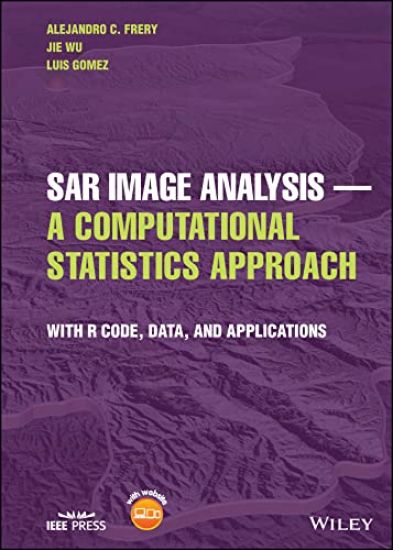
SAR IMAGE ANALYSIS — A COMPUTATIONAL STATISTICS APPROACH Discover how to use statistics to extract information from SAR imagery In SAR Image Analysis — A Computational Statistics Approach, an accomplished team of researchers delivers a practical exploration of how to use statistics to extract information from SAR imagery. The authors discuss various models, supply sample data and code, and explain theoretical aspects of SAR image analysis that are highly relevant to practitioners and students. The book offers the theoretical properties of models, estimators, interpretation, data visualization, and advanced techniques, along with the data and code samples, that students require to learn effectively and efficiently. SAR Image Analysis — A Computational Statistics Approach provides various exercises throughout the book to help readers reinforce and retain the extensive information on parameter estimation, applications, reproducibility, replicability, and advanced topics, like robust estimators and stochastic distances, contained within. The book also includes: Thorough introductions to data acquisition and the elements of data analysis and image processing with R, including useful R packages, preprocessing SAR data, and visualizationComprehensive explorations of intensity SAR data and the multiplicative model, including the (SAR) gamma distribution, the K distribution, the G0 distribution, and more general distributions under the multiplicative modelPractical discussions of parameter estimations, including the Bernoulli distribution, the negative binomial distribution, and the uniform distributionIn-depth examinations of applications, including statistical filters and classification Perfect for undergraduate and graduate students studying remote sensing, data analysis, and statistics, SAR Image Analysis — A Computational Statistics Approach is also an indispensable resource for researchers, practitioners, and professionals seeking a one-stop resource on how to use statistics to extract information from SAR imagery.
This book outlines the transitions between cultured and natural land cover/vegetation types and their implications in the search for alternatives to reverse the trend of anthropogenic environmental degradation. It also elaborates on the proposed “standardized hierarchical Mexican vegetation classification system” and geobotanical mapping, a critical transversal environmental issue. The first chapter consists of an historical review of the common approaches to the study of vegetation both in Mexico and in other regions of the world. The second chapter concisely analyzes the existing schools of thought that have led to the development of vegetation classification systems based on physiognomic, structural and floristic approaches. The focal point of the book is the “standardized hierarchical Mexican vegetation classification system” (SECLAVEMEX – “Sistema jerárquico estandarizado para la clasificación de la vegetación de México”). Chapter 3 describes the system’s organizational levels along with the criteria defining them and the nomenclatural basis for the denomination of each type of vegetation. It also includes a series of tables explaining and precisely defining the meaning of each concept, criterion, character and element used to help readers successfully identify the type of vegetation in a determined area. The fourth chapter highlights SECLAVEMEX's inclusive character as evidenced through its compatibility with other systems currently used around the globe. Three concepts are critically reviewed: land cover, land use and vegetation. These are often the study subject of the contrasting disciplines geography, agronomy and ecology, which all rely upon plant species assemblages. As such, the final chapter focuses on a critical transversal environmental issue – geobotanical mapping. Geobotanical mapping offers a baseline for land cover/use planning and provides critical information on ecological, economic and cultural attributes, which can be used as a basis for environmental-policy decisions. The proposed SECLAVEMEX was applied to Mexico as an example of land cover, land use and vegetation patterns intermingling as the result of a long human influence. SECLAVEMEX, however, can be adapted and hopefully adopted globally as a baseline for consistently comparing geobotanical patterns and their transitions.
This book outlines the transitions between cultured and natural land cover/vegetation types and their implications in the search for alternatives to reverse the trend of anthropogenic environmental degradation. It also elaborates on the proposed “standardized hierarchical Mexican vegetation classification system” and geobotanical mapping, a critical transversal environmental issue. The first chapter consists of an historical review of the common approaches to the study of vegetation both in Mexico and in other regions of the world. The second chapter concisely analyzes the existing schools of thought that have led to the development of vegetation classification systems based on physiognomic, structural and floristic approaches. The focal point of the book is the “standardized hierarchical Mexican vegetation classification system” (SECLAVEMEX – “Sistema jerárquico estandarizado para la clasificación de la vegetación de México”). Chapter 3 describes the system’s organizational levels along with the criteria defining them and the nomenclatural basis for the denomination of each type of vegetation. It also includes a series of tables explaining and precisely defining the meaning of each concept, criterion, character and element used to help readers successfully identify the type of vegetation in a determined area. The fourth chapter highlights SECLAVEMEX's inclusive character as evidenced through its compatibility with other systems currently used around the globe. Three concepts are critically reviewed: land cover, land use and vegetation. These are often the study subject of the contrasting disciplines geography, agronomy and ecology, which all rely upon plant species assemblages. As such, the final chapter focuses on a critical transversal environmental issue – geobotanical mapping. Geobotanical mapping offers a baseline for land cover/use planning and provides critical information on ecological, economic and cultural attributes, which can be used as a basis for environmental-policy decisions. The proposed SECLAVEMEX was applied to Mexico as an example of land cover, land use and vegetation patterns intermingling as the result of a long human influence. SECLAVEMEX, however, can be adapted and hopefully adopted globally as a baseline for consistently comparing geobotanical patterns and their transitions.