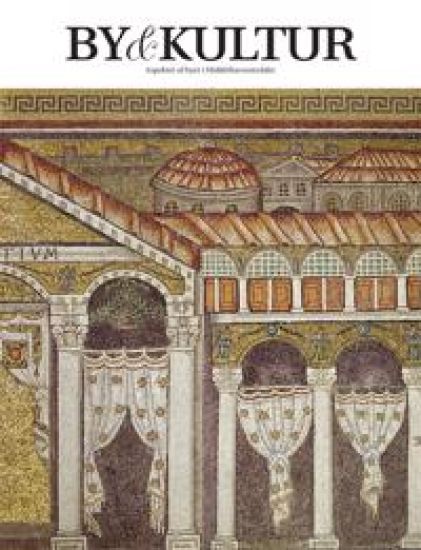
Antologi om byer og bydannelse i Middelhavsområdet fra de tidligste bydannelser ca. 6000 f.kr. til 1700-tallet e.Kr. I alt 14 artikler hvor forfatterne tager udgangspunkt i arkæologiske, litterære, propagandistiske, kunsthistoriske, teologiske og samfundsmæssige forhold.
Hæftet rummer uddrag af fire fortællinger fra Ovids hovedværk FORVANDLINGERNE: Apollon og Daphne, Historien om Io, Narcissus og den pythagoræiske forståelsesramme for forvandlingsmotivet, Alt forvandles. Alle tekststykker er forsynet med oversættelse. Til hvert stykke er der huskegloser og ordbogsgloser. Serien God latin er samlet et bud på et pensum for latin C. De to første hæfter i serien AUGUSTUS og CATUL opbygger det grammatiske grundlag, og AUGUSTUS rummer seriens BASISGRAMMATIK. Disse to hæfter giver også den kulturelle ramme for OVID. Uden for serien findes desuden hæftet KLOG PÅ SPROG – latin i almen sprogforståelse.
SENECA – God latin 4 er det fjerde hæfte i serien God latin. Hæftet rummer uddrag af stoikeren Senecas Breve til Lucilius og skriftet Om mildhed. Alle tekster er forsynet med oversættelse og fuldstændigt glosseret. Desuden er der til hvert stykke huskegloser og ordbogsgloser. Serien God latin er samlet et bud på et pensum for latin C. De to første hæfter i serien AUGUSTUS og CATUL opbygger det grammatiske grundlag, og AUGUSTUS rummer seriens grammatik. Med CATUL gives et eksempel på senrepublikkens digtning, med seriens tredje hæfte OVID introduceres tidlig kejsertids digtning og i dette sidste hæfte introduceres kejsertidens prosa.Ud over serien God latin findes desuden hæftet KLOG PÅ SPROG – latin i almen sprogforståelse.
Matemaatik ja statistik Ene-Margit Tiit võtab sageli sõna ka teemadel, mis esmapilgul jäävad matemaatikast ja statistikast kaugemale. Ta on öelnud:Suurem osa sellesse raamatusse koondatud kirjatükke on sündinud puht mõtlemise - ja kirjutamise - mõnust. See tähendab, et enamik neist lugudest ei ole kirjutatud leivateenimiseks teostatud teadusuuringute või projektide pärast, vaid n.-ö. õhinapõhiselt, uurimise uudishimust või soovist öelda välja oma mõtteid. Kuid ka soovist panustada ühiskonna teenimisse, säilitades selle juures mõtte sõltumatuse ja sukeldumata poliitikasse.Selles keeles kõnelevad meiega meie merelained ja metsasalud - sest igale loodushääle varjundile vastab eestikeelne sõna.
Når det stabile liv pludselig falder fra hinanden. Når man bliver forladt af et menneske, af livet, af sig selv opstår der et tomrum hvor chokket er fragmenteret og kaotisk, reaktionen vred og stum. Tankerne kan ikke forties, de finder deres vej til papiret. Forladt er en digt- og novellesamling, der på rå og ærlig vis lader læseren stå i det følelsesmæssige kaos der indfinder sig når man bliver ramt af sorg. Teksterne leder en igennem sorgfaserne både i skrivestil og indhold.
This book examines current policy discussions around the migration-development nexus and subjects them to rigorous conceptual and empirical criticism through a transnational lens, placing the current re-discovery of migrants as agents of development nexus into theoretical and historical perspective.
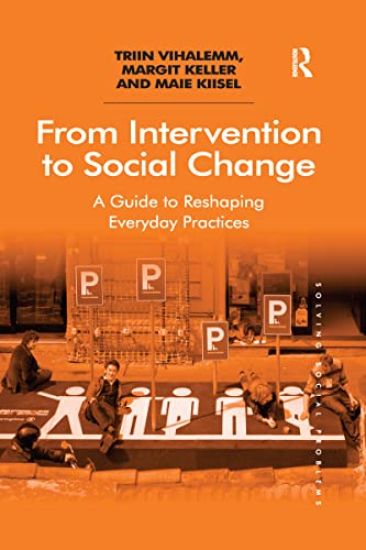
This book explores the design, communication and implementation of social change programmes aimed at solving various social problems, from reducing health-risk behaviour to ’green’ consumption or financial literacy. Examining the application of social practice theory as a way of understanding social change, From Intervention to Social Change connects theoretical reflections with empirical research, sample cases and exercises, emphasising the importance of communication and community engagement in the initiation and implementation of social change programmes designed to address social problems and improve quality of life. Adopting a ’communication for social change’ approach and presenting illustrative studies drawn from ’developed’ and rapidly transforming countries, this handbook will appeal to project managers and communication professionals in the public and private sectors, as well as scholars of sociology, anthropology and development studies with interests in social problems and social change.
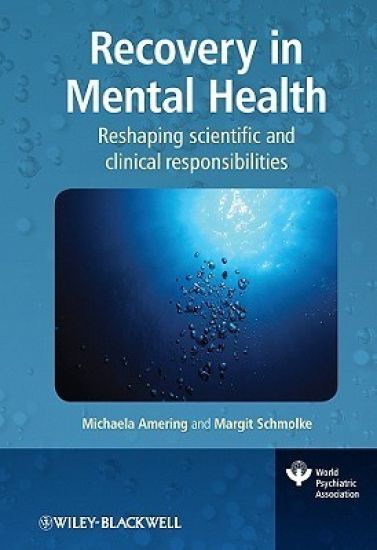
Winner of Medical Journalists’ Association Specialist Readership Award 2010 Recovery is widely endorsed as a guiding principle of mental health policy. Recovery brings new rules for services, e.g. user involvement and person-centred care, as well as new tools for clinical collaborations, e.g. shared decision making and psychiatric advance directives. These developments are complemented by new proposals regarding more ethically consistent anti-discrimination and involuntary treatment legislation, as well as participatory approaches to evidence-based medicine and policy. Recovery is more than a bottom up movement turned into top down mental health policy in English-speaking countries. Recovery integrates concepts that have evolved internationally over a long time. It brings together major stakeholders and different professional groups in mental health, who share the aspiration to overcome current conceptual reductionism and prognostic negativism in psychiatry. Recovery is the consequence of the achievements of the user movement. Most conceptual considerations and decisions have evolved from collaborations between people with and without a lived experience of mental health problems and the psychiatric service system. Many of the most influential publications have been written by users and ex-users of services and work-groups that have brought together individuals with and without personal experiences as psychiatric patients. In a fresh and comprehensive look, this book covers definitions, concepts and developments as well as consequences for scientific and clinical responsibilities. Information on relevant history, state of the art and transformational efforts in mental health care is complemented by exemplary stories of people who created through their lives and work an evidence base and direction for Recovery. This book was originally published in German. The translation has been fully revised, references have been amended to include the English-language literature and new material has been added to reflect recent developments. It features a Foreword by Helen Glover who relates how there is more to recovery than the absence or presence of symptoms and how health care professionals should embrace the growing evidence that people can reclaim their lives and often thrive beyond the experience of a mental illness. Comments on German edition: "It is fully packed with useful information for practitioners, is written in jargon free language and has a good reading pace." Theodor Itten, St. Gallen, Switzerland and Hamburg, Germany "This book is amazingly positive. It not only talks about hope, it creates hope. Its therapeutic effects reach professional mental health workers, service users, and carers alike. Fleet-footed and easily understandable, at times it reads like a suspense novel." Andreas Knuf, pro mente sana, Switzerland '"This is the future of psychiatry"' cheered a usually service-oriented manager after reading the book. We might not live to see it.' Ilse Eichenbrenner, Soziale Psychiatrie, Germany
Situated on the geographic margins of two nations, yet imagined as central to each, Transylvania has long been a site of nationalist struggles. Since the fall of communism, these struggles have been particularly intense in Cluj, Transylvania's cultural and political center. Yet heated nationalist rhetoric has evoked only muted popular response. The citizens of Cluj--the Romanian-speaking majority and the Hungarian-speaking minority--have been largely indifferent to the nationalist claims made in their names. Based on seven years of field research, this book examines not only the sharply polarized fields of nationalist politics--in Cluj, Transylvania, and the wider region--but also the more fluid terrain on which ethnicity and nationhood are experienced, enacted, and understood in everyday life. In doing so the book addresses fundamental questions about ethnicity: where it is, when it matters, and how it works. Bridging conventional divisions of academic labor, Rogers Brubaker and his collaborators employ perspectives seldom found together: historical and ethnographic, institutional and interactional, political and experiential. Further developing the argument of Brubaker's groundbreaking Ethnicity without Groups, the book demonstrates that it is ultimately in and through everyday experience--as much as in political contestation or cultural articulation--that ethnicity and nationhood are produced and reproduced as basic categories of social and political life.
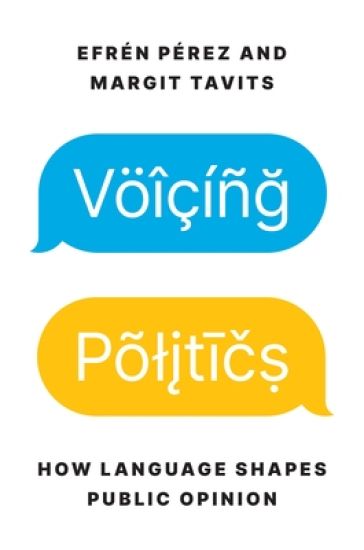
Why your political beliefs are influenced by the language you speakVoicing Politics brings together the latest findings from psychology and political science to reveal how the linguistic peculiarities of different languages can have meaningful consequences for political attitudes and beliefs around the world. Efrén Pérez and Margit Tavits demonstrate that different languages can make mental content more or less accessible and thereby shift political opinions and preferences in predictable directions. They rigorously test this hypothesis using carefully crafted experiments and rich cross-national survey data, showing how language shapes mass opinion in domains such as gender equality, LGBTQ rights, environmental conservation, ethnic relations, and candidate evaluations.Voicing Politics traces how these patterns emerge in polities spanning the globe, shedding essential light on how simple linguistic quirks can affect our political views. This incisive book calls on scholars of political behavior to take linguistic nuances more seriously and charts new directions for researchers across diverse fields. It explains how a stronger grasp of linguistic effects on political cognition can help us better understand how people form political attitudes and why political outcomes vary across nations and regions.