Kirjojen hintavertailu. Mukana 12 269 037 kirjaa ja 12 kauppaa.

Kirjahaku

Etsi kirjoja tekijän nimen, kirjan nimen tai ISBN:n perusteella.

1000 tulosta hakusanalla Marina Bohlmann-Modersohn

Eat Like a Greek

Eat Like a Greek

Marina Georgallides

Octopus Publishing Group
2026
sidottu
Join Instagram sensation Marina Georgallides (@chefmarinie) on a journey to rediscover her Greek roots through these delicious yet simple recipes.In Eat Like A Greek, Marina Georgallides shares 100 easy-to-follow Greek and Cypriot recipes from her childhood, using fresh ingredients and surprisingly simple cooking methods.Contents include: - Dips & appetisers (including Tirokafteri, a spicy feta dip made with hot peppers)- Breads (including Greek Flatbread, soft, fluffy and foldable breads)- Meat & fish (including Biftekia, the Greek version of a burger patty)- Vegetarian & vegan (including Dolmades Cake, an adaptation of the classic Greek mezze dish of stuffed vine)- Desserts & pastries (including Easy Tiropita, a classic savoury Greek pastry stuffed with cheese and egg)Rooted in tradition but designed to be adapted, Marina's recipes make the flavourful dishes that she grew up with accessible to all cooks. From a Portokalopita recipe that doesn't require you to oven dry the filo pastry to a flatbread recipe that only needs one hour proving time, no dish is out of reach.
Baby & child care handbook

Baby & child care handbook

Marina Petropulos

Marina Petropulos
2019
nidottu
THE COMPLETE BABY & CHILD CARE HANDBOOKFor more than four decades, parents worldwide have referred to Marina's book as their 'baby bible'. The Baby & Child Care Handbook is fully up to date, with the latest medical research. You will also have free access to Marina's website (www.baby-childcare.com) featuring over 100 video talks by world renowned paediatric experts, doctors and professors on a variety of childcare subjects.These are arranged according to the subject of each chapter in the book. 'It is my sincere conviction that parents of all shades and creeds share a common bond: that of wanting the best for their children. It is also the right of every child to be raised with enough care to nurture mind, body and soul; so that each will grow up with the good sense of self-worth and a chance to realise their full potential.' MARINA PETROPULOS 'Marina highlights that each child is an individual, so we as parents get to know them in order to provide their particular needs. There is no single right way and Marina is very clear that we have to trust our knowledge of our particular children in order to help them grow up to be adults who can negotiate their way in life. This is a book to have always on one's bedside table ' Dr ALAN WOOD, Medical Journal. 'This book is a veritable one-stop knowledge shop... Not only does it seem to cover every single, solitary, freaky, benign, apparently stupid or incredibly bright question a fuzzy-headed mother might find herself asking, but it does so in a calm, credible, non-judgemental and non-patronising tone... there are also the more tricky topics like the hopes we have for our children, and - very sensitively and sensibly dealt with - the issue of discipline... particularly useful are the handy grids to illnesses, their symptoms and when to see a doctor... ' KAREN SCHIMKE 'This book provides an up-to-date, comprehensive and reliable, factual advice and help for parents and parents-to-be. I unreservedly recommend it.' DR JOHN PEARN, Royal Children's' Hospital, Australia. 'This book read beautifully - it is light, yet serious and thorough and up-to-date. A really marvellous guide and source of excellent information.' Professor Astrid Berg, MB ChB, FC Psych (SA), MPhil (Child & Adolescent Psychiatry). Professor Berg is on the Board of Directors of the World Association for Infant Mental Health. 'This book could be the best investment parents ever make...' SUNDAY TIMES. Curious? Find out more from www.baby-childcare.com
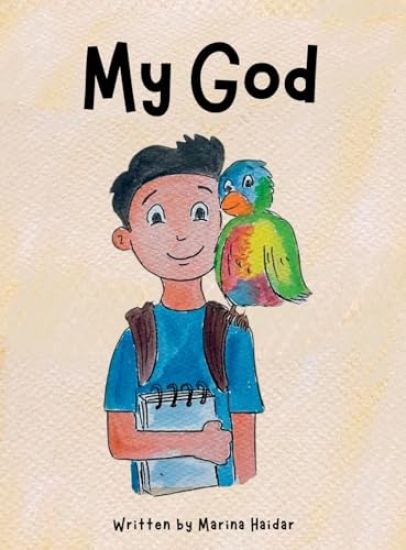
My God

My God

Marina Haidar

Marina Haidar
2025
sidottu
My GodJoin Kassem and his parrot Mato on an adventure to discover God. As they explore the unseen powers that shape the world, they uncover the mystery of where true power comes from.An exciting journey of discovery and wonder awaits Marina Haidar is an educational leader with over a decade of experience in primary education. A lifelong learner, Marina has travelled and enriched her understanding of Islam through both formal study and her personal readings. Her love for learning and teaching has always been at the core of her pedagogical approach, whether engaging her students in the classroom or sharing stories with her three children.While reading to her kids, Marina noticed there wasn't a simple book to help young children grasp the concept of God. Inspired by this, she embarked on a journey to create one herself, driven by her belief in the transformative power of storytelling.Though her children have grown, Marina continues to use this approach to teach them about about God at home, fostering an environment of curiosity. With her background as an educational content writer and her love for learning, writing this book has been a joyful and fulfilling journey.
A Race for the Future

A Race for the Future

Marina Mogilner

HARVARD UNIVERSITY PRESS
2022
sidottu
The forgotten story of a surprising anti-imperial, nationalist project at the turn of the twentieth century: a grassroots movement of Russian Jews to racialize themselves.In the rapidly nationalizing Russian Empire of the late nineteenth century, Russian Jews grew increasingly concerned about their future. Jews spoke different languages and practiced different traditions. They had complex identities and no territorial homeland. Their inability to easily conform to new standards of nationality meant a future of inevitable assimilation or second-class minority citizenship. The solution proposed by Russian Jewish intellectuals was to ground Jewish nationhood in a structure deeper than culture or territory—biology.Marina Mogilner examines three leading Russian Jewish race scientists— Samuel Weissenberg, Alexander El’kind, and Lev Shternberg—and the movement they inspired. Through networks of race scientists and political activists, Jewish medical societies, and imperial organizations like the Society for the Protection of the Health of the Jewish Population, they aimed to produce “authentic” knowledge about the Jewish body, which would motivate an empowering sense of racially grounded identity and guide national biopolitics. Activists vigorously debated eugenic and medical practices, Jews’ status as Semites, Europeans, and moderns, and whether the Jews of the Caucasus and Central Asia were inferior. The national science, and the biopolitics it generated, became a form of anticolonial resistance, and survived into the early Soviet period, influencing population policies in the new state.Comprehensive and meticulously researched, A Race for the Future reminds us of the need to historically contextualize racial ideology and politics and makes clear that we cannot fully grasp the biopolitics of the twentieth century without accounting for the imperial breakdown in which those politics thrived.
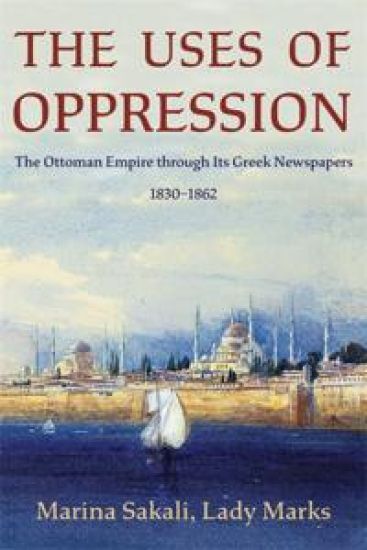
The Uses of Oppression

The Uses of Oppression

Marina Sakali

HARVARD UNIVERSITY PRESS
2024
nidottu
During the middle decades of the nineteenth century, a generation of Ottoman Greeks was caught up in radical social and political changes, including the period of reforms known as Tanzimat. The Ottoman Greek press was both a product and an agent of these changes. The Uses of Oppression follows the development of the Ottoman Greek press from its birth in 1830 until 1862, employing the vivid reflections of its editors, correspondents, advertisers, commentators, and readers as a lens through which to view the everyday lives of this generation of Ottoman Greeks—their social aspirations, their reactions to political events, their reception of Western-style norms, and other contemporary issues.
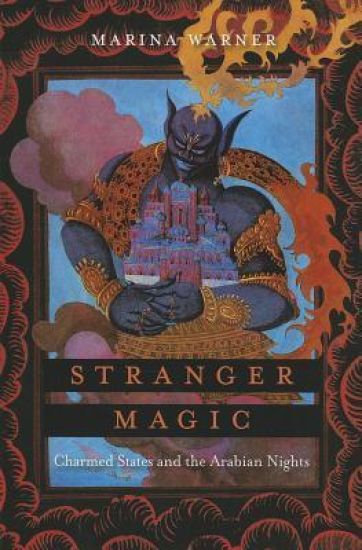
Stranger Magic

Stranger Magic

Marina Warner

Harvard University Press
2020
nidottu
Our foremost theorist of myth, fairytales, and folktales explores the magical realm of the imagination where carpets fly, objects speak, dreams reveal hidden truths, and genies grant prophetic wishes. Stranger Magic examines the wondrous tales of the Arabian Nights, their profound impact on the West, and the progressive exoticization of magic since the eighteenth century, when the first European translations appeared. The Nights seized European readers' imaginations during the siecle des Lumieres, inspiring imitations, spoofs, turqueries, extravaganzas, pantomimes, and mauresque tastes in dress and furniture. Writers from Voltaire to Goethe to Borges, filmmakers from Raoul Walsh on, and countless authors of children's books have adapted its stories. What gives these tales their enduring power to bring pleasure to readers and audiences? Their appeal, Marina Warner suggests, lies in how the stories' magic stimulates the creative activity of the imagination. Their popularity during the Enlightenment was no accident: dreams, projections, and fantasies are essential to making the leap beyond the frontiers of accepted knowledge into new scientific and literary spheres. The magical tradition, so long disavowed by Western rationality, underlies modernity's most characteristic developments, including the charmed states of brand-name luxury goods, paper money, and psychoanalytic dream interpretation. In Warner's hands, the Nights reveal the underappreciated cultural exchanges between East and West, Islam and Christianity, and cast light on the magical underpinnings of contemporary experience, where mythical principles, as distinct from religious belief, enjoy growing acceptance. These tales meet the need for enchantment, in the safe guise of oriental costume.
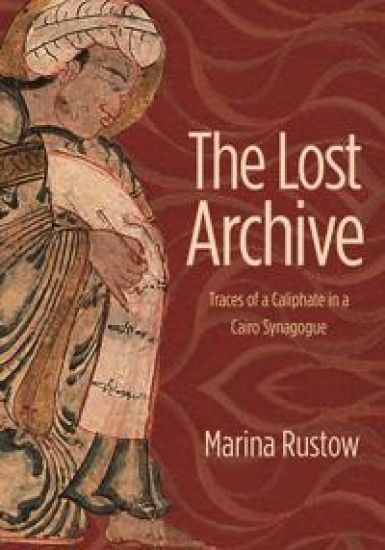
The Lost Archive

The Lost Archive

Marina Rustow

PRINCETON UNIVERSITY PRESS
2020
sidottu
A compelling look at the Fatimid caliphate's robust culture of documentationThe lost archive of the Fatimid caliphate (909–1171) survived in an unexpected place: the storage room, or geniza, of a synagogue in Cairo, recycled as scrap paper and deposited there by medieval Jews. Marina Rustow tells the story of this extraordinary find, inviting us to reconsider the longstanding but mistaken consensus that before 1500 the dynasties of the Islamic Middle East produced few documents, and preserved even fewer.Beginning with government documents before the Fatimids and paper’s westward spread across Asia, Rustow reveals a millennial tradition of state record keeping whose very continuities suggest the strength of Middle Eastern institutions, not their weakness. Tracing the complex routes by which Arabic documents made their way from Fatimid palace officials to Jewish scribes, the book provides a rare window onto a robust culture of documentation and archiving not only comparable to that of medieval Europe, but, in many cases, surpassing it. Above all, Rustow argues that the problem of archives in the medieval Middle East lies not with the region’s administrative culture, but with our failure to understand preindustrial documentary ecology.Illustrated with stunning examples from the Cairo Geniza, this compelling book advances our understanding of documents as physical artifacts, showing how the records of the Fatimid caliphate, once recovered, deciphered, and studied, can help change our thinking about the medieval Islamicate world and about premodern polities more broadly.
Abramovic-isms

Abramovic-isms

Marina Abramovic

PRINCETON UNIVERSITY PRESS
2024
sidottu
A collection of fascinating and provocative quotations from the world-renowned performance artistMarina Abramovic is arguably the most important and influential performance artist of our time. For decades, she has broken boundaries in iconic works such as The Artist Is Present (2010), where she sat in silence across from members of the public at the Museum of Modern Art for eight hours a day for three months, and Rhythm 0 (1974), a six-hour performance in which she stood next to a table holding seventy-two objects, including a scalpel and a loaded gun, and a sign suggesting audience members could do to her whatever they wanted. Gathered from interviews, lectures, writings, and other sources, Abramovic-isms is a unique collection of quotations that offers a window into the mind of this iconic trailblazer.“Artists have to be free human beings. They have to have the complete freedom to express their ideas with no restrictions.”“Our body is an absolute replica of the Universe, and this is why I took to studying myself—by studying myself, I can understand everything else and everybody else.”“Beauty doesn’t have a definition. What is important is what moves you.”“Don’t ever call me the grandmother of performance art. Just call me a warrior.”
The Severed Word

The Severed Word

Marina Scordilis Brownlee

Princeton University Press
2014
pokkari
In this wide-ranging study Marina Scordilis Brownlee investigates the importance of the letter--often a complex interplay of objectivity and subjectivity--in the establishment of novelistic discourse. She shows how Ovid's Heroides explore the discourse of epistolarity in a way that exerted a lasting effect on Italian, French, and Spanish works of the Middle Ages and Renaissance, especially on the fifteenth-century Spanish novela sentimental, or "sentimental romance." Presenting this proto-novelistic form as a highly original rewriting of Ovid, Brownlee demonstrates that its language model interrogates rather than affirms the linguistic referentiality implied by romance. Whereas the ambiguity of the sign had been articulated in fourteenth-century Spain (most notably by the Libro de buen amor), it is the fifteenth-century novela sentimental that fully grasps the existentially, novelistically dire consequences of this ambiguity. And in the process of deconstructing the referentiality that underlies romance, the novela sentimental reveals itself to be a discursively essential step in the evolution of the modern novel. Originally published in 1990. The Princeton Legacy Library uses the latest print-on-demand technology to again make available previously out-of-print books from the distinguished backlist of Princeton University Press. These editions preserve the original texts of these important books while presenting them in durable paperback and hardcover editions. The goal of the Princeton Legacy Library is to vastly increase access to the rich scholarly heritage found in the thousands of books published by Princeton University Press since its founding in 1905.
Government Risk-Sharing in Foreign Investment

Government Risk-Sharing in Foreign Investment

Marina von Neumann Whitman

Princeton University Press
2015
pokkari
Since World War II six risk-sharing institutions to stimulate foreign investment have been established by the U.S. government and several international organizations. These are thoroughly studied. Originally published in 1965. The Princeton Legacy Library uses the latest print-on-demand technology to again make available previously out-of-print books from the distinguished backlist of Princeton University Press. These editions preserve the original texts of these important books while presenting them in durable paperback and hardcover editions. The goal of the Princeton Legacy Library is to vastly increase access to the rich scholarly heritage found in the thousands of books published by Princeton University Press since its founding in 1905.
The Severed Word

The Severed Word

Marina Scordilis Brownlee

Princeton University Press
2016
sidottu
In this wide-ranging study Marina Scordilis Brownlee investigates the importance of the letter--often a complex interplay of objectivity and subjectivity--in the establishment of novelistic discourse. She shows how Ovid's Heroides explore the discourse of epistolarity in a way that exerted a lasting effect on Italian, French, and Spanish works of the Middle Ages and Renaissance, especially on the fifteenth-century Spanish novela sentimental, or "sentimental romance." Presenting this proto-novelistic form as a highly original rewriting of Ovid, Brownlee demonstrates that its language model interrogates rather than affirms the linguistic referentiality implied by romance. Whereas the ambiguity of the sign had been articulated in fourteenth-century Spain (most notably by the Libro de buen amor), it is the fifteenth-century novela sentimental that fully grasps the existentially, novelistically dire consequences of this ambiguity. And in the process of deconstructing the referentiality that underlies romance, the novela sentimental reveals itself to be a discursively essential step in the evolution of the modern novel. Originally published in 1990. The Princeton Legacy Library uses the latest print-on-demand technology to again make available previously out-of-print books from the distinguished backlist of Princeton University Press. These editions preserve the original texts of these important books while presenting them in durable paperback and hardcover editions. The goal of the Princeton Legacy Library is to vastly increase access to the rich scholarly heritage found in the thousands of books published by Princeton University Press since its founding in 1905.
Government Risk-Sharing in Foreign Investment

Government Risk-Sharing in Foreign Investment

Marina von Neumann Whitman

Princeton University Press
2016
sidottu
Since World War II six risk-sharing institutions to stimulate foreign investment have been established by the U.S. government and several international organizations. These are thoroughly studied. Originally published in 1965. The Princeton Legacy Library uses the latest print-on-demand technology to again make available previously out-of-print books from the distinguished backlist of Princeton University Press. These editions preserve the original texts of these important books while presenting them in durable paperback and hardcover editions. The goal of the Princeton Legacy Library is to vastly increase access to the rich scholarly heritage found in the thousands of books published by Princeton University Press since its founding in 1905.
Found in Translation Volume III. Children and Education

Found in Translation Volume III. Children and Education

Marina Bluvshtein

North American Society of Adlerian Psychology
2019
pokkari
This is a third volume in the series "Found in translation". This volume provides an opportunity to witness the professional debates and general intellectual discourse taking place in Europe in 1910s-1930s on topics of children and education and published in the Russian scientific interdisciplinary journal Psychotherapy: An Overview of Psychiatric Treatment and Applied Psychology in 1910-1914 and the German language journal Internationale Zeitschrift f?r Individualpsychologie (International Journal of Individual Psychology)in 1914-1937. Most of the articles have never been published in English. A collection is a delight for anyone interested in history, psychology, and education. Like in previous volumes, this book presents a rich list of artistic responses to the topics discussed in the articles.
More&more (the Invisible Oceans)

More&more (the Invisible Oceans)

Marina Zurkow

Punctum Books
2016
nidottu
More&More is an art and research project that explores the language and mechanics of global trade, container shipping, and the exchange of goods. It questions a mercantile structure that by necessity disallows the presence of ocean as a real space in order to flatten the world into a Pangaea of capital. The project is presented in two volumes, released in conjunction with an exhibition of Marina Zurkow's work (with collaborators Sarah Rothberg, Surya Mattu, and others) at bitforms gallery in New York City in February 2016.This book, More&More (The Invisible Oceans), is a catalog of the exhibition, featuring many full-color images of the art on display (including video stills, bespoke bathing suits, and fungal sculptures), as well as an introduction by Marina Zurkow and a conversation between Zurkow and international curator Kathleen Forde.
More&more (a Guide to the Harmonized System)
More&More is an art and research project that explores the language and mechanics of global trade, container shipping, and the exchange of goods. It questions a mercantile structure that by necessity disallows the presence of ocean as a real space in order to flatten the world into a Pangaea of capital. The project is presented in two volumes, released in conjunction with an exhibition of Marina Zurkow's work (with collaborators Sarah Rothberg, Surya Mattu, and others) at bitforms gallery in New York City in February 2016.This book, More&More (A Guide to the Harmonized System), is an experimental "brick" of a book that intervenes in the Harmonized Commodity Description and Coding System (also known as the HS Code). The HS Code is the internationally accepted standard of product classification, which codifies the way nations conduct import/export. All legal trade products (and illegal ones that find loopholes) are shipped using this system. More&More (A Guide to the Harmonized System) lists the astonishing variety of items that are shipped around the world, and includes instructions for using the code to ship items (both legally and illegally). It also includes poetic, personal, and scholarly annotations by Stacy Alaimo, Heather Davis, Kathleen Forde, Dylan Gauthier, Elena Glasberg, Calliope Mathios, Steve Mentz, Astrida Neimanis, Chris Piuma, Elspeth Probyn, Sarah Rothberg, Phil Steinberg, Rita Wong, and Marina Zurkow.