Max can't wait to go on a school trip to the art gallery--until he learns he is going to be stuck with Spencer, the class bully, for a partner all day. On top of that, Max comes down with a case of the Super Fidgets before they even get off the bus, so he decides to focus on the color green to keep himself focused. His game threatens to embarrass him in front of the rest of the class, but Max's friends always know how to make him feel better and help him win his game.
From multi-award-winning writer Helen Ennis comes the first ever biography of the photographer Max Dupain, the most influential Australian photographer of the 20th century and creator of many iconic images that have passed into our national imagination.One of The Guardian's 25 Best Australian Books of 2024 Max Dupain (1911-1992) was a major cultural figure in Australia, and at the forefront of the visual arts in a career spanning more than fifty years. During this time he produced a number of images now regarded as iconically Australian. He championed modern photography and a distinctive Australian approach.To date, Dupain has been seen mostly in one-dimensional, limited and limiting terms - as exceptional, as super masculine, as an Australian hero. But this landmark biography approaches him as a complex and contradictory figure who, despite the apparent certitude of his photographic style, was filled with self-doubt and anxiety. Dupain was a Romantic and a rationalist and struggled with the intensity of his emotions and reactions. He wanted simplicity in his art and life, but found it difficult to attain. He never wanted to be ordinary.Examining the sources of his creativity - literature, art, music - alongside his approaches to masculinity, love, the body, war, and nature, Max Dupain: A Portrait reveals a driven artist, one whose relationship to his work has been described as 'ferocious' and 'painful to watch'. Photographer David Moore, a long-term friend, said he 'needed to photograph like he needed to breathe. It was part of him. It gave him his drive and force in life.''In this deeply thought book ... [Ennis'] thoughts subtly accumulate into a complex portrait of a man and a rich picture of Australia ... Revelatory.' The Conversation'This handsome biography ... a more complex man and career are revealed in lucid prose by Ennis, a leading historian of photography.' Guardian
This lively book, with its spectacular illustrations, tells the interesting story of the life of Max Broedel, the pioneering medical illustrator and founder of the Department of Art as Applied to Medicine at The Johns Hopkins University in Baltimore.
The inevitable turn of the century California Malaise has finally settled on old hippies Max and Carlotta, and they flee to Mexico. They build one house with their Mexican crew and become enamored of Mexico, the land and the people. Like their namesakes Maximillian and Carlotta long ago, they have idealistic dreams for their company and their new, adopted countrymen, their loyal workers. And like that ill-fated couple, they will be all the while ignorant of the forces that move against them, business rivals, bureaucrats and, most fiercesome of all, a religious scourge, a Hindu swami intent on divine retribution.
Max loves going to the park and taking his favorite toys along. His latest adventure has him wondering about the sun and where it lives when it's not visiting him.
Ceramics are a versatile material, more so than is widely known. They are thermal resistant, poor electrical conductors, insulators against nuclear radiation, and not easily damaged, making ceramics a key component in many industrial processes. MAX Phases and Ultra-High Temperature Ceramics for Extreme Environments investigates a new class of ultra-durable ceramic materials, which exhibit characteristics of both ceramics and metals. Readers will explore recent advances in the manufacturing of ceramic materials that improve their durability and other physical properties, enhancing their overall usability and cost-effectiveness. This book will be of primary use to researchers, academics, and practitioners in chemical, mechanical, and electrical engineering. This book is part of the Research Essentials collection.
When Polish wigmaker and cosmetician Max Factor arrived in Los Angeles at the dawn of the motion picture industry, make-up had been associated only with stage performers and ladies of the oldest profession. Appalled by the garish paints worn by actors, Factor introduced the first flexible greasepaint for film in 1914. With a few careful brush strokes, a lot of innovation and the kind of luck that can happen only in Hollywood, Max Factor changed the meaning of glamour. His innovations can be experienced in every tube of lipstick, palette of eye shadow and bottle of nail lacquer used today. Join author Erika Thomas as she reveals the makeup guru's expert beauty tips and the story of how he created the most iconic golden-era looks that are as relevant today as they were nearly a century ago.
Max Dehn (1878-1952) is known to mathematicians today for his seminal contributions to geometry and topology-Dehn surgery, Dehn twists, the Dehn invariant, etc. He is also remembered as the first mathematician to solve one of Hilbert's famous problems. However, Dehn's influence as a scholar and teacher extended far beyond his mathematics. Dehn also lived a remarkable life, described in this book in three phases. The first phase focuses on his early career as one of David Hilbert's most gifted students. The second, after World War I, treats his time in Frankfurt where he led an intimate community of mathematicians in explorations of historical texts. The final phase, after 1938, concerns his flight from Nazi Germany to Scandinavia and eventually to the United States where, after various teaching experiences, the Dehns settled at iconic Black Mountain College.This book is a collection of essays written by mathematicians and historians of art and science. It treats Dehn's mathematics and its influence, his journeys, and his remarkable engagement in history and the arts. A great deal of the information found in this book has never before been published.
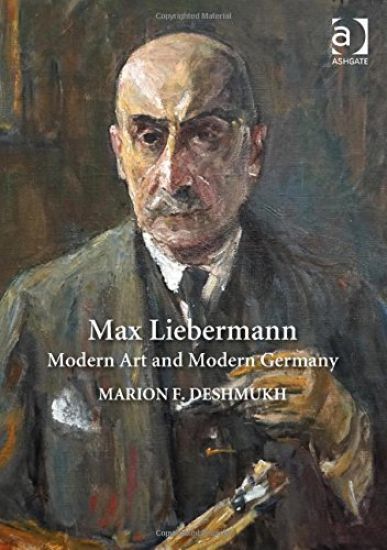
Max Liebermann: Modern Art and Modern Germany is the first English-language examination of this German impressionist painter whose long life and career spanned nine decades. Through a close reading of key paintings and by a discussion of his many cultural networks across Germany and throughout Europe, this study by Marion Deshmukh illuminates Liebermann’s importance as a pioneer of German modernism. Critics and admirers alike saw his art as representing aesthetic European modernism at its best. His subjects included dispassionate depictions of the rural Dutch countryside, his colorful garden at the Wannsee, and his many portraits of Germany’s cultural, political, and military elites. Liebermann was the largest collector of French Impressionism in Germany - and his cosmopolitan outlook and his art created strong antipathies towards both by political and cultural conservatives throughout his life.
This book illuminates an important dimension of the work of Max Weber. Weber’s theory of meaning and modernity is articulated through an understanding of his account of the way in which the pursuit of meaning in the modern world has been shaped by the loss of Western religion and how such pursuit gives sense to the phenomena of human suffering and death. Through a close, scholarly reading of Weber’s extensive writings and Vocation Lectures, the author explores the concepts of ’paradox’ and ’brotherliness’ as found in Weber’s work, in order to offer an original exposition of Weber’s actual theory of how meaning and meaninglessness work in the modern world. In addition to making a substantial and highly original contribution to the sociology of modernity, the book applies the theory of meaning extracted from Weber’s thought, addressing the claim that Weber’s work has been rendered out-dated by the supposed re-enchantment of the modern world, as well as discussing the ways this theory can contribute to our understanding of the development of specific forms of modernity. A rigorous examination of the thought of one of the most important figures in classical sociology, this volume will appeal to scholars of sociology, social theory and philosophy with interests in modernity, Weber and the concept of meaning.
Max is accepted into a brand new space school. He and the other students are excited until they realise the school is secretly run by villains! The students are trapped in space far from help. Max must use his Space Guard training and the help of his new friends to foil the villains and try to free them all.