Kirjojen hintavertailu. Mukana 12 592 870 kirjaa ja 12 kauppaa.

Kirjahaku

Etsi kirjoja tekijän nimen, kirjan nimen tai ISBN:n perusteella.

1000 tulosta hakusanalla Michael A. Cook

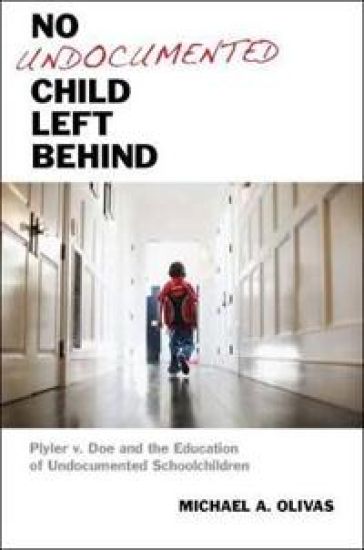
No Undocumented Child Left Behind

No Undocumented Child Left Behind

Michael A. Olivas

New York University Press
2012
sidottu
The 1982 U. S. Supreme Court case of Plyler v. Doe, which made it possible for undocumented children to enroll in Texas public schools, was a watershed moment for immigrant rights in the United States. The Court struck down both a state statute denying funding for education to undocumented children and a municipal school district's attempt to charge an annual $1,000 tuition fee for each undocumented student to compensate for the lost state funding. Yet while this case has not returned to the Supreme Court, it is frequently contested at the state and local level. In No Undocumented Child Left Behind, Michael A. Olivas tells a fascinating history of the landmark case, examining how, 30 years later, Plyler v. Doe continues to suffer from implementation issues and requires additional litigation and vigilance to enforce the ruling. He takes a comprehensive look at the legal regime it established regarding the education of undocumented school children, moves up through its implementation, including direct and indirect attacks on it, and closes with the ongoing, highly charged debates over the Development, Relief, and Education for Minors (DREAM) Act, which aims to give conditional citizenship to undocumented college students who graduated from US high schools and have been in the country for at least five years. Listen to Michael Olivas on WYPF 88.1 FM, as he takes a look back 30 years to the Supreme Court case that made it possible for undocumented children to enroll in public schools and the highly-charged political and legal battles that have ensued.
Climate Change

Climate Change

Michael A. Toman

CRC Press Inc
2017
sidottu
Over the years, a large and growing literature on the economics of climate change has developed. Within this volume the contributors have included a wide range of journal essays that consider the impact of climate change on specific sectors; goods and services; the costs and benefits of greenhouse gas (GHG) mitigation; and policy design for mitigation, including both domestic instruments and issues related to international agreements.
Marriage Relationships in Tudor Political Drama

Marriage Relationships in Tudor Political Drama

Michael A. Winkelman

TAYLOR FRANCIS INC
2020
sidottu
Originally published in 2005. While several recent studies have investigated the political dimensions of sixteenth-century English drama, until now there has not been a monograph that tells the story of how and why royal marital selection was examined. By linking court interludes, neoclassical university tragedies, and popular plays by late Elizabethan dramatists Christopher Marlowe, John Lyly, Thomas Kyd, and William Shakespeare to the inflammatory topic of Tudor marriage, Michael Winkelman demonstrates their cultural centrality. This new work interrogates the symbolic, allusive, and mimetic aspects of marital relationships in such plays. Winkelman argues that they were crucial battlegrounds for a series of consequential debates about the future of the monarchy, especially during the reigns of the oft-married King Henry VIII and his unmarried daughter, the Virgin Queen Elizabeth I. Marriage, as a critically important political metaphor as well as a pressing realpolitik quandary, was the subject of major debate in the drama and government of Tudor England. Royal conduct in the domestic sphere had a tremendous impact on the entire English social order, and in an age before widespread freedom of speech, court drama was often the only venue where the voicing of criticism was tolerated. The fascinating soap-opera story of Tudor marriage thus provides the author with a reference point for an interdisciplinary study of sixteenth-century theatre and politics. Drawing on evidence from playbooks and historical chronicles as well as contemporary work in gender studies, audience-response theory, and anthropology, this book explores how during a time of anxiety-inducing change, playwrights discussed controversies and propounded remedies; theatre played a pivotal role in shaping society.
The Future of Arms Control

The Future of Arms Control

Michael A. Levi; Michael E. O'Hanlon

Brookings Institution
2004
nidottu
"Arms control, for decades at the core of the foreign policy consensus, today is among the more contentious issues in American politics. It is pilloried and considered out of mode in many conservative quarters, while being viewed as nearly sacrosanct in many liberal circles. In this new book, Michael Levi and Michael O'Hanlon argue that neither the left nor the right has a correct view of the proper utility of arms control in the age of terror. Arms control in the traditional sense--lengthy treaties to limit nuclear and other military competitions among the great powers--is no longer particularly useful. Nor should arms control be pursued as a means to the end of constraining the power of nations or of promoting global government. It is still a critical tool, though, for controlling dangerous technologies, particularly those that, in the hands of hostile states or terrorist organizations, could cause massive death and destruction. Arms control and coercive action, including military force, must be integrated into an overall strategy for preventing proliferation, now more than ever before. Arms control should be used to gain earlier warning of illicit activities inside dangerous states, allowing the international community to take coercive action in a timely way. The authors propose three new criteria to guide future arms control efforts, designed to respond to today's geopolitical realities. Arms control must focus on the dangers of catastrophic technology, not so much in the hands of major powers as of small states and terrorist groups. Their criteria lead to a natural focus on nuclear and biological technologies. Much tougher measures to prevent countries from gaining nuclear weapons technoloty while purportedly complying with the Nuclear Non-Proliferation Treaty and procedures for controlling dangerous biological technologies will be most prominent in this framework, while lower priority is giben to efforts such as bilateral nuclear accords and most types of arms control for outer space. This book provides a framework for an effective arms control strategy in a new age of international security."
Savings for the Poor

Savings for the Poor

Michael A. Stegman; Joseph I. Lieberman

Brookings Institution
1999
nidottu
"Beginning this year, federal payment recipients will receive their government benefits through electronic funds transfer (EFT)-- what most of us call direct deposit. Although cost-cutting is the driving force behind the move to a virtually all-electronic federal payment system, Michael Stegman believes the initiative has a far broader potential: to bring poor Americans into the banking mainstream. In this book Stegman outlines how many families will enter the mainstream banking system through EFT '99, as the program is called. He explains in careful detail the thinking behind the shift to EFT and the implementation of the program this year. He also argues that, for maximum success, EFT '99 should be combined with a program of national Individual Development Accounts (IDAs), dedicated savings accounts for low-income people that can be used for purchasing a first home, acquiring more education or job training, or starting a small-business. Essentially, EFT '99 will bring people into the banking system, and IDAs will give them an incentive to use the system to its fullest in order to make their money work for them and their children. There are other steps that the government can take to boost EFT's ability to help public aid recipients achieve self-sufficiency. It can: add a direct deposit option to state benefits payments programs; give banks significant additional Community Reinvestment Act Credit for establishing accounts for EFT recipients; and regulate fees for cashing government benefits and voluntary accounts so that people are not charged excessively for accessing their money. This book demonstrates that — with careful planning and a relatively small investment — the government's EFT initiative can have a major payoff in real assets and improved prospects for those who have been, for far too long, on the fringes of the country's mainstream banking system. Brookings Metro Series "
Transilient Acts and Resilient Villages

Transilient Acts and Resilient Villages

Michael A. Adler

University of Arizona Press
2026
sidottu
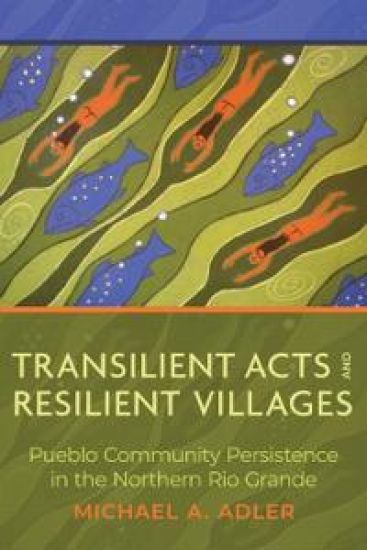
A powerful rethinking of resilience through the lens of Pueblo history, this work reveals how Tiwa communities in the Northern Rio Grande used culturally intentional strategies to adapt, transform, and endure across a millennium of change. Anthropologist Michael A. Adler introduces the concept of transilience—culturally intentional acts that address existential threats and enable transformation—as a framework for interpreting the long-term persistence of Tiwa communities. Focusing on the Tiwa-speaking communities of Taos, Picuris, and Pot Creek Pueblos, Adler shows how social and ritual organization, architectural change, and sacred geographies were mobilized in response to disruption. He challenges conventional resilience theory, which emphasizes systemic stability, instead centering Indigenous agency, mobility, and sacred practice as key to understanding cultural endurance. Grounded in decades of collaborative research with Pueblo communities, Transilient Acts and Resilient Villages is a vital contribution to southwestern archaeology. It offers a compelling model for how archaeology can respectfully engage with descendant communities and provides essential insights for scholars, students, and community members seeking to understand the complexities of cultural persistence in the face of change.
Taking The Field

Taking The Field

Michael A. Messner

University of Minnesota Press
2002
nidottu
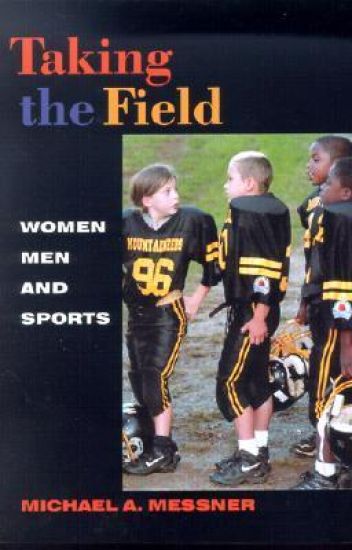
A hard-hitting look at the persistent inequities in women’s sports participation.In the past, when sport simply excluded girls, the equation of males with active athletic power and of females with weakness and passivity seemed to come easily, almost naturally. Now, however, with girls’ and women’s dramatic movement into sport, the process of exclusion has become a bit subtler, a bit more complicated-and yet, as Michael Messner shows us in this provocative book, no less effective. In Taking the Field, Messner argues that despite profound changes, the world of sport largely retains and continues its longtime conservative role in gender relations.To explore the current paradoxes of gender in sport, Messner identifies and investigates three levels at which the "center" of sport is constructed: the day-to-day practices of sport participants, the structured rules and hierarchies of sport institutions, and the dominant symbols and belief systems transmitted by the major sports media. Using these insights, he analyzes a moment of gender construction in the lives of four- and five-year-old children at a soccer opening ceremony, the way men’s violence is expressed through sport, the interplay of financial interests and dominant men’s investment in maintaining the status quo in the face of recent challenges, and the cultural imagery at the core of sport, particularly televised sports. Through these examinations Messner lays bare the practices and ideas that buttress-as well as those that seek to disrupt-the masculine center of sport. Taking the Field exposes the subtle and not-so-subtle ways in which men and women collectively construct gender through their interactions-interactions contextualized in the institutions and symbols of sport.
Culture Concept

Culture Concept

Michael A. Elliott

University of Minnesota Press
2002
sidottu
"Culture" is a term we commonly use to explain the differences in our ways of living. In this book Michael A. Elliott returns to the moment this usage was first articulated, tracing the concept of culture to the writings -- folktales, dialect literature, local color sketches, and ethnographies -- that provided its intellectual underpinnings in turn-of-the-century America.The Culture Concept explains how this now-familiar definition of "culture" emerged during the late nineteenth century through the intersection of two separate endeavors that shared a commitment to recording group-based difference -- American literary realism and scientific ethnography. Elliott looks at early works of cultural studies as diverse as the conjure tales of Charles Chesnutt, the Ghost-Dance ethnography of James Mooney, and the prose narrative of the Omaha anthropologist-turned-author Francis La Flesche. His reading of these works -- which struggle to find appropriate theoretical and textual tools for articulating a less chauvinistic understanding of human difference -- is at once a recovery of a lost connection between American literary realism and ethnography and a productive inquiry into the usefulness of the culture concept as a critical tool in our time and times to come.
Culture Concept

Culture Concept

Michael A. Elliott

University of Minnesota Press
2002
nidottu
Examines the prehistory of the American struggle to address cultural difference."Culture" is a term we commonly use to explain the differences in our ways of living. In this book Michael A. Elliott returns to the moment this usage was first articulated, tracing the concept of culture to the writings-folktales, dialect literature, local color sketches, and ethnographies-that provided its intellectual underpinnings in turn-of-the-century America. The Culture Concept explains how this now-familiar definition of "culture" emerged during the late nineteenth century through the intersection of two separate endeavors that shared a commitment to recording group-based difference-American literary realism and scientific ethnography. Elliott looks at early works of cultural studies as diverse as the conjure tales of Charles Chesnutt, the Ghost Dance ethnography of James Mooney, and the prose narrative of the Omaha anthropologist-turned-author Francis La Flesche. His reading of these works-which struggle to find appropriate theoretical and textual tools for articulating a less chauvinistic understanding of human difference-is at once a recovery of a lost connection between American literary realism and ethnography and a productive inquiry into the usefulness of the culture concept as a critical tool in our time and times to come.
Nature's Prophet

Nature's Prophet

Michael A. Flannery

The University of Alabama Press
2018
sidottu
An astute study of Alfred Russel Wallace’s path to natural theology.A spiritualist, libertarian socialist, women’s rights advocate, and critic of Victorian social convention, Alfred Russel Wallace was in every sense a rebel who challenged the emergent scientific certainties of Victorian England by arguing for a natural world imbued with purpose and spiritual significance. Nature’s Prophet:Alfred Russel Wallace and His Evolution from Natural Selection to Natural Theology is a critical reassessment of Wallace’s path to natural theology and counters the dismissive narrative that Wallace’s theistic and sociopolitical positions are not to be taken seriously in the history and philosophy of science.Author Michael A. Flannery provides a cogent and lucid account of a crucial—and often underappreciated—element of Wallace’s evolutionary worldview. As co-discoverer, with Charles Darwin, of the theory of natural selection, Wallace willingly took a backseat to the well-bred, better known scientist. Whereas Darwin held fast to his first published scientific explanations for the development of life on earth, Wallace continued to modify his thinking, refining his argument toward a more controversial metaphysical view which placed him within the highly charged intersection of biology and religion.Despite considerable research into the naturalist’s life and work, Wallace’s own evolution from natural selection to natural theology has been largely unexplored; yet, as Flannery persuasively shows, it is readily demonstrated in his writings from 1843 until his death in 1913. Nature’s Prophet provides a detailed investigation of Wallace’s ideas, showing how, although he independently discovered the mechanism of natural selection, he at the same time came to hold a very different view of evolution from Darwin.Ultimately, Flannery shows, Wallace’s reconsideration of the argument for design yields a more nuanced version of creative and purposeful theistic evolution and represents one of the most innovative contributions of its kind in the Victorian and Edwardian eras, profoundly influencing a later generation of scientists and intellectuals.
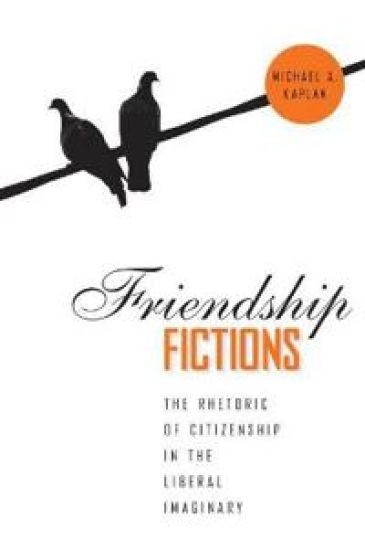
Friendship Fictions

Friendship Fictions

Michael A. Kaplan

The University of Alabama Press
2018
nidottu
Friendship serves as a metaphor for citizenship and mirrors the individual's participation in civic life. Friendship Fictions unravels key implications of this metaphor and demonstrates how it can transform liberal culture into a more just and democratic way of life. A criticism often leveled at liberal democratic culture is its emphasis on the individual over community and private life over civic participation. However, liberal democratic culture has a more complicated relationship to notions of citizenship. As Michael Kaplan shows, citizenship comprises a major theme of popular entertainment, especially Hollywood film, and often takes the form of friendship narratives; and this is no accident. Examining the representations of citizenship-as-friendship in four Hollywood films (The Big Chill, Thelma & Louise, Lost in Translation, and Smoke), Kaplan argues that critics have misunderstood some of liberal democracy's most significant features: its resilience, its capacity for self-revision, and the cultural resonance of its model of citizenship. For Kaplan, friendship—with its dynamic pacts, fluid alliances, and contingent communities—is one arena in which preconceptions about individual participation in civic life are contested and complicated. Friendship serves as a metaphor for citizenship and mirrors the individual's participation in civic life. Friendship Fictions unravels key implications of this metaphor and demonstrates how it can transform liberal culture into a more just and democratic way of life.
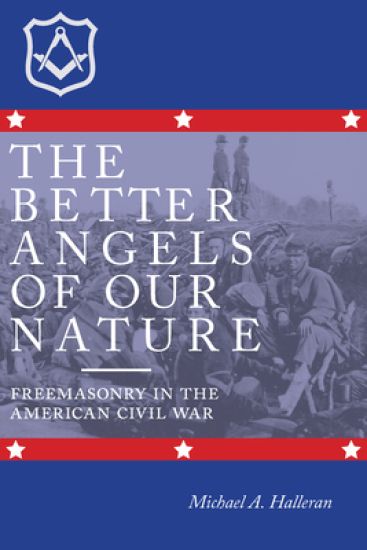
The Better Angels of Our Nature

The Better Angels of Our Nature

Michael A. Halleran

The University of Alabama Press
2020
nidottu
The first in-depth study of the Freemasons during the Civil WarOne of the enduring yet little examined themes in Civil War lore is the widespread belief that on the field of battle and afterward, members of Masonic lodges would give aid and comfort to wounded or captured enemy Masons, often at great personal sacrifice and danger. This work is a deeply researched examination of the recorded, practical effects of Freemasonry among Civil War participants on both sides.From first-person accounts culled from regimental histories, diaries, and letters, Michael A. Halleran has constructed an overview of 19th-century American freemasonry in general and Masonry in the armies of both North and South in particular, and provided telling examples of how Masonic brotherhood worked in practice. Halleran details the response of the fraternity to the crisis of secession and war, and examines acts of assistance to enemies on the battlefield and in POW camps.The author examines carefully the major Masonic stories from the Civil War, in particular the myth that Confederate Lewis A. Armistead made the Masonic sign of distress as he lay dying at the high-water mark of Pickett's charge at Gettysburg.
Catholic Perspectives on Baptism, Eucharist and Ministry

Catholic Perspectives on Baptism, Eucharist and Ministry

Michael A. Fahey

University Press of America
1986
nidottu
This is the first collective publication by Roman Catholics in North America to evaluate the historic Lima document, Baptism, Eucharist and Ministry. The volume also contains historical, scriptural and theological investigations into one of the most significant ecumenical texts of this century. Co-published with the Catholic Theological Society of America.