
Kirjahaku
Etsi kirjoja tekijän nimen, kirjan nimen tai ISBN:n perusteella.
1000 tulosta hakusanalla Murray R. Janewski


Murray Barrington-Jones sounds aristocratic. He's not.Many Pottsville residents have fallen foul of Mr. Barrington-Jones dodgy business dealings; most have been financially ruined. And now he's dead. Suspects are plenty.His ex-wife Susan is the primary suspect. But the list grows bigger. There's Susan's financially strapped lover, Tommy Llewellyn; Stefan Rudinski, a local bikie Chapter President; Brian Brady, a bankrupt pensioner and Annie Greer, a 'a koala saving greenie'.All have motive. All wanted Murray Barrington-Jones dead.When Selena Sharma, Pottsville's cooking school Queen and part time amateur sleuth, discovers a vital clue, Detective Stewart has just minutes to solve the crime.If he fails, Pottsville will have another killing. Will he make it in time?"C T Mitchell is spell binding" - The Underground Post
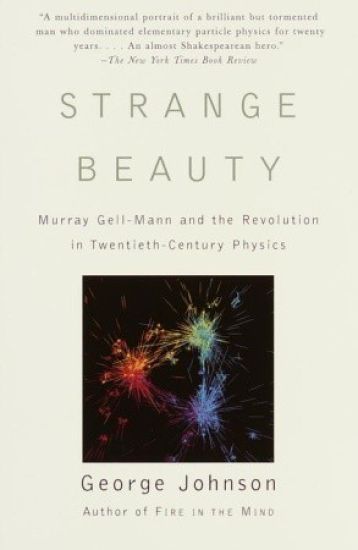
Strange Beauty: Murray Gell-Mann and the Revolution in Twentieth-Century Physics
George Johnson
VINTAGE
2000
nidottu
With a New Afterword "Our knowledge of fundamental physics contains not one fruitful idea that does not carry the name of Murray Gell-Mann."--Richard Feynman Acclaimed science writer George Johnson brings his formidable reporting skills to the first biography of Nobel Prize-winner Murray Gell-Mann, the brilliant, irascible man who revolutionized modern particle physics with his models of the quark and the Eightfold Way. Born into a Jewish immigrant family on New York's East 14th Street, Gell-Mann's prodigious talent was evident from an early age--he entered Yale at 15, completed his Ph.D. at 21, and was soon identifying the structures of the world's smallest components and illuminating the elegant symmetries of the universe. Beautifully balanced in its portrayal of an extraordinary and difficult man, interpreting the concepts of advanced physics with scrupulous clarity and simplicity, Strange Beauty is a tour-de-force of both science writing and biography.
John Courtney Murray in a Cold War Context
Thomas W. O'Brien
University Press of America
2004
nidottu
This thought-provoking work examines American Catholic theologian John Courtney Murray, whose beliefs featured an enthusiastic endorsement of America and thorough condemnation of communism, in the context of the Cold War debates of the 1950s. This was a time when Catholics were still perceived with suspicion by the mainstream. The book contends that the rhetoric of the Cold War was more than merely an ingredient of John Courtney Murray's public theology—it was part of the very foundation of his thinking. John Courtney Murray in a Cold War Context argues that Murray, and other American Catholics, recognized, through the Cold War milieu, an opportunity to reconcile their religious tradition with their own political affiliation.

William H. (Alfalfa Bill) Murray is the most important figure in the political history of Oklahoma. No other individual contributed so greatly to the formation of its political institutions - and there was never a more colorful or controversial character on the state's political scene. Flamboyant, unpredictable, and stubborn, Alfalfa Bill became a legend. President of the Oklahoma Constitutional Convention, speaker of the first House of Representatives, two-term congressman, and governor of Oklahoma, the Texas-born Murray made an indelible mark on his adopted state. But he also made enemies. During the struggle for statehood he waged a hard battle over the constitution, taking on President Theodore Roosevelt and Secretary of War William Howard Taft. As Oklahoma governor, Murray challenged the oil industry, newspaper interests, and the state of Texas. To enforce his programs, he relied on the National Guard. While governor, Murray called out the guard forty-seven times for duties ranging from policing ticket sales at University of Oklahoma football games, to patrolling oil fields, to guarding the Red River Bridge during the infamous Bridge War with Texas. In 1932 he ran for the Democratic nomination for president, and his fame spread across the nation. When candidate Franklin D. Roosevelt offered a program for national recovery, Murray countered with ""Bread, Butter, Bacon, and Beans."" In describing Murray's frustrated efforts to preserve the agricultural American of the nineteenth century, Bryant has written a perceptive biography presenting the first clearly defined portrait of this determined but inflexible man.
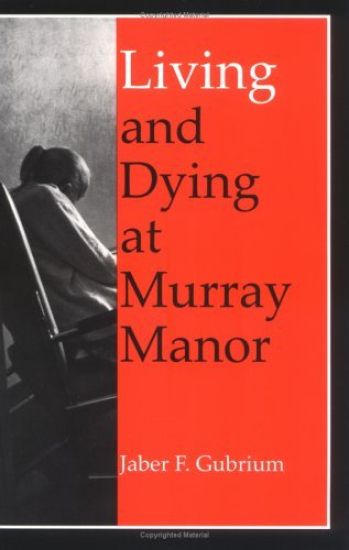
A classic text that documents the "work" of everyday life in a nursing home. In 1973 sociologist Jaber F. Gubrium spent several months at a nursing home as a participant-observer. Through his observations, interviews, and transcriptions, Gubrium recounts case studies of clients, doctors, the dynamics between them, patient socialization, and the intimacies of daily hygiene.
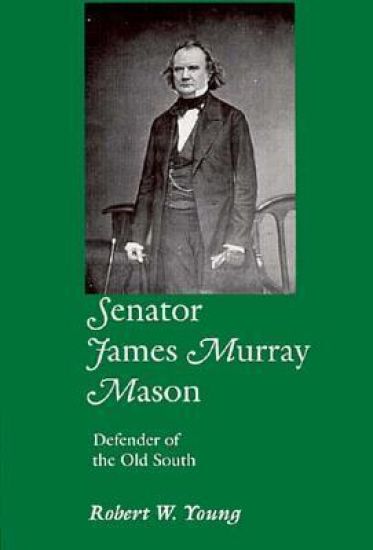

Problems from Murray Klamkin: The Canadian Collection
Andy Liu; Bruce Shawyer
Mathematical Association of America (MAA)
2009
sidottu
When one thinks of mathematical problems posed over the past 30 years, one name automatically leaps to the fore - Murray Klamkin. In this book Andy Liu and Bruce Shawyer present problems that he proposed over his career. It contains the 'quickies' (problems with quick and neat solutions) he proposed in 'Crux Mathematicorum, ' his longer problems, and also problems which were posed in tribute to him after he died. Solutions are provided in the second half of the book.

John Courtney Murray and the Dilemma of Religious Toleration
Keith J. Pavlischek
Truman State Univ Pr
1994
sidottu

The Wagner-Murray Bill ..; 1944?
Montana Unemployment Compensation Co
Hassell Street Press
2021
nidottu
This work has been selected by scholars as being culturally important and is part of the knowledge base of civilization as we know it.This work is in the public domain in the United States of America, and possibly other nations. Within the United States, you may freely copy and distribute this work, as no entity (individual or corporate) has a copyright on the body of the work.Scholars believe, and we concur, that this work is important enough to be preserved, reproduced, and made generally available to the public. To ensure a quality reading experience, this work has been proofread and republished using a format that seamlessly blends the original graphical elements with text in an easy-to-read typeface.We appreciate your support of the preservation process, and thank you for being an important part of keeping this knowledge alive and relevant.

Venture into the heart of old New York with Robert Neilson Stephens's "Mystery of Murray Davenport," a captivating detective story set against the vibrant backdrop of city life. This historical fiction transports you to a bygone era, immersing you in the intrigue and suspense of a classic mystery. Stephens masterfully weaves a tale of suspense, exploring the complexities of New York society. This meticulously prepared republication brings the sights, sounds, and secrets of early New York to life, showcasing the author's skill in crafting a compelling narrative. "Mystery of Murray Davenport" offers readers a glimpse into the past, where hidden truths and unexpected twists await around every corner. Perfect for lovers of historical fiction, classic mysteries, and stories that capture the essence of a city's soul.This work has been selected by scholars as being culturally important, and is part of the knowledge base of civilization as we know it.This work is in the public domain in the United States of America, and possibly other nations. Within the United States, you may freely copy and distribute this work, as no entity (individual or corporate) has a copyright on the body of the work.Scholars believe, and we concur, that this work is important enough to be preserved, reproduced, and made generally available to the public. We appreciate your support of the preservation process, and thank you for being an important part of keeping this knowledge alive and relevant.
The Biography of Robert Murray M'Cheyne
Andrew a (Andrew Alexander) Bonar
Anson Street Press
2025
pokkari
The Biography of Robert Murray M'Cheyne
Andrew a (Andrew Alexander) Bonar
Anson Street Press
2025
sidottu
Testimony of James Sterling Murray and Edward Tiers Manning Regarding Clarence Hiskey and Arthur Adams. Hearings, Eighty-first Congress, First Session. August 14 and October 5, 1949
James Sterling Murray; Edward Tiers Manning
Hutson Street Press
2025
sidottu
Testimony of James Sterling Murray and Edward Tiers Manning Regarding Clarence Hiskey and Arthur Adams. Hearings, Eighty-first Congress, First Session. August 14 and October 5, 1949
James Sterling Murray; Edward Tiers Manning
Hutson Street Press
2025
pokkari
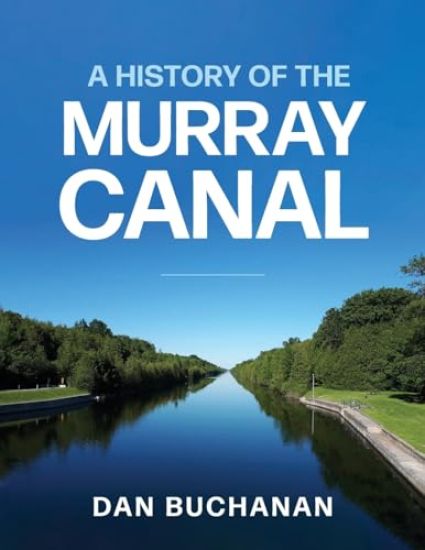
During the 1790s, Upper Canada's first lieutenant governor, John Graves Simcoe, promoted the idea of a canal in the area between the Bay of Quinte and Presqu'ile Bay on Lake Ontario, but his idea did not come into fruition until decades later. Why did it take so long?In A History of the Murray Canal, historian Dan Buchanan provides a detailed account of the building of the Murray Canal and how lobbying and politics combined to finally make it happen in 1889.Industries, farmers, and merchants around the Bay of Quinte all wanted an easier, cheaper path to move products within the region. Mounting pressure from them, supported by their members of Parliament, pushed politicians to finally approve the necessary funding to build a canal. The construction of the Murray Canal began in 1882, with the contract going to a company that had experience with the Welland Canal. Steam-powered dredges dug the canal straight from Twelve O'Clock Point to Presqu'ile Bay, through land that had been expropriated from farmers along the route. When it opened at last, the Murray Canal became an important link in the regional transportation system, a role it continues to play today as part of the Trent-Severn Waterway.Currently the only published historical record of the Murray Canal, A History of the Murray Canal not only chronicles how the canal was built and how it has changed over the years, but also sheds light on the movers and shakers who got the job done.
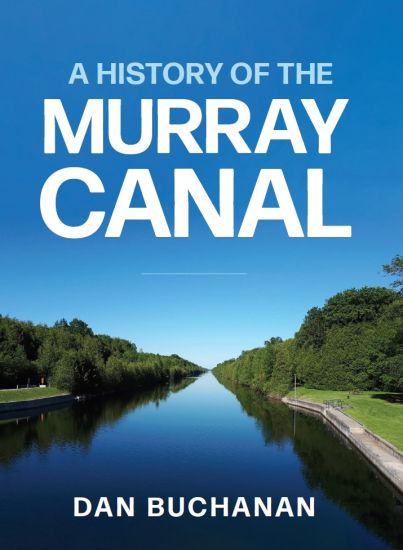
During the 1790s, Upper Canada's first lieutenant governor, John Graves Simcoe, promoted the idea of a canal in the area between the Bay of Quinte and Presqu'ile Bay on Lake Ontario, but his idea did not come into fruition until decades later. Why did it take so long?In A History of the Murray Canal, historian Dan Buchanan provides a detailed account of the building of the Murray Canal and how lobbying and politics combined to finally make it happen in 1889.Industries, farmers, and merchants around the Bay of Quinte all wanted an easier, cheaper path to move products within the region. Mounting pressure from them, supported by their members of Parliament, pushed politicians to finally approve the necessary funding to build a canal. The construction of the Murray Canal began in 1882, with the contract going to a company that had experience with the Welland Canal. Steam-powered dredges dug the canal straight from Twelve O'Clock Point to Presqu'ile Bay, through land that had been expropriated from farmers along the route. When it opened at last, the Murray Canal became an important link in the regional transportation system, a role it continues to play today as part of the Trent-Severn Waterway.Currently the only published historical record of the Murray Canal, A History of the Murray Canal not only chronicles how the canal was built and how it has changed over the years, but also sheds light on the movers and shakers who got the job done.