When Meg was a little girl, Abuela Mar a predicted she would travel to the moon. Now she's an archaeologist digging up Mayan ruins in Belize while trying to keep her own past buried beneath hard work and professional responsibility. It isn't working. The summer of 2022 seems destined to push all of Meg's buttons-her deep-seated aversion to marijuana and guns and the unwanted presence of a boy who reminds her of a certain horrific summer in Mexico. Digging deeper only unearths more questions. And then her husband buys a lottery ticket for the first tourist flight to the moon. What Meg doesn't want to know may yet be her redemption.
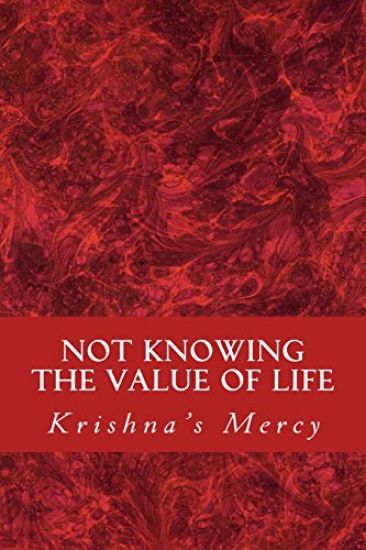
"Why is that your cruel, crooked, blackish and yellowish eyes do not fall to the ground while looking at me, O uncivilized one?" (Sita Devi, Valmiki Ramayana, Sundara Kand, 22.18) "Not Knowing the Value of Life" is a collection of twenty-four essays discussing verses from the Ramayana which deal with Sita's rebuke of Ravana and her hope of again seeing her husband Rama.
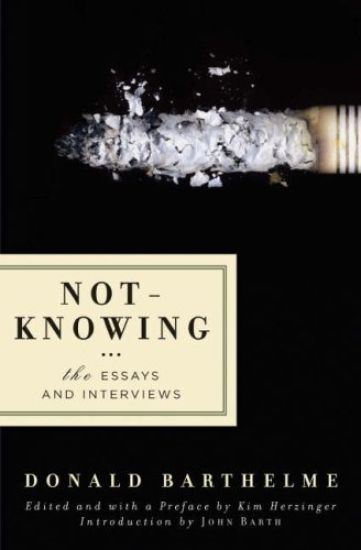
The wildly varied essays in "Not-Knowing" combine to form a posthumous manifesto of one of America s masters of literary experiment. Here are Barthelme s thoughts on writing (his own and others); his observations on art, architecture, film, and city life; interviews, including two previously unpublished; and meditations on everything from "Superman III" to the art of rendering Melancholy Baby on jazz banjolele. This is a rich and eclectic selection of work by the man Robert Coover has called one of the great citizens of contemporary world letters. "
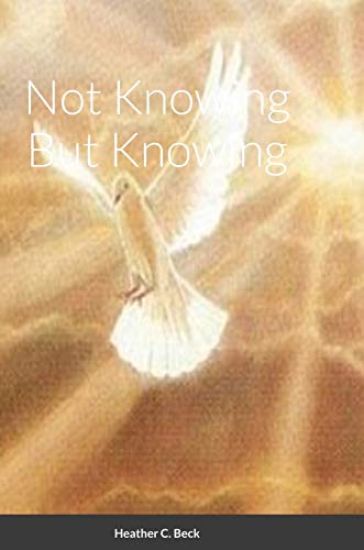
Poetry, the art of words flowing together in a sense that captures your mind. In this book, you will find yourself lost in letters to God, heartache, pain, suffering, love and loss. You will find that many poems sound more like prayers or letters. In the beginning stages of writing, that is exactly what they were before their transformation into what you are about to read, poetry from the heart and soul. You will find darkness and light as you continue to turn each page. Each poem will bring a new meaning, a new message and a new sense of direction for you to unfold.
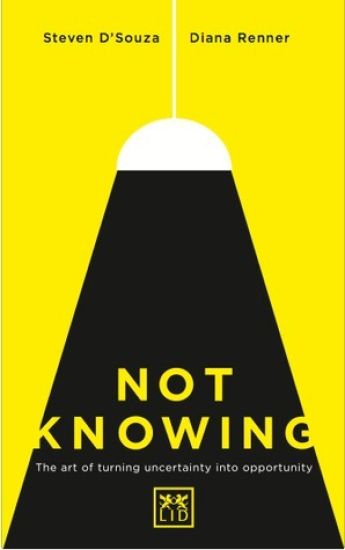
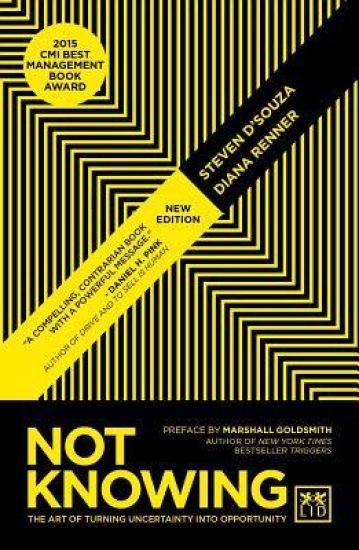
In order to thrive in these worrying times, this fascinating book proposes we head, uncomfortably, towards the unknown, rather than away from it. By developing a unique relationship with Not Knowing we discover a new way of living, working and succeeding in our modern world. This book re-frames the concept of Not Knowing, from being in a fearful place of weakness and ignorance, moving to something we must engage with personally. It introduces us to a new paradigm, where Not Knowing becomes an exciting opportunity, where we are no longer limited by what we already know and our habitual reactions to things that life throws at us, so that deeper knowing can emerge, full of rich possibilities and wisdom. Learn: Why your hard-won knowledge may be holding you back. How to recognise when you are entering your real learning zone. Lessons from people who thrive in the unknown. Powerful ideas that will help you experience joy and possibility, rather than uncertainty and worry.
Knowledge and expertise are highly valued in today's business world. These values are introduced at an early age by our education system, and at work, we are assessed based on what we know, on having the answers and solutions. Our need for certainty, to know what's going on, to have all the answers, exerts strong pressure in our lives. This award-winning book offers an alternative, contrarian approach to dealing with such pressures - and to embrace "not knowing" rather than fearing it. The authors argue it is by "not knowing" that we in fact develop an exploratory mindset, and we discover, engage and create new ways to deal with business and management problems and issues. The book is supported by stories of individuals and the positive change they made in their lives through "not knowing". Solving new problems with old ways of thinking are no longer useful in the new world.
Ethnographers of socio-cultural phenomena routinely face moments in the field that evoke no answers for our interlocutors, or in which answers come in entirely different forms from those anthropologists and other scholars expect. The over-emphasis on structure and meaning in social science, and anthropology in particular, has inhibited the study of a-conceptual “darker” spaces of cultural phenomena. In this book, Diana Espírito Santo and Sergio González Varela explore areas of social life often neglected by traditional ethnographers, analytically described as spaces of negation, of not-knowing, where bodies, environments and realities resist explanation or description, and where there are ultimately no answers – either for interlocutors or researchers. Examining fields as diverse as divination, parapsychology, monsterology, Brazilian capoeira, tattoo artistry, Afrofuturism, Umbanda, ufology, and Cuban Spiritism, they argue that radical uncertainty should propel novel forms of theory.
Ethnographers of socio-cultural phenomena routinely face moments in the field that evoke no answers for our interlocutors, or in which answers come in entirely different forms from those anthropologists and other scholars expect. The over-emphasis on structure and meaning in social science, and anthropology in particular, has inhibited the study of a-conceptual “darker” spaces of cultural phenomena. In this book, Diana Espírito Santo and Sergio González Varela explore areas of social life often neglected by traditional ethnographers, analytically described as spaces of negation, of not-knowing, where bodies, environments and realities resist explanation or description, and where there are ultimately no answers – either for interlocutors or researchers. Examining fields as diverse as divination, parapsychology, monsterology, Brazilian capoeira, tattoo artistry, Afrofuturism, Umbanda, ufology, and Cuban Spiritism, they argue that radical uncertainty should propel novel forms of theory.
A beautifully written suite of personal essays on the value of not knowing. Moments of clarity are rare and fleeting; how can we become comfortable outside of them, in the more general condition of uncertainty within which we make our lives? Written by English professor Emily Ogden while her children were small, On Not Knowing forays into this rich, ambivalent space. Each of her sharply observed essays invites the reader to think with her about questions she can't set aside: not knowing how to give birth, to listen, to hold it together, to love. Unapologetically capacious in her range of reference and idiosyncratic in the canon she draws on, Ogden moves nimbly among the registers of experience, from the operation of a breast pump to the art of herding cattle; from one-night stands to the stories of Edgar Allan Poe; from kayaking near a whale to a psychoanalytic meditation on drowning. Committed to the accumulation of knowledge, Ogden nonetheless finds that knowingness for her can be a way of getting stuck, a way of not really living. Rather than the defensiveness of willful ignorance, On Not Knowing celebrates the defenselessness of not knowing yet-possibly of not knowing ever. Ultimately, this book shows how resisting the temptation of knowingness and embracing the position of not knowing becomes a form of love.
A beautifully written suite of personal essays on the value of not knowing. Moments of clarity are rare and fleeting; how can we become comfortable outside of them, in the more general condition of uncertainty within which we make our lives? Written by English professor Emily Ogden while her children were small, On Not Knowing forays into this rich, ambivalent space. Each of her sharply observed essays invites the reader to think with her about questions she can't set aside: not knowing how to give birth, to listen, to hold it together, to love. Unapologetically capacious in her range of reference and idiosyncratic in the canon she draws on, Ogden moves nimbly among the registers of experience, from the operation of a breast pump to the art of herding cattle; from one-night stands to the stories of Edgar Allan Poe; from kayaking near a whale to a psychoanalytic meditation on drowning. Committed to the accumulation of knowledge, Ogden nonetheless finds that knowingness for her can be a way of getting stuck, a way of not really living. Rather than the defensiveness of willful ignorance, On Not Knowing celebrates the defenselessness of not knowing yet--possibly of not knowing ever. Ultimately, this book shows how resisting the temptation of knowingness and embracing the position of not knowing becomes a form of love.
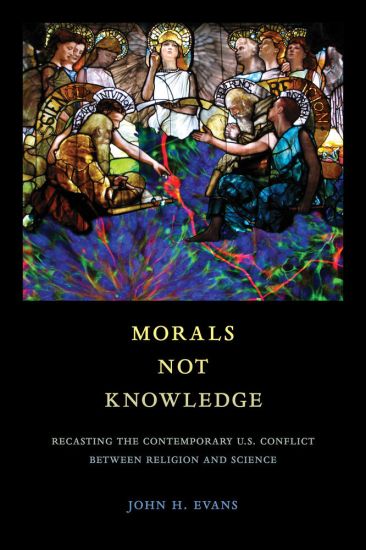
A free ebook version of this title is available through Luminos, University of California Press’s Open Access publishing program for monographs. Visit www.luminosoa.org to learn more. In a time when conservative politicians challenge the irrefutability of scientific findings such as climate change, it is more important than ever to understand the conflict at the heart of the “religion vs. science” debates unfolding in the public sphere. In this groundbreaking work, John H. Evans reveals that, with a few limited exceptions, even the most conservative religious Americans accept science’s ability to make factual claims about the world. However, many religious people take issue with the morality implicitly promoted by some forms of science. Using clear and engaging scholarship, Evans upends the prevailing notion that there is a fundamental conflict over the way that scientists and religious people make claims about nature and argues that only by properly understanding moral conflict between contemporary religion and science will we be able to contribute to a more productive interaction between these two great institutions.
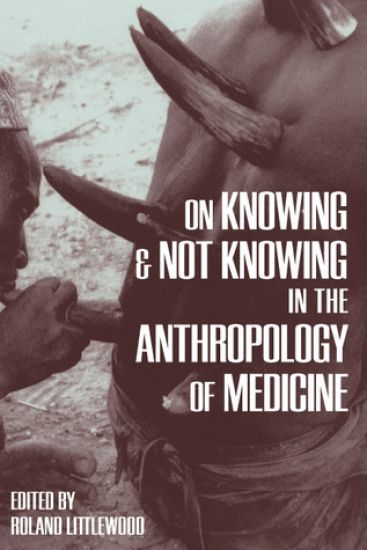
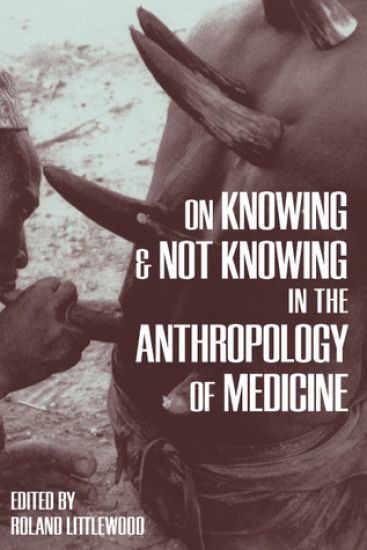
Social scientific studies of medicine typically assume that systems of medical knowledge are uniform and consistent. But while anthropologists have long rejected the notion that cultures are discrete, bounded, and rule-drive entities, medical anthropology has been slower to develop alternative approaches to understanding cultures of health. This provocative volume considers the theoretical, methodological, and ethnographic implications of the fact that medical knowledge is frequently dynamic, incoherent, and contradictory, and that and our understanding of it is necessarily incomplete and partial. In diverse settings from indigenous cultures to Western medical industries, contributors consider such issues as how to define the boundaries of “medical” knowledge versus other kinds of knowledge; how to understand overlapping and shifting medical discourses; the medical profession’s need for anthropologists to produce “explanatory models”; the limits of the Western scientific method and the potential for methodological pluralism; constraints on fieldwork including violence and structural factors limiting access; and the subjectivity and interests of the researcher. On Knowing and Not Knowing in the Anthropology of Medicine will stimulate innovative thinking and productive debate for practitioners, researchers, and students in the social science of health and medicine.
Social scientific studies of medicine typically assume that systems of medical knowledge are uniform and consistent. But while anthropologists have long rejected the notion that cultures are discrete, bounded, and rule-drive entities, medical anthropology has been slower to develop alternative approaches to understanding cultures of health. This provocative volume considers the theoretical, methodological, and ethnographic implications of the fact that medical knowledge is frequently dynamic, incoherent, and contradictory, and that and our understanding of it is necessarily incomplete and partial. In diverse settings from indigenous cultures to Western medical industries, contributors consider such issues as how to define the boundaries of “medical” knowledge versus other kinds of knowledge; how to understand overlapping and shifting medical discourses; the medical profession’s need for anthropologists to produce “explanatory models”; the limits of the Western scientific method and the potential for methodological pluralism; constraints on fieldwork including violence and structural factors limiting access; and the subjectivity and interests of the researcher. On Knowing and Not Knowing in the Anthropology of Medicine will stimulate innovative thinking and productive debate for practitioners, researchers, and students in the social science of health and medicine.