Kirjojen hintavertailu. Mukana 12 016 292 kirjaa ja 12 kauppaa.

Kirjahaku

Etsi kirjoja tekijän nimen, kirjan nimen tai ISBN:n perusteella.

1000 tulosta hakusanalla PAUL LINNET; Sue Hendra

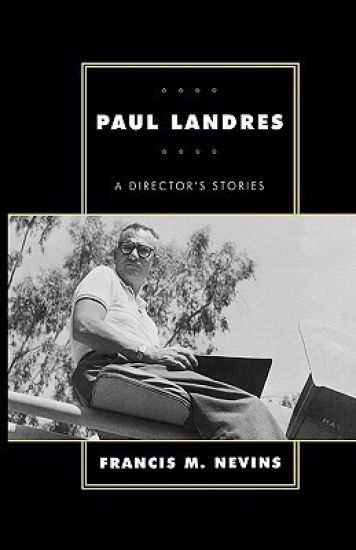
Paul Landres

Paul Landres

Francis M. Nevins

Scarecrow Press
2000
sidottu
If you were first exposed to television as a child in the early 1950s when your parents bought their first set, you probably saw the words "directed by Paul Landres" on the screen several times a week. His name became familiar by sheer repetition on the end credits of episode after episode of what youngsters were watching in those days: The Cisco Kid, Boston Blackie, The Lone Ranger, Sky King, Cowboy G-Men, and Ramar of the Jungle. Francis M. Nevins grew to know Landres' name then, and later in his life when he watched other series directed by him—Westerns including The Rifleman and Bonanza and detective shows like 77 Sunset Strip and Hawaiian Eye. Nevins had the pleasure of later meeting Paul Landres and was able to tap into his memories, insights, and professional knowledge to create this enjoyable biographical account. This book is organized as a sort of prose documentary, with Landres' reminiscences interspersed with Nevin's own narration. Includes photos and a filmography.
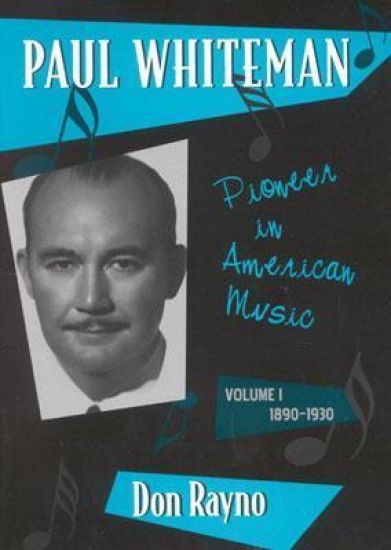
Paul Whiteman

Paul Whiteman

Don Rayno; William H. Youngren

Scarecrow Press
2003
sidottu
When Paul Whiteman, the best-known dance band leader of the flapper age, brought his entourage to town it was a big deal. Mayors met him at the train station and presented him with the key to the city, parades and throngs of cheering crowds escorted him to City Hall, and special luncheons were held in his honor. Eventually dubbed the "King of Jazz," Whiteman grew into one of the biggest promoters of players, singers, and arrangers of all times. Many well-known musicians got their first big boost in his band including Tommy and Jimmy Dorsey, Bing Crosby, Frank Trumbauer, Bix Beiderbecke, Johnny Mercer, Mildred Bailey, and Ferde Grofé. When it came to jazz, Whiteman was a trailblazer. He invented "symphonic jazz" and gave the first performance of Gershwin's Rhapsody in Blue, one of the most enduringly popular of all jazz-influenced musical works of the 20th century. He perfected the one-nighter concert tours, traveling across the country by train, from city to city, with his unique brand of music. He was also the first to employ a special arranger to craft tailor-made charts to fit the Whiteman Orchestra's instrumentation and sound. This is the first of a two-volume set that will serve as the definitive work on the life and music of this legendary jazz leader. Covering the early years from 1890 to 1930, the text will entertain and inform the reader about the exciting life of one of the major influencers of jazz music and also provide a nostalgic glimpse of what life was like during the Roaring Twenties. Features: · Day-by-day chronology 1890-1930 · Comprehensive discography of recordings 1920-1930 · Gallery of Whiteman's band members-alphabetical listing from 1918 to 1930 (includes birth and death dates) · Detailed reference notes with biographical sketches of famous people · Extensive bibliography and index, including index of songs · Nearly 60 rare, black and white photos
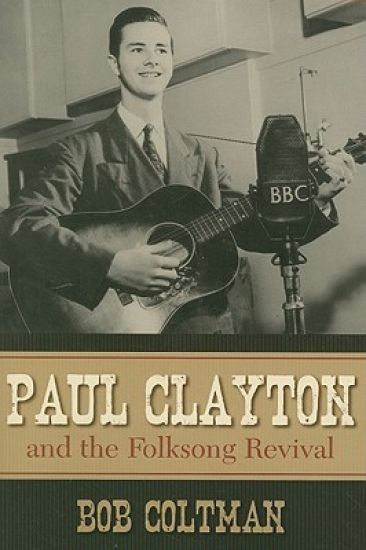
Paul Clayton and the Folksong Revival

Paul Clayton and the Folksong Revival

Bob Coltman

Scarecrow Press
2008
nidottu
A scholar and a balladeer, Paul Clayton (1931-1967) is credited with the Top-Ten hit "Gotta Travel On" and was a key figure in the mid-1950s rise of folksong to media popularity. Clayton single-handedly brought hundreds of obscure folksongs to the mainstream radio and recording market, and he influenced listeners and friends from Dave Van Ronk to Bob Dylan, who considered Clayton a mentor, "mindguard," and well of folksong. Paul Clayton and the Folksong Revival is the first biography of the folk singer and song collector. Using accounts from friends, family, and fellow musicians, author Bob Coltman relates the breadth and depth of Clayton's extraordinary life, from his birth into a singing family and his teenage years as a radio singer and folksong collector, to his establishment in New York as a folk performer and recording artist, to his tragic early suicide. Clayton's recordings are also examined, interspersed with his insights and adventures as a performer and songwriter in the folk world. Gradually, Clayton's achievements become overwhelmed by his disintegration as a drug user, failing musician, and bipolar gay man, culminating in eyewitness accounts relating to his tragic end. Presenting an in-depth look at folk music in the 1950s, Coltman illuminates what it meant to be a working, but not starring, folksinger in this period. With quotes from a number of folksongs, a discographic summary, and a bibliography, this volume brings to life this intelligent, perceptive, and largely unknown scholar-folksinger.
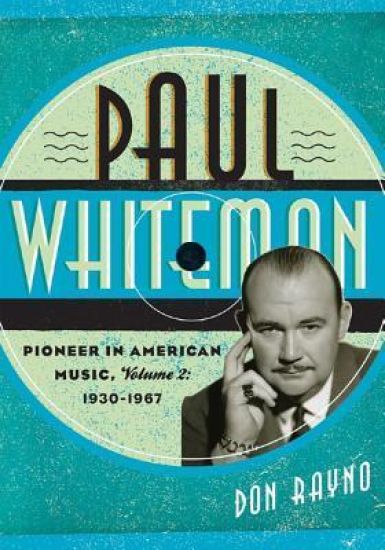
Paul Whiteman

Paul Whiteman

Don Rayno

Scarecrow Press
2012
sidottu
In a career that spanned 60 years, Paul Whiteman changed the landscape of American music, beginning with his million-selling recordings in the early 1920s of “Whispering,” “Japanese Sandman,” and “Three O’Clock in the Morning.” Whiteman would then introduce “symphonic jazz,” a powerful blend of the classical and jazz idioms that represented a whole new approach to modern American music, influencing generations of bandleaders and composers. While some hold that at the close of the Roaring Twenties Whiteman’s musical hegemony quickly waned, Don Rayno illustrates in this second volume of Paul Whiteman: Pioneer in American Music how much of a dominant figure Whiteman remained. A major figure on the American music scene for decades to come, he would continue to lead critically-acclaimed orchestras, filling theaters and concert halls alike and diligently seeking out and nurturing musical talent on the largest scale of any orchestra leader in the 20th century. In this second volume of Rayno’s magisterial treatment of the life and music of this remarkable maestro, Whiteman’s career during the second half of his life is explored in the fullest detail, as Whiteman conquers the worlds of theater and vaudeville, the concert hall, radio, motion pictures, and television, winning accolades in all of them. Through hundreds of interviews, extensive documentation, and exhaustive research of over nearly three decades, a portrait emerges of one of American music’s most important musical figures during the last century. Rayno paints a stunning portrait of Whiteman’s considerable accomplishments and far-reaching influence.
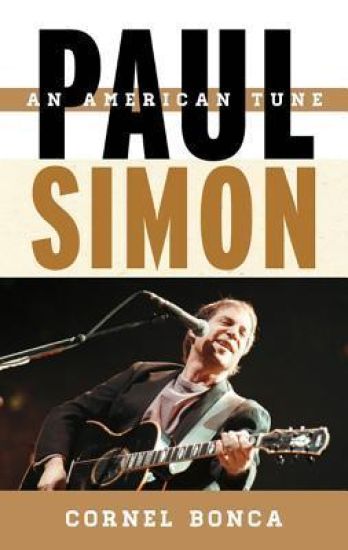
Paul Simon

Paul Simon

Cornel Bonca

Rowman Littlefield Publishers
2014
sidottu
Paul Simon: An American Tune is the first full-scale survey of the career of one of the most honored musicians and songwriters in American history. Starting out as a teeny-bopper rocker in the late 1950s, Paul Simon went on to form the most influential pop duo of the 1960s—Simon & Garfunkel—and after their break-up in 1970, launch one of the most successful, varied, and surprising solo careers of our time. In Paul Simon: An American Tune, Cornel Bonca considers Simon’s vast trove of songs in the biographical and cultural context in which he wrote them: from the pop cultural revolution of the 1960s which Simon himself helped to create, the singer-songwriter movement of the 1970s, the turn toward world music in the 1980s that gave the world the monumental Graceland, to the intimate personal turn his music took in the millennial era. Analyzing Simon’s albums one by one, often song by song, Bonca provides a deep and artful exploration of the work of one of today’s major songwriters. Offering a lucid and vivid portrait of an astonishing decades-long career, Paul Simon: An American Tune will interest a wide audience, from Simon fans to students and scholars of American popular culture.
Paul Simon

Paul Simon

Cornel Bonca

Rowman Littlefield Publishers
2017
nidottu
Paul Simon: An American Tune is the first full-scale survey of the career of one of the most honored musicians and songwriters in American history. Starting out as a teeny-bopper rocker in the late 1950s, Paul Simon went on to form the most influential pop duo of the 1960s—Simon & Garfunkel—and after their break-up in 1970, launch one of the most successful, varied, and surprising solo careers of our time. In Paul Simon: An American Tune, Cornel Bonca considers Simon’s vast trove of songs in the biographical and cultural context in which he wrote them: from the pop cultural revolution of the 1960s which Simon himself helped to create, the singer-songwriter movement of the 1970s, the turn toward world music in the 1980s that gave the world the monumental Graceland, to the intimate personal turn his music took in the millennial era. Analyzing Simon’s albums one by one, often song by song, Bonca provides a deep and artful exploration of the work of one of today’s major songwriters. Offering a lucid and vivid portrait of an astonishing decades-long career, Paul Simon: An American Tune will interest a wide audience, from Simon fans to students and scholars of American popular culture.
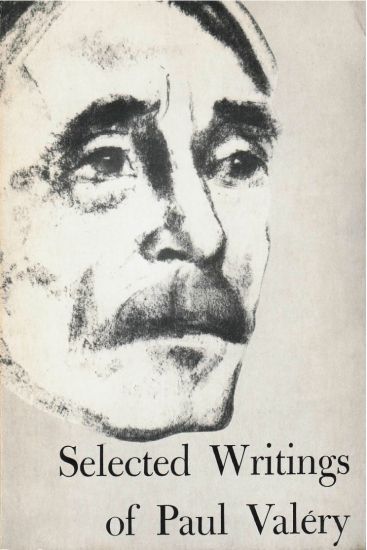
Selected Writings of Paul Valery

Selected Writings of Paul Valery

Paul Valéry

New Directions Publishing Corporation
1986
nidottu
It begins with the poetry (French and English en face), including such masterpieces as "Le Cimetiere Marin" and portions of "La Jeune Parque"; then ranges through Valéry's work in fields as various as architecture, logic, the dance, literature, philosophy, and painting. It concludes with excerpts from his creative writings such as Monsieur Teste and the drama Mon Faust. The list of translators for this volume is distinguished. Among them are Lionel Abel, Léonie Adams, Malcolm Cowly, James Kirkup, C. Day Lewis, Jackson Mathews, Louise Varese, and Vernon Watkins.
Paul Celan and the Trans-Tibetan Angel

Paul Celan and the Trans-Tibetan Angel

Yoko Tawada

NEW DIRECTIONS PUBLISHING CORPORATION
2024
nidottu
Patrik, who sometimes calls himself "the patient," is a literary researcher living in present-day Berlin. The city is just coming back to life after lockdown, and his beloved opera houses are open again, but Patrik cannot leave the house and hardly manages to get out of bed. When he shaves his head, his girlfriend scolds him, "What have you done to your head? I don't want to be with a prisoner from a concentration camp " He is supposed to give a paper at a conference in Paris, on the poetry collection Threadsuns by Paul Celan, but he can't manage to get past the first question on the registration form: "What is your nationality?" Then at a caf (or in the memory of being at a caf ?), he meets a mysterious stranger. The man's name is Leo-Eric Fu, and somehow he already knows Patrik...In the spirit of imaginative homage like Roberto Bola o's Monsieur Pain, Antonio Tabucchi's Requiem, and Thomas Bernhard's Wittgenstein's Nephew, Yoko Tawada's mesmerizing new novel unfolds like a lucid dream in which friendship, conversation, reading, poetry, and music are the connecting threads that bind us together.
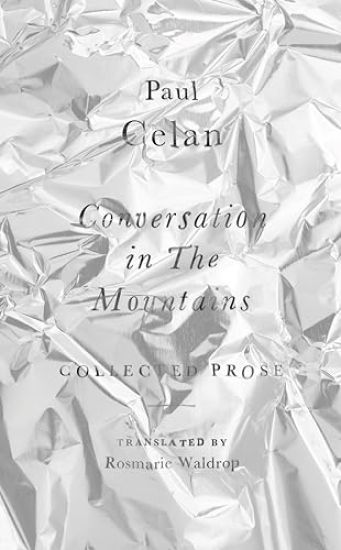
Conversation in the Mountains: Collected Prose of Paul Celan

Conversation in the Mountains: Collected Prose of Paul Celan

Paul Celan

NEW DIRECTIONS PUBLISHING CORPORATION
2026
nidottu
"I am supposed to tell you some of the words I heard deep down in the sea where there is much silence and so much happens." So begins the first text in this indispensable volume, which includes: "Edgar Jen and the Dream about the Dream," "Backlight," "The Meridian," and the piece which Celan himself deemed his most important, "Conversation in the Mountains." George Steiner wrote in The New Yorker that Celan's prose was "transforming the landscape of poetic theory and of the philosophy of language." This collection of essays, speeches, letters, as well as notes on Alexander Blok and Osip Mandelstam is a great gift to readers and to anyone who wishes to understand the twentieth century. As the philosopher Hans-Georg Gadamer wrote, "Paul Celan's poems reach us, but we miss them." Perhaps through these rare prose texts we may find the key to what we missed.
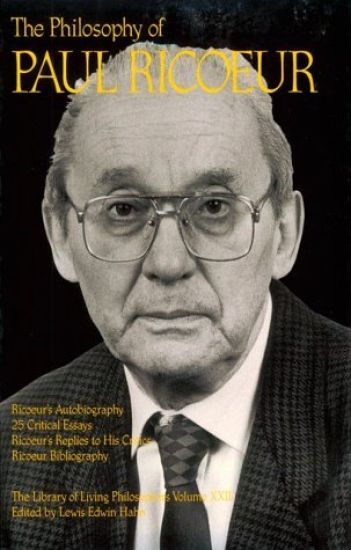
The Philosophy of Paul Ricoeur, Volume 22

The Philosophy of Paul Ricoeur, Volume 22

Paul Ricoeur; Lewis Edwin Hahn

Open Court Publishing Co ,U.S.
1998
pokkari
Paul Ricoeur is widely regarded as the foremost living phenomenologist. His writings cover a wide range of topics, from the history of philosophy, literary criticism and aesthetics, to metaphysics, ethics, religion, semiotics, linguistic structuralism, the humanistic sciences, psychoanalysis, Marxism, guilt and evil, and conflicts of interpretation. In similar format to the preceding 21 volumes of the "Library of Living Philosophers", this book contains Ricoeur's intellectual autobiography, critical essays by 25 leading philosophers, and Ricoeur's replies to these criticisms.
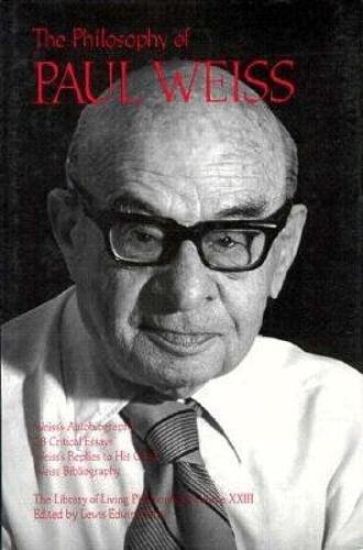
The Philosophy of Paul Weiss, Volume 23

The Philosophy of Paul Weiss, Volume 23

Paul Weiss; Lewis Edwin Hahn

Open Court Publishing Co ,U.S.
1999
sidottu
Born in 1901, Paul Weiss has made major contributions to several branches of philosophy, as well as to teaching and scholarly publishing. Alfred North Whitehead remarked: "The danger of philosophical teaching is that it may become dead-alive, but in Paul Weiss's presence that is impossible". Weiss is widely believed to be America's greatest living speculative metaphysician, but he has also made notable philosophical contributions to the discussion of sports, the arts, religion, logic, and politics. Professor Weiss has been highly productive: his Being and Other Realities (1995) was hailed as one of his most exciting books, and as this volume goes to press he is hard at work on yet another major treatise.
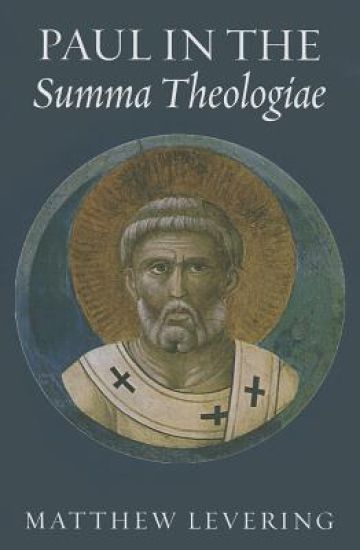
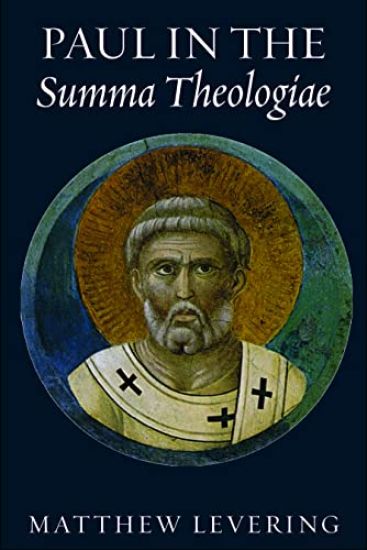
Paul in the Summa Theologiae

Paul in the Summa Theologiae

Matthew Levering

The Catholic University of America Press
2014
nidottu
Aquinas’s commentaries on St. Paul are well known and have received significant attention in the past few years. It is widely known, too, that Aquinas quotes Paul often in the Summa Theologiae. This aspect of the Summa, however, has not been studied in detail. This book seeks to fill that lacuna in scholarship.The book’s brief introduction treats Aquinas as a biblically erudite theologian, and offers some basic statistical data regarding his use of Paul in the Summa Theologiae. The book’s nine chapters track in detail Aquinas’s use of Pauline quotations in his theological argumentation. The first six chapters examine Paul in particular “treatises:” the triune God, grace, charity, the virtue of religion, the Passion of Christ, and baptism. The last three chapters investigate Pauline texts as they are used throughout the Summa: Romans 1:20, 1 Corinthians 13, and Philippians 2:5–11. Chapters 1–3 are organised by the order of the treatise; chapters 4–6 are organised by order of the Pauline letters. This multifaceted procedure provides a rich, detailed picture of Aquinas’s use of Paul in the Summa.The guiding question is whether, and if so how, we can describe Aquinas’s theology as Pauline or as deeply influenced by Paul. Aquinas does not seek to understand Paul’s theology in its Second Temple context, and Aquinas often uses Pauline texts in a way that takes them out of context or that uses them in response to a theological problem unknown to Paul. Levering argues that Aquinas’s theology is indeed deeply Pauline, offering ample evidence that Aquinas captures the central Pauline themes and gives them a central place in his own theology.
Paul in the Summa Theologiae

Paul in the Summa Theologiae

Matthew Levering

THE CATHOLIC UNIVERSITY OF AMERICA PRESS
2025
nidottu
Aquinas's commentaries on St. Paul are well known and have received significant attention in the past few years. It is widely known, too, that Aquinas quotes Paul often in the Summa theologiae. This aspect of the Summa, however, has not been studied in detail. This book seeks to fill that lacuna in scholarship. The book's brief introduction treats Aquinas as a biblically erudite theologian, and offers some basic statistical data regarding his use of Paul in the Summa theologiae. The book's nine chapters track in detail Aquinas's use of Pauline quotations in his theological argumentation. The first six chapters examine Paul in particular ""treatises:"" the triune God, grace, charity, the virtue of religion, the Passion of Christ, and baptism. The last three chapters investigate Pauline texts as they are used throughout the Summa: Romans 1:20, 1 Corinthians 13, and Philippians 2:5–11. Chapters 1–3 are organized by the order of the treatise; chapters 4–6 are organized by order of the Pauline letters. This multi- faceted procedure provides a rich, detailed picture of Aquinas's use of Paul in the Summa. The guiding question is whether, and if so how, we can describe Aquinas's theology as Pauline or as deeply influenced by Paul. Aquinas does not seek to understand Paul's theology in its Second Temple context, and Aquinas often uses Pauline texts in a way that takes them out of context or that uses them in response to a theological problem unknown to Paul. Levering argues that Aquinas's theology is indeed deeply Pauline, offering ample evidence that Aquinas captures the central Pauline themes and gives them a central place in his own theology.
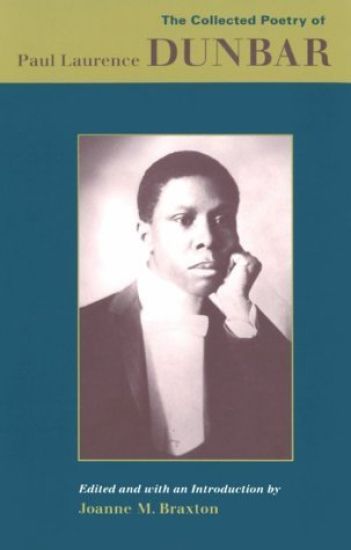
The Collected Poetry of Paul Laurence Dunbar

The Collected Poetry of Paul Laurence Dunbar

Paul Laurence Dunbar

University of Virginia Press
1993
nidottu
This edition of the collected poems of Paul Laurence Dunbar includes 60 poems not included in the previous - and now out of print - ""Complete Poems"". 16 of these were found in manuscript form. Paul Laurence Dunbar's work achieved wide recognition in the first part of this century. The author of six volumes of poetry, as well as novels, liberettos, songs and essays, he was nationally known and accepted by black and white readers alike. The poet's influence has been far-reaching, and reaction to him, at times, controversial. In addition to creating musical renditions of black folk language, both comic and serious, he wrote lyrical poetry in standard English verse, inspired by Shakespeare, Shelley, Keats, Tennyson and the American romantics. Critics in Dunbar's day, however, led by William Dean Howells, noted only his comic dialect poetry, dismissing the standard English poetry and ignoring the subtlety and depth of the dialect work. Disagreements about the significance and meaning of Dunbar's poetry have continued through succeeding generations.
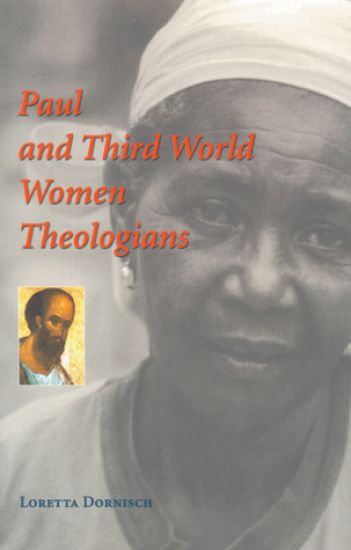
Paul and Third World Women Theologians

Paul and Third World Women Theologians

Loretta C. Dornisch

Liturgical Press
1999
pokkari
For many people Paul is seen as anti-woman and male-dominating, mired in images and concepts from ancient worlds people cannot relate to. Yet, why have his letters endured? Why do women in Guatemala, Nigeria, or Korea find a resonance in their experience today? Why has Paul continued to be a major resource for people wanting to live a deeply Christian life? Loretta Dornisch explores these questions by examining Paul's letters in Paul and Third World Women Theologians.In Paul and Third World Women Theologians Dornisch explores the themes of liberation and justice against a background of oppressing and oppressed people, whether in the first century or in the twenty-first. She pays particular attention to Third World women theologians who are emerging as voices calling for a new consciousness. These women speak for the many voiceless Third World women who are often treated as less than human and whose oppression can no longer be tolerated.To make these texts woman-, user-, and liberation-friendly, Dornisch examines Paul's letters from different perspectives. First, she explores these texts as if they were written by a woman, Paula, instead of Paul. Dornisch hypothesizes Paula as a co-worker, co-writer, co-thinker with Paul. She stresses that this idea is not contradictory to the texts since Paul refers to at least three women as co-workers" (Rom 16:3; Phil 4:3). The second point of view introduced by Dornisch is that of various women named by Paul whether as co-worker or heads of households, or even as deacon or apostle. Dornisch's third perspective is that of imagined women of the first century with various cultural and traditional world views. Her fourth perspective is that of women today, from whatever continent, who are struggling to create life for themselves and others. Dornisch invites readers to interact with each of these perspectives in order to renew life for Christians today.Pal and Third World Women Theologians is divided into four sections. Part one covers the people of Thessalonica in northern Greece. Part two explores developments associated with the people of Corinth, a major city for the growth of Christianity. Part three contains themes connected with the people of Philippi and Galatia, now known as Asia Minor. Part four looks at major theological developments associated with a letter to the people of Rome.Loretta Dornisch, OP, PhD, is Professor of Religious Studies at Edgewood College, Madison, Wisconsin. She has written articles bridging interpretation and Scripture, and is the author of Adwoman Reads the Gospel of Luke published by The Liturgical Press."
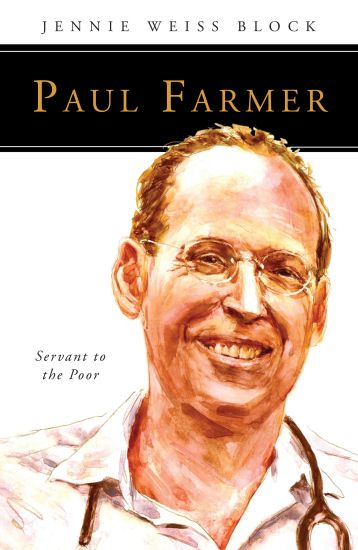
Paul Farmer

Paul Farmer

Jennie Weiss Block

Liturgical Press
2018
pokkari
Bill Gates has called Paul Farmer one of the most amazing people he has ever met. CNN medical correspondent Dr. Sanjay Gupta says that “if pure altruism exists in humans, it probably looks a lot like Dr. Paul Farmer."In Paul Farmer, Servant to the Poor, Jennie Weiss Block introduces readers to this physician and medical anthropologist of international stature whose Catholic faith has driven him to work untiringly to make a preferential option for the poor in health care. Farmer, with his colleagues at Harvard University and Partners in Health, have been instrumental in bringing the fruits of modern medicine to millions of the poorest people in the world, in places like Haiti, Rwanda, Peru, Russia, Malawi, and West Africa during the recent Ebola crisis. Challenging the conventional wisdom of global health experts, Dr. Farmer has shown it is possible to deliver high-quality medical care on a large scale in settings of great poverty and to build communities around the globe where good health and hope prevail.
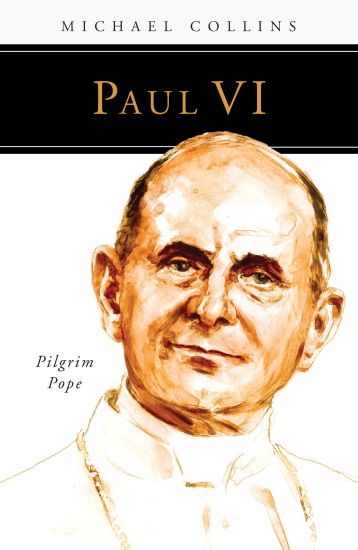
Paul VI

Paul VI

Michael Collins

Liturgical Press
2018
pokkari
Pope Paul VI (1963-78) was one of the most important and influential pontiffs of the twentieth century. In this engaging biography, Michael Collins examines this deeply spiritual man who is remembered as a reformer, evangelizer, and pilgrim. Pope Paul’s pontificate was marked by an unprecedented series of international journeys, establishing a practice that his successors developed even further. These brought him face-to-face with modern life throughout the globe and the challenge of making the Christian message relevant in a secular world. Paul VI is regarded for his efforts to reduce poverty in the developing world, bolster the church’s rejection of artificial birth control, and foster better relations between Catholics and Orthodox and Reformed Christians. He was beatified in 2014 by Pope Francis.
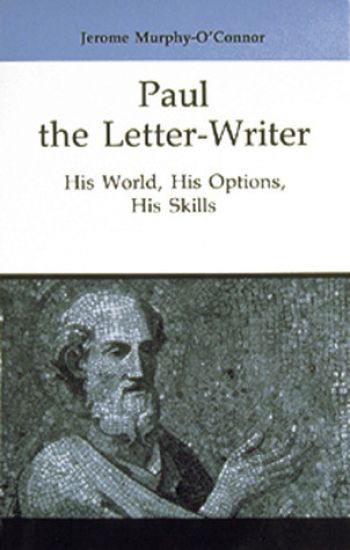
Paul the Letter-Writer

Paul the Letter-Writer

Jerome Murphy-O?Connor

Liturgical Press
1994
pokkari
Paul's letters are intensely human documents. In the examination of such basic human questions as What did he write the letters with?" "Did he use a secretary to record them?" and "What was his personal writing style?" much real information can be gathered regarding his thought without intimidating the average reader. Scholar Jerome Murphy-O'Connor has put together such a work, one that, tapping into his knowledge of classical Greek and Latin writings, addresses the physical nature of a first-century letter as well as the actual composition, presentation, and question of authorship collaborative or other of the Pauline letters. The formal features of the letters and their organization show the extent to which Paul adapted current epistolary conventions. At the same time, they draw attention to his mood while writing and his relationship with the recipients. Father Murphy-O'Connor also investigates the question of how these letters, written to widely scattered churches, were brought together to form the Pauline canon. Jerome Murphy-O'Connor, OP (1935-2013), was a professor of New Testament at the famous École Biblique in Jerusalem since 1967. A frequent lecturer in summer sessions in the United States, he had written widely on Paul's life and theology. In addition to his 1 Corinthians and Becoming Human Together: The Pastoral Anthropology of St.Paul, The Liturgical Press has published his St. Paul's Corinth: Texts and Archaeology, which does for Corinth what this book does for the Pauline letters: reveal their character.