Kirjojen hintavertailu. Mukana 12 083 983 kirjaa ja 12 kauppaa.

Kirjahaku

Etsi kirjoja tekijän nimen, kirjan nimen tai ISBN:n perusteella.

1000 tulosta hakusanalla Pamela Gradon

Speaking Clearly Teacher's book

Speaking Clearly Teacher's book

Pamela Rogerson; Judy B. Gilbert

Cambridge University Press
1990
pokkari
Speaking Clearly aims to help intermediate and advanced learners of English overcome problems of understanding and being understood by other speakers of English. Speaking Clearly: • Integrates pronunciation and listening • Provides systematic ear-training and practice from individual words and sounds to longer stretches of speech • Contains diagnostic tests • Explains phonological features in clear, non-technical terms
The Reformation in Germany and Switzerland

The Reformation in Germany and Switzerland

Pamela Johnston; Bob W. Scribner

Cambridge University Press
1993
pokkari
The Reformation in Germany and Switzerland is a collection of documents for A-level students and undergraduates and forms part of the series, Cambridge Topics in History. It combines new interpretations which emphasise the importance of popular response, belief and practice with the traditional approach to the origins and progress of the Reformation in Germany and Switzerland. Avoiding a Luther-centred view, it gives equal attention to other important figures as well as the political dimensions of the Reformation and elements of social protest. For the first time in any collection of documents, it focuses on the longer-term success or failure of the implementation of the Reformation aand includes many original documents translated here for the first time from previously unpublished archival sources.
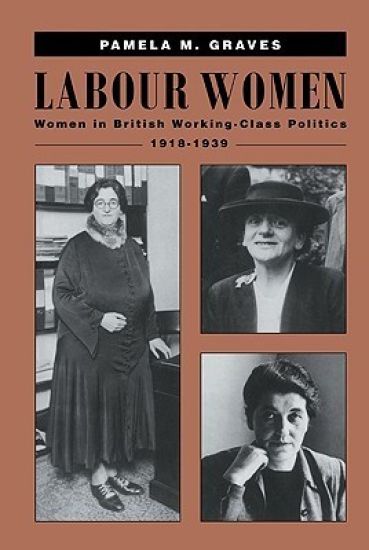
Labour Women

Labour Women

Pamela M. Graves

Cambridge University Press
1994
sidottu
After winning the vote in 1918, many thousands of working class women joined the Labour Party and Co-operative Movement. This book is about their struggle to find a place in the male world of organised labour politics. In the twenties, labour women challenged male leaders to give them equal status and support for their reform programmes, but the ideas were rejected. For most labour women, dedication to the class cause far outweighed their desire for power, and the struggle for 'women-power' was abandoned. Consequently, despite the common reform agendas of labour women and the middle class feminists of the era, a working alliance was never achieved. Labour Women uses oral and questionnaire testimony to draw a portrait of grass-roots activists. It contrasts labour women's failure to win power in the national organisations with their great achievements in community politics, poor law administration and municipal government.
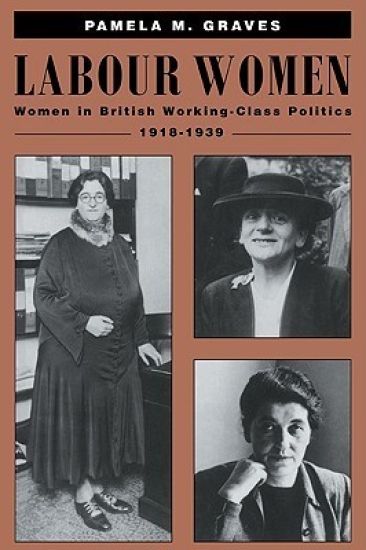
Labour Women

Labour Women

Pamela M. Graves

Cambridge University Press
1994
pokkari
After winning the vote in 1918, many thousands of working class women joined the Labour Party and Co-operative Movement. This book is about their struggle to find a place in the male world of organised labour politics. In the twenties, labour women challenged male leaders to give them equal status and support for their reform programmes, but the ideas were rejected. For most labour women, dedication to the class cause far outweighed their desire for power, and the struggle for ‘women-power’ was abandoned. Consequently, despite the common reform agendas of labour women and the middle class feminists of the era, a working alliance was never achieved. Labour Women uses oral and questionnaire testimony to draw a portrait of grass-roots activists. It contrasts labour women's failure to win power in the national organisations with their great achievements in community politics, poor law administration and municipal government.
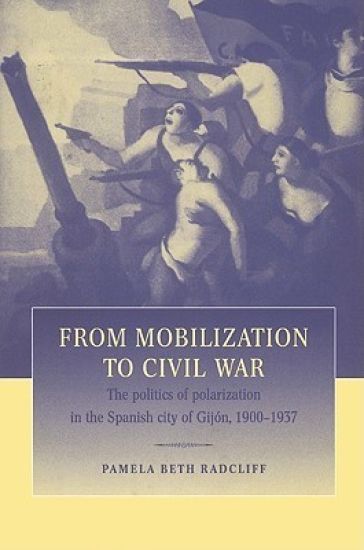
From Mobilization to Civil War

From Mobilization to Civil War

Pamela Beth Radcliff

Cambridge University Press
2002
pokkari
This is a social history of political polarisation as it evolved in one city over three and a half decades before the Spanish Civil War. As such it is a book about the long-term origins of the War as seen ‘from below’. More broadly it is an analysis of the evolution of political culture during the transition from elite to mass politics. The book focuses on the interplay between the three main forces that competed for political control: the conservative monarchist/Catholics, the democratic republicans, and the revolutionary trade movement. It is different from other Civil War studies, in trying to understand the relationship between organised political forces and the ‘masses’ they sought to reach. In doing so it reveals a rich canvas of participants and activities, from trade unions and strikes to female consumer riots.
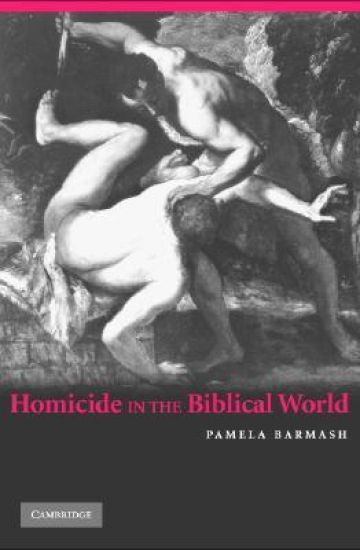
Homicide in the Biblical World

Homicide in the Biblical World

Pamela Barmash

Cambridge University Press
2004
pokkari
Homicide in the Biblical World analyses the treatment of homicide in the Hebrew Bible and demonstrates that it is directly linked to the unique social structure and religion of ancient Israel. Close parallels between biblical law and ancient Near Eastern law are evident in the laws of the ox that gored and the pregnant woman who is assaulted, but, when the total picture of the process by which homicide was adjudicated comes into view, what is most noticeable is how little of it is similar to ancient Near Eastern law. This book reconstructs biblical law from both legal texts and narrative texts and analyses both the law collections and documents from actual legal cases from the ancient Near East.
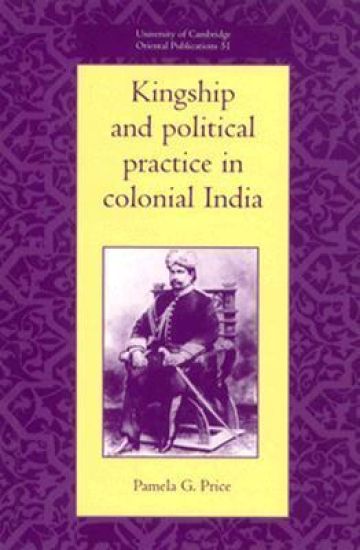
Kingship and Political Practice in Colonial India

Kingship and Political Practice in Colonial India

Pamela G. Price

Cambridge University Press
1996
sidottu
In a cultural history which considers the transformation of south Indian institutions under British colonial rule in the nineteenth century, Pamela Price focuses on the two former ‘little kingdoms’ of Ramnad and Sivaganga which came under colonial governance as revenue estates. She demonstrates how rivalries among the royal families and major zamindari temples, and the disintegration of indigenous institutions of rule, contributed to the development of nationalism and identity amongst the people of southern Tamil country. The author also shows how religious symbols and practices going back to the seventeenth century were reformulated and acquired a new significance in the colonial context. Arguing for a reappraisal of the relationship of Hinduism to politics, Price finds that these symbols and practices continue to inform popular expectation of political leadership today.
Children's Work and Welfare 1780–1890

Children's Work and Welfare 1780–1890

Pamela Horn

Cambridge University Press
1995
sidottu
This short book provides a succinct account of changes in children's work and welfare in Britain between 1780 and 1890. It examines both the scale and the nature of child employment and the changing attitude of society towards it at a time when Britain was becoming the 'workshop of the world'. The further development of industry in the second half of the nineteenth century meant that the need for juvenile workers declined. At the same time the efforts of philanthropists and the State led to legal curbs on the kinds of jobs children could perform and the minimum age at which they could commence them. The author concludes that the century after 1780 saw a progressive lengthening of childhood as a stage of life, and that by 1890 children had been recognised as 'special cases' in need of protective legislation. However, for the poorest and most disadvantaged families life remained a struggle, and children continued to pick up a living where they could.
Children's Work and Welfare 1780–1890

Children's Work and Welfare 1780–1890

Pamela Horn

Cambridge University Press
1995
pokkari
This short book provides a succinct account of changes in children’s work and welfare in Britain between 1780 and 1890. It examines both the scale and the nature of child employment and the changing attitude of society towards it at a time when Britain was becoming the ‘workshop of the world’. The further development of industry in the second half of the nineteenth century meant that the need for juvenile workers declined. At the same time the efforts of philanthropists and the State led to legal curbs on the kinds of jobs children could perform and the minimum age at which they could commence them. The author concludes that the century after 1780 saw a progressive lengthening of childhood as a stage of life, and that by 1890 children had been recognised as ‘special cases’ in need of protective legislation. However, for the poorest and most disadvantaged families life remained a struggle, and children continued to pick up a living where they could.
From Mobilization to Civil War

From Mobilization to Civil War

Pamela Beth Radcliff

Cambridge University Press
1997
sidottu
This is a social history of political polarisation as it evolved in one city over three and a half decades before the Spanish Civil War. As such it is a book about the long-term origins of the War as seen ‘from below’. More broadly it is an analysis of the evolution of political culture during the transition from elite to mass politics. The book focuses on the interplay between the three main forces that competed for political control: the conservative monarchist/Catholics, the democratic republicans, and the revolutionary trade movement. It is different from other Civil War studies, in trying to understand the relationship between organised political forces and the ‘masses’ they sought to reach. In doing so it reveals a rich canvas of participants and activities, from trade unions and strikes to female consumer riots.
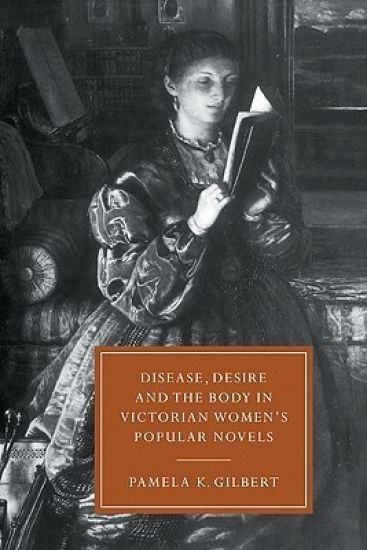
Disease, Desire, and the Body in Victorian Women's Popular Novels

Disease, Desire, and the Body in Victorian Women's Popular Novels

Pamela K. Gilbert

Cambridge University Press
1997
sidottu
Popular fiction in mid-Victorian Britain was regarded as both feminine and diseased. Critical articles of the time on fiction and on the body and disease offer convincing evidence that reading was metaphorically allied with eating, contagion, and sex. Anxious critics traced the infection of the imperial, healthy body of masculine elite culture by ‘diseased’ popular fiction, especially novels by women. This book discusses works by three novelists - M. E. Braddon, Rhoda Broughton, and ‘Ouida’ - within this historical context. In each case, the comparison of an early, ‘sensation’ novel against a later work shows how generic categorization worked in the context of social concerns to contain anxiety and limit interpretive possibilities. Within the texts themselves, references to contemporary critical and medical literatures resist or exploit mid-Victorian concepts of health, nationality, class, and the body.
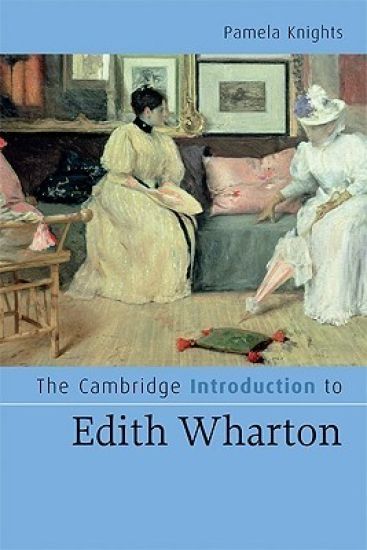
The Cambridge Introduction to Edith Wharton

The Cambridge Introduction to Edith Wharton

Pamela Knights

Cambridge University Press
2009
pokkari
Born in New York into a world of wealth and privilege, and writing with unique insight into the lives of the rich and fashionable, Edith Wharton was a best-seller in her time, and is now, again, one of the most widely read American authors. This book provides an accessible and stimulating introduction to Wharton's life and writings, to help map her work for new readers, and to encourage more detailed exploration of her texts and contexts. Suggesting a range of perspectives on her most famous novels - The House of Mirth (1905), Ethan Frome (1911), The Custom of the Country (1913) and The Age of Innocence (1920) - it stimulates fresh lines of inquiry, examining these alongside other writings that are now attracting lively critical interest. With its clear structure, illustrations, and guide to further study, this book will form the ideal starting-point for students and for general readers.
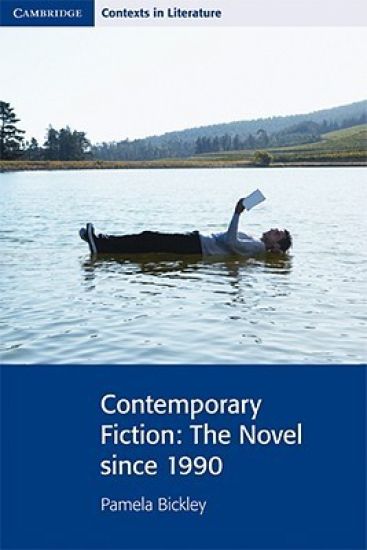
Contemporary Fiction

Contemporary Fiction

Pamela Bickley

Cambridge University Press
2008
pokkari
Critical introductions to a range of literary topics and genres. Following a period when the decline of the novel was widely discussed, fiction has emerged as a vibrant and innovative genre, exploring the diversity of the contemporary world and, frequently, experimenting with form and language. Contemporary Fiction introduces students to the major and recurrent preoccupations of the post-1990 novel; it identifies some of the chief characteristics of the genre, and offers ways in which contemporary writing can be analysed and discussed. Texts are placed in their cultural contexts and are often discussed in the light of related works.
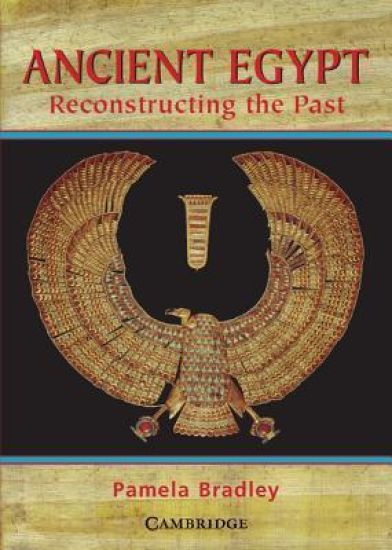
Ancient Egypt

Ancient Egypt

Pamela Bradley

Cambridge University Press
2004
pokkari
For senior secondary students studying Ancient History. Particularly suitable for the new NSW HSC Ancient History syllabus, with extensive coverage of the personalities listed for the new Core Study. Text divided into four parts which cover the political, social, economic and religious developments and changes that occurred from the early Dynastic Period to the death of Ramessess II. Special focus on: The achievement of particular pharaohs, including: Hatshepsut, Akkhenaten, Ramessess II; The impact of other significant individuals and groups; social life, funerary beliefs and practices during the Old, Middle and New Kingdoms. Provides a vast range of primary and secondary source material, without loosing sight of the historical narrative.
Ancient Rome

Ancient Rome

Pamela Bradley

Cambridge University Press
2000
pokkari
This text presents a detailed coverage of three crucial centuries in the history of the Roman people: the second and first centuries BC and the first century AD. It examines major issues including the development of the Roman republican form of government, Rome's expansion in the Mediterranean, the decline of the republic, the founding of the principate and the Julio-Claudian period. The introductory chapters will familiarise students with the source material and give them an understanding of those events and influences which played a large part in moulding the character of the Romans and the nature of their institutions. These chapters are essential reading for any student who wishes to understand clearly the complicated political history of the second and first centuries BC. The ancient sources and archaeological material serve both to describe events and to allow students to evaluate and interpret historical documents and pictorial evidence. Throughout the text exercises enable students to recognise differing interpretations, distinguish between fact and opinion and discern bias.