
Kirjahaku
Etsi kirjoja tekijän nimen, kirjan nimen tai ISBN:n perusteella.
1000 tulosta hakusanalla Paul Durand-Ruel
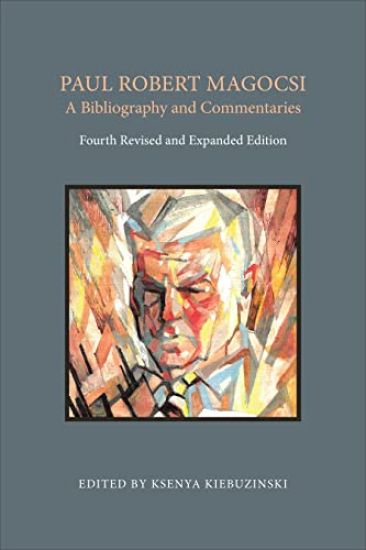
Paul Robert Magocsi
UNIVERSITY OF TORONTO PRESS
2021
sidottu
Paul Robert Magocsi: A Bibliography and Commentaries provides an introduction to the scholarly career of the world renowned Canadian academic. It includes a complete list of his 876 publications (books, articles, chapters, brochures, etc.) in the fields of history, sociolinguistics, ethnic studies, bibliography, and cartography that have appeared in 21 languages from 1964 through 2020. Also included are references to the 844 reviews of many of those publications as well as a separate bibliographical list of 80 works (books, articles, and encyclopedic entries) about Professor Magocsi. The fourth revised and expanded edition includes a bibliographic update since the last edition in 2011 as well as an entirely new 110-page section, Commentaries in Periodicals and the Media, about Professor Magocsi as a public advocate and the impact of his writings on fellow scholars and on political and social developments, particularly in central and eastern Europe since the collapse of Communist rule in 1989. Appended are comprehensive subject and personal indexes.
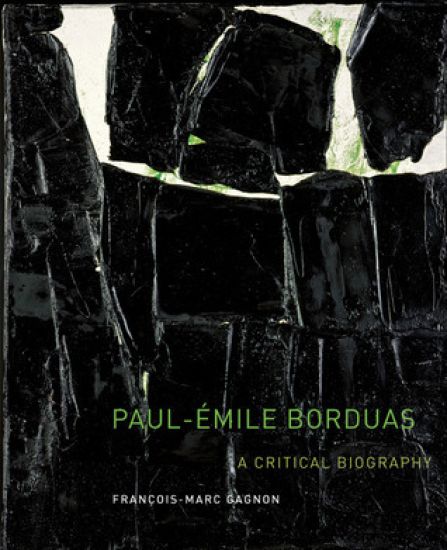
From his beginnings as a rural church decorator, to his role as catalyst of the social and artistic manifesto the Refus global, to a career as Canada's pre-eminent practitioner of radical abstraction abroad, Paul-Emile Borduas's short life encompassed the reversals and contradictions of the modern condition. Drawing on a lifetime of published research, Francois-Marc Gagnon's comprehensive biography is a far-reaching exploration of a Quebec cultural figure renowned for both his art and his thought. Gagnon details each period of Borduas's dynamic career - his apprenticeship with Ozias Leduc, his teaching in Montreal and the role within the Automatiste group, his move to New York at the height of the Abstract Expressionist movement, and then, against the current of the times, to Paris, where he created the iconic images of his "cosmic" period. Borduas's relentless search for an authentic art often put him at odds with his surroundings. As an avant-garde artist in a Montreal art world bound by tradition, his most important work had to be exhibited in makeshift venues; as a surrealist-influenced francophone in New York, he recognized the importance of the major figures of Abstract Expressionism but maintained an independent style and method. A full appreciation of Borduas's radical stance - an artistic and intellectual orientation that was always towards the universal - transforms a Canadian cultural landscape where the narrative of artistic modernism centres on figurative landscape art. An original and rigorously researched work, Paul-Emile Borduas: A Critical Biography provides an English-language readership with a much-needed understanding of a seminal modernist, an exemplary figure in Canadian art, and the origins of modern art in North America.
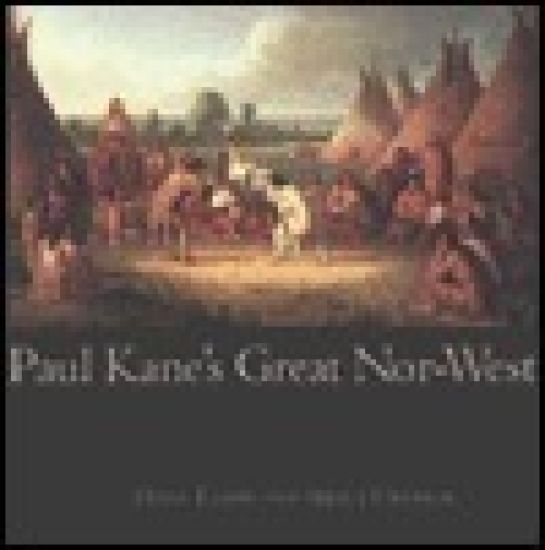
In this beautifully designed and richly illustrated book, Diane Eaton and Sheila Urbanek re-create Paul Kane's heroic journey across Canada and bring to life the people, places, and events he experienced. Determined to document the lives and customs of the Indians of the Northwest, Paul Kane set out in 1845 to cross the continent "with no companions but my portfolio and a box of paints, my gun and a stock of ammunition."Travelling via the Hudson's Bay Company fur brigade routes, he made his way from the Great Lakes to the Pacific coast and back again. When he returned to Toronto in the fall of 1848, he brought back some 500 field sketches as well as a remarkable collection of Indian "curiosities," which he used as raw material for one hundred oil paintings depicting scenes of Indian life.While the carefully executed oil paintings are deliberately romanticized images of the west, the original field sketches convey Kane's immediate impressions and offer tantalizing glimpses of what he describes as the "wild scenes amongst which I strayed almost alone." A fascinating complement to the sketches is contained in a small diary Kane kept while on his journey – brief and plainspoken, these entries were jotted down in his own idiosyncratic spelling and punctuation.Illustrated with a wide selection of the field sketches as well as his better-known oil paintings, this book reintroduces this remarkable artist to a modern audience.
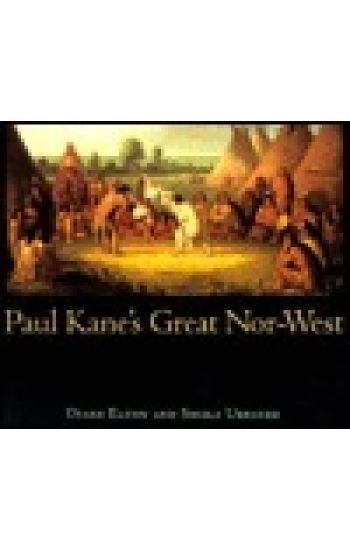
In this beautifully designed and richly illustrated book, Diane Eaton and Sheila Urbanek re-create Paul Kane's heroic journey across Canada and bring to life the people, places, and events he experienced. Determined to document the lives and customs of the Indians of the Northwest, Paul Kane set out in 1845 to cross the continent "with no companions but my portfolio and a box of paints, my gun and a stock of ammunition."Travelling via the Hudson's Bay Company fur brigade routes, he made his way from the Great Lakes to the Pacific coast and back again. When he returned to Toronto in the fall of 1848, he brought back some 500 field sketches as well as a remarkable collection of Indian "curiosities," which he used as raw material for one hundred oil paintings depicting scenes of Indian life.While the carefully executed oil paintings are deliberately romanticized images of the west, the original field sketches convey Kane's immediate impressions and offer tantalizing glimpses of what he describes as the "wild scenes amongst which I strayed almost alone." A fascinating complement to the sketches is contained in a small diary Kane kept while on his journey – brief and plainspoken, these entries were jotted down in his own idiosyncratic spelling and punctuation.Illustrated with a wide selection of the field sketches as well as his better-known oil paintings, this book reintroduces this remarkable artist to a modern audience.

In 1994, ethnic conflict turned to genocide in Rwanda. When the world finally took notice, a million people lay dead, and the small African country lay in ruins. Rwanda returned from the brink guided by rulers determined to rebuild the country on their own terms, rather than those of a previously indifferent international community. Paul Kagame, Rwanda's first democratically elected president, embodies the new Rwandan political philosophy. Young, unconventional, not without flaws and critics--Kagame is key to understanding Rwanda's transition from a country that had known only fear, division and clan-based nepotism for many years to an exceptional African state built upon traditional order and values. Paul Kagame's life--from exiled child refugee, to guerilla warrior and rebel politician, to President of Rwanda--is traced in this exploration of the influences on Rwanda's struggle for change. Analyzing the conflicts and challenges of post-genocide Rwanda in comparison to modern parallels, the work invites reassessment of Kagame's leadership and government in an African context rather than measurement against Western standards, and critiques Western involvement in Rwanda since the early 1990s. Twenty-eight photographs and three maps supplement the text, as do a history of Rwanda's Banyarwanda people and a glossary of words in Kinyarwanda, their language. The work includes a bibliography and an index.
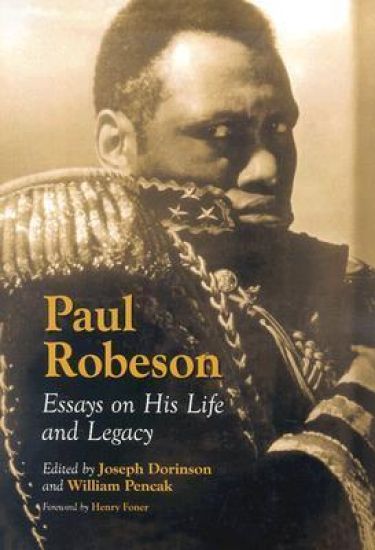
Paul Robeson
McFarland Co Inc
2004
pokkari
Paul Robeson was born April 9, 1898, in Princeton, New Jersey, the son of an escaped slave. He rose to unparalleled heights as an athlete, actor, singer, and activist, and was arguably the most prominent African American from the 1920s through the 1950s. This work is a compilation of 18 essays written by scholars and activists that were presented at a one-day conference held at Long Island University's Brooklyn campus on February 28, 1998, to honor Robeson's life and legacy. The essays discuss his significance as a singer, his political activism, his efforts to achieve solidarity between African Americans and Jews, the important role played by his wife, Eslanda Goode Robeson, in his struggles, his founding of the Freedom newspaper during the Korean War, his contemporary relevance, and the way conservative Americans turned against him, refused to discuss him in the press, and tried to silence his voice. Instructors considering this book for use in a course may request an examination copy here.
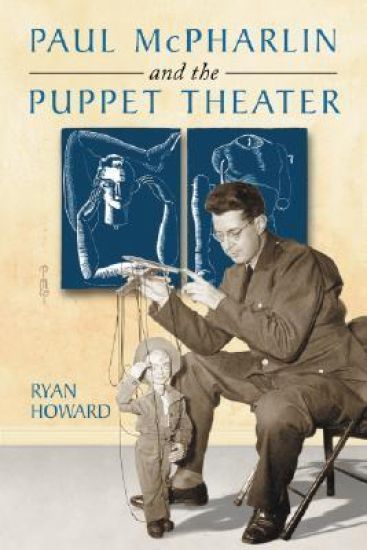
Paul McPharlin is one of the 20th century's most important contributors to the art of puppetry. Over a period of nine years he created some 20 productions with marionettes, rod puppets, hand puppets and shadow figures. He was also a prolific writer whose technical, theoretical and historical works contributed significantly to a puppetry revival. His book The Puppet Theatre in America is considered the definitive history of American puppetry. Though shy and aloof, McPharlin was also energetic. He had an ability to bring people together and used this knack to found a national puppetry organization, Puppeteers of America. Besides the author's extensive research on McPharlin and puppetry, the book draws on significant contributions from McPharlin's wife, puppeteer and author Marjorie Batchelder McPharlin, who allowed the use of her 18-year correspondence with Paul in the creation of the book. Chapters take the reader through McPharlin's childhood as a loner in Detroit, his maturation and education in New York, and his early, erratic and often unsuccessful attempts at making a living. His puppeteering years, 1929 to 1937, are detailed, as are the later years that saw him first working for the WPA and then being drafted into the army to serve in World War II at age 38. He continued making important contributions to the art of puppetry until a brain tumor took his life at age 45 in 1948. Appendices present two of McPharlin's plays, The Barn at Bethlehem: A Christmas Play and Punch's Circus. Another appendix details puppetry imprints, including yearbooks, plays, handbooks, worksheets and books. A fourth lists Paul McPharlin's Puppeteers, members of the Marionette Fellowship of Detroit.
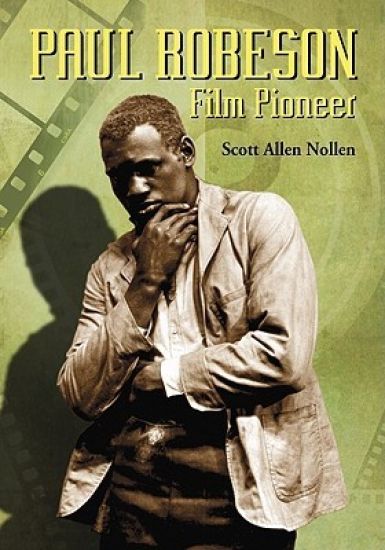
This is the first book-length study of the 12 films starring African American Renaissance man Paul Robeson (1898-1976). Singer, actor, author, lawyer, athlete, pacifist and civil rights activist, Robeson was also the first African American to receive top billing in motion pictures, delivering unforgettable characterizations in such classics as The Emperor Jones (1933), Sanders of the River (1935), Show Boat (1936) and The Proud Valley (1940). Original research is provided from primary materials housed at the Schomburg Center for Black Culture in Harlem and the FBI archives in Washington, D.C., and from Robeson's family and friends, including his son Paul Robeson, Jr. Two appendices cover Robeson's film work as offscreen narrator and singer and his many stage appearances. Rare illustrations include never-before-published original studio materials.
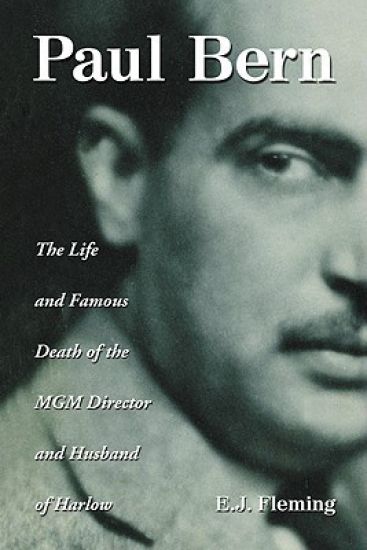
Paul Bern, known throughout the movie business as "Hollywood's Father Confessor," earned a reputation for being a loyal and supportive friend and for becoming one of MGM's most respected and creative directors. After his death, though, he was said to have grown so depressed and despondent over his own apparent sexual inadequacies that he committed suicide, and he would be denounced for attempting to rape his new bride Jean Harlow. In this biography, the author uncovers startling new facts and argues that MGM knew the real story of Bern's death--that an estranged, mentally ill common-law wife murdered him. MGM understood that the earlier spouse rendered Bern's marriage to Harlow, its fastest-rising star, ambiguous if not bigamous, so the studio staged a suicide and embarked on a very public tarnishing of his memory. Included are 93 rare photos, many lost for decades, along with three appendices examining the handwriting on an alleged suicide note and Bern's will and estate.
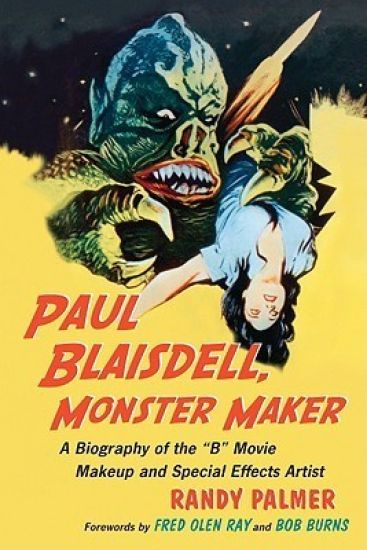
Paul Blaisdell was the man behind the monsters in such movies as The She Creature, Invasion of the Saucer Men, Not of This Earth, It! Terror from Beyond Space and many others. Working in primarily low-budget films, Blaisdell was forced to rely on greasepaint, guts and, most importantly, an unbounded imagination for his creations. From his inauspicious beginning through The Ghost of Dragstrip Hollow (1959), the construction of Blaisdell's monsters and the making of the movies in which they appeared are fully detailed here. Blaisdell's work in the early monster magazines of the 1960s is also covered.
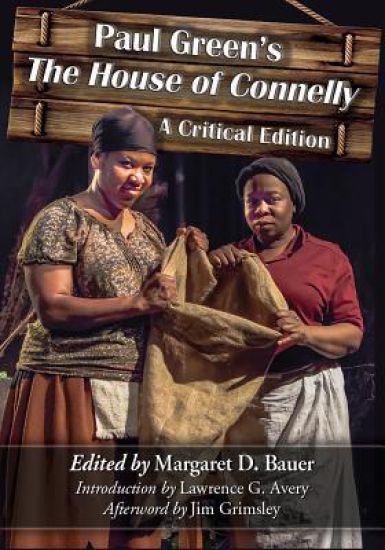
One of Paul Green's best plays, The House of Connelly, was the first play performed (on Broadway in 1931) by the renowned Group Theatre of New York. This book reintroduces the play, and the playwright--famous in his day, but largely forgotten now, although his outdoor symphonic drama The Lost Colony continues to be performed every summer in Manteo, North Carolina. The House of Connelly, is a more traditional drama, comparable to the writing of Tennessee Williams, and the editor asserts that the play deals more directly and fully with racial issues of the early 20th-century South than Williams did in his work. A new edition of the play includes both the original tragic ending and the revised ending Green wrote upon the Group Theatre directors' request. The writing, production and publication history of the play is provided, as well as a scene-by-scene critical analysis and a discussion of the 1934 film adaptation, Carolina. The play's theme is change and Green shows with both endings that the South had to change to survive.
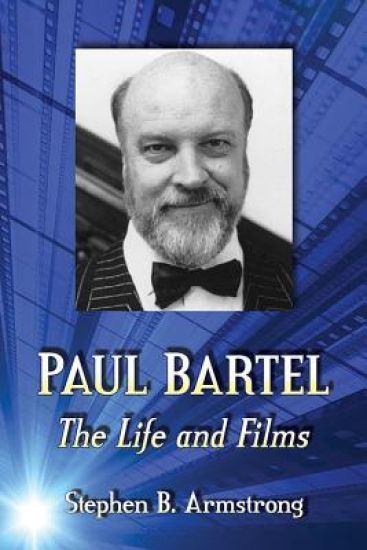
Director Paul Bartel enjoyed poking holes in the expectations of audiences and critics with amusing films about murder, greed and transgressive sex--among them Death Race 2000 (1975), Eating Raoul (1982) and Scenes from the Class Struggle in Beverly Hills (1989). He believed that strange stories that aroused laughter had the potential to disorient viewers and challenge their beliefs about American culture and values. This first book-length study of Bartel's life and work traces his emergence as an independent auteur whose work was praised by Hollywood luminaries like Steven Spielberg, Jim Jarmusch and Brian De Palma. Bartel's experiences as a gay man are explored. Interviews with people who knew him--including Roger Corman, Joe Dante and John Waters--are provided, along with critical analysis of each film.
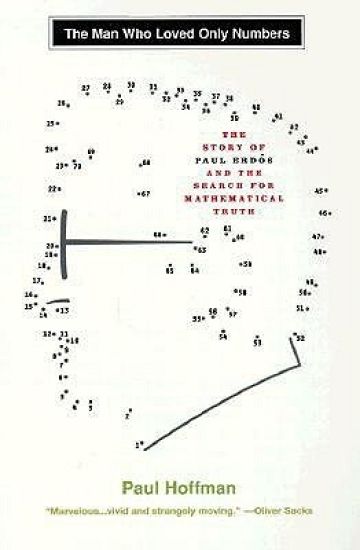
The Man Who Loved Only Numbers: The Story of Paul Erdos and the Search for Mathematical Truth
Paul Hoffman
Grand Central Publishing
1999
nidottu
"A funny, marvelously readable portrait of one of the most brilliant and eccentric men in history." --The Seattle Times Paul Erdos was an amazing and prolific mathematician whose life as a world-wandering numerical nomad was legendary. He published almost 1500 scholarly papers before his death in 1996, and he probably thought more about math problems than anyone in history. Like a traveling salesman offering his thoughts as wares, Erdos would show up on the doorstep of one mathematician or another and announce, "My brain is open." After working through a problem, he'd move on to the next place, the next solution. Hoffman's book, like Sylvia Nasar's biography of John Nash, A Beautiful Mind, reveals a genius's life that transcended the merely quirky. But Erdos's brand of madness was joyful, unlike Nash's despairing schizophrenia. Erdos never tried to dilute his obsessive passion for numbers with ordinary emotional interactions, thus avoiding hurting the people around him, as Nash did. Oliver Sacks writes of Erdos: "A mathematical genius of the first order, Paul Erdos was totally obsessed with his subject--he thought and wrote mathematics for nineteen hours a day until the day he died. He traveled constantly, living out of a plastic bag, and had no interest in food, sex, companionship, art--all that is usually indispensable to a human life." The Man Who Loved Only Numbers is easy to love, despite his strangeness. It's hard not to have affection for someone who referred to children as "epsilons," from the Greek letter used to represent small quantities in mathematics; a man whose epitaph for himself read, "Finally I am becoming stupider no more"; and whose only really necessary tool to do his work was a quiet and open mind. Hoffman, who followed and spoke with Erdos over the last 10 years of his life, introduces us to an undeniably odd, yet pure and joyful, man who loved numbers more than he loved God--whom he referred to as SF, for Supreme Fascist. He was often misunderstood, and he certainly annoyed people sometimes, but Paul Erdos is no doubt missed. --Therese Littleton
The New Testament epistles are a marvelous guidebook full of practical wisdom on living the Christian faith. Providing much more than just a glimpse of the specific issues facing the early church, the pastoral letters contain a multitude of timeless lessons for contemporary spiritual pilgrims who seek to grow in their daily walk with the Lord. In these outstanding sermons based on the Second Readings from Cycle B of the Revised Common Lectionary, the epistles' nourishing teachings are applied to today's complex challenges. Here is a wealth of creative ideas and illustrations helpful for preaching, teaching, and meditation. These biblically grounded sermons shine the light of Christ on our often-confusing world and proclaim the richness of God's truth, offering readers comfort and hope while challenging them to a more intense faith relationship with the Almighty.

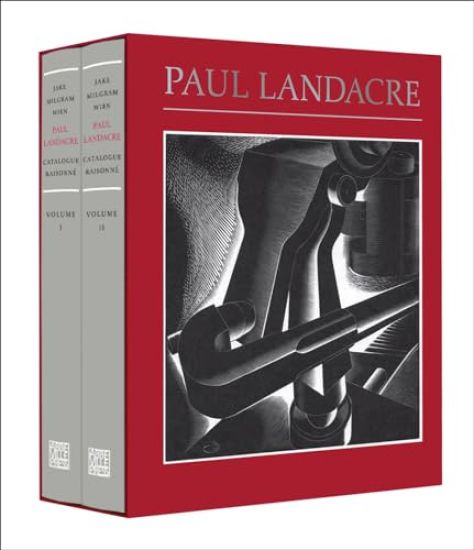
Paul Landacre: California Hills, Hollywood, and the World Beyond
Jake Milgram Wien; John Bidwell; Dana Gioia
ABBEVILLE PRESS INC.,U.S.
2025
sidottu
The long-awaited definitive work on master wood engraver Paul Landacre (1893–1963), a key figure of California modernism. With his virtuosic prints of rolling California hills, classically inspired nudes, and natural and manmade forms — from a seashell to his own printing press — Paul Landacre elevated wood engraving to a high art form in twentieth-century America. Landacre’s ceaseless stylistic innovation placed his work in dialogue with California contemporaries like Edward Weston and Henrietta Shore; he was, in fact, central to an artistic milieu that has been described as a “small Renaissance, Southern California style.” It is fitting, too, that the velvety blacks and dazzling whites of Landacre’s prints can recall the images of the silver screen — for the artist’s rustic bungalow on a Los Angeles hill was but a stone’s throw from Hollywood, and his early patrons and supporters included such luminaries as the director Delmer Daves and the actress Kay Francis. This handsome two-volume set, illustrated with generously sized, high-quality reproductions, offers a definitive catalogue not only of Landacre’s individual wood engravings but also of his early linocuts, his celebrated book illustrations, and his experimental works in other media, including painting, drawing, and lithography. Yet this is much more than a catalogue raisonné — the fruit of more than 30 years of research, it brings to life the bohemian world in which the artist lived, and the rich cultural and artistic context of his work. Landacre’s prints are already prized by curators and collectors; this landmark publication will give him his rightful place in the firmament of American art.
Paul Ricoeur and the Poetic Imperative
W. David Hall
State University of New York Press
2007
sidottu
Looks at Ricoeur's writings on love and justice, prominent toward the end of his life, and how these serve as an interpretive key to his thought as a whole.This book addresses the thought of Paul Ricoeur (1913–2005), paying particular attention to the creative tension between love and justice as principle themes in his work. Dealing with these issues chiefly in his writings on religion, Ricoeur explored the tension between the biblical ideals of the golden rule-the religious formulation of a principle of justice-and the love command. Author W. David Hall shows how these ideals continually speak to each other in Ricoeur's work, how they operate creatively on each other, and how each serves as a corrective to the perversions of the other. Hall maintains that although issues of love and justice became prominent comparatively late in Ricoeur's corpus, they provide a sustained trajectory throughout his work and are an important interpretive key for understanding Ricoeur's intellectual project as a whole.

A sharp challenge to traditional ways of understanding Paul is sounded in this book by a distinguished interpreter of the New Testament. Krister Stendahl proposes-in the key title essay-new ways of exploring Paul's speech: Paul must be heard as one who speaks of his call rather than conversion, of justification rather than forgiveness, or weakness rather than sin, of love rather than integrity, and in unique rather than universal language. The title essay is complemented by the landmark paper, "Paul and the Introspective Conscience of the West," and by two seminal explorations of Pauline issues, "Judgement and Mercy" and "Glossolalia-The New Testament Evidence." The book concludes with Stendahl's pointed reply to the eminent scholar Ernst Kasemann who has taken issue with the author's revolutionary interpretations. This volume provides convincingly new ways for viewing Paul, the most formative of Christian teachers.
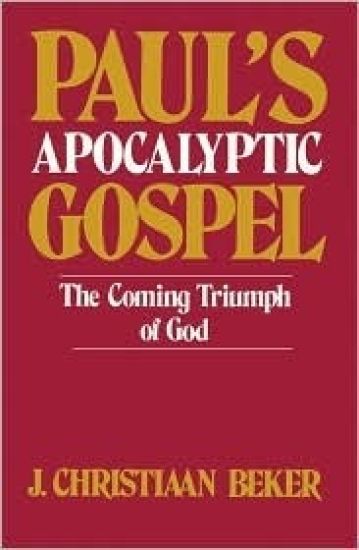
Paul's Apocalyptic Gospel
Augsburg Fortress
1982
pokkari