Kirjojen hintavertailu. Mukana 11 699 587 kirjaa ja 12 kauppaa.

Kirjahaku

Etsi kirjoja tekijän nimen, kirjan nimen tai ISBN:n perusteella.

1000 tulosta hakusanalla Peter J. Perry

Strategic Supervision

Strategic Supervision

Peter J. Pecora; David A. Cherin; Emily J. Bruce; Trinidad de Jesus Arguello

SAGE Publications Inc
2010
nidottu
Offering social service agency leaders the necessary skills for day-to-day supervision practice This guide presents readers with a practical overview to the most important aspects of supervisory leadership and personnel management within the social work environment. Strategic Supervision serves as a primer for new or soon-to-be supervisors on the types of knowledge, skills and abilities necessary for effective supervisory practice. It also offers more seasoned practitioners a concise compendium of checklists and tools that can be utilized selectively.Key FeaturesConcrete examples of how excellent supervisors problem-solve, lead teams, and support multicultural and other forms of diverse staffingPractical strategies for working with employees that have performance difficulties Management tools specifically tailored to the application of Equal Employment Opportunity, Affirmative Action, and other nondiscriminatory practices in hiring and promotion activities
Betrayed

Betrayed

Peter J Falotico

Xlibris
2005
pokkari
Betrayed is a story about John Reed, convicted felon who served time in the Illinois State Penitentiary for armed robbery and assault with a deadly weapon. John reed's detailed planning for the perfect bank robbery, with three ex-convicts, accents his leadership and powerful personality; although, the perfect crime goes beyond the shared caper.
Betrayed the Story

Betrayed the Story

Peter J Falotico

Xlibris
2004
pokkari
BETRAYED THE STORY IS ABOUT JOHN REED'S PERFECT CRIME. HIS DETAILED PLANNING FOR THE PERFECT BANK ROBBERY, WITH THREE EX-CONVICTS, ACCENTS HIS LEADSHIP AND POWERFUL PERSONALITY; ALTHOUGH, THE PERFECT CRIME GOES BEYOND THE SHARED CAPER.
Digital Biology

Digital Biology

Peter J. Bentley

Simon Schuster
2007
pokkari
"Imagine a future world where computers can create universes -- digital environments made from binary ones and zeros. Imagine that within these universes there exist biological forms that reproduce, grow, and think. Imagine plantlike forms, ant colonies, immune systems, and brains, all adapting, evolving, and getting better at solving problems. Imagine if our computers became greenhouses for a new kind of nature. Just think what digital biology could do for us. Perhaps it could evolve new designs for us, think up ways to detect fraud using digital neurons, or solve scheduling problems with ants. Perhaps it could detect hackers with immune systems or create music from the patterns of growth of digital seashells. Perhaps it would allow our computers to become creative and inventive. Now stop imagining." digital biology is an intriguing glimpse into the future of technology by one of the most creative thinkers working in computer science today. As Peter J. Bentley explains, the next giant step in computing technology is already under way as computer scientists attempt to create digital universes that replicate the natural world. Within these digital universes, we will evolve solutions to problems, construct digital brains that can learn and think, and use immune systems to trap and destroy computer viruses. The biological world is the model for the next generation of computer software. By adapting the principles of biology, computer scientists will make it possible for computers to function as the natural world does. In practical terms, this will mean that we will soon have "smart" devices, such as houses that will keep the temperature as we like it and automobiles that will start only for drivers they recognize (through voice recognition or other systems) and that will navigate highways safely and with maximum fuel efficiency. Computers will soon be powerful enough and small enough that they can become part of clothing. "Digital agents" will be able to help us find a bank or restaurant in a city that we have never visited before, even as we walk through the airport. Miniature robots may even be incorporated into our bodies to monitor our health. "Digital Biology" is also an exploration of biology itself from a new perspective. We must understand how nature works in its most intimate detail before we can use these same biological processes inside our computers. Already scientists engaged in this work have gained new insights into the elegant simplicity of the natural universe. This is a visionary book, written in accessible, nontechnical language, that explains how cutting-edge computer science will shape our world in the coming decades.
"Cop" Constables on Patrol

"Cop" Constables on Patrol

Peter J. KEENAN

AuthorHouse
2004
pokkari
Constablos On Patrol is a police story centering on a recently discharged U.S. Navy veteran of World War II who commences a career as a New York City police officer in 1946. An experienced, dedicated police captain, recognizing in this new officer those qualities which he believes justifies the term New York's Finest attributed to the police force "adopts" the new recruit. The officer, exhibiting wisdom beyond his brief period of experience in the department, stumbles upon an arsonist in the act of torching a Chinese restaurant. This shoot-out sets off a startling chain of events which culminates in murder and high-level police corruption.
Friction Science and Technology

Friction Science and Technology

Peter J. Blau

CRC Press Inc
2008
sidottu
"Should have broad appeal in many kinds of industry, ranging from automotive to computers—basically any organization concerned with products having moving parts!"—David A. Rigney, Materials Science and Engineering Department, Ohio State University, Columbus, USAIn-Depth Coverage of Frictional ConceptsFriction affects so many aspects of daily life that most take it for granted. Arguably, mankind’s attempt to control friction dates back to the invention of the wheel. Friction Science and Technology: From Concepts to Applications, Second Edition presents a broad, multidisciplinary overview of the constantly moving field of friction, spanning the history of friction studies to the evolution of measurement instruments. It reviews the gamut of friction test methods, ranging from simple inclined plans to sophisticated laboratory tribometers. The book starts with introductory concepts about friction and progressively delves into the more subtle fundamentals of surface contact, use of various lubricants, and specific applications such as brakes, piston rings, and machine components.Includes American Society of Testing and Management (ASTM) Standards This volume covers multiple facets of friction, with numerous interesting and unusual examples of friction-related technologies not found in other tribology books. These include: Friction in winter sports Friction of touch and human skin Friction of footware and biomaterials Friction drilling of metals Friction of tires and road surfaces Describing the tools of the trade for friction research, this edition enables engineers to purchase or build their own devices. It also discusses frictiona
Blue Marble Health

Blue Marble Health

Peter J. Hotez

Johns Hopkins University Press
2016
pokkari
In 2011, Dr. Peter J. Hotez relocated to Houston to launch Baylor's National School of Tropical Medicine. He was shocked to discover that a number of neglected diseases often associated with developing countries were widespread in impoverished Texas communities. Despite the United States' economic prowess and first-world status, an estimated 12 million Americans living at the poverty level currently suffer from at least one neglected tropical disease, or NTD. Hotez concluded that the world's neglected diseases-which include tuberculosis, hookworm infection, lymphatic filariasis, Chagas disease, and leishmaniasis-are born first and foremost of extreme poverty. In this book, Hotez describes a new global paradigm known as "blue marble health," through which he asserts that poor people living in wealthy countries account for most of the world's poverty-related illness. He explores the current state of neglected diseases in such disparate countries as Mexico, South Korea, Argentina, Australia, the United States, Japan, and Nigeria. By crafting public policy and relying on global partnerships to control or eliminate some of the world's worst poverty-related illnesses, Hotez believes, it is possible to eliminate life-threatening disease while at the same time creating unprecedented opportunities for science and diplomacy. Clear, compassionate, and timely, Blue Marble Health is a must-read for leaders in global health, tropical medicine, and international development, along with anyone committed to helping the millions of people who are caught in the desperate cycle of poverty and disease.
Vaccines Did Not Cause Rachel's Autism

Vaccines Did Not Cause Rachel's Autism

Peter J. Hotez; Arthur L. Caplan

Johns Hopkins University Press
2018
sidottu
Internationally renowned medical scientist, frequent media contributor, and autism dad Dr. Peter J. Hotez explains why vaccines do not cause autism.In 1994, Peter J. Hotez's nineteen-month-old daughter, Rachel, was diagnosed with autism. Dr. Hotez, a pediatrician-scientist who develops vaccines for neglected tropical diseases affecting the world's poorest people, became troubled by the decades-long rise of the influential anti-vaccine community and its inescapable narrative around childhood vaccines and autism. In Vaccines Did Not Cause Rachel's Autism, Hotez draws on his experiences as a pediatrician, vaccine scientist, and father of an autistic child. Outlining the arguments on both sides of the debate, he examines the science that refutes the concerns of the anti-vaccine movement, debunks current conspiracy theories alleging a cover-up by the Centers for Disease Control and Prevention, and critiques the scientific community's failure to effectively communicate the facts about vaccines and autism to the general public, all while sharing his very personal story of raising a now-adult daughter with autism.A uniquely authoritative account, this important book persuasively provides evidence for the genetic basis of autism and illustrates how the neurodevelopmental pathways of autism are under way before birth. Dr. Hotez reminds readers of the many victories of vaccines over disease while warning about the growing dangers of the anti-vaccine movement, especially in the United States and Europe. Now, with the anti-vaccine movement reenergized in our COVID-19 era, this book is especially timely. Vaccines Did Not Cause Rachel's Autism is a must-read for parent groups, child advocates, teachers, health-care providers, government policymakers, health and science policy experts, and anyone caring for a family member or friend with autism."When Peter Hotez—an erudite, highly trained scientist who is a true hero for his work in saving the world's poor and downtrodden—shares his knowledge and clinical insights along with his parental experience, when his beliefs in the value of what he does are put to the test of a life guiding his own child's challenges, then you must pay attention. You should. This book brings to an end the link between autism and vaccination."—from the foreword by Arthur L. Caplan, NYU School of Medicine
Artificial Intelligence and Robotics: Ten Short Lessons

Artificial Intelligence and Robotics: Ten Short Lessons

Peter J. Bentley

Johns Hopkins University Press
2020
nidottu
An expert introduction to the fascinating world of robotics, artificial intelligence, and how machines learn. In Artificial Intelligence and Robotics: Ten Short Lessons, leading expert Peter J. Bentley breaks down the fast-moving world of computers into ten pivotal lessons, presenting the reader with the essential information they need to get to understand our most powerful technology and its remarkable implications for our species.From the origins and motivation behind the birth of AI and robotics to using smart algorithms that allow us to build good robots, from the technologies that enable computers to understand a huge range of sensory information, including language and communication, to the challenges of emotional intelligence, unpredictable environments, and imagination in artificial intelligence, this is a cutting-edge, expert-led guide for curious minds. Packed full of easy-to-understand diagrams, pictures, and fact boxes, these ten lessons cover all the basics, as well as the latest understanding and developments, to enlighten the nonscientist.About the series: The Pocket Einstein series is a collection of essential pocket-sized guides for anyone looking to understand a little more about some of the most important and fascinating areas of science in the twenty-first century. Broken down into ten simple lessons and written by leading experts in their field, the books reveal the ten most important takeaways from those areas of science you've always wanted to know more about.
Vaccines Did Not Cause Rachel's Autism

Vaccines Did Not Cause Rachel's Autism

Peter J. Hotez; Arthur L. Caplan

Johns Hopkins University Press
2021
pokkari
Internationally renowned medical scientist, frequent media contributor, and autism dad Dr. Peter J. Hotez explains why vaccines do not cause autism.In 1994, Peter J. Hotez's nineteen-month-old daughter, Rachel, was diagnosed with autism. Dr. Hotez, a pediatrician-scientist who develops vaccines for neglected tropical diseases affecting the world's poorest people, became troubled by the decades-long rise of the influential anti-vaccine community and its inescapable narrative around childhood vaccines and autism. In Vaccines Did Not Cause Rachel's Autism, Hotez draws on his experiences as a pediatrician, vaccine scientist, and father of an autistic child. Outlining the arguments on both sides of the debate, he examines the science that refutes the concerns of the anti-vaccine movement, debunks current conspiracy theories alleging a cover-up by the Centers for Disease Control and Prevention, and critiques the scientific community's failure to effectively communicate the facts about vaccines and autism to the general public, all while sharing his very personal story of raising a now-adult daughter with autism.A uniquely authoritative account, this important book persuasively provides evidence for the genetic basis of autism and illustrates how the neurodevelopmental pathways of autism are under way before birth. Dr. Hotez reminds readers of the many victories of vaccines over disease while warning about the growing dangers of the anti-vaccine movement, especially in the United States and Europe. Now, with the anti-vaccine movement reenergized in our COVID-19 era, this book is especially timely. Vaccines Did Not Cause Rachel's Autism is a must-read for parent groups, child advocates, teachers, health-care providers, government policymakers, health and science policy experts, and anyone caring for a family member or friend with autism."When Peter Hotez—an erudite, highly trained scientist who is a true hero for his work in saving the world's poor and downtrodden—shares his knowledge and clinical insights along with his parental experience, when his beliefs in the value of what he does are put to the test of a life guiding his own child's challenges, then you must pay attention. You should. This book brings to an end the link between autism and vaccination."—from the foreword by Arthur L. Caplan, NYU School of Medicine
Preventing the Next Pandemic

Preventing the Next Pandemic

Peter J. Hotez

Johns Hopkins University Press
2021
sidottu
The last five years saw a significant return of epidemic infectious disease, culminating in COVID-19. In our new post–COVID-19 world, how do we prevent future illnesses by expanding scientific and vaccine diplomacy and cooperation, especially to combat the problems that humans have brought on ourselves?Modern diseases and viruses have been spurred anew by war and conflict as well as shifting poverty, urbanization, climate change, and a new troubling anti-science/anti-vaccination outlook. From such twenty-first-century forces, we have seen declines in previous global health gains, with sharp increases in vaccine-preventable and neglected diseases on the Arabian Peninsula, in Venezuela, in parts of Africa, and even on the Gulf Coast of the United States. In Preventing the Next Pandemic, international vaccine scientist and tropical disease and coronavirus expert Peter J. Hotez, MD, PhD, argues that we can—and must—rely on vaccine diplomacy to address this new world order in disease and global health. Detailing his years in the lab developing new vaccines, Hotez also recounts his travels around the world to shape vaccine partnerships with people in countries both rich and poor in an attempt to head off major health problems. Building on the legacy of Dr. Albert Sabin, who developed the oral polio vaccine with Soviet scientists at the height of the Cold War, he explains how he is still working to refresh and redirect vaccine diplomacy toward neglected and newly emerging diseases. Hotez reveals how—during his Obama-era tenure as the US Science Envoy for the Middle East and North Africa, which coincided with both the rise in these geopolitical forces and climate change—he witnessed tropical infectious diseases and established vaccine partnerships that may still combat them up close. He explores why, since 2015, we've seen the decline of global cooperation and cohesion, to the detriment of those programs that are meant to benefit the most vulnerable people in the world. Unfortunately, Hotez asserts, these negative global events kick off a never-ending loop. Problems in a country may lead to disease outbreaks, but those outbreaks can lead to further problems—such as the impact of coronavirus on China's society and economy, which has been felt around the globe. Zeroing in on the sociopolitical and environmental factors that drive our most controversial and pressing global health concerns, Hotez proposes historically proven methods to soothe fraught international relations while preparing us for a safer, healthier future. He hammers home the importance of public engagement to communicate the urgency of embracing science during troubled times. Touching on a range of disease, from leishmaniasis, schistosomiasis, and Middle East Respiratory Syndrome (MERS) to COVID-19, Preventing the Next Pandemic has always been a timely goal, but it will be even more important in a COVID and post-COVID world.
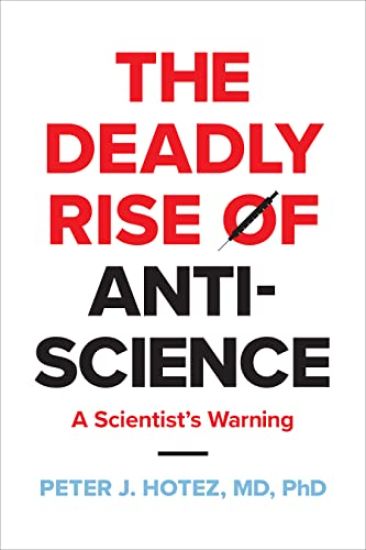
The Deadly Rise of Anti-science

The Deadly Rise of Anti-science

Peter J. Hotez

Johns Hopkins University Press
2023
sidottu
Dr. Peter Hotez discusses how an antivaccine movement became a dangerous political campaign promoted by elected officials and amplified by news media, causing thousands of American deaths.During the height of the COVID-19 pandemic, one renowned scientist, in his famous bowtie, appeared daily on major news networks such as MSNBC, NPR, the BBC, and others. Dr. Peter J. Hotez often went without sleep, working around the clock to develop a nonprofit COVID-19 vaccine and to keep the public informed. During that time, he was one of the most trusted voices on the pandemic and was even nominated for a Nobel Peace Prize for his selfless work. He also became one of the main targets of anti-science rhetoric that gained traction through conservative news media. In this eyewitness story of how the anti-vaccine movement grew into a dangerous and prominent anti-science element in American politics, Hotez describes the devastating impacts it has had on Americans' health and lives. As a scientist who has endured antagonism from anti-vaxxers and been at the forefront of both essential scientific discovery and advocacy, Hotez is uniquely qualified to tell this story. By weaving his personal experiences together with information on how the anti-vaccine movement became a tool of far-right political figures around the world, Hotez opens readers' eyes to the dangers of anti-science. He explains how anti-science became a major societal and lethal force: in the first years of the pandemic, more than 200,000 unvaccinated Americans needlessly died despite the widespread availability of COVID-19 vaccines. Even as he paints a picture of the world under a shadow of aggressive ignorance, Hotez demonstrates his innate optimism, offering solutions for how to combat science denial and save lives in the process.
The Deadly Rise of Anti-science

The Deadly Rise of Anti-science

Peter J. Hotez

Johns Hopkins University Press
2025
pokkari
Dr. Peter Hotez discusses how the antivaccine movement became a dangerous political campaign promoted by elected officials and amplified by news media, causing thousands of American deaths.Shortlisted for the Non-Obvious Book Awards by the Non-Obvious CompanyDuring the height of the COVID-19 pandemic, one renowned scientist, in his famous bowtie, appeared daily on major news networks such as MSNBC, NPR, the BBC, and others. Dr. Peter J. Hotez often went without sleep, working around the clock to develop a nonprofit COVID-19 vaccine and to keep the public informed. During that time, he was one of the most trusted voices on the pandemic and was even nominated for a Nobel Peace Prize for his selfless work. He also became one of the main targets of anti-science rhetoric that gained traction through conservative news media. In this eyewitness story of how the anti-vaccine movement grew into a dangerous and prominent anti-science element in American politics, Hotez describes the devastating impacts it has had on Americans' health and lives. As a scientist who has endured antagonism from anti-vaxxers and been at the forefront of both essential scientific discovery and advocacy, Hotez is uniquely qualified to tell this story. By weaving his personal experiences together with information on how the anti-vaccine movement became a tool of far-right political figures around the world, Hotez opens readers' eyes to the dangers of anti-science. He explains how anti-science became a major societal and lethal force: in the first years of the pandemic, more than 200,000 unvaccinated Americans needlessly died despite the widespread availability of COVID-19 vaccines. Even as he paints a picture of the world under a shadow of aggressive ignorance, Hotez demonstrates his innate optimism, offering solutions for how to combat science denial and save lives in the process.
Immigration, Diversity and Student Journeys to Higher Education

Immigration, Diversity and Student Journeys to Higher Education

Peter J. Guarnaccia

Peter Lang Publishing Inc
2019
nidottu
Immigration, Diversity and Student Journeys to Higher Education presents an in-depth understanding of how immigrant students at a major public research university balanced keeping their family cultures alive and learning U.S. culture to get to college. A revitalized anthropological understanding of acculturation provides the theoretical framework for the book. The text builds its analysis using extensive quotes from the 160 immigrant students who participated in the 21 focus groups that form the core of this study. The students’ families come from Africa, Asia, the Caribbean, Europe and Latin America, and reflect a wide diversity of experiences and insights into how these students successfully pursued higher education. A key theme of the book is the "immigrant bargain," where students repay their parents’ hard work and migration sacrifices by excelling in school. A large majority of the parents made clear that a major motivation for immigrating was so their children could have better educational opportunities; these parents had the original dreams for their children. Immigration, Diversity and Student Journeys to Higher Education examines the similarities and differences across this diverse group of students, ending with a series of recommendations about how to improve acculturation research and how to facilitate immigrant students’ journeys to educational success.
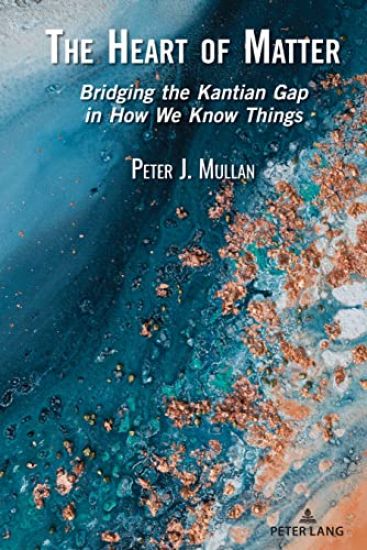
The Heart of Matter

The Heart of Matter

Peter J. Mullan

PETER LANG PUBLISHING INC
2022
sidottu
Few fields in philosophy are so seemingly distant from ordinary human experience as theories of knowledge. How much information do we draw in from bodies outside of us? And to what degree do our perceptual and mental processes subjectify that information to the point of becoming non-objective? The Heart of Matter: Bridging the Kantian Gap in How We Know Things presents both a back history of current theories of perception and a plausible theory to span the gap between subject and object. This book begins with Sir Karl Popper’s theory of falsifiability, as a twentieth-century version of Kantian subjectivism. Before considering eighteenth-century transcendental philosophy, a look at both the empirical and rational theories that inspired Kant helps place his Critique of Pure Reason in context. This book highlights the developments in Kant’s thought, as he struggled to solve important problems within his Copernican revolution. How far does Kant’s theory coincide with our actual perceptual experience? Twentieth-century experimentation in perception sheds important light on human knowing. The Heart of Matter follows Cornelio Fabro’s study of those psychological findings and especially his ability to incorporate those findings into a coherent description and explanation. Many current theories of knowledge dismiss any possibility of our objectively knowing bodies outside of us; this book takes a candid look at both the major dilemmas implied in such a dismissal, as well as our actual perception of things. On this account, a fruitful exchange does appear to take place between the mind and reality in perception. "This book is a clear and brilliant contribution to the philosophy of knowledge. Through a detailed study of Cornelio Fabro’s theory of knowledge, involving modern advances in psychology of perception, the author convincingly bridges the problem of the gap between senses and thought. The key-point in this volume is the importance given to sensations integrated in perception and penetrated by the intellectual grasp of the world around us. I recommend this book both to scholars and students. They will enjoy the elegant and fresh style which makes its reading very pleasant." —Juan Jose Sanguineti, Professor emeritus, Faculty of Philosophy, Holy Cross University (Rome)
God's Kingdom through God's Covenants

God's Kingdom through God's Covenants

Peter J. Gentry; Stephen J. Wellum

Crossway Books
2015
pokkari
In this abridgement of the groundbreaking book Kingdom through Covenant, a biblical scholar and a theologian offer readers an accessible overview of the overarching structure of the Bible. Tracing the significance of the concept of “covenant” through both the Old and New Testaments, this book charts a middle way between covenant theology and dispensationalism—exploring the covenantal framework undergirding the history of redemption.