The book draws upon the exciting and illuminating understanding of trauma and dissociation that has developed within the last decade and shows how this can transform our view of many severe personality disorders. MPD is presented as a disorder based upon trauma and pretence - a pretence which structures the personality. The author explores the implications of working with personalities structured around trauma and pretence. The many complex and bewildering aspects of the therapeutic process are discussed.
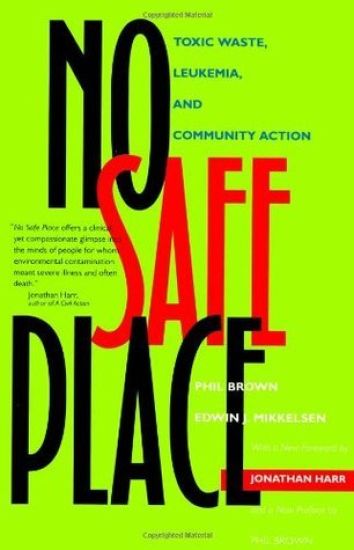
Toxic waste, contaminated water, cancer clusters--these phrases suggest deception and irresponsibility. But more significantly, they are watchwords for a growing struggle between communities, corporations, and government. In No Safe Place, sociologists, public policy professionals, and activists will learn how residents of Woburn, Massachusetts discovered a childhood leukemia cluster and eventually sued two corporate giants. Their story gives rise to questions important to any concerned citizen: What kind of government regulatory action can control pollution? Just how effective can the recent upsurge of popular participation in science and technology be? Phil Brown, a medical sociologist, and Edwin Mikkelsen, psychiatric consultant to the plaintiffs, look at the Woburn experience in light of similar cases, such as Love Canal, in order to show that toxic waste contamination reveals fundamental flaws in the corporate, governmental, and scientific spheres. The authors strike a humane, constructive note amidst chilling odds, advocating extensive lay involvement based on the Woburn model of civic action. Finally, they propose a safe policy for toxic wastes and governmental/corporate responsibility. Woburn, the authors predict, will become a code word for environmental struggles.
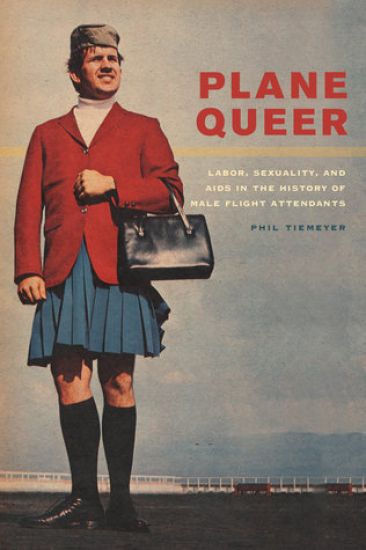
In this vibrant new history, Phil Tiemeyer details the history of men working as flight attendants. Beginning with the founding of the profession in the late 1920s and continuing into the post-September 11 era, "Plane Queer" examines the history of men who joined workplaces customarily identified as female-oriented. It examines the various hardships these men faced at work, paying particular attention to the conflation of gender-based, sexuality-based, and AIDS-based discrimination. Tiemeyer also examines how this heavily gay-identified group of workers created an important place for gay men to come out, garner acceptance from their fellow workers, fight homophobia and AIDS phobia, and advocate for LGBT civil rights. All the while, male flight attendants facilitated key breakthroughs in gender-based civil rights law, including an important expansion of the ways that Title VII of the 1964 Civil Rights Act would protect workers from sex discrimination. Throughout their history, men working as flight attendants helped evolve an industry often identified with American adventuring, technological innovation, and economic power into a queer space.
In this vibrant new history, Phil Tiemeyer details the history of men working as flight attendants. Beginning with the founding of the profession in the late 1920s and continuing into the post-September 11 era, "Plane Queer" examines the history of men who joined workplaces customarily identified as female-oriented. It examines the various hardships these men faced at work, paying particular attention to the conflation of gender-based, sexuality-based, and AIDS-based discrimination. Tiemeyer also examines how this heavily gay-identified group of workers created an important place for gay men to come out, garner acceptance from their fellow workers, fight homophobia and AIDS phobia, and advocate for LGBT civil rights. All the while, male flight attendants facilitated key breakthroughs in gender-based civil rights law, including an important expansion of the ways that Title VII of the 1964 Civil Rights Act would protect workers from sex discrimination. Throughout their history, men working as flight attendants helped evolve an industry often identified with American adventuring, technological innovation, and economic power into a queer space.
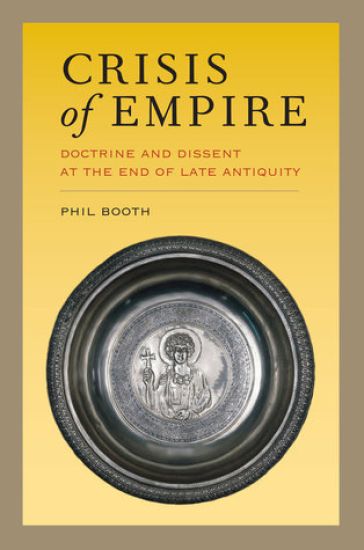
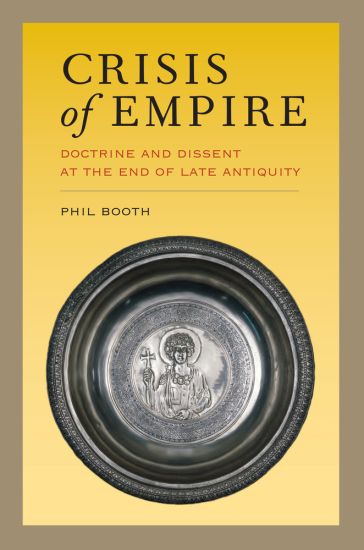
This book focuses on the attempts of three ascetics - John Moschus, Sophronius of Jerusalem, and Maximus Confessor - to determine the Church's power and place during a period of profound crisis, as the eastern Roman empire suffered serious reversals in the face of Persian and then Islamic expansion. By asserting visions which reconciled long-standing intellectual tensions between asceticism and Church, these authors established the framework for their subsequent emergence as Constantinople's most vociferous religious critics, their alliance with the Roman popes, and their radical rejection of imperial interference in matters of the faith. Situated within the broader religious currents of the fourth to seventh centuries, this book throws new light on the nature not only of the holy man in late antiquity, but also of the Byzantine Orthodoxy that would emerge in the Middle Ages, and which is still central to the churches of Greece and Eastern Europe.
This book focuses on the attempts of three ascetics--John Moschus, Sophronius of Jerusalem, and Maximus Confessor--to determine the Church's power and place during a period of profound crisis, as the eastern Roman empire suffered serious reversals in the face of Persian and then Islamic expansion. By asserting visions which reconciled long-standing intellectual tensions between asceticism and Church, these authors established the framework for their subsequent emergence as Constantinople's most vociferous religious critics, their alliance with the Roman popes, and their radical rejection of imperial interference in matters of the faith. Situated within the broader religious currents of the fourth to seventh centuries, this book throws new light on the nature not only of the holy man in late antiquity, but also of the Byzantine Orthodoxy that would emerge in the Middle Ages, and which is still central to the churches of Greece and Eastern Europe.
This book, published in 2000, is a clear account of causation based firmly in contemporary science. Dowe discusses in a systematic way, a positive account of causation: the conserved quantities account of causal processes which he has been developing over the last ten years. The book describes causal processes and interactions in terms of conserved quantities: a causal process is the worldline of an object which possesses a conserved quantity, and a causal interaction involves the exchange of conserved quantities. Further, things that are properly called cause and effect are appropriately connected by a set of causal processes and interactions. The distinction between cause and effect is explained in terms of a version of the fork theory: the direction of a certain kind of ordered pattern of events in the world. This particular version has the virtue that it allows for the possibility of backwards causation, and therefore time travel.
Extensively updated throughout, this new edition introduces students to a wide range of modern legal issues. Written in a clear and engaging style, the book expertly addresses the ways in which the rules and structures of law respond to and influence changes in economic and political life. It provides a clear understanding of the relationship between law and society, with particular emphasis on the importance of morality, dispute solution and business regulation. An Introduction to Law is a valuable resource for students of law, be they undergraduate law students, those studying law as part of a mixed degree, or students on business or social science courses in which legal studies are included.
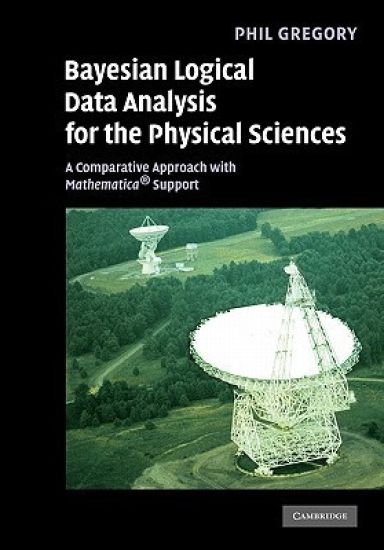
Bayesian inference provides a simple and unified approach to data analysis, allowing experimenters to assign probabilities to competing hypotheses of interest, on the basis of the current state of knowledge. By incorporating relevant prior information, it can sometimes improve model parameter estimates by many orders of magnitude. This book provides a clear exposition of the underlying concepts with many worked examples and problem sets. It also discusses implementation, including an introduction to Markov chain Monte-Carlo integration and linear and nonlinear model fitting. Particularly extensive coverage of spectral analysis (detecting and measuring periodic signals) includes a self-contained introduction to Fourier and discrete Fourier methods. There is a chapter devoted to Bayesian inference with Poisson sampling, and three chapters on frequentist methods help to bridge the gap between the frequentist and Bayesian approaches. Supporting Mathematica® notebooks with solutions to selected problems, additional worked examples, and a Mathematica tutorial are available at www.cambridge.org/9780521150125.
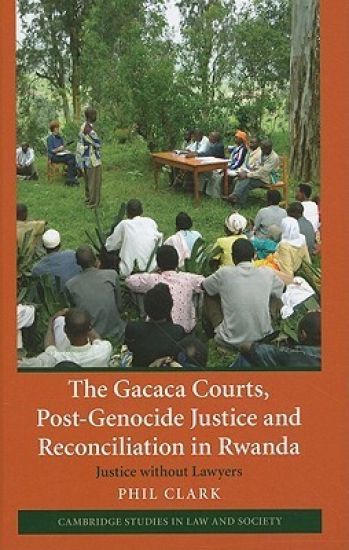
Since 2001, the Gacaca community courts have been the centrepiece of Rwanda's justice and reconciliation programme. Nearly every adult Rwandan has participated in the trials, principally by providing eyewitness testimony concerning genocide crimes. Lawyers are banned from any official involvement, an issue that has generated sustained criticism from human rights organisations and international scepticism regarding Gacaca's efficacy. Drawing on more than six years of fieldwork in Rwanda and nearly five hundred interviews with participants in trials, this in-depth ethnographic investigation of a complex transitional justice institution explores the ways in which Rwandans interpret Gacaca. Its conclusions provide indispensable insight into post-genocide justice and reconciliation, as well as the population's views on the future of Rwanda itself.
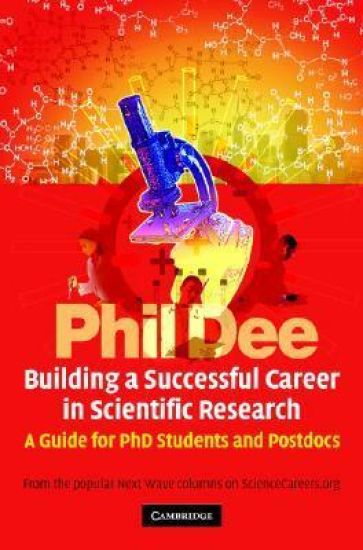
From PhD student to post-doc, Phil Dee has been sharing his career experiences with fellow scientists in his regular and acclaimed Science Next Wave column since 2000. Now his invaluable and entertaining advice is available in this compact warts-and-all guide to getting your science PhD and subsequent post-doctoral employment as a researcher. Phil Dee offers you the inside track on what life in the lab is really like with down-to-earth suggestions for making the most productive use of your time, dealing with personal relationships in science and maintaining your morale, as well as dealing with more practical issues like how to design a good poster. As well as being based on the author's own experiences, the book brings together a wealth of advice from other scientists who have made it in science, and from a few who haven't. The book will be accessible to all early career scientists worldwide.
This book, published in 2000, is a clear account of causation based firmly in contemporary science. Dowe discusses in a systematic way, a positive account of causation: the conserved quantities account of causal processes which he has been developing over the last ten years. The book describes causal processes and interactions in terms of conserved quantities: a causal process is the worldline of an object which possesses a conserved quantity, and a causal interaction involves the exchange of conserved quantities. Further, things that are properly called cause and effect are appropriately connected by a set of causal processes and interactions. The distinction between cause and effect is explained in terms of a version of the fork theory: the direction of a certain kind of ordered pattern of events in the world. This particular version has the virtue that it allows for the possibility of backwards causation, and therefore time travel.
The Politics of Commonwealth offers a major reinterpretation of urban political culture in England during the sixteenth and seventeenth centuries. Examining what it meant to be a freeman and citizen in early modern England, it also shows the increasingly pivotal place of cities and boroughs within the national polity. It considers the practices that constituted urban citizenship as well as its impact on the economic, patriarchal and religious life of towns and the larger commonwealth. The author has recovered the language and concepts used at the time, whether by eminent citizens like Andrew Marvell or more humble tradesmen and craftsmen. Unprecedented in terms of the range of its sources and freshness of its approach, the book reveals a dimension of early modern culture that has major implications for how we understand the English state, economy and 'public sphere'; the political upheavals of the mid-seventeenth-century and popular political participation more generally.
Increasingly, researchers in many branches of science are coming into contact with Bayesian statistics or Bayesian probability theory. By encompassing both inductive and deductive logic, Bayesian analysis can improve model parameter estimates by many orders of magnitude. It provides a simple and unified approach to all data analysis problems, allowing the experimenter to assign probabilities to competing hypotheses of interest, on the basis of the current state of knowledge. This book provides a clear exposition of the underlying concepts with large numbers of worked examples and problem sets. The book also discusses numerical techniques for implementing the Bayesian calculations, including an introduction to Markov Chain Monte-Carlo integration and linear and nonlinear least-squares analysis seen from a Bayesian perspective. In addition, background material is provided in appendices and supporting Mathematica notebooks are available, providing an easy learning route for upper-undergraduates, graduate students, or any serious researcher in physical sciences or engineering.
From PhD student to post-doc, Phil Dee has been sharing his career experiences with fellow scientists in his regular and acclaimed Science Next Wave column since 2000. Now his invaluable and entertaining advice is available in this compact warts-and-all guide to getting your science PhD and subsequent post-doctoral employment as a researcher. Phil Dee offers you the inside track on what life in the lab is really like with down-to-earth suggestions for making the most productive use of your time, dealing with personal relationships in science and maintaining your morale, as well as dealing with more practical issues like how to design a good poster. As well as being based on the author's own experiences, the book brings together a wealth of advice from other scientists who have made it in science, and from a few who haven't. The book will be accessible to all early career scientists worldwide.
Phil Beadle is a former rock musician, the winner of the Secondary Teacher of the Year Award 2005, and the inspirational teacher who wowed the nation with his unorthodox teaching methods in Channel 4 series THE UNTEACHABLES.
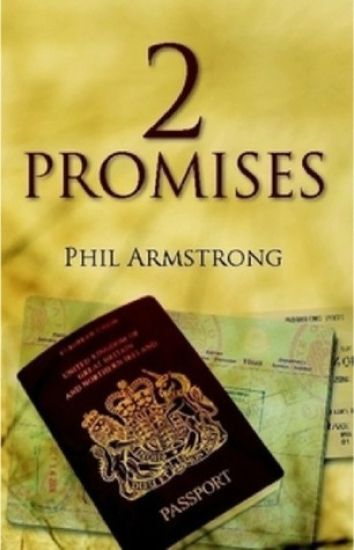
Beth Martindale is a misfit with a fast mind and an equally fast mouth. Her mundane village life is thrown into turmoil by an unusual intruder. As events unfold she becomes desperate to keep her two distinct, yet connected, promises. This cleverly crafted novel charts her journey through England, India, Canada and Belgium following a fascinating trail of connecting coincidences. Beth's epic adventure is peppered with intrigue, humor, insight and wisdom. She is determined to keep her 2 PROMISES but at what cost?