Kirjojen hintavertailu. Mukana 12 016 292 kirjaa ja 12 kauppaa.

Kirjahaku

Etsi kirjoja tekijän nimen, kirjan nimen tai ISBN:n perusteella.

1000 tulosta hakusanalla Philo

Philosophy of Science

Philosophy of Science

Rosenberg Alex

TAYLOR FRANCIS LTD
2000
nidottu
This user-friendly text covers key issues in the philosophy of science in an accessible and philosophically serious way. It will prove valuable to students studying philosophy of science as well as science students.Prize-winning author Alex Rosenberg explores the philosophical problems that science raises by its very nature and method. He skilfully demonstrates that scientific explanation, laws, causation, theory, models, evidence, reductionism, probability, teleology, realism and instrumentalism actually pose the same questions that Plato, Aristotle, Descartes, Hume, Kant and their successors have grappled with for centuries.
Philosophy of Art

Philosophy of Art

Noël Carroll

Routledge
1999
sidottu
Philosophy of Art is a textbook for undergraduate students interested in the topic of philosophical aesthetics.It introduces the techniques of analytic philosophy as well as key topics such as the representational theory of art, formalism, neo-formalism, aesthetic theories of art, neo-Wittgensteinism, the Institutional Theory of Art. as well as historical approaches to the nature of art.Throughout, abstract philosophical theories are illustrated by examples of both traditional and contemporary art including frequent reference to the avant-garde in this way enriching the readers understanding of art theory as well as the appreciation of art.Unique features of the textbook are:* chapter summaries* summaries of major theories of art and suggested analyses of the important categories used when talking and thinking of art* annotated suggested readings at the ends of chapters.Also available in this series:Epistemology Pb: 0-415-13043-3: £12.99Ethics Pb: 0-415-15625-4: £11.99Metaphysics Pb: 0-415-14034-X: £12.99Philosophy of Mind Pb: 0-415-13060-3: £11.99Philosophy of Religion Pb: 0-415-13214-2: £12.99
Philosophy of Art

Philosophy of Art

Noël Carroll

Routledge
1999
nidottu
Philosophy of Art is a textbook for undergraduate students interested in the topic of philosophical aesthetics.It introduces the techniques of analytic philosophy as well as key topics such as the representational theory of art, formalism, neo-formalism, aesthetic theories of art, neo-Wittgensteinism, the Institutional Theory of Art. as well as historical approaches to the nature of art.Throughout, abstract philosophical theories are illustrated by examples of both traditional and contemporary art including frequent reference to the avant-garde in this way enriching the readers understanding of art theory as well as the appreciation of art.Unique features of the textbook are:* chapter summaries* summaries of major theories of art and suggested analyses of the important categories used when talking and thinking of art* annotated suggested readings at the ends of chapters.Also available in this series:Epistemology Pb: 0-415-13043-3: £12.99Ethics Pb: 0-415-15625-4: £11.99Metaphysics Pb: 0-415-14034-X: £12.99Philosophy of Mind Pb: 0-415-13060-3: £11.99Philosophy of Religion Pb: 0-415-13214-2: £12.99
Philosophy of Mathematics and Economics

Philosophy of Mathematics and Economics

Thomas A. Boylan; Paschal F. O'Gorman

Routledge
2018
sidottu
With the failure of economics to predict the recent economic crisis, the image of economics as a rigorous mathematical science has been subjected to increasing interrogation. One explanation for this failure is that the subject took a wrong turn in its historical trajectory, becoming too mathematical. Using the philosophy of mathematics, this unique book re-examines this trajectory.Philosophy of Mathematics and Economics re-analyses the divergent rationales for mathematical economics by some of its principal architects. Yet, it is not limited to simply enhancing our understanding of how economics became an applied mathematical science. The authors also critically evaluate developments in the philosophy of mathematics to expose the inadequacy of aspects of mainstream mathematical economics, as well as exploiting the same philosophy to suggest alternative ways of rigorously formulating economic theory for our digital age. This book represents an innovative attempt to more fully understand the complexity of the interaction between developments in the philosophy of mathematics and the process of formalisation in economics.Assuming no expert knowledge in the philosophy of mathematics, this work is relevant to historians of economic thought and professional philosophers of economics. In addition, it will be of great interest to those who wish to deepen their appreciation of the economic contours of contemporary society. It is also hoped that mathematical economists will find this work informative and engaging.
Philosophy of History

Philosophy of History

M.C. Lemon

Routledge
2003
sidottu
Philosophy of History is an essential introduction to a vast body of writing about history, from classical Greece and Rome to the modern world. M.C. Lemon maps out key debates and central concepts of philosophy of history, placing principal thinkers in the context of their times and schools of thought. Lemon explains the crucial differences between speculative philosophy as an enquiry into the content of history, and analytic philosophy of history as relating to the methods of history. The first two parts of the book trace each of these traditions, whereas the third part revisits both in the light of recent contributions to the discipline. This guide provides a comprehensive survey of historical thought since ancient times. Its clear terminology and lucid argument will make it an invaluable source for students and teachers alike.
Philosophy of History

Philosophy of History

M.C. Lemon

Routledge
2003
nidottu
Philosophy of History is an essential introduction to a vast body of writing about history, from classical Greece and Rome to the modern world. M.C. Lemon maps out key debates and central concepts of philosophy of history, placing principal thinkers in the context of their times and schools of thought. Lemon explains the crucial differences between speculative philosophy as an enquiry into the content of history, and analytic philosophy of history as relating to the methods of history. The first two parts of the book trace each of these traditions, whereas the third part revisits both in the light of recent contributions to the discipline. This guide provides a comprehensive survey of historical thought since ancient times. Its clear terminology and lucid argument will make it an invaluable source for students and teachers alike.
Philosophical Dimensions of Personal Construct Psychology
This book traces the philosophical history of Personal Construct Psychology through the broad and complex tradition of phenomenology and thinkers such as Spinoza, Hegel and Heidegger. The author also gives credit to the influence of general creative and dramatic literature across a variety of cultures. Specific issues addressed in depth include the position of Personal Construct Psychology with regard to philosophy of science, determinism and free will, concepts of mental illness and the implications for social and political philosophy.
Philosophy and the Maternal Body

Philosophy and the Maternal Body

Michelle Boulous Walker

Routledge
1998
sidottu
Philosophy and the Maternal Body gives a new voice to the mother and the maternal body which have often been viewed as silent within philosophy. Michelle Boulous Walker clearly shows how some male theorists have appropriated maternity, and suggests new ways of articulating the maternal body and women's experience of pregnancy and motherhood.
Philosophy and the Maternal Body

Philosophy and the Maternal Body

Michelle Boulous Walker

Routledge
1998
nidottu
Philosophy and the Maternal Body gives a new voice to the mother and the maternal body which have often been viewed as silent within philosophy. Michelle Boulous Walker clearly shows how some male theorists have appropriated maternity, and suggests new ways of articulating the maternal body and women's experience of pregnancy and motherhood.
Philosophical Propositions

Philosophical Propositions

Jonathan Westphal

Routledge
1998
nidottu
Philosophical Propositions is a fresh, up to date, and reliable introduction to philosophical problems. It takes seriously the need for philosophy to deal with definitive and statable propositions, such as God, certainty, time, personal identity, the mind/body problem, free will and determinism, and the meaning of life.
Philosophical Shakespeares
Shakespeare continues to articulate the central problems of our intellectual inheritance. The plays of a Renaissance playwright still seem to be fundamental to our understanding and experience of modernity.Key philosophical questions concerning value, meaning and justice continue to resonate in Shakespeare's work. In the course of rethinking these issues, Philosophical Shakespeares actively encourages the growing dissolution of boundaries between literature and philosophy. The approach throughout is interdisciplinary, and ranges from problem-centred readings of particular plays to more general elaborations of the significance of Shakespeare in relation to individual thinkers or philosophical traditions.
Philosophical Shakespeares
Shakespeare continues to articulate the central problems of our intellectual inheritance. The plays of a Renaissance playwright still seem to be fundamental to our understanding and experience of modernity.Key philosophical questions concerning value, meaning and justice continue to resonate in Shakespeare's work. In the course of rethinking these issues, Philosophical Shakespeares actively encourages the growing dissolution of boundaries between literature and philosophy. The approach throughout is interdisciplinary, and ranges from problem-centred readings of particular plays to more general elaborations of the significance of Shakespeare in relation to individual thinkers or philosophical traditions.
Philosophy of Wilhelm Dilthey

Philosophy of Wilhelm Dilthey

H.A. Hodges

Routledge
1998
sidottu
First published in 1998.This is Volume VIII of twenty-two in the Sociology of Social Theory and Methodology series. Written in 1952, this book looks at the concepts behind the German philosopher Wilhelm Dilthey, whose ideas extend into several fields of learning, of which philosophy is only one. They include critical and historical studies of literature and music; studies in educational theory and in the history of educational practice, ancient and modern; researches into the history of religious and political as well as philosophical ideas, especially since the Renaissance and Reformation, which have shaped his thinking.
Philosophy and Mystification

Philosophy and Mystification

Guy Robinson

Routledge
1998
sidottu
Philosophy and Mystification reflects on the nature, methods and resources of philosophic enquiry are carefully grounded in the central problems that have dogged Western philosophy in the modern era: logical necessity, machine intelligence, the relation of science and religion, determinism, scepticism and the questions of foundations and origins.
Philosophy and Computing

Philosophy and Computing

Luciano Floridi

Routledge
1999
sidottu
Philosophy and Computing explores each of the following areas of technology: the digital revolution; the computer; the Internet and the Web; CD-ROMs and Mulitmedia; databases, textbases, and hypertexts; Artificial Intelligence; the future of computing.Luciano Floridi shows us how the relationship between philosophy and computing provokes a wide range of philosophical questions: is there a philosophy of information? What can be achieved by a classic computer? How can we define complexity? What are the limits of quantam computers? Is the Internet an intellectual space or a polluted environment? What is the paradox in the Strong Artificial Intlligence program?Philosophy and Computing is essential reading for anyone wishing to fully understand both the development and history of information and communication technology as well as the philosophical issues it ultimately raises.
Philosophy and Computing

Philosophy and Computing

Luciano Floridi

Routledge
1999
nidottu
Philosophy and Computing explores each of the following areas of technology: the digital revolution; the computer; the Internet and the Web; CD-ROMs and Mulitmedia; databases, textbases, and hypertexts; Artificial Intelligence; the future of computing.Luciano Floridi shows us how the relationship between philosophy and computing provokes a wide range of philosophical questions: is there a philosophy of information? What can be achieved by a classic computer? How can we define complexity? What are the limits of quantam computers? Is the Internet an intellectual space or a polluted environment? What is the paradox in the Strong Artificial Intlligence program?Philosophy and Computing is essential reading for anyone wishing to fully understand both the development and history of information and communication technology as well as the philosophical issues it ultimately raises.
Philosophical Theories of Probability
The Twentieth Century has seen a dramatic rise in the use of probability and statistics in almost all fields of research. This has stimulated many new philosophical ideas on probability. Philosophical Theories of Probability is the first book to present a clear, comprehensive and systematic account of these various theories and to explain how they relate to one another. Gillies also offers a distinctive version of the propensity theory of probability, and the intersubjective interpretation, which develops the subjective theory.
Philosophical Theories of Probability
The Twentieth Century has seen a dramatic rise in the use of probability and statistics in almost all fields of research. This has stimulated many new philosophical ideas on probability. Philosophical Theories of Probability is the first book to present a clear, comprehensive and systematic account of these various theories and to explain how they relate to one another. Gillies also offers a distinctive version of the propensity theory of probability, and the intersubjective interpretation, which develops the subjective theory.
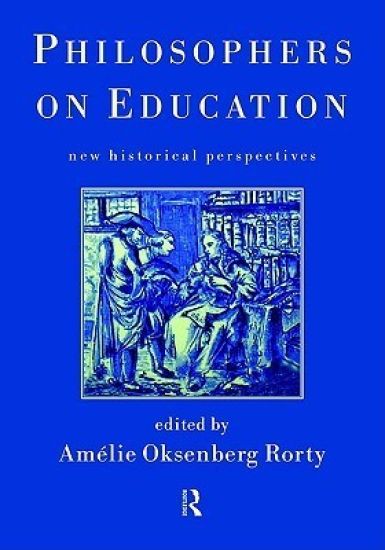
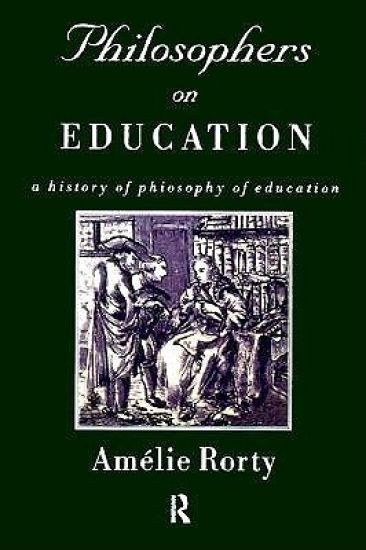
Philosophers on Education
Philosophers on Education offers us the most comprehensive available history of philosopher's views and impacts on the directions of education. As Amelie Rorty explains, in describing a history of education, we are essentially describing and gaining the clearest understanding of the issues that presently concern and divide us.The essays in this stellar collection are written by some of the finest comtemporary philosophers. Those interested in history of philosophy, epistemology, moral psychology and education, and political theory will find Philosophers on Education to be both an engaging and fascinating read.
Philosophers on Education
Philosophers on Education offers us the most comprehensive available history of philosopher's views and impacts on the directions of education. As Amelie Rorty explains, in describing a history of education, we are essentially describing and gaining the clearest understanding of the issues that presently concern and divide us.The essays in this stellar collection are written by some of the finest comtemporary philosophers. Those interested in history of philosophy, epistemology, moral psychology and education, and political theory will find Philosophers on Education to be both an engaging and fascinating read.