Kirjojen hintavertailu. Mukana 11 717 486 kirjaa ja 12 kauppaa.

Kirjahaku

Etsi kirjoja tekijän nimen, kirjan nimen tai ISBN:n perusteella.

1000 tulosta hakusanalla RUSSELL B

The Road

The Road

Russell Lawrence Barsh; James Youngblood Henderson

University of California Press
2022
pokkari
This title is part of UC Press's Voices Revived program, which commemorates University of California Press’s mission to seek out and cultivate the brightest minds and give them voice, reach, and impact. Drawing on a backlist dating to 1893, Voices Revived makes high-quality, peer-reviewed scholarship accessible once again using print-on-demand technology. This title was originally published in 1980.
The Road

The Road

Russell Lawrence Barsh; James Youngblood Henderson

University of California Press
2022
sidottu
This title is part of UC Press's Voices Revived program, which commemorates University of California Press’s mission to seek out and cultivate the brightest minds and give them voice, reach, and impact. Drawing on a backlist dating to 1893, Voices Revived makes high-quality, peer-reviewed scholarship accessible once again using print-on-demand technology. This title was originally published in 1980.
Witchcraft in the Middle Ages

Witchcraft in the Middle Ages

Russell Jeffrey Burton

CORNELL UNIVERSITY PRESS
1972
sidottu
All the known theories and incidents of witchcraft in Western Europe from the fifth to the fifteenth century are brilliantly set forth in this engaging and comprehensive history.Building on a foundation of newly discovered primary sources and recent secondary interpretations, Professor Russell first establishes the facts and then explains the phenomenon of witchcraft in terms of its social and religious environment, particularly in relation to medieval heresies. He treats European witchcraft as a product of Christianity, grounded in heresy more than in the magic and sorcery that have existed in other societies. Skillfully blending narration with analysis, he shows how social and religious changes nourished the spread of witchcraft until large portions of medieval Europe were in its grip—"from the most illiterate peasant to the most skilled philosopher or scientist."A significant chapter in the history of ideas and their repression is illuminated by this book. Our growing fascination with the occult gives the author's affirmation that witchcraft arises at times and in areas afflicted with social tensions a special quality of immediacy.
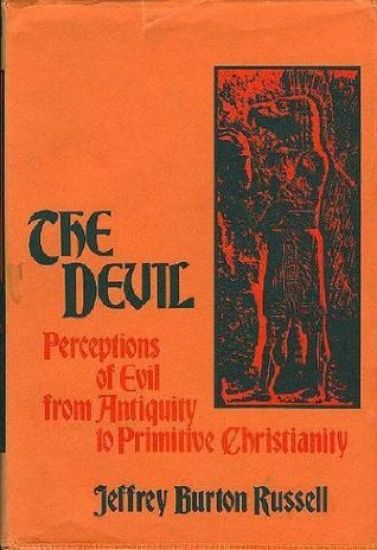
The Devil

The Devil

Russell Jeffrey Burton

CORNELL UNIVERSITY PRESS
1977
sidottu
"Evil—the infliction of pain upon sentient beings—is one of the most long-standing and serious problems of human existence. Frequently and in many cultures evil has been personified. This book is a history of the personification of evil, which for the sake of clarity I have called 'the Devil.' I am a medievalist, but when I began some years ago to work with the concept of the Devil in the eleventh and twelfth centuries, I came to see that I could not understand the medieval Devil except in terms of its historical antecedents. More important, I realized that I could not understand the Devil at all except in the context of the problem of evil. I needed to face the issue of evil squarely, both as a historian and as a human being."—from the PrefaceThis lively and learned book traces the history of the concept of evil from its beginnings in ancient times to the period of the New Testament. A remarkable work of synthesis, it draws upon a vast number of sources in addressing a major historical and philosophical problem over a broad span of time and in a number of diverse cultures, East and West. Jeffrey Burton Russell probes the roots of the idea of evil, treats the development of the idea in the Ancient Near East, and then examines the concept of the Devil as it was formed in late Judaism and early Christianity.Generously illustrated with fifty black-and-white photographs, this book will appeal to a wide range of readers, from specialists in religion, theology, sociology, history, psychology, anthropology, and philosophy to anyone with an interest in the demonic, the supernatural, and the question of good and evil.
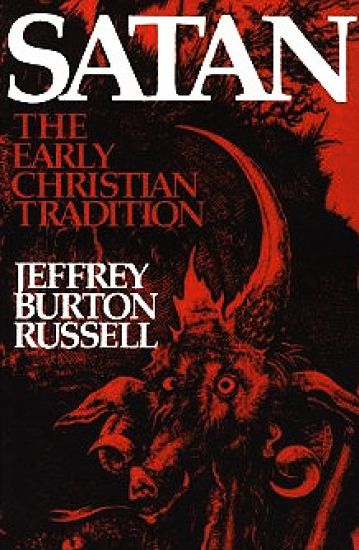
Satan

Satan

Russell Jeffrey Burton

CORNELL UNIVERSITY PRESS
1981
sidottu
Undeniably, evil exists in our world; we ourselves commit evil acts. How can one account for evil's ageless presence, its attraction, and its fruits? The question is one that Jeffrey Burton Russell addresses in his history of the concept of the Devil—the personification of evil itself. In the predecessor to this book, The Devil: Perceptions of Evil from Antiquity to Primitive Christianity, Russell traced the idea of the Devil in comparative religions and examined its development in Western thought through ancient Hebrew religion and the New Testament. This volume follows its course over the first five centuries of the Christian era.Like most theological problems, the question of evil was largely ignored by the primitive Christian community. The later Christian thinkers who wrestled with it for many centuries were faced with a seemingly irreconcilable paradox: if God is benevolent and omnipotent, why does He permit evil? How, on the other hand, can God be all-powerful if one adopts a dualist stance, and posits two divine forces, one good and one evil?Drawing upon a rich variety of literary sources as well as upon the visual arts, Russell discusses the apostolic fathers, the apologetic fathers, and the Gnostics. He goes on to treat the thought of Irenaeus and Tertullian, and to describe the diabology of the Alexandrian fathers, Clement and Origen, as well as the dualist tendencies in Lactantius and in the monastic fathers. Finally he addresses the syntheses of the fifth century, especially that of Augustine, whose view of the Devil has been widely accepted in the entire Christian community ever since.Satan is both a revealing study of the compelling figure of the Devil and an imaginative and persuasive inquiry into the forces that shape a concept and ensure its survival.
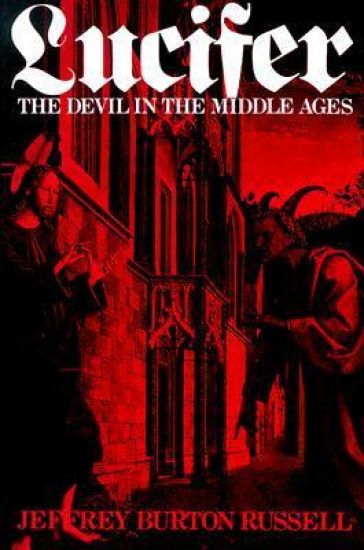
Lucifer

Lucifer

Russell Jeffrey Burton

CORNELL UNIVERSITY PRESS
1984
sidottu
Evil is an intrinsically fascinating topic. In Lucifer, Jeffrey Burton Russell continues his compelling study of the personification of evil in the figure of the Devil. The previous two volumes in this remarkable tertalogy—The Devil and Satan—trace the history of the concept of the devil comparatively as it emerged in diverse cultures and followed its development in Western thought from the ancient Hebrew religion through the first five centuries of the Christian era.The present volume charts the evolution of the concept of the devil from the fifth century through the fifteenth. Drawing on an impressive array of sources from popular religion, art, literature, and drama, as well as from scholastic philosophy, mystical theology, homiletics, and hagiography, Russell provides a detailed treatment of Christian diabology in the Middle Ages. Although he focuses primarily on Western Christian thought, Russell also includes, for the sake of comparison, material on the concept of the devil in Greek Orthodoxy during the Byzantine period as well as in Muslim thought.Russell recounts how the Middle Ages saw a refinement in detail rather than a radical alteration of diabological theory. He shows that the medieval concept of the devil, fundamentally unchanged over the course of the centuries, eventually gave rise to the unyielding beliefs that resulted in the horrifying cruelties of the witch-hunting craze in the 1500s and 1600s. This major contribution to the history of the Middle Ages and to the history of religion will enlighten scholars and students alike and will appeal to anyone concerned with the problem of evil in our world.
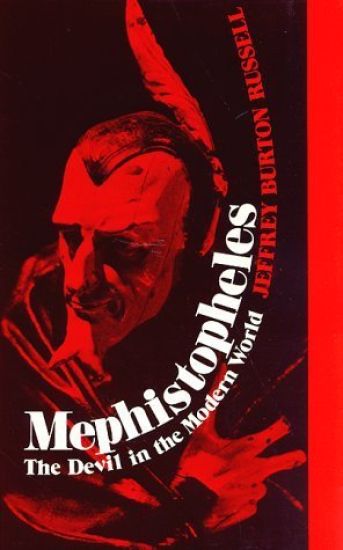
Mephistopheles

Mephistopheles

Russell Jeffrey Burton

CORNELL UNIVERSITY PRESS
1986
sidottu
Mephistopheles is the fourth and final volume of Jeffrey Burton Russell's critically acclaimed history of the concept of the Devil. The series constitutes the most complete historical study ever made of the figure called the second most famous personage in Christianity. In the first three volumes, the author brought the history of Christian diabology to the end of the Middle Ages. This volume continues the story from the Reformation to the present, tracing the fragmentation of the tradition. Using examples from theology, philosophy, art, literature, and popular culture, Russell describes the great changes effected in our idea of the Devil by the intellectual and cultural developments of modern times.
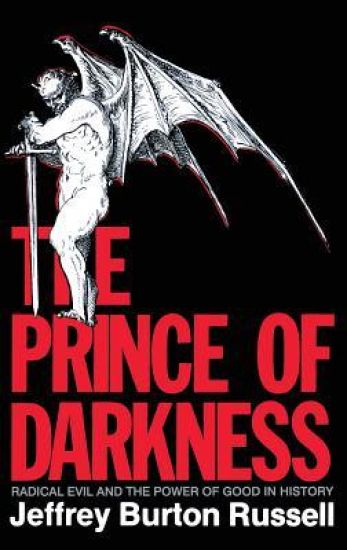
The Prince of Darkness

The Prince of Darkness

Russell Jeffrey Burton

CORNELL UNIVERSITY PRESS
1988
sidottu
The Devil, Satan, Lucifer, Mephistopheles - throughout history the Prince of Darkness, the Western world's most powerful symbol of evil, has taken many names and shapes. Jeffrey Burton Russell here chronicles the remarkable story of the Devil from antiquity to the present. While recounting how past generations have personified evil, he deepens our understanding of the ways in which people have dealt with the enduring problem of radical evil.After a compelling essay on the nature of evil, Russell uncovers the origins of the concept of the Devil in various early cultures and then traces its evolution in Western thought from the time of the ancient Hebrews through the first centuries of the Christian era. Next he turns to the medieval view of the Devil, focusing on images found in folklore, scholastic thought, art, literature, mysticism, and witchcraft. Finally, he follows the Devil into our own era, where he draws on examples from theology, philosophy, art, literature, and popular culture to describe the great changes in this traditional notion of evil brought about by the intellectual and cultural developments of modern times.Is the Devil an outmoded superstition, as most educated people today believe? Or do the horrors of the twentieth century and the specter of nuclear war make all too clear the continuing need for some vital symbol of radical evil? A single-volume distillation of Russell's epic tetralogy on the nature and personifcation of evil from ancient times to the present (published by Cornell University Press between 1977 and 1986), The Prince of Darkness invites readers to confront these and other critical questions as they explore the past faces of that figure who has been called the second most famous personage in Christianity.
Ulrick the Unicorn Prince

Ulrick the Unicorn Prince

Russell J Baines

Imagi Productions
2009
pokkari
Within a distant time within a distant place a young, orphaned Prince Ulrick dreams of adventure beyond the palace walls. Yet he is unaware of the plot to have him killed before he can rightly take his place upon his father's throne. Ulrick's vile uncle, King Huntro, plans to keep the throne for himself. When Ulrick was but a babe Huntro made a pact with a souless creature made of metal with a furnace for a heart, a being Known as Man Chine. The pact was a simple one in return for killing Ulrick Huntro would set about discovering the identity of the last Enchantress, the only one Man Chine feared. A daughter of the forest called Nature. On discovering his uncle's betrayal Ulrick sets out to find the fabled Nature and discovers a world beyond his wildest imaginings, a world of magic and dragons and an evil of steel and fire which threatens to consume the world...
Design and Test of a Rocket Motor Expansion Joint

Design and Test of a Rocket Motor Expansion Joint

Russell Lawrence Barden K. Reiserer

Hassell Street Press
2021
nidottu
This work has been selected by scholars as being culturally important and is part of the knowledge base of civilization as we know it.This work is in the public domain in the United States of America, and possibly other nations. Within the United States, you may freely copy and distribute this work, as no entity (individual or corporate) has a copyright on the body of the work.Scholars believe, and we concur, that this work is important enough to be preserved, reproduced, and made generally available to the public. To ensure a quality reading experience, this work has been proofread and republished using a format that seamlessly blends the original graphical elements with text in an easy-to-read typeface.We appreciate your support of the preservation process, and thank you for being an important part of keeping this knowledge alive and relevant.
Until They Eat Stones

Until They Eat Stones

Russell 1911- Brines

Hassell Street Press
2021
nidottu
This work has been selected by scholars as being culturally important and is part of the knowledge base of civilization as we know it.This work is in the public domain in the United States of America, and possibly other nations. Within the United States, you may freely copy and distribute this work, as no entity (individual or corporate) has a copyright on the body of the work.Scholars believe, and we concur, that this work is important enough to be preserved, reproduced, and made generally available to the public. To ensure a quality reading experience, this work has been proofread and republished using a format that seamlessly blends the original graphical elements with text in an easy-to-read typeface.We appreciate your support of the preservation process, and thank you for being an important part of keeping this knowledge alive and relevant.
Common Factors Therapy

Common Factors Therapy

Russell J Bailey; Benjamin M. Ogles

AMERICAN PSYCHOLOGICAL ASSOCIATION
2023
pokkari
This book highlights common factors as a psychotherapeutic treatment and offers related techniques that can be used as rubrics to improve clinical practice and training. The authors discuss five key common factors: the therapeutic relationship, motivation, corrective experiencing, insight, and self-efficacy, which serve as heuristics for therapists of any background. Each factor is broken down into a set of core principles, intervention concepts, and example techniques, such as motivational interviewing skills, confronting distress to move towards change, adopting a multicultural orientation, and empowering clients. Deliberate practice methods are provided so that clinicians can rehearse common factor approaches and integrate them into their own work. Reviewing past efforts to define actionable common factors-including the contextual model of therapy-as well as transtheoretical studies and techniques, the book provides a uniquely well-defined common factors model of treatment and paves the way for future innovations.