Kirjojen hintavertailu. Mukana 11 342 296 kirjaa ja 12 kauppaa.

Kirjahaku

Etsi kirjoja tekijän nimen, kirjan nimen tai ISBN:n perusteella.

1000 tulosta hakusanalla Robert Cornforth

Robert Stephenson – The Eminent Engineer
Robert Stephenson, the leading engineer of the mid-nineteenth century whose substantial public works brought about considerable social change is now the subject of this excellent new biography: Robert Stephenson - The Eminent Engineer. Stephenson's engineering practice was responsible for major railway building programmes in Britain and overseas. He oversaw the building of many bridges, particularly the innovative tubular bridges in North Wales and was influential in the development of England's railway network. Stephenson's engineering practice in Westminster, whose many associates were engaged throughout England, were responsible for substantial railway building programmes during the 'mania' years of the 1840s. By 1850, he was associated with one third of the railway network. His overseas railway involvements included building many miles of line and developing national transport plans. Robert Stephenson - The Eminent Engineer also considers Stephenson's public roles and shows how he was perceived by his contemporaries. Stephenson was a Member of Parliament and Commissioner for the Great Exhibition, was well respected as an arbitrator, received several British and overseas honours and was President of both the Institutions of Civil and Mechanical Engineering.
Robert Hooke

Robert Hooke

Michael Hunter

Ashgate Publishing Limited
2006
sidottu
Robert Hooke (1635-1703) was a genius whose wide-ranging achievements are at last receiving the recognition that they deserve. Long overshadowed by such eminent contemporaries as Sir Isaac Newton and Sir Christopher Wren, Hooke's own seminal contributions to science, architecture and technology are now being acclaimed in their own right. Curator of Experiments to the Royal Society when it was chartered in 1662 and author of the famous Micrographia (1665), Hooke also showed unparalleled ingenuity in designing machines and instruments, and played a crucial role as Surveyor to the City of London after the Great Fire. This volume represents a benchmark in the study of Hooke, bringing together a comprehensive set of studies of different aspects of his life, thought and artistry. Its sections deal with Hooke's life and reputation; his contributions to celestial mechanics and astronomy, and to speculative natural philosophy; the instruments that he designed; and his work in architecture and construction. The introduction places the studies in the context of our current understanding of Hooke and his milieu, while the book also contains a comprehensive bibliography. In all, it will be an invaluable resource for all those interested in a figure whose complexity and importance are becoming clear after centuries of neglect.
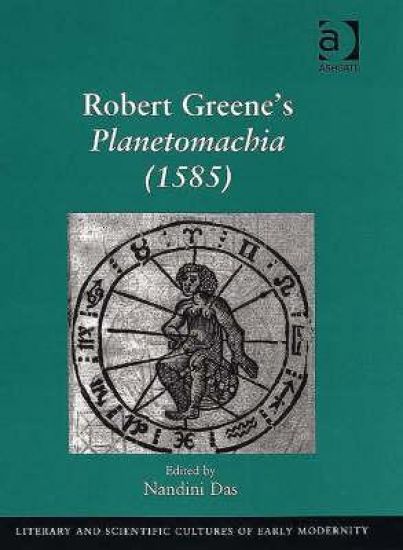
Robert Greene's Planetomachia (1585)

Robert Greene's Planetomachia (1585)

Ashgate Publishing Limited
2007
sidottu
When Planetomachia was published in 1585, Greene himself-always the best advertiser of his own books-promised his readers a perfectly balanced diet of edification and entertainment. He described his newest offering as an astronomical discourse on the nature and influence of the planets interlaced with 'pleasant and tragical histories,' which one could ostensibly use as a manual to identify various planetary influences on 'natural constitution.' In this first complete critical edition, Nandini Das presents Planetomachia as a complex hybrid which is eminently a product of its times, exploring how the two very different intellectual and cultural spheres of Humanist scholarship and Renaissance popular print engage in an intriguing, albeit uneasy, dialogue to produce this unique work of prose fiction. The volume gives a clear sense, afforded by no other existing edition, of the intellectual climate which shaped this text. It offers substantial introductory material (on biographical, literary and scientific contexts) and extensive annotation identifying Greene's allusions and elucidating his vocabulary. It also includes translations and extracts from significant sources, along with a bibliography of relevant primary texts and critical work on Greene generally and on Planetomachia in particular.
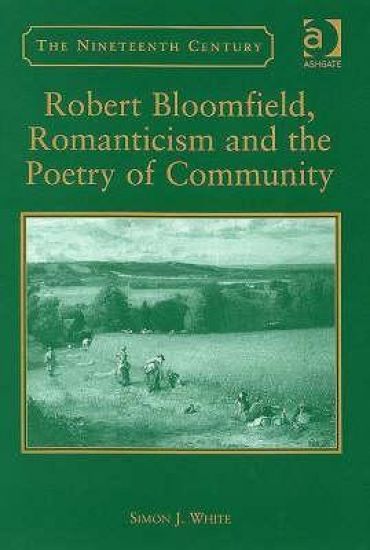
Robert Bloomfield, Romanticism and the Poetry of Community

Robert Bloomfield, Romanticism and the Poetry of Community

Simon J. White

Ashgate Publishing Limited
2007
sidottu
Robert Bloomfield, whom John Clare described as 'the most original poet of the age,' was a widely read and critically acclaimed poet throughout the first decade of the nineteenth century, and remained popular until the beginning of the twentieth century. Yet until now, no modern critic has undertaken a full-length study of his poetry and its contexts. Simon J. White considers the relationship between Bloomfield's poetry and that of other Romantic poets. For example, her argues that Wordsworth's poetics of rural life was in some respects a response to Bloomfield's The Farmer's Boy. White considers Bloomfield's emphasis on the importance of local tradition and community in the lives of labouring people. In challenging the idea that the formal and rhetorical innovation of Wordsworth and Coleridge was principally responsible for the emergence of a new kind of poetry at the turn of the eighteenth century, he also shows that it is impossible to understand how the lyric and the literary ballad evolved during the Romantic period without considering Bloomfield's poetry. White's authoritative study demonstrates that, on the contrary, Bloomfield's poetry was pivotal in the development of Romanticism.
Robert the Monk's History of the First Crusade
This is the first English translation of Robert the Monk's Historia Iherosolimitana, a Latin prose chronicle describing the First Crusade. In addition to providing new and unique information on the Crusade (Robert claims to have been an eyewitness of the Council of Clermont in 1095), its particular interest lies in the great popularity it enjoyed in the Middle Ages. The text has close links with the vernacular literary tradition and is written in a racy style which would not disgrace a modern tabloid journalist. Its reflection of contemporary legends and anecdotes gives us insights into perceptions of the Crusade at that time and opens up interesting perspectives onto the relationship of history and fiction in the twelfth century. The introduction discusses what we know about Robert, his importance as a historical source and his place in the literary tradition of the First Crusade.
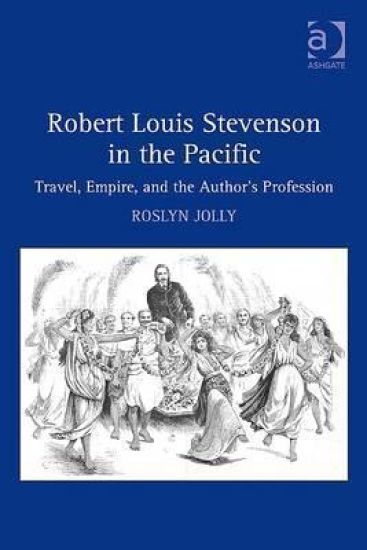
Robert Louis Stevenson in the Pacific

Robert Louis Stevenson in the Pacific

Roslyn Jolly

Ashgate Publishing Limited
2009
sidottu
Robert Louis Stevenson's departure from Europe in 1887 coincided with a vocational crisis prompted by his father's death. Impatient with his established identity as a writer, Stevenson was eager to explore different ways of writing, at the same time that living in the Pacific stimulated a range of latent intellectual and political interests. Roslyn Jolly examines the crucial period from 1887 to 1894, focusing on the self-transformation wrought in Stevenson's Pacific travel-writing and political texts. Jolly shows how Stevenson's desire to understand unfamiliar Polynesian and Micronesian cultures, and to record and intervene in the politics of Samoa, gave him opportunities to use his legal education, pursue his interest in historiography, and experiment with anthropology and journalism. Thus as his geographical and cultural horizons expanded, Stevenson's professional sphere enlarged as well, stretching the category of authorship in which his successes as a novelist had placed him. Rather than enhancing his stature as a popular writer, however, Stevenson's experiments with new styles and genres, and the Pacific subject matter of his later works, were resisted by his readers. Jolly's analysis of contemporary responses to Stevenson's writing, gleaned from an extensive collection of reviews, many of which are not readily available, provides fascinating insights into the interests, obsessions, and resistances of Victorian readers. As Stevenson sought to escape the vocational straightjacket that confined him, his readers just as strenuously expressed their loyalty to outmoded images of Stevenson the author, and their distrust of the new guises in which he presented himself.
Robert Saxton: Caritas

Robert Saxton: Caritas

Wyndham Thomas

Ashgate Publishing Limited
2012
sidottu
Caritas relates the 'true', yet largely undocumented story of Christine Carpenter, a 14th-century anchoress who moves towards insanity as her desire for a divine revelation continues to be unfulfilled after a period of three years locked in her cell. Although physically isolated, she is aware of the worldly life and love that she has abandoned. The very essence of the drama is the dogmatic refusal of her Bishop to release her from her vows. Set against the backcloth of the Peasants' Uprising (1381), the libretto/play juxtaposes sacred and secular worlds, the relative power and servitude of rulers and serfs, and the terrifying ordeal of Christine who is caught between the inflexibility of the established church and her personal religious expectations. Such a narrative was to offer rich opportunities for musical characterization and evocation of the historical context of the action, as well as substantial challenges in pacing and integrating the sequence of dramatic 'snap-shots' that culminate in a scene of total despair. The colourful juxtaposition of secular life and that of a recluse in Act One culminates in a Second Act finale of immense dramatic power in which Saxton's vocal and instrumental writing reaches new heights - a landmark both in his output and in late 20th century opera. Caritas - first performed in 1991 - occupies an important position in Robert Saxton's output and, as Thomas argues, in British opera during the closing decades of the 20th century. Thomas provides a detailed contextual setting in which to evaluate Caritas, as well as presenting an analytical commentary on the structure, musical language, instrumentation, staging and production of the opera. Thomas concludes with a reflection on the reception of Caritas as well as looking forward to Saxton's later and future works. A downloadable resource of the first performance is included.
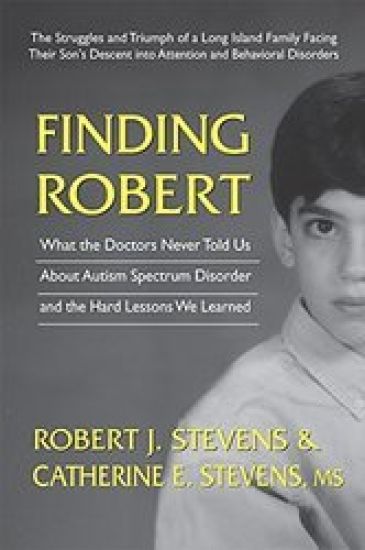
Finding Robert

Finding Robert

Robert J. Stevens; Catherine E. Stevens

Square One Publishers
2016
nidottu
Diagnosed with attention deficit hyperactivity disorder, oppositional defiance disorder, and pervasive developmental disorder in the early 1990s, Robert Stevens was anexceptionally intelligent child who could not function in a mainstream environment.Being the problem child of every play group, sports league, and extracurricular activityhe joined, Robert had no friends, no internal means of self-control, no off switch, and as his parents, Robert and Catherine Stevens, were warned perhaps no realfuture. Thinking it for the best, Robert s parents did what the experts told them to do.Despite having a remarkably high IQ, Robert was placed in a special education program, under a psychiatrist s care, and on several powerful medications, including Ritalin andProzac. Unfortunately, nothing worked quite as intended, and Robert suffered from nearlyevery side effect these drugs had to offer.Robert s parents saw they were losing him. Witnesses to Robert s drastic mood swingsand anxious displays, they did not know whether they were seeing their son or theresults of the medications he was taking. While initially helpful, the special educationclass began to create its own world of problems, with Robert taking a step backwards foreach step forward. Desperate, the Stevens family turned to holistic therapies. Amazingly, Robert began to show improvement. Wondering why their son s doctors had discouragedsuch strategies, Robert and Catherine started researching new approaches on their own.Using nontraditional approaches, Robert was found. By third grade, he was off allmedications, attending a mainstream school, making friends, and simply being himself.Finding Robert chronicles one family s journey through the world of developmentaldisorders. It depicts the struggles faced, examines the decisions made, and offers athorough analysis of the therapies utilized. Amid sadness and confusion, with strengthand resolve, Robert and Catherine regained their son and undertook a mission to changethe way we look at these conditions."
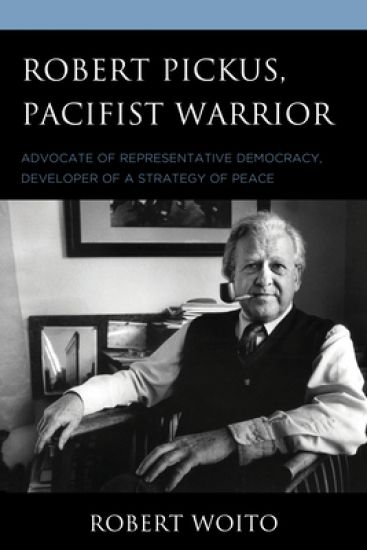
Robert Pickus, Pacifist Warrior

Robert Pickus, Pacifist Warrior

Robert Woito

Hamilton Books
2020
nidottu
Pacifist Warrior introduces Robert Pickus, his leadership role in the pacifist community (1951–2016), and his thoughtful work to constructively engage the United States in world politics. He called for leadership by the United States to move a conflict-filled world towards peace through non-military initiatives, designed to gain the reciprocation of allies and dedicated adversaries alike. Robert Pickus earned the title “Pacifist Warrior” because he not only believed pacifism in a nuclear age was a moral imperative, it was also a more effective strategy towards a world without war. Pickus’ career lasted from 1951 to 2016. As Director of the World Without War Council office in Berkeley, he engaged civic, labor, business, and religious organizations to work for a world without war. He worked at the juncture where advocates of war-as-a-last-resort met community peace advocates to develop non-military alternatives to war. His signature contribution was a compendium of American Peace Initiatives developed with other key leaders, including George Weigel, Harold Guetzkow, Sidney Hook and Ted Sorensen. During his tenure, the WWWC developed a strategy of American peace initiatives to get from here to a world without war. The ideas of reciprocation, universal participation and non-violent change apply to both arms control and disarmament as well as climate change.
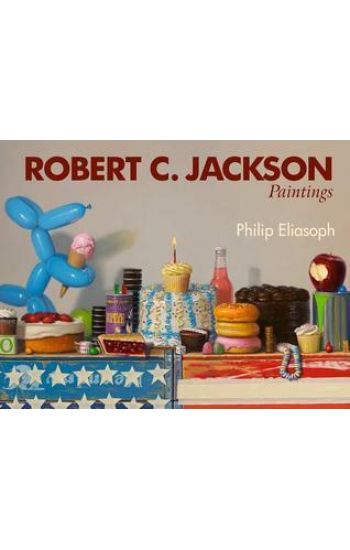
Robert C. Jackson Paintings

Robert C. Jackson Paintings

Philip Eliasoph

Schiffer Publishing Ltd
2012
sidottu
A monograph of contemporary American painter Robert C. Jackson. The paintings of Robert C. Jackson are introduced by Philip Eliasoph in the artist’s first monograph. Using paintings from artists as diverse as Andrew Wyeth and Jasper Johns, Eliasoph’s extensive knowledge of American art places Jackson’s artwork into a historical context. This beautifully illustrated book includes more than 130 images of the artist’s paintings with details, photographs of the artist at work, sketchbook reproductions, and an interview with the artist himself. Eliasoph colorfully proclaims, “The paintings we are about to examine are inescapably a bundle of contradictions, satirical complexities, and witty subterfuge. Essentially, Jackson is a uniquely self-realized painter. His feisty independence is fortified with healthy dosages of non-conforming eccentricity, with a small touch of screwball nuttiness.” The foreword by Professor Henry Adams reveals a similar sentiment, “Notably, this is also the sort of strange mix of sensibilities one finds in the best American novelists, such as Mark Twain.”
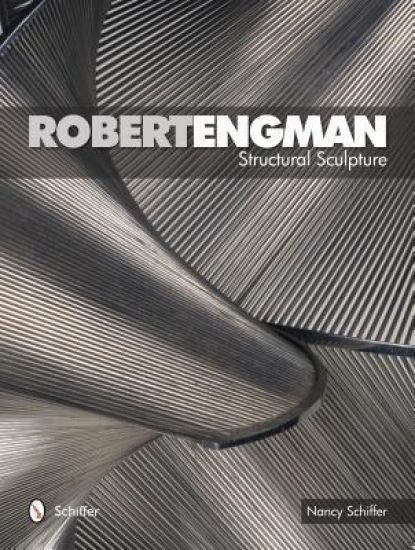
Robert Engman

Robert Engman

Nancy Schiffer

Schiffer Publishing Ltd
2013
sidottu
Robert Engman's distinctive sculptures developed from his training and fellowship with some of the mid-twentieth century's most renowned art teachers and famous sculptors. As shown here in over 600 color photos, his beautiful curved, minimal surfaces and clean abstract designs evolved as he sought his own voice with bronze, steel, aluminum, and plastics. Engman's commissions stand in Boston, New York, Philadelphia, Washington, D.C., Atlanta, and Jerusalem. They are also found in the Hirshhorn, MOMA, Whitney, and numerous college museums. He was a professor at Yale and Penn, significantly influencing today's American sculptors. Engman continues to explore the relationships of planes and produces dynamic sculptures in series, with warped surfaces of curvilinear shapes. This book's insightful text, organized chronologically, exposes the influences, opportunities, experiences, and challenges he met. Major chapters cover his training, teaching, and sculpture, with a timeline, resume, bibliography, and index. The photos reveal his stages of development and progression of sculpture construction. Robert Engman's warm character is shared with readers to reflect his teaching style as a popular professor and resident artist.
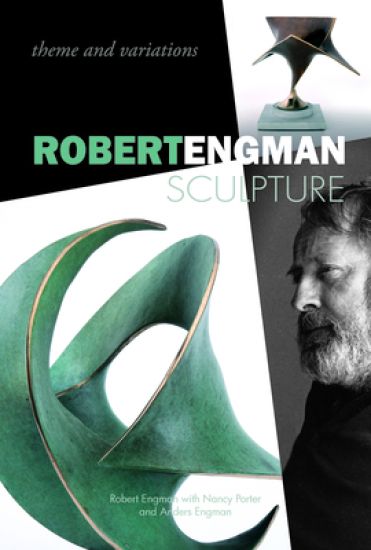
Robert Engman Sculpture

Robert Engman Sculpture

Robert Engman; Nancy Porter; Anders Engman

Schiffer Publishing Ltd
2017
sidottu
Robert Engman’s work over the last fifty years has ranged in size from monumental to miniature. Large pieces he has created for major cities and museums in decades past have common attributes but he had never formally attempted to make a series of related works. In the last ten years, he has cast a group of 52 distinctive small sculptures, whose modest scale has allowed him to realize his vast number of sculptural ideas more efficiently. This collection clearly demonstrates how Engman’s work expands and alters three-dimensional structural concepts. Divided into nine families, the sculptures' forms are based on different combinations of circles and squares in flat and warped planes. Each piece is shown from several angles, revealing strikingly different perspectives.
Robert C. Jackson

Robert C. Jackson

Robert C. Jackson

SCHIFFER PUBLISHING LTD
2025
sidottu
With over 525 images and photos that focus on his career from age 45 to 60, American still-life painter Jackson reveals his work methods, inspirations, and development. Featuring more than 525 paintings in Robert C. Jackson's iconic style of realism with a slyly irreverent twist, this beautiful book thoughtfully covers his midcareer works. Many of his signature themes are recognizable but now treated more deeply, the compelling nature of his art is intensified, and larger canvases prevail. Known especially for his realistic still-life paintings featuring objects such as soda crates, balloon dogs, and foods, Jackson creates playful, exuberant art that often makes impossible situations believable, one reason for its wide appeal. Learn more about: • His final college semester when he took Painting 101 to fill out his schedule. • The first time he ever quit anything. (It was a career as an engineer.) • How the concept of "seriously funny" motivates him. • The cleansing and growth that occurs with aging as a painter. • Zippy, the clown he keeps on retainer to make balloon dogs. Jackson's paintings have been featured in five solo museum exhibitions to date, and are in private, corporate, and museum collections worldwide, ranging from the Delaware Art Museum to the South Dakota Art Museum. Jackson's conversational insights begin each section and address how he built a successful art career. Jackson offers specific details of interest to collectors as well as to artists also striving for a full-time career in painting. For example, coming up with new source material year after year requires effort, and Jackson explains his processes for doing just that. He also shares how embracing commissioned artwork as a collaborative art process can be fulfilling for both the artist and client. Candid black-and-white photos of Jackson at work and play express the spirit he brings to his art. Understand why new fans and established collectors alike respond to this artist who has found his unique and identifiable voice within contemporary art.
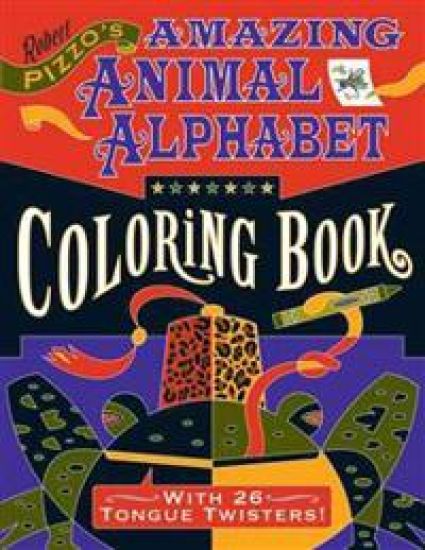
Robert Pizzo Amazing Animal Alphabet Colouring Book

Robert Pizzo Amazing Animal Alphabet Colouring Book

Robert Pizzo

Pomegranate Communications Inc,US
2014
nidottu
How would you color a Crabby Crab Cabbie? How would you ornament an Outlandish, Oboe-playing Octopus? In his book The Amazing Animal Alphabet of Twenty-Six Tongue Twisters Pomegranate, 2013, artist and author Robert Pizzo assembled a cast of crazy critters to star in twenty-six tiny, tongue-twisting talesone for every letter of the alphabet. He did the coloring in that book himself, setting his maniacal menagerie in a collection of captivatingly chaotic, brightly colored contexts. Now its your turn this coloring book offers Roberts same twenty-six tongue-torturing tableaux in black-and-white line drawings that cry out
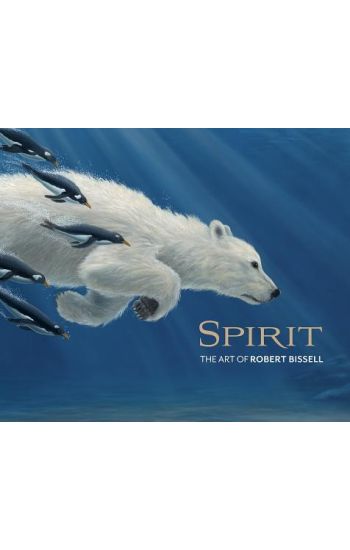
Spirit the Art of Robert Bissell

Spirit the Art of Robert Bissell

Robert Bissell

Pomegranate Communications Inc,US
2019
sidottu
Spirit: The Art of Robert Bissell includes more than 130 of Bissell's artworks that help illuminate the universal quest into the world of spirit. His familiar bears and rabbits are joined by elephants and humans as they find love and connection. Spirit guides offer help along the way, but in the end, each of us takes a unique, truly individual journey through life, and the end is simply the beginning of a new adventure.
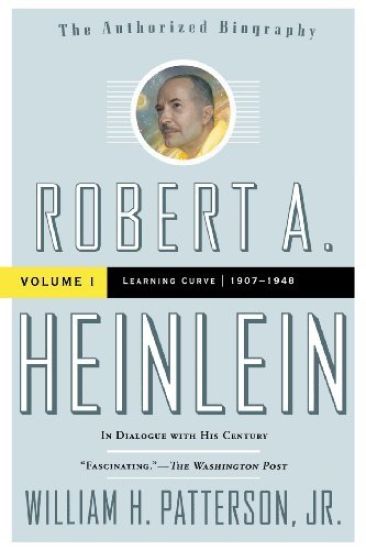
Robert A. Heinlein: In Dialogue with His Century, Volume 1: Learning Curve (1907-1948)
For the first time, the real story of the life of Robert A. Heinlein in the authorized biography Robert A. Heinlein (1907-1988) is generally considered the greatest American SF writer of the 20th century. A famous and bestselling author in later life, he started as a navy man and graduate of Annapolis who was forced to retire because of tuberculosis. A socialist politician in the 1930s, he became one of the sources of Libertarian politics in the USA in his later years. His most famous works include the Future History series (stories and novels collected in The Past Through Tomorrow and continued in later novels), Starship Troopers, Stranger in a Strange Land, and The Moon is a Harsh Mistress. Given his desire for privacy in the later decades of his life, he was both stranger and more interesting than one could ever have known. This is the first of two volumes of a major American biography. This volume is about Robert A. Heinlein's life up to the end of the 1940s and the mid-life crisis that changed him forever.
Robert A. Heinlein: In Dialogue with His Century, Volume 2: The Man Who Learned Better (1948-1988)
"Robert A. Heinlein: In Dialogue with his Century: 1948-1988 The Man Who Learned Better" The real-life story of Robert A. Heinlein in the second volume of the authorized biography by William H. Patterson Robert A. Heinlein (1907 1988) is generally considered the greatest American science fiction writer of the twentieth century. His most famous and widely influential works include the Future History series (stories and novels collected in "The Past Through Tomorrow" and continued in later novels), "Starship Troopers," "Stranger in a Strange Land," and "The Moon is a Harsh Mistress" all published in the years covered by this volume. He was a friend of admirals, bestselling writers, and artists; became committed to defending the United States during the Cold War; and was on the advisory committee that helped Ronald Reagan create the Star Wars Strategic Defense Initiative in the 1980s.Heinlein was also devoted to space flight and humanity's future in space, and he was a commanding presence to all around him in his lifetime. Given his desire for privacy in the later decades of his life, the revelations in this biography make for riveting reading."