Kirjahaku
Etsi kirjoja tekijän nimen, kirjan nimen tai ISBN:n perusteella.
1000 tulosta hakusanalla Roberto Podda
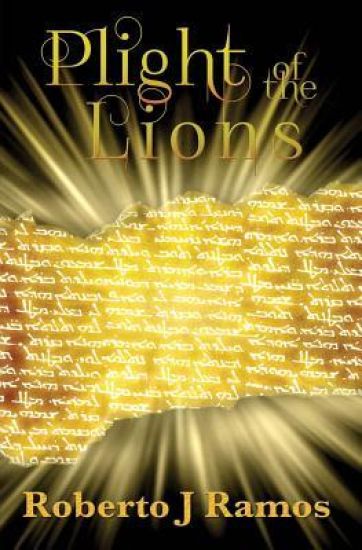
SET IN THE MEDITERRANEAN WORLD OF BIBLICAL TIMES, PLIGHT OF THE LIONS begins one night when Akiva, a young runaway, inadvertently stumbles into the rabbi Yeshua on the night he is arrested on the Mount of Olives. The chance encounter changes his life forever. Years later the streets of Rome are filled with political betrayal, murder and unrest under Nero. Across the Great Sea Jerusalem is on the brink of chaos under Roman rule. Its citizens are doing all that they can to prepare for certain doom. It is amid this world that Tessius Trulius, a Roman boy, and Farrenthias Theophilus, a Greek boy, arrive at Clivus. Hidden deep in the mountains of Armenia, Clivus is occupied by priests who study and translate sacred scrolls that they have gathered throughout the world. Trulius and Farrenthias spend most of their youth at Clivus, and although very different in character, they form a friendship that bonds them for life. Eventually, they must leave Clivus. Trulius sets out in search of his father who has been wrongly convicted of murder. At first, Farrenthias accompanies Trulius and then goes his separate way on a quest to search for Akiva and discover what Akiva uncovered and wrote about the life of Yeshua. Follow their lives and the lives of the other men and women who make up Plight of the Lions
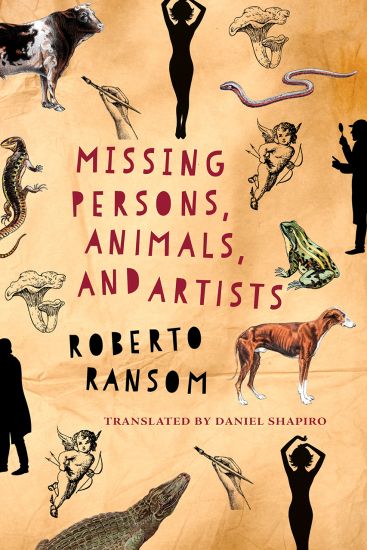
Elegant prose and imaginative ironies bring these compelling short stories to life in this first English-language collection from Mexican author Roberto Ransom. Each of the ten stories is filled with fascinating, yet enigmatic and sometimes elusive characters: an alligator in a bathtub, an invisible toad who appears only to a young boy, the beautiful redheaded daughter of a mushroom collector, a deceased journalist who communicates in code, and even Leonardo Da Vinci himself, meditating on The Last Supper. One of Mexico's most original writers, Ransom explores these characters' emotional depths as they move through their fantastical worlds that, while at times unfamiliar, offer brave and profound insights into our own. Missing Persons, Animals, and Artists is the follow-up to Ransom's highly acclaimed A Tale of Two Lions, praised by Ignacio Padilla as "the best Mexican literary work I have read in recent years...[It] heralds a pen capable of that rarest of privileges in our letters: attaining the comic and profoundly human through a perfect simplicity." This collection of short stories has been translated with great care by Daniel Shapiro.
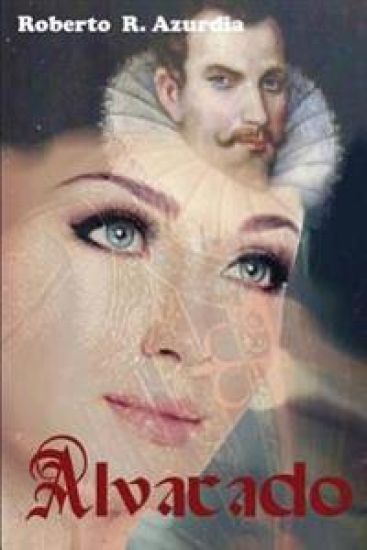
Esta novela se desarrolla en una poca diferente y en pa ses entonces afectados por la corrupci n, en situaciones muy similares a lo que sucede hoy entre la alta burocracia de varios gobiernos. Se incorporan al relato algunos personajes imaginarios y otros que en la vida real existieron. Un joven gobernador de una colonia en Am rica Central estaba emplazado para enfrentar un juicio muy hostil, acusado por disponer del oro que deb a enviar a Espa a utiliz ndolo para construir los primeros barcos que surcaron las costas de Am rica en el Oceano Pac fico. Al mismo tiempo hab a una conspiraci n internacional para anular a los herederos de un magnate holand s desaparecido en un naufragio, y cuya ausencia desencaden una serie de letales conflictos. Por casualidad y caprichos del destino aquellos personajes asediados por esos terribles peligros llegan a conocerse, y luego a integrar una alianza para enfrentar a sus poderosos enemigos, vi ndose obligados a emprender una intensa aventura por el Oceano Pac fico desde las costas de Am rica hasta Indonesia, y luego a Europa donde culmina con apasionantes eventos plenos de intenso drama en un ambiente multifac tico con inesperados desenlaces.
During the turbulent history of the Spanish conquest of the Americas, Capit n Don Pedro de Alvarado, a young governor of a colony in the Central American region of the New Spain, decided to build several galleons, wanting to be the first to navigate the Pacific Ocean coastlines of America. To achieve his quest and acting out of his own initiative, the governor used the gold which had been destined for the Spanish Crown, generating a terrible tsunami of unpleasantness and anger among the high levels of the Spanish government, where officials routinely and fraudulently benefited from some of that wealth originating in the New Spain. A conspiracy was organized at the highest and most corrupt levels of the Spanish court, aimed at neutralizing and destroying what the originators deemed an abusive governor. Young captain Alvarado became the target of lethal attacks against him, his family and friends. He was forced to defend himself with the help of his allies, some of whom were also victims of a similar conspiracy launched by the corrupt rulers of another small, northern European country. The governor and his allies eventually retaliated against the heads of their enemies, who had been shielded by power and distance. This was accomplished through heroic deeds and big sacrifices, leading to an unexpected conclusion. A novelist has the liberty of using fiction when interesting events have faded in time, leaving empty voids in history. Once the veracity of certain stories has been diluted by the passing of time, the novelist is able to fill in the gaps, provided it is done with logic acceptable to the storyline and in an interesting, well-articulated style of what might have been. Such is the case with this novella, which contains considerable veracity in its pages.
This is a history where the protagonist is caught for second time in the clutches of evil. With the exception of his lawyer, no one listened to him or believed in his innocence, however, he decides to insist in communicating with Jesus, and to make Jesus aware of the injustices committed on the Earth.
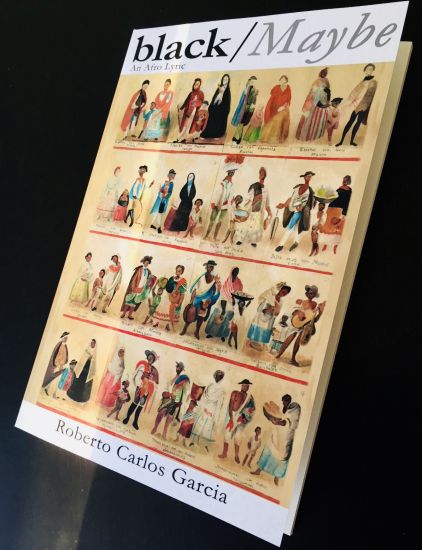
Poetry collection by Roberto Carlos Garcia. Explores themes of blackness and Dominican culture. "I'm American, but I don't speak English because I'm from England and I'm a Latino that doesn't speak Spanish because I'm from Spain. I speak these languages thanks to a long history of colonialism, to be more specific, the losing end of colonialism. The flight attendant who poured my whiskey is a Spaniard. Spanish has been his national language for centuries and his family's language for generations. When he hears me, a mutt with African, Chinese, and Spanish blood (but who leans more towards the African), does he consider me a fraud? Does he see me as parroting Spanish? Now, this poor flight attendant is a fill in, of course, but you get the picture. What do most Spaniards think about the Spanish speakers in the colonies they lost all those years ago? Do they care? Why should I?" --from "Trapped in History," EnglishKillsReview.com
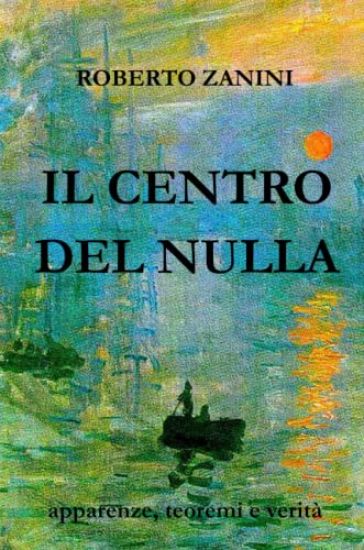
Lo studio di Carmine De Vitis, dottore commercialista con una vita regolare e prevedibile, si trova al centro di un crimine insolvibile e la vita di Carmine viene sconvolta suo malgrado. Un giallo, dunque, ma soprattutto un percorso incerto, spesso ironico, accompagnato dalla bellezza e dalle riflessioni dei poeti e dei filosofi di ogni tempo. L'autore, Roberto Zanini, architetto di professione, da sempre scrittore per passione, amante della filosofia e dell'arte, affronta gli enigmi che ogni uomo trova sul cammino della propria esistenza e che spesso gli si propongono in maniera ambigua; un cammino contraddittorio che permette di conoscere le verit e gli inganni, l'amore e la morte, la felicit e l'angoscia, la gioia e la disperazione.
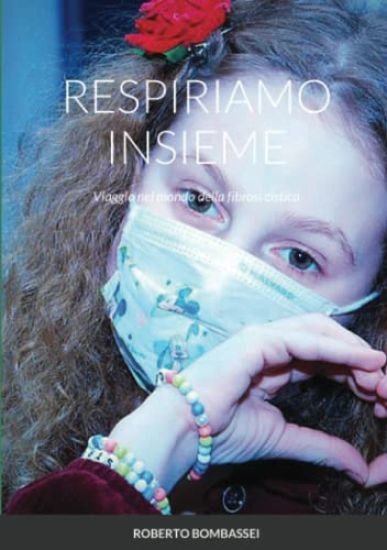
Cos' la fibrosi cistica? Come nata? Cosa si sta facendo per la ricerca? Questo libro nato con lo scopo di sensibilizzare, attraverso l' esperienza personale di due genitori di una bambina affetta da fibrosi cistica, il mondo a loro estraneo su questa malattia invisibile. Il ricavato della vendita di questa pubblicazione andr interamente a coprire progetti avanzati di ricerca sulla fibrosi cistica.
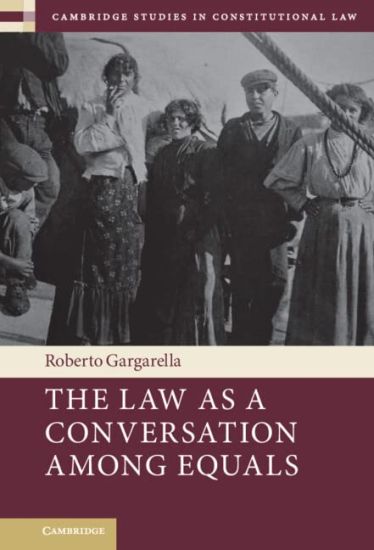
In a time of disenchantment with democracy, massive social protests and the 'erosion' of the system of checks and balances, this book proposes to reflect upon the main problems of our constitutional democracies from a particular regulative ideal: that of the conversation among equals. It examines the structural character of the current democratic crisis, and the way in which, from its origins, constitutions were built around a 'discomfort with democracy'. In this sense, the book critically explores the creation of different restraints upon majority rule and collective debate: constitutional rights that are presented as limits to (and not, fundamentally, as a product of) democratic debate; an elitist system of judicial review; a checks and balances scheme that discourages, rather than promotes, dialogue between the different branches of power; etc. Finally, the book proposes a dignified constitutional democracy aimed at enabling fraternal conversation within the framework of a community of equals.
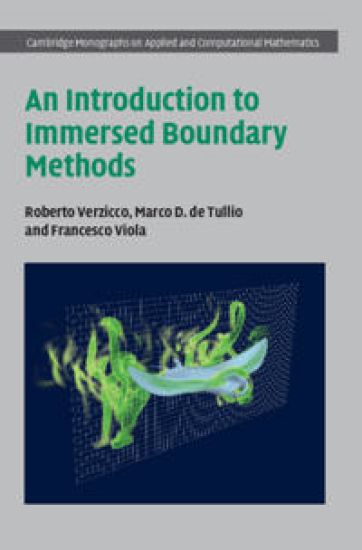
An Introduction to Immersed Boundary Methods
Roberto Verzicco; Marco D. de Tullio; Francesco Viola
Cambridge University Press
2025
sidottu
Unlock the potential of computational fluid dynamics with this essential guide for master's and graduate students, and researchers. It explores the immersed boundary method (IBM), a revolutionary approach for simulating flows in complex geometries. With a focus on fluid/structure interaction, it examines theoretical principles and practical implementations, offering insights into tackling intricate geometries and enhancing simulation accuracy. The book features a series of numerical examples that increase in complexity, and is accompanied by the source code, allowing readers to replicate results and deepen their understanding. Whether you're wanting to refine your skills or embark on new research, this introduction will empower you to master the art of complex flow simulations.
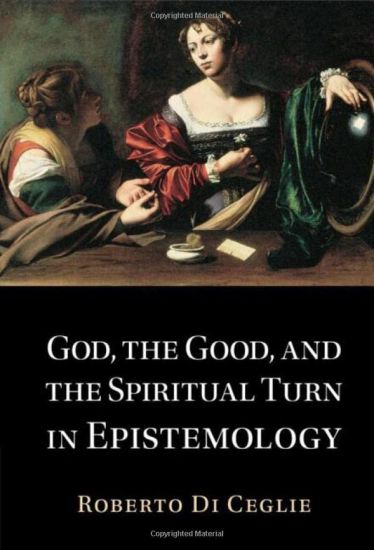
God, the Good, and the Spiritual Turn in Epistemology
Roberto Di Ceglie
Cambridge University Press
2022
sidottu
In this book, Roberto Di Ceglie offers an historical, theological, and epistemological investigation exploring how commitments to God and/or the good generate the optimum condition to achieve knowledge. Di Ceglie criticizes the common belief that to attain knowledge, one must always be ready to replace one's convictions with beliefs that appear to be proven. He defends a more comprehensive view, historically exemplified by outstanding Christian thinkers, whereby believers are expected to commit themselves to God and to related beliefs no matter how convincing the evidence contradicting such beliefs appears to be. He also argues that both believers and unbelievers can commit themselves to God and the good, respectively, thereby creating a spiritual turn in epistemology that enables them to generate the best possible condition for conducting rational enquiries and discussion.
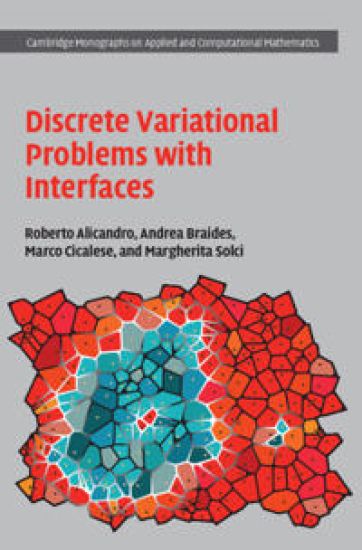
Discrete Variational Problems with Interfaces
Roberto Alicandro; Andrea Braides; Marco Cicalese; Margherita Solci
Cambridge University Press
2023
sidottu
Many materials can be modeled either as discrete systems or as continua, depending on the scale. At intermediate scales it is necessary to understand the transition from discrete to continuous models and variational methods have proved successful in this task, especially for systems, both stochastic and deterministic, that depend on lattice energies. This is the first systematic and unified presentation of research in the area over the last 20 years. The authors begin with a very general and flexible compactness and representation result, complemented by a thorough exploration of problems for ferromagnetic energies with applications ranging from optimal design to quasicrystals and percolation. This leads to a treatment of frustrated systems, and infinite-dimensional systems with diffuse interfaces. Each topic is presented with examples, proofs and applications. Written by leading experts, it is suitable as a graduate course text as well as being an invaluable reference for researchers.
Petri nets are one of the most popular tools for modeling distributed systems. This book provides a modern look at the theory behind them, by studying three classes of nets that model (i) sequential systems, (ii) non-communicating parallel systems, and (iii) communicating parallel systems. A decidable and causality respecting behavioral equivalence is presented for each class, followed by a modal logic characterization for each equivalence. The author then introduces a suitable process algebra for the corresponding class of nets and proves that the behavioral equivalence proposed for each class is a congruence for the operator of the corresponding process algebra. Finally, an axiomatization of the behavioral congruence is proposed. The theory is introduced step by step, with ordinary-language explanations and examples provided throughout, to remain accessible to readers without specialized training in concurrency theory or formal logic. Exercises with solutions solidify understanding, and the final chapter hints at extensions of the theory.
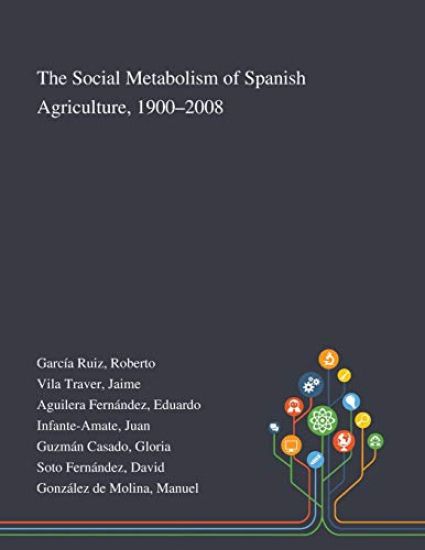
The Social Metabolism of Spanish Agriculture, 1900-2008
Roberto García Ruiz; Jaime Vila Traver; Eduardo Aguilera Fernández
Saint Philip Street Press
2020
pokkari
This open access book provides a panoramic view of the evolution of Spanish agriculture from 1900 to the present, offering a more diverse picture to the complex and multidimensional reality of agrarian production. With a clear transdisciplinary ambition, the book applies an original and innovative theoretical and methodological tool, termed Agrarian Social Metabolism, combining Social Metabolism with an agroecological perspective. This integrative analysis is especially interesting for environmental scientists and policy makers being the best way to design sustainable agroecosystems and public policies capable of moving us towards a more sustainable food system. Spanish agricultural production has experienced impressive growth during the 20th century which has allowed it to ensure the supply of food to the population and even to transform some crops into important chapters in foreign trade. However, this growth has had its negative side since it was based on the injection of large amounts of external energy, on the destruction of employment and the loss of profitability of agricultural activity. But perhaps the most serious part is the strong impact of the current industrialised agriculture model on Spanish agroecosystems, exposed to the overexploitation of hydric resources, pollution of the water by nitrates and pesticides, high erosion rates and an alarming loss of biodiversity; damage which in the immediate future will end up reducing production capacity. This work was published by Saint Philip Street Press pursuant to a Creative Commons license permitting commercial use. All rights not granted by the work's license are retained by the author or authors.
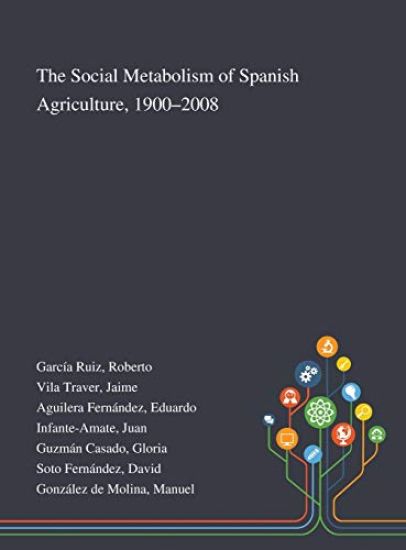
The Social Metabolism of Spanish Agriculture, 1900-2008
Roberto García Ruiz; Jaime Vila Traver; Eduardo Aguilera Fernández
Saint Philip Street Press
2020
sidottu
This open access book provides a panoramic view of the evolution of Spanish agriculture from 1900 to the present, offering a more diverse picture to the complex and multidimensional reality of agrarian production. With a clear transdisciplinary ambition, the book applies an original and innovative theoretical and methodological tool, termed Agrarian Social Metabolism, combining Social Metabolism with an agroecological perspective. This integrative analysis is especially interesting for environmental scientists and policy makers being the best way to design sustainable agroecosystems and public policies capable of moving us towards a more sustainable food system. Spanish agricultural production has experienced impressive growth during the 20th century which has allowed it to ensure the supply of food to the population and even to transform some crops into important chapters in foreign trade. However, this growth has had its negative side since it was based on the injection of large amounts of external energy, on the destruction of employment and the loss of profitability of agricultural activity. But perhaps the most serious part is the strong impact of the current industrialised agriculture model on Spanish agroecosystems, exposed to the overexploitation of hydric resources, pollution of the water by nitrates and pesticides, high erosion rates and an alarming loss of biodiversity; damage which in the immediate future will end up reducing production capacity. This work was published by Saint Philip Street Press pursuant to a Creative Commons license permitting commercial use. All rights not granted by the work's license are retained by the author or authors.
This work has been selected by scholars as being culturally important and is part of the knowledge base of civilization as we know it.This work is in the public domain in the United States of America, and possibly other nations. Within the United States, you may freely copy and distribute this work, as no entity (individual or corporate) has a copyright on the body of the work.Scholars believe, and we concur, that this work is important enough to be preserved, reproduced, and made generally available to the public. To ensure a quality reading experience, this work has been proofread and republished using a format that seamlessly blends the original graphical elements with text in an easy-to-read typeface.We appreciate your support of the preservation process, and thank you for being an important part of keeping this knowledge alive and relevant.