
Kirjahaku
Etsi kirjoja tekijän nimen, kirjan nimen tai ISBN:n perusteella.
1000 tulosta hakusanalla Rodney Timms

Who Invented the Reaper? An Answer to the Protest Statement Said to Have Been Filed at the Treasury Department
Rodney B Swift
Hutson Street Press
2025
sidottu

Who Invented the Reaper? An Answer to the Protest Statement Said to Have Been Filed at the Treasury Department
Rodney B Swift
Hutson Street Press
2025
pokkari

Strategic Development of the Trinidad and Tobago Defense Force
Rodney L Smart
Hutson Street Press
2025
sidottu



The Official History of the British Civil Service
Rodney Lowe; Hugh Pemberton
TAYLOR FRANCIS LTD
2021
nidottu
This second volume of The Official History of the British Civil Service explores the radical restructuring of the Civil Service that took place during the Thatcher and Major premierships from 1982 until 1997, after a period of confusion and disagreement about its future direction. The book brings a much-needed historical perspective to the development of the ‘new public management’, in which the UK was a world-leader, and considers difficult questions about the quality of democratic governance in Britain and the constitutional position of its Civil Service. Based on extensive research using government papers and interviews with leading participants, it concentrates on attempts to reform the Civil Service from the centre. In doing so, it has important lessons to offer all those, both inside and outside the UK, seeking to improve the quality, efficiency and accountability of democratic governance.Particular light is shed on the origins of such current concerns as:The role of special advisersThe need for a Prime Minister’s DepartmentThe search for cost efficiencyAccountability to Parliament and its Select Committees Civil Service policy-making capacity and implementation capability. This book will be of much interest to students of British history, government and politics, and public administration.
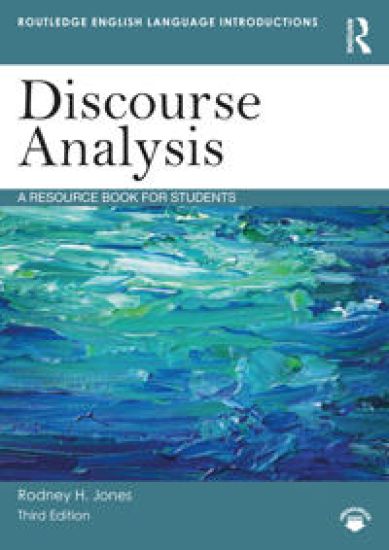
Routledge English Language Introductions cover core areas of language study and are one-stop resources for students. Assuming no prior knowledge, books in the series offer an accessible overview of the subject, with activities, study questions, sample analyses, and commentaries.Revised and updated throughout, the new edition of Discourse Analysis provides a comprehensive overview of the major approaches to and methodological tools used in discourse analysis. This textbook:introduces both traditional perspectives on the analysis of texts and talk as well as more recent approaches that address technologically mediated and multimodal discourseincorporates practical examples using real data, now revised to include more diverse examples from a wider range of countriesincludes a revised final section to highlight recent research with case studies showcasing examples of how scholars used the principles illustrated in the bookis accompanied by online support material with additional student activities, summaries, explanations, and useful linksOther features of the new edition include updated references and a wider range of material from social media that includes TikTok and other more recently popular platforms. Written by an experienced teacher and author, this accessible textbook is essential reading for all students of English language and linguistics.
Routledge English Language Introductions cover core areas of language study and are one-stop resources for students. Assuming no prior knowledge, books in the series offer an accessible overview of the subject, with activities, study questions, sample analyses, and commentaries.Revised and updated throughout, the new edition of Discourse Analysis provides a comprehensive overview of the major approaches to and methodological tools used in discourse analysis. This textbook:introduces both traditional perspectives on the analysis of texts and talk as well as more recent approaches that address technologically mediated and multimodal discourseincorporates practical examples using real data, now revised to include more diverse examples from a wider range of countriesincludes a revised final section to highlight recent research with case studies showcasing examples of how scholars used the principles illustrated in the bookis accompanied by online support material with additional student activities, summaries, explanations, and useful linksOther features of the new edition include updated references and a wider range of material from social media that includes TikTok and other more recently popular platforms. Written by an experienced teacher and author, this accessible textbook is essential reading for all students of English language and linguistics.

The Peasants' Revolt of 1381, led by Wat Tyler, was the first popular uprising in British history. Centred around the counties of South East England and rebelling against legislation to fix minimum wages, it was driven by agricultural labourers and the urban working classes but quickly gathered momentum to encompass artisans, villeins and the destitute. Although it lasted only a month before defeat, it was a major turning point in early British history and was heralded by many historians as the emergence of British working-class consciousness and political activism.Rodney Hilton's superb account of these events remains a classic, widely read and admired since its first publication. Locating the revolt in the context of European class conflict, he argues that the peasant movements that disturbed the Middle Ages were not mere unrelated outbreaks of violence, but had their roots in common economic and political conditions and in a recurring conflict of interest between peasants and landowners – one that has endured through the ages.This Routledge Classics edition includes a new Foreword by Phillipp R. Schofield.

The Peasants' Revolt of 1381, led by Wat Tyler, was the first popular uprising in British history. Centred around the counties of South East England and rebelling against legislation to fix minimum wages, it was driven by agricultural labourers and the urban working classes but quickly gathered momentum to encompass artisans, villeins and the destitute. Although it lasted only a month before defeat, it was a major turning point in early British history and was heralded by many historians as the emergence of British working-class consciousness and political activism.Rodney Hilton's superb account of these events remains a classic, widely read and admired since its first publication. Locating the revolt in the context of European class conflict, he argues that the peasant movements that disturbed the Middle Ages were not mere unrelated outbreaks of violence, but had their roots in common economic and political conditions and in a recurring conflict of interest between peasants and landowners – one that has endured through the ages.This Routledge Classics edition includes a new Foreword by Phillipp R. Schofield.
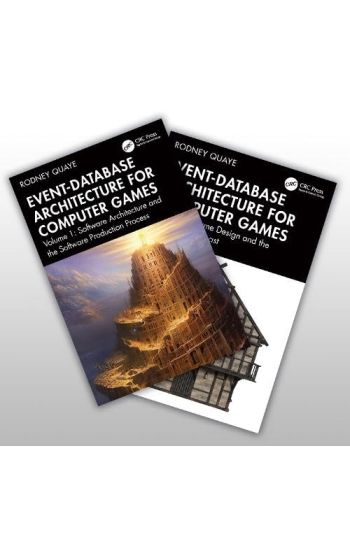
Event-Database Architecture for Computer Games proposes the first explicit software architecture for game development, answering the problem of building modern computer games with little or no game design.The first volume begins by describing the formal definition of software production processes in general, and the production process of computer games in particular. It introduces the two basic principles behind the software architecture that addresses the communication and productivity problems of a degenerative production process. It goes on to describe the archetypal software production process, and outlines the role that the Game Designers, Game Programmers, Game Artists, Sound Designers and Game Testers play in that process.The second volume includes a brief overview on how to optimize the results. This leads on to an exploration of how staff, especially Software Engineers, typically view optimization. It also explains how the vision of the Engineers relates to the vision of the leadership of a project or company. It describes how this leadership can also affect the efficacy of a production process, including the Event-Database Production Process.This book will be of great interest to professional game developers involved in programming roles, such as Tools Programmers, UI Programmers, Gameplay Programmers and Engineers, as well as students studying game development and programming.
Event-Database Architecture for Computer Games proposes the first explicit software architecture for game development, answering the problem of building modern Computer Games with little or no game design. An archetypal software production process, based on this architecture, is also introduced.This volume begins by describing the formal definition of software production processes in general and the production process of Computer Games in particular. It introduces the two basic principles behind the software architecture that addresses the communication and productivity problems of a degenerative production process. It goes on to describe the archetypal software production process and outlines the role that the Game Designers, Game Programmers, Game Artists, Sound Designers and Game Testers play in that process.This book will be of great interest to professional game developers involved in programming roles, such as Tools Programmers, UI Programmers, Gameplay Programmers and Engineers, as well as students studying game development and programming.Rodney Quaye is Senior Software Development Engineer in Test at Build A Rocket Boy. He has worked in the Computer Games industry for over 16 years. He has worked at several Games Studios including Sumo Digital, nDreams, Supermassive Games, Traveller’s Tales, Hotgen, Oysterworld, Second Impact, Flaming Pumpkin, Goldhawk Interactive, Jagex, Gusto Games, Criterion, Asylum Entertainment, Codemasters and Deibus Studios. The famous titles he has worked on include Burnout 2 and 3 for Criterion, LMA Manager for Codemasters, Runescape for Jagex, Lego Worlds for Traveller’s Tales, and Everywhere for Build A Rocket Boy.
Event-Database Architecture for Computer Games proposes the first explicit software architecture for game development, answering the problem of building modern computer games with little or no game design. In this volume, an example of a practical production process based on the software production process is explained, including examples of the game design, technical design, data design and tools design in that process.This volume includes a brief overview on how to optimise the results. This leads on to an exploration of how staff, especially Software Engineers, typically view optimisation. It also explains how the vision of the Engineers relates to the vision of the leadership of a project or company. It describes how this leadership can also affect the efficacy of a production process, including the Event-Database Production Process.This book will be of great interest to professional game developers involved in management roles such as Technical Directors and Game Producers and technical roles, such as Tools Programmers, UI Programmers, Gameplay Programmers and Engineers, as well as students studying game development and programming.Rodney Quaye is Senior Software Development Engineer in Test at Build A Rocket Boy. He has worked in the Computer Games industry for over 16 years. He has worked at several Games Studios, including Sumo Digital, nDreams, Supermassive Games, Traveller’s Tales, Hotgen, Oysterworld, Second Impact, Flaming Pumpkin, Goldhawk Interactive, Jagex, Gusto Games, Criterion, Asylum Entertainment, Codemasters and Deibus Studios. The famous titles he has worked on include Burnout 2 and 3 for Criterion, LMA Manager for Codemasters, Runescape for Jagex, Lego Worlds for Traveller’s Tales and Everywhere for Build A Rocket Boy.
Event-Database Architecture for Computer Games proposes the first explicit software architecture for game development, answering the problem of building modern computer games with little or no game design.The first volume begins by describing the formal definition of software production processes in general, and the production process of computer games in particular. It introduces the two basic principles behind the software architecture that addresses the communication and productivity problems of a degenerative production process. It goes on to describe the archetypal software production process, and outlines the role that the Game Designers, Game Programmers, Game Artists, Sound Designers and Game Testers play in that process.The second volume includes a brief overview on how to optimize the results. This leads on to an exploration of how staff, especially Software Engineers, typically view optimization. It also explains how the vision of the Engineers relates to the vision of the leadership of a project or company. It describes how this leadership can also affect the efficacy of a production process, including the Event-Database Production Process.This book will be of great interest to professional game developers involved in programming roles, such as Tools Programmers, UI Programmers, Gameplay Programmers and Engineers, as well as students studying game development and programming.
Event-Database Architecture for Computer Games proposes the first explicit software architecture for game development, answering the problem of building modern Computer Games with little or no game design. An archetypal software production process, based on this architecture, is also introduced.This volume begins by describing the formal definition of software production processes in general and the production process of Computer Games in particular. It introduces the two basic principles behind the software architecture that addresses the communication and productivity problems of a degenerative production process. It goes on to describe the archetypal software production process and outlines the role that the Game Designers, Game Programmers, Game Artists, Sound Designers and Game Testers play in that process.This book will be of great interest to professional game developers involved in programming roles, such as Tools Programmers, UI Programmers, Gameplay Programmers and Engineers, as well as students studying game development and programming.Rodney Quaye is Senior Software Development Engineer in Test at Build A Rocket Boy. He has worked in the Computer Games industry for over 16 years. He has worked at several Games Studios including Sumo Digital, nDreams, Supermassive Games, Traveller’s Tales, Hotgen, Oysterworld, Second Impact, Flaming Pumpkin, Goldhawk Interactive, Jagex, Gusto Games, Criterion, Asylum Entertainment, Codemasters and Deibus Studios. The famous titles he has worked on include Burnout 2 and 3 for Criterion, LMA Manager for Codemasters, Runescape for Jagex, Lego Worlds for Traveller’s Tales, and Everywhere for Build A Rocket Boy.
Event-Database Architecture for Computer Games proposes the first explicit software architecture for game development, answering the problem of building modern computer games with little or no game design. In this volume, an example of a practical production process based on the software production process is explained, including examples of the game design, technical design, data design and tools design in that process.This volume includes a brief overview on how to optimise the results. This leads on to an exploration of how staff, especially Software Engineers, typically view optimisation. It also explains how the vision of the Engineers relates to the vision of the leadership of a project or company. It describes how this leadership can also affect the efficacy of a production process, including the Event-Database Production Process.This book will be of great interest to professional game developers involved in management roles such as Technical Directors and Game Producers and technical roles, such as Tools Programmers, UI Programmers, Gameplay Programmers and Engineers, as well as students studying game development and programming.Rodney Quaye is Senior Software Development Engineer in Test at Build A Rocket Boy. He has worked in the Computer Games industry for over 16 years. He has worked at several Games Studios, including Sumo Digital, nDreams, Supermassive Games, Traveller’s Tales, Hotgen, Oysterworld, Second Impact, Flaming Pumpkin, Goldhawk Interactive, Jagex, Gusto Games, Criterion, Asylum Entertainment, Codemasters and Deibus Studios. The famous titles he has worked on include Burnout 2 and 3 for Criterion, LMA Manager for Codemasters, Runescape for Jagex, Lego Worlds for Traveller’s Tales and Everywhere for Build A Rocket Boy.



Navigating Conflict: A Guide Through the Storm
Rodney a. Harrison; Glenn a. Miller; Jeffrey a. Klick
Independently Published
2019
nidottu
Everyone has conflict. We can be defeated by it or grow as a result of it, but we will not be able to avoid it. Our third book together as authors provides a way through conflict to growth and redemption. Combining over 100 years of ministry experience, we share stories, pain, victories, and defeats to help others mature in walking through the inevitable. The Kingdom of God is relational and every relationship sooner than later will hit storms. How will you navigate through them? The insights shared in this book will help We must learn how to walk through conflict to a redemptive solution, even if that means ending a toxic relationship. Do not give up for there is always hope