Kirjojen hintavertailu. Mukana 12 016 292 kirjaa ja 12 kauppaa.

Kirjahaku

Etsi kirjoja tekijän nimen, kirjan nimen tai ISBN:n perusteella.

1000 tulosta hakusanalla Ron Destro

The Law of Deliberative Democracy

The Law of Deliberative Democracy

Ron Levy; Graeme Orr

Routledge
2016
sidottu
Laws have colonised most of the corners of political practice, and now substantially determine the process and even the product of democracy. Yet analysis of these laws of politics has been hobbled by a limited set of theories about politics. Largely absent is the perspective of deliberative democracy – a rising theme in political studies that seeks a more rational, cooperative, informed, and truly democratic politics. Legal and political scholarship often view each other in reductive terms. This book breaks through such caricatures to provide the first full-length examination of whether and how the law of politics can match deliberative democratic ideals. Essential reading for those interested in either law or politics, the book presents a challenging critique of laws governing electoral politics in the English-speaking world. Judges often act as spoilers, vetoing or naively reshaping schemes meant to enhance deliberation. This pattern testifies to deliberation’s weak penetration into legal consciousness. It is also a fault of deliberative democracy scholarship itself, which says little about how deliberation connects with the actual practice of law. Superficially, the law of politics and deliberative democracy appear starkly incompatible. Yet, after laying out this critique, The Law of Deliberative Democracy considers prospects for reform. The book contends that the conflict between law and public deliberation is not inevitable: it results from judicial and legislative choices. An extended, original analysis demonstrates how lawyers and deliberativists can engage with each other to bridge their two solitudes.
Analyzing Public Discourse

Analyzing Public Discourse

Ron Scollon

Routledge
2007
sidottu
Analyzing Public Discourse demonstrates the use of discourse analysis to provide testimony in public policy consultations: from environmental impact statements to changes in laws and policies.Scollon asserts that it is in the best interest of democratic public discourse for all participants in the process to be working with a common discursive framework. He puts forward a strategy by which discourse analysts can become engaged in this framework as participants through the process of public consultations. Using documents which are publicly available online from specific consultative projects, Scollon provides the reader with concrete examples and introduces basic skills for discourse analysis.Accessible to readers who are new to discourse analysis, Analyzing Public Discourse will be of interest to students of linguistics and language studies as well as to those on environmental studies courses. This book can also be used as a guide for any public consultation which calls for public responses.
Geography and Geographers

Geography and Geographers

Ron Johnston; James Sidaway

Routledge
2015
sidottu
Geography and Geographers continues to be the most comprehensive and up-to-date overview of human geography available. It provides a survey of the major debates, key thinkers and schools of thought in the English-speaking world, setting them within the context of economic, social, cultural, political and intellectual changes. It is essential reading for all undergraduate geography students.It draws on a wide reading of the geographical literature and addresses the ways geography and its history are understood and the debates among geographers regarding what the discipline should study and how.This extensively updated seventh edition offers a thoroughly contemporary perspective on human geography for new and more experienced students alike.
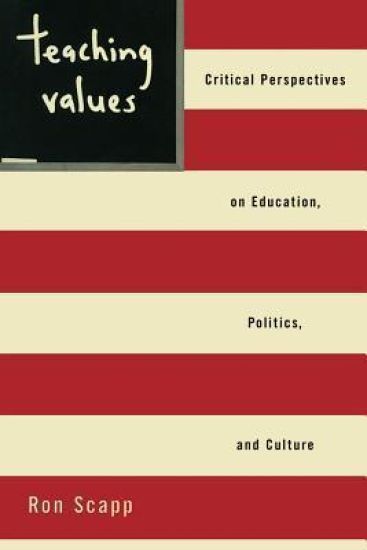
Teaching Values

Teaching Values

Ron Scapp

Routledge
2002
sidottu
In Teaching Values, Ron Scapp wrests the discussion of values and values-based education away from traditionalists who have long dominated educational debates. While challenging the Right's domination of the discussion of values education, Scapp examines some issues not typically raised by educators and critics on the Left, including the positive role of citizenship and national identity in U.S. education and culture.
Teaching Values

Teaching Values

Ron Scapp

Routledge
2002
nidottu
In Teaching Values, Ron Scapp wrests the discussion of values and values-based education away from traditionalists who have long dominated educational debates. While challenging the Right's domination of the discussion of values education, Scapp examines some issues not typically raised by educators and critics on the Left, including the positive role of citizenship and national identity in U.S. education and culture.
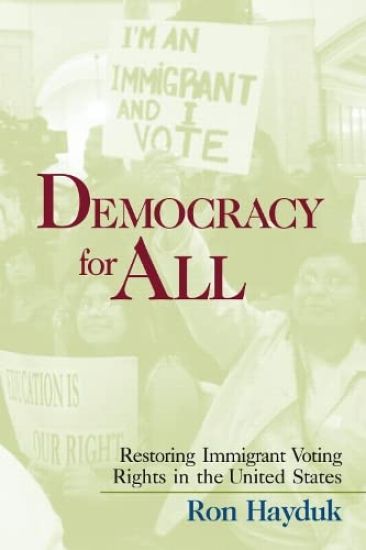
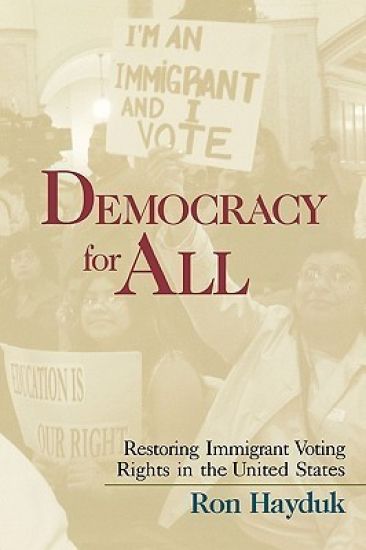
Democracy for All

Democracy for All

Ron Hayduk

Routledge
2006
sidottu
First published in 2006. Voting is for citizens only, right? Not exactly. It is not widely known that immigrants, or noncitizens, currently vote in local elections in over a half dozen cities and towns in the U.S.; nor that campaigns to expand the franchise to noncitizens have been launched in at least a dozen other jurisdictions from coast to coast over the past decade. These practices have their roots in another little-known fact: for most of the country's history - from the founding until the 1920s - noncitizens voted in forty states and federal territories in local, state, and even federal elections, and also held.
Democracy for All

Democracy for All

Ron Hayduk

Routledge
2006
nidottu
Voting is for citizens only, right? Not exactly. It is not widely known that immigrants, or noncitizens, currently vote in local elections in over a half dozen cities and towns in the U.S.; nor that campaigns to expand the franchise to noncitizens have been launched in at least a dozen other jurisdictions from coast to coast over the past decade. These practices have their roots in another little-known fact: for most of the country's history - from the founding until the 1920s - noncitizens voted in forty states and federal territories in local, state, and even federal elections, and also held public office such as alderman, coroner, and school board member. Globally, over forty countries on nearly every continent permit voting by noncitizens. Legal immigrants, or resident aliens, pay taxes, own businesses and homes, send their children to public schools, and can be drafted or serve in the military, yet proposals to grant them voting rights are often met with great resistance. But, in a country where no taxation without representation was once a rallying cry for revolution, such a proposition may not, after all, be so outlandish.Democracyfor All examines the politics and practices of noncitizen voting in the United States, chronicling the rise and fall - and re-emergence - of immigrant voting in the U.S. In addition to making the case for noncitizen voting, this book takes a close look at the politics of and actors in recent campaigns that successfully reestablished noncitizen voting, others that failed, and ones that are currently underway. Democracy for All explores the prospects for a truly universal suffrage in America.
Music Publishing

Music Publishing

Ron Sobel; Dick Weissman

Routledge
2008
sidottu
Music Publishing covers the basics of how a composition is copyrighted, published, and promoted. Publishing in the music business goes far beyond the physical sheet--it includes live performance and mechanical (recording) rights, and income streams from licensing deals of various kinds. A single song can generate over thirty different royalty streams, and a writer must know how these royalties are calculated and who controls the flow of the money.Taking a practical approach, the authors -- one a successful music publisher and attorney, the other a songwriter and music business professor -- explain in simple terms the basic concept of copyright law as it pertains to compositions. Throughout, they give practical examples from "real world" situations that illuminate both potential pitfalls and possible upsides for the working composers.
Music Publishing

Music Publishing

Ron Sobel; Dick Weissman

Routledge
2008
nidottu
Music Publishing covers the basics of how a composition is copyrighted, published, and promoted. Publishing in the music business goes far beyond the physical sheet--it includes live performance and mechanical (recording) rights, and income streams from licensing deals of various kinds. A single song can generate over thirty different royalty streams, and a writer must know how these royalties are calculated and who controls the flow of the money.Taking a practical approach, the authors -- one a successful music publisher and attorney, the other a songwriter and music business professor -- explain in simple terms the basic concept of copyright law as it pertains to compositions. Throughout, they give practical examples from "real world" situations that illuminate both potential pitfalls and possible upsides for the working composers.
Eating Disorders in Sport

Eating Disorders in Sport

Ron A. Thompson; Roberta Trattner Sherman

Routledge
2010
sidottu
Over the past fifteen years, there has been a great increase in the knowledge of eating disorders in sport and effective means of treatment. In this book, the authors draw on their extensive clinical experience to discuss how to identify, manage, treat, and prevent eating disorders in sport participants. They begin by examining the clinical conditions related to eating problems, including descriptions of specific disorders and a review of the relevant literature. Special attention is given to the specific gender and sport-related factors that can negatively influence the eating habits of athletes. The second half of the book discusses identification of participants with disordered eating by reviewing symptoms and how they manifest in sport; management issues for sport personnel, coaches, athletic trainers, and healthcare professionals; treatment; and medical considerations, such as the use of psychotropic medications. A list of useful resources is included in an appendix, as well as a glossary of important terms.
Raising the Curve

Raising the Curve

Ron Berler

Berkley Publishing Corporation,U.S.
2014
pokkari
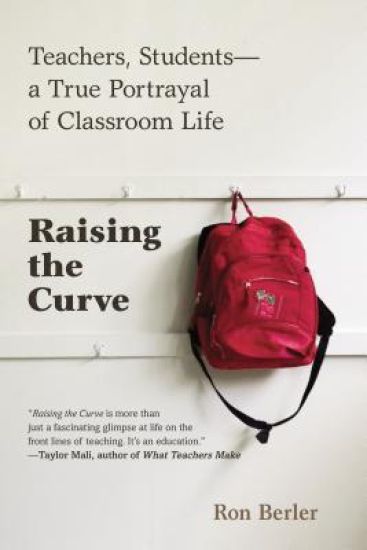
Brookside Elementary in Norwalk, Connecticut, is preparing for a new school year and another chance to improve its failing scores on the statewide standardized test known as the CMT. The challenges are many, and for the faculty--whose jobs may depend on their students' ability to improve on the test--the stakes are high. Ten-year-old Hydea is about to start fifth grade with second-grade reading skills. Her friend Marbella is only a little further along. In past years, these students would have received help from the literacy specialist Mrs. Schaefer. But this year, due to cutbacks and a change in job description, she will have to select the few students whom she and the teachers can bet on--the ones who are close to passing the exams. And, for added measure, Principal Hay has already asked his faculty to teach to the test. Journalist Ron Berler spent a full year at Brookside. In Raising the Curve, he offers a nuanced and personal portrait of the students, teachers, and staff who make up the Brookside community, capturing their struggles as well as their pride, resilience, and spirited faith.
Postharvest

Postharvest

Ron Wills; Terry Lee; Doug Graham

Van Nostrand Reinhold Inc.,U.S.
1990
nidottu
Updates the introductory textbook on the principles and practice of the postharvest handling and storage of fresh fruit and vegetables. For technical college and university courses, workers in related industries, and interested consumers. Written in Australia, but about products grown worldwide. Ann
Enhanced Sampling Methods for Molecular Dynamics

Enhanced Sampling Methods for Molecular Dynamics

Ron Elber

ELSEVIER SCIENCE PUBLISHING CO INC
2026
nidottu
Enhanced Sampling Methods for Molecular Dynamics: Algorithms, Implementations, and Applications provides a single introductory resource for understanding enhanced sampling techniques for molecular dynamics studies of equilibrium and kinetics, discussing the theory, algorithm, and implementation of techniques for equilibrium studies, such as Umbrella Sampling, Replica Exchange, Generalized Ensembles, and Metadynamics. A similar discussion of methodologies for enhanced sampling for kinetics then follows. Ron Elber considers exact and approximate approaches of enhanced sampling, their speed, rate of convergence, and accuracy. He examines the necessary inputs of these approaches, such as prior knowledge of the reaction coordinate (or several coarse variables). The chapters consider path integral formulation, Weighted Ensemble, Transition Path Sampling, and Milestoning. Finally, simple, detailed examples illustrate the enhancements and prepare the reader for their use in more complex systems. Enhanced Sampling Methods for Molecular Dynamics: Algorithms, Implementations, and Applications is written primarily for computational chemists and biochemists (graduate students and postdoctoral fellows) as well as computational and theoretical scientists who study molecular processes. Experimentalists in the biophysics and biochemistry fields, as well as practitioners in the drug and material design areas who use standard software tools to conduct MD simulations of their experimental systems will also find the book of interest.
The Revolution

The Revolution

Ron Paul

Grand Central Publishing
2009
pokkari
The best way to understand Congressman Ron Paul is to take a look at his voting record. He has never voted to raise taxes. He has never voted for an unbalanced budget. He has never voted to raise congressional pay. He has never taken a government-paid junket. He has never voted to increase the power of the executive branch. He voted against the Patriot Act. He voted against regulating the Internet and he voted against the Iraq war. Operating from a unique strain of libertarian republicanism, Ron Paul's beliefs are refreshingly logical, even if you disagree with his principles. He is a Republican in the truest sense of the word, not at all what that word has grown to represent.This is his call to arms for a nation that needs to change but doesn't know how. Barry Goldwater defined a conservative in the 1960's and with this manifesto, Ron Paul redefines it for the modern day.
End the Fed

End the Fed

Ron Paul

Grand Central Publishing
2010
pokkari
During the 2008 presidential campaign over 4,000 students gathered at the University of Michigan to hear Republican candidate Ron Paul speak. As he began to address the topics of monetary policy and the coming depression, a chant came from the crowd, 'End the Fed! End the Fed!' As dollar bills were set on fire, it became clearer than ever that the real problem, one that nobody in the media was talking about, was the central bank - an unconstitutional entity and a political, economic and moral disaster. Most people think of the Federal Reserve as an institution that has always been there and isn't going anywhere. But in END THE FED, Ron Paul draws on American history, economics and fascinating stories from his own political life to argue that the Federal Reserve is both corrupt and unconstitutional. It is inflating currency today at nearly a Weimar or Zimbabwe level, a practice that threatens to put the US into an inflationary depression where $100 bills are worthless. What most people don't realise is that the Fed - created by the Morgans and Rockefellers at a private club off the coast of Georgia - is actually working against their own personal interests.
End the Fed

End the Fed

Ron Paul

Grand Central Publishing
2009
pokkari
In the post-meltdown world, it is irresponsible, ineffective, and ultimately useless to have a serious economic debate without considering and challenging the role of the Federal Reserve. Most people think of the Fed as an indispensable institution without which the country's economy could not properly function. But in End the Fed, Ron Paul draws on American history, economics, and fascinating stories from his own long political life to argue that the Fed is both corrupt and unconstitutional. It is inflating currency today at nearly a Weimar or Zimbabwe level, a practice that threatens to put us into an inflationary depression where $100 bills are worthless. What most people don't realize is that the Fed -- created by the Morgans and Rockefellers at a private club off the coast of Georgia -- is actually working against their own personal interests. Congressman Paul's urgent appeal to all citizens and officials tells us where we went wrong and what we need to do fix America's economic policy for future generations.