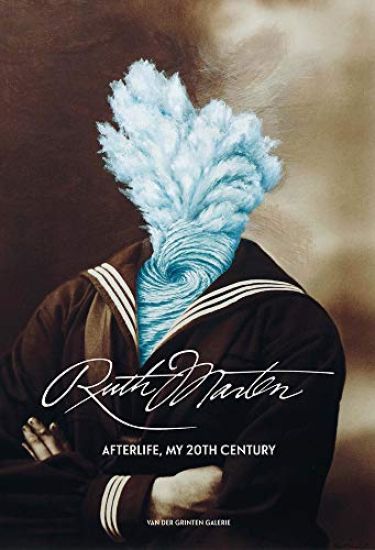
Ruth Marten started her career as a tattoo artist in the 1970s before working as an illustrator for a range of publishers and magazines in the US. Her visual artwork has earned well-deserved international recognition only in the last few years. This book is the second publication on the highly acclaimed New York artist and presents Ruth Marten's most recent creations - 19 large-format works on paper produced between autumn 2018 and summer 2019. Marten used photographs from the 19th and early 20th centuries as the basis for these artworks. By overpainting the photos, she created literally fantastic pictures that seem to allow the impossible to become possible. Like the pioneers of surrealism, she developed a world between dream and nightmare that is full of mystery, where inanimate objects suddenly become alive and where new, unheard-of phenomena shake up our established worldview. Her works abound in psychoanalytic enigmas that have sprung from the depths of her artistic subconscious. Text in English and German.
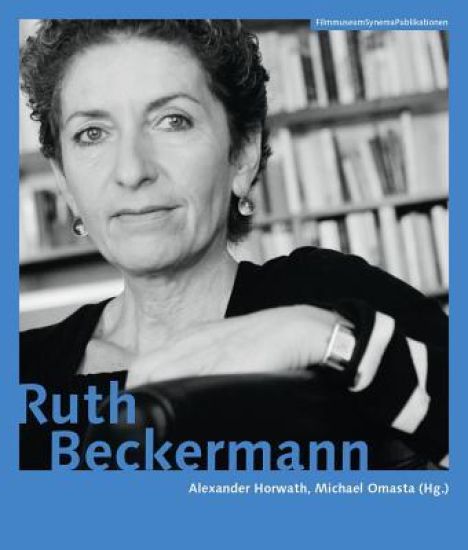
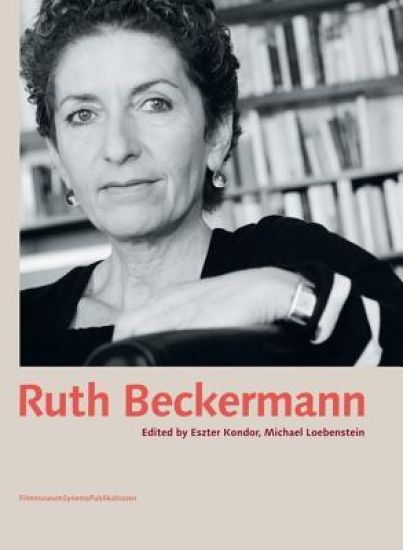
With her documentaries and essay films since the late 1970s, Viennese filmmaker Ruth Beckermann has created an exciting and widely recognized body of personal/political cinema. Her work reflects on the relations between history and contemporaneity, on her life as a Jewish woman in postwar Austria and Europe, and on travelling and migration as modes of staying alive - literally as well as artistically. Beckermann's films speak about identity conflicts and the class struggle, about her family history in the Habsburg monarchy (The Paper Bridge) and the war generation as it confronts the crimes of the Werhrmacht (East of War). Most recently, she has turned her sights towards the deep love affair between two poets, Paul Celan und Ingeborg Bachmann, in 1950s Vienna (The Dreamed Ones). This is the first book about Ruth Beckermann's multifaceted oeuvre, with original essays by critics and literary writers, rare illustrations and documents, and an in-depth conversation with the artist. Also included are Beckermann's reflections on her current project, The Case of Kurt Waldheim.
Viennese filmmaker Ruth Beckermann, who has been making films since the 1970s, has created an exciting and widely recognized body of essay and documentary films. Her work is both deeply personal and political. She discusses the complex relationship between history and the present and reflects on her identity as a Jewish woman in postwar Austria and Europe. Tropes of travel and migration feature heavily in her work as means of experiencing the world and of staying alive, literally as well as artistically.Beckermann’s films speak about identity conflicts and class struggle (Suddenly, a Strike), her family history in the Habsburg monarchy (Paper Bridge), and the war generation as it confronts the crimes of the Wehrmacht (East of War). In 2016, she turned the love affair between poets Paul Celan and Ingeborg Bachmann in postwar Vienna into an unconventional feature film (The Dreamed Ones). In her latest project, The Waldheim Waltz (2018), Beckermann uses 1980s archival footage of the “Waldheim Affair” to reflect on the mechanisms of populism and the media.This is the first English-language publication on Ruth Beckermann’s filmic oeuvre, including an original essay by Nick Pinkerton, an in-depth conversation with the artist conducted by Alexander Horwath and Michael Omasta, and a detailed filmography by Michael Omasta and Brigitte Mayr.
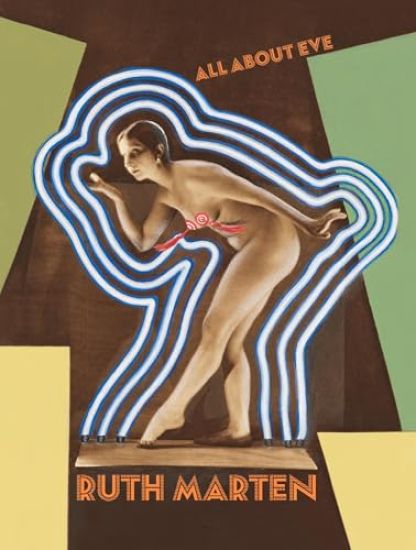
All About Eve is the latest series of the American artist Ruth Marten (*1949) which she has been developing since 2022. Here she unfolds a complex interplay involving the boundaries of reality, time, and genre. She began her career as a tattoo artist and later worked as an illustrator for various publishers and magazines. It was during this time that she discovered the technique of overpainting and collage, subsequently to become integral to her artistic practice. Marten’s works are based on old graphic prints from the 18th and 19th centuries, as well as on photographs from the late 19th and early 20th centuries. By reworking the originals, she creates a fascinating link between historical representations and contemporary perspectives. The All About Eve series reflects on the radical cultural shift of the 1920s: the heliogravures reworked by Marten depict female dancers from a French variety theatre, embodying the new freedoms of the post-war era. Through her artistic reworkings, Marten emphasises the diversity and complexity of female possibilities, infusing them with her characteristic dash of humour and subversion.