Kirjojen hintavertailu. Mukana 11 342 296 kirjaa ja 12 kauppaa.

Kirjahaku

Etsi kirjoja tekijän nimen, kirjan nimen tai ISBN:n perusteella.

1000 tulosta hakusanalla Samuel Butler; Samuel Johnson

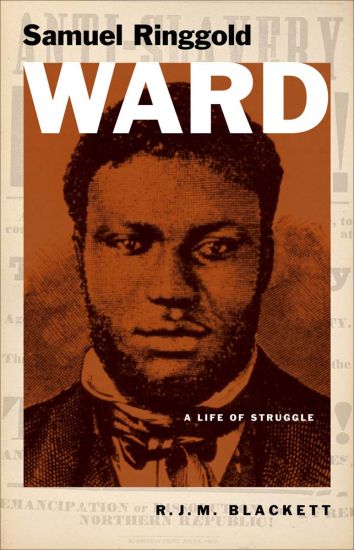
Samuel Ringgold Ward

Samuel Ringgold Ward

R. J. M. Blackett

YALE UNIVERSITY PRESS
2023
sidottu
The rediscovery of a pivotal figure in Black history and his importance and influence in the struggle against slavery and discrimination “A masterful biography. . . . Ward’s struggles to find freedom, equality, peace, and belonging are still shared by many African Americans today.”—Kellie Carter Jackson, The Nation Born on the Eastern Shore of Maryland, Samuel Ringgold Ward (1817–c. 1869) escaped enslavement and would become a leading figure in the struggle for Black freedom, citizenship, and equality. He was extolled by his contemporary Frederick Douglass for his “depth of thought, fluency of speech, readiness of wit, logical exactness.” Until now, his story has been largely untold. Ward, a newspaper editor, Congregational minister, and advocate for the temperance movement, was considered one of the leading orators of his time. After the passage of the Fugitive Slave Act of 1850 he fled to Canada, where he lectured widely to improve conditions for formerly enslaved people who had settled there. Ward then went to Britain as an agent of the Canadian Antislavery Society and published his influential book Autobiography of a Fugitive Negro. He never returned to the United States, and he died in obscurity in Jamaica. Despite Ward’s prominent role in the abolitionist movement, his story has been lost because of the decades he spent in exile. In this book, R. J. M. Blackett brings light to Ward’s life and his important role in the struggle against slavery and discrimination, and to the personal price he paid for confronting oppression.
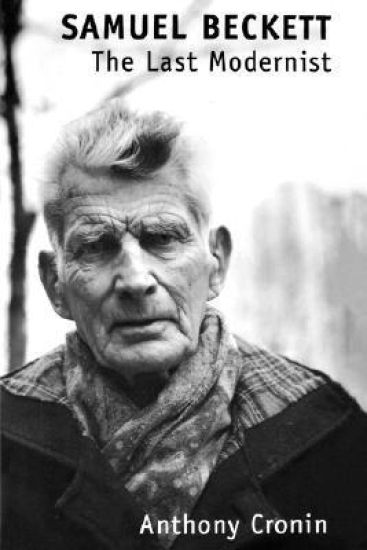
Samuel Beckett

Samuel Beckett

Isaac Cronin

Da Capo Press Inc
1999
pokkari
Intensely private, possibly saintly, but perhaps misanthropic, Samuel Beckett was the most legendary and enigmatic of writers. Anthony Cronin's biography is a revelation of this mythical figure as fully human and fallible, while confirming his enormous stature both as a man and a writer. Cronin explores how the sporty schoolboy of solid Protestant bourgeois stock became a prizewinning student at Trinity, flirted with scholarship, and, in Paris, found himself at the centre of its literary avant-garde as an intimate friend of James Joyce. But he was a young man who struggled with complexities in his own nature as well as with problems of literary expression. In the small provincial city of Kassel, Germany, the cosmopolitan Beckett experienced a faltering entanglement with his cousin,one of the first in a series of problematic encounters with women. The war years, which he spent as a member of the Resistance and a refugee in the South of France, brought Beckett the self-probings and discoveries that led to the great works. Then, with his sudden and astonishing fame, the balloons of myth began to inflate and a stereotype was born,frozen in exile and enigma, solemnity and sanctity. Anthony Cronin bursts these balloons to see more clearly what lies behind. Without moralizing or psychologizing, without pretensions or piety, he uncovers the real Beckett, the way the life was lived, the way the art was made.
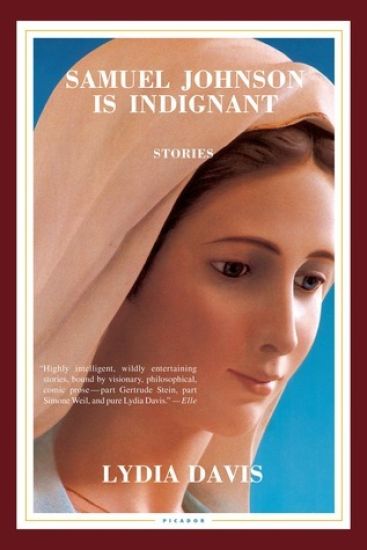
Samuel Johnson Is Indignant: Stories
The author of Almost No Memory presents an inventive collection of short fiction that explores the various ways in which human beings perceive each other and themselves, from a couple that suspects their friends think them boring to a funeral home that receives a letter rebuking it for linguistic errors. Reprint. 10,000 first printing.
Samuel Taylor Coleridge

Samuel Taylor Coleridge

Jefferson D. Caskey; M M. Stapper

Greenwood Press
1978
sidottu
In the last several decades, interest in this leader of the English romantic movement has increased dramatically. More and more scholars are publishing books and articles about Coleridge; more and more students are writing their theses and dissertations on his works. Even psychologists and theologians are turning to the poet and essayist and finding especially valuable his pre-Freudian interpretations of dreams, guilt, and the sub-conscious mind. This volume provides all students of Coleridge with an up-to-date aid in their research.
Samuel Barber

Samuel Barber

Don A. Hennessee

Greenwood Press
1985
sidottu
Hennessee provides a biographical overview of the life of Samuel Barber, one of America's foremost composers, as well as comprehensive bibliographical information about his complete oeuvre. The volume consists of four main sections: a brief biography, a complete list of works and performances, a discography, and an annotated bibliography. A complete index of personal and corporate names and titles concludes the volume.
Samuel Johnson and the Essay

Samuel Johnson and the Essay

Robert D. Spector

Praeger Publishers Inc
1997
sidottu
When Samuel Johnson is discussed as an essayist, his and Idler are generally the works that are considered. This is the first study to take account of the effect of Johnson's essayistic talents on the entirety of his writing. Setting forth the particular characteristics of the genre that are present in Johnson's contributions to the political controversies of his time, this analysis examines those qualities of Johnson's thought and methods that naturally led to his dependence on the essay form in polemical engagements throughout his career. In detail, Spector's study then goes on to explore the manner in which Johnson employed the essay not only in forms normally related to the genre, but in literary types ordinarily considered remote from it. The and Idler, along with Johnson's periodical essays in the Adventurer, are themselves looked at from a fresh point of view—the ways in which Johnson the professional writer, without regard for posterity, addressed the interests of the common reader of his century.
Samuel Beckett's Waiting for Godot

Samuel Beckett's Waiting for Godot

William Hutchings

Praeger Publishers Inc
2005
sidottu
No modern play in the western dramatic tradition has provoked as much controversy or generated as much diversity of opinion as Samuel Beckett's Waiting for Godot. Since its initial production in 1953, it has revolutionized the stage through its existentialism and apparent rejection of plot. This book is a valuable introduction to the play. It begins with a summary of the play and its origins and editions. It then explores the play's meaning and the historical and intellectual contexts informing Beckett's work. The book then examines Beckett's dramatic art and gives full coverage of the play's performance history. A bibliographical essay surveys the most important critical studies.
Samuel Johnson: An Analysis

Samuel Johnson: An Analysis

Charles H. Hinnant

Palgrave Macmillan
1988
sidottu
In this provocative and incisive book the author re-examines Samuel Johnson's major texts, focusing on his famous review of Soame Jenyns's A Free Inquiry into the Nature and Origin of Evil as a principal source of insight and innovation. He offers a lucid exposition of its ideas and methods, defining for the first time its relation to an important strand in eighteenth-century intellectual history, and assessing its implications for Johnson's moral vision. Hinnant's book will be an indispensable guide for anyone interested in understanding what is most modern in Johnson's thought and writings.
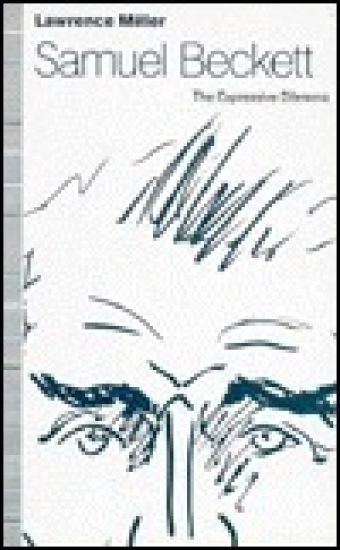
Samuel Beckett: The Expressive Dilemma

Samuel Beckett: The Expressive Dilemma

Lawrence Miller

Palgrave Macmillan
1992
sidottu
In this detailed study of Molloy, Malone Dies, and The Unnamable, Lawrence Miller traces Beckett's attempt to voice the expressive dilemma that is posed by the assumptions of modernist art and art criticism. A preliminary examination of Beckett's critical writings on literature and painting reveals a growing suspicion of modernist ambitions; it is the trilogy of novels, however, which represents Beckett's most sustained rejection of the 'feasible' aspirations of an expressive theory of art.
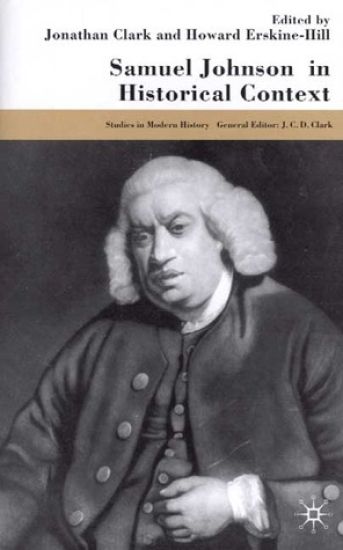
Samuel Johnson in Historical Context

Samuel Johnson in Historical Context

J. Clark; H. Erskine-Hill

Palgrave Macmillan
2001
sidottu
In one of the more sudden shifts of perspective, and hotly contested controversies of recent historical and literary scholarship, our view of Johnson has been fundamentally changed. This volume offers the best up-to-the-moment account of what has been achieved, and points to the new directions in which scholarship is developing. It will be essential reading for all concerned with eighteenth-century studies.
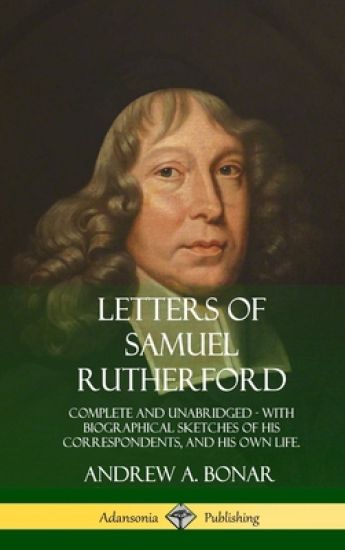
Letters of Samuel Rutherford

Letters of Samuel Rutherford

Samuel Rutherford; Andrew a Bonar

Lulu.com
2018
sidottu
This superb collection of Samuel Rutherford's letters includes a biographical account of his life, together with a copious arrangement of notes and an appendix. As one of Scotland's foremost theologians and authors in the 17th century, Samuel Rutherford was a gifted and busy wordsmith. Throughout a career spanning decades, he wrote a series of valued books on both religious topics and Presbyterianism in the political sphere. A lively and engaged thinker, Rutherford's life and thoughts offers a good portrayal of the evolution in both church and state in his era. Although most known for his ideas on constitutionalism and on military principles, Samuel Rutherford in the day-to-day lived for ordinary men and women believers who frequented his church in Kirkcudbrightshire, Galloway. He would often pay visits to the sick, correspond with their families, and offer emotional comfort and reassurance in times of difficulty.
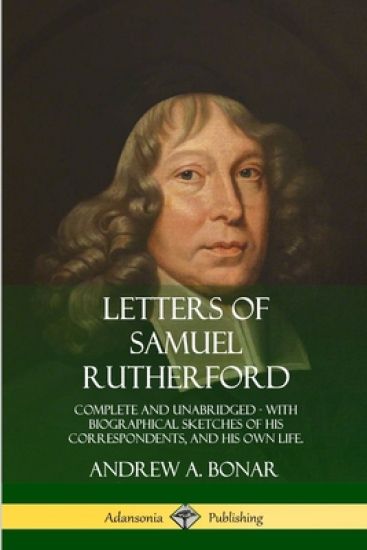
Letters of Samuel Rutherford

Letters of Samuel Rutherford

Samuel Rutherford; Andrew a Bonar

Lulu.com
2018
pokkari
This superb collection of Samuel Rutherford's letters includes a biographical account of his life, together with a copious arrangement of notes and an appendix. As one of Scotland's foremost theologians and authors in the 17th century, Samuel Rutherford was a gifted and busy wordsmith. Throughout a career spanning decades, he wrote a series of valued books on both religious topics and Presbyterianism in the political sphere. A lively and engaged thinker, Rutherford's life and thoughts offers a good portrayal of the evolution in both church and state in his era. Although most known for his ideas on constitutionalism and on military principles, Samuel Rutherford in the day-to-day lived for ordinary men and women believers who frequented his church in Kirkcudbrightshire, Galloway. He would often pay visits to the sick, correspond with their families, and offer emotional comfort and reassurance in times of difficulty.
Samuel W. Brown, Sr. from Wealaka

Samuel W. Brown, Sr. from Wealaka

Mark Maxey; William Breckenridge

Lulu.com
2019
nidottu
A prominent member of the Yuchi in the Creek Nation, after the removal to the Indian territory, was Chief Samuel W. Brown, Sr., who was born in Van Buren, Arkansas, in June 1843. He was the eldest son of S. W. Williams, a lieutenant in the United States Army. Brown's mother called Suttah was a sister of Chief Tissoso of the Yuchi. She was the granddaughter of Cosenna Barnard or "Cussinne Barnett", a prominent leader among the Yuchi.Yuchi Chief Brown, Sr., maintained his home near Jenks where he kept "the trophies of his long eventful life" for he lived to the age of ninety-two years. One who knew him well described him as low, heavy set man with a fair complexion.
Samuel Beckett and the Arts
This book, first published in 1999, addresses Beckett’s visual and musical sensibilities, and examines his visionary use of such diverse modes of creative expression as stage, radio, television and film, when his medium was the written word. The first section of the book focuses on music; the second part analyses the visual arts; and the third part examines film, radio and television. This book uncovers aspects of his thinking on, and use of the arts that have been little studied, including the nonfigurative function of music and art in Beckett’s work; the ‘collaborations’ undertaken by composers, painters and choreographers with his texts; the relation of his literary to his visual and musical artistry; and his use of film, radio and television as innovative means and celebration of artistic process.
Samuel Beckett and the Arts
This book, first published in 1999, addresses Beckett’s visual and musical sensibilities, and examines his visionary use of such diverse modes of creative expression as stage, radio, television and film, when his medium was the written word. The first section of the book focuses on music; the second part analyses the visual arts; and the third part examines film, radio and television. This book uncovers aspects of his thinking on, and use of the arts that have been little studied, including the nonfigurative function of music and art in Beckett’s work; the ‘collaborations’ undertaken by composers, painters and choreographers with his texts; the relation of his literary to his visual and musical artistry; and his use of film, radio and television as innovative means and celebration of artistic process.
Samuel Beckett, Repetition and Modern Music
Music abounds in twentieth- century Irish literature. Whether it be the "thought-tormented" music of Joyce’s "The Dead", the folk tunes and opera that resound throughout Ulysses, or the four- part threnody in Beckett’s Watt, it is clear that the influence of music on the written word in Ireland is deeply significant. Samuel Beckett arguably went further than any other writer in the incorporation of musical ideas into his work. Musical quotations inhabit his texts, and structural devices such as the da capo are metaphorically employed. Perhaps most striking is the erosion of explicit meaning in Beckett’s later prose brought about through an extensive use of repetition, influenced by his reading of Schopenhauer’s philosophy of music. Exploring this notion of "semantic fluidity", John McGrath discusses the ways in which Beckett utilised extreme repetition to create texts that operate and are received more like music. Beckett’s writing has attracted the attention of numerous contemporary composers and an investigation into how this Beckettian "musicalized fiction" has been retranslated into contemporary music forms the second half of the book. Close analyses of the Beckett- inspired music of experimental composer Morton Feldman and the structured improvisations of avantjazz guitarist Scott Fields illustrate the cross- genre appeal of Beckett to musicians, but also demonstrate how repetition operates in diverse ways. Through the examination of the pivotal role of repetition in both music and literature of the twentieth century and beyond, John McGrath’s book is a significant contribution to the field of Word and Music Studies.
Samuel Pepys: The Unequalled Self
For a decade, beginning in 1660, an ambitious young London civil servant kept an astonishingly candid account of his life during one of the most defining periods in British history. In Samuel Pepys, Claire Tomalin offers us a fully realized and richly nuanced portrait of this man, whose inadvertent masterpiece would establish him as the greatest diarist in the English language. Against the backdrop of plague, civil war, and regicide, with John Milton composing diplomatic correspondence for Oliver Cromwell, Christopher Wren drawing up plans to rebuild London, and Isaac Newton advancing the empirical study of the world around us, Tomalin weaves a breathtaking account of a figure who has passed on to us much of what we know about seventeenth-century London. We witness Pepys's early life and education, see him advising King Charles II before running to watch the great fire consume London, learn about the great events of the day as well as the most intimate personal details that Pepys encrypted in the Diary, follow him through his later years as a powerful naval administrator, and come to appreciate how Pepys's singular literary enterprise would in many ways prefigure our modern selves. With exquisite insight and compassion, Samuel Pepys captures the uniquely fascinating figure whose legacy lives on more than three hundred years after his death.