Kirjojen hintavertailu. Mukana 12 016 292 kirjaa ja 12 kauppaa.

Kirjahaku

Etsi kirjoja tekijän nimen, kirjan nimen tai ISBN:n perusteella.

1000 tulosta hakusanalla Thomas Walter Perry

Crossing the Water and Keeping the Faith

Crossing the Water and Keeping the Faith

Terry Rey; Alex Stepick; Archbishop Thomas Wenski

New York University Press
2013
pokkari
Beginning in the late 1970s and early 1980s, significant numbers of Haitian immigrants began to arrive and settle in Miami. Overcoming some of the most foreboding obstacles ever to face immigrants in America, they, their children, and now their grandchildren, as well as more recently arriving immigrants from Haiti, have diversified socioeconomically. Together, they have made South Florida home to the largest population of native-born Haitians and diasporic Haitians outside of the Caribbean and one of the most significant Caribbean immigrant communities in the world. Religion has played a central role in making all of this happen. Crossing the Water and Keeping the Faith is a historical and ethnographic study of Haitian religion in immigrant communities, based on fieldwork in both Miami and Haiti, as well as extensive archival research. Where many studies of Haitian religion limit themselves to one faith, Rey and Stepick explore Catholicism, Protestantism, and Vodou in conversation with one another, suggesting that despite the differences between these practices, the three faiths ultimately create a sense of unity, fulfillment, and self-worth in Haitian communities. This meticulously researched and vibrantly written book contributes to the growing body of literature on religion among new immigrants, as well as providing a rich exploration of Haitian faith communities.
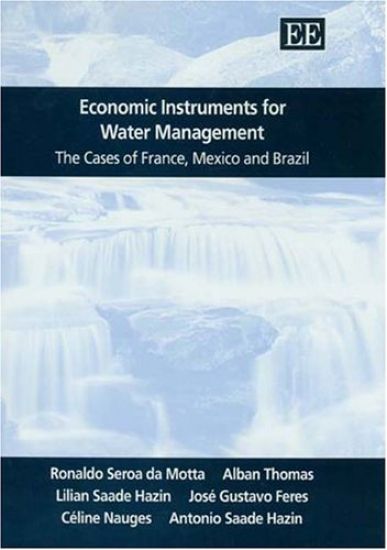
Economic Instruments for Water Management

Economic Instruments for Water Management

Ronaldo Seroa da Motta; Alban Thomas; Lilian Saade Hazin; Jose Gustavo Feres; Céline Nauges; Antonio Saade Hazin

Edward Elgar Publishing Ltd
2004
sidottu
This book argues that the economic appeal of using water charges to promote efficiency in usage and pollution control can be constrained by institutional and operational problems. Analysing the cases of France, Mexico and Brazil, the authors - respective local experts - illustrate that barriers are similar despite the existing differences among these economies. Each country evaluation within the book is analysed using the same framework, covering topics of relevance for the application of a policy instrument, namely: policy analysis phase: the policy setting in which the water economic instrument (EI) was introduced as a means of achieving policy goalsinstrument design phase: the theoretical, institutional and legal basis on which the EI was conceivedinstrument implementation phase: successes and failures of the EI application and its review process.Based on this comparative analysis, the authors gather substantial material on institutional and operational barriers constraining the full application of water charges. They also identify possible solutions already in place in these countries to remove or mitigate these barriers. The book concludes that although mistakes and solutions vary, valuable lessons can be learnt by those making decisions on water management and environmental pricing.Providing a concise and didactic background on the theoretical, conceptual and operational issues related to environmental pricing, this book will appeal to students, researchers, policy makers and practitioners with a specific interest in water management.
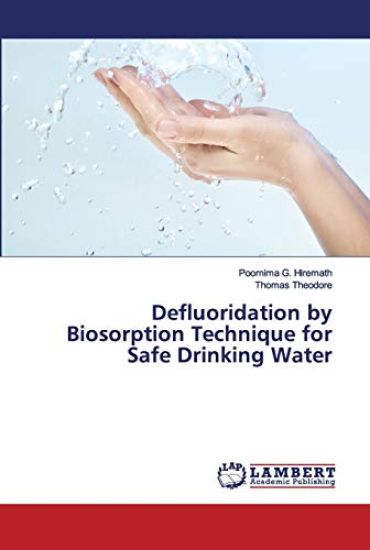
Defluoridation by Biosorption Technique for Safe Drinking Water

Defluoridation by Biosorption Technique for Safe Drinking Water

Poornima G Hiremath; Thomas Theodore

LAP Lambert Academic Publishing
2020
pokkari
Fluoride prevents dental caries at lower concentrations, but causes serious health problems to humans and animals at concentrations above 1.5 ppm through drinking water. Fluoride enters the groundwater due to slow dissolution of fluorine-containing rocks. Industries like glass and ceramic, semiconductor, electroplating, coal-fired power stations, beryllium extraction plants, brick and iron works, and aluminum smelters also increase the fluoride contamination in groundwater. With around 200 million people across 35 countries at risk of fluorosis and kidney damages, the fluoride contamination in drinking water has become a major problem world-wide. Biosorption is an ideal technique for fluoride removal as it is a relatively cost-effective, environment friendly, and possesses efficient adsorption capacities. This book comprises of investigation of fluoride uptake by algae and fungi biosorbents.
Scaling Up Multiple Use Water Services

Scaling Up Multiple Use Water Services

Barbara van Koppen; Stef Smits; Cristina Rumbaitis del Rio; John Thomas

Practical Action Publishing
2014
nidottu
Poor people in developing countries need water for many purposes: for drinking, bathing, irrigating vegetable gardens, and watering livestock. However, responsibility for water services is divided between different government agencies, the WASH (Water, Sanitation and Hygiene) and irrigation sub-sectors, with the result that people's holistic needs are not met. Multiple use water services (MUS) is a participatory water services approach that takes account of poor people's multiple water needs as a starting point of planning, and the approach has been implemented in at least 22 countries in Africa, Asia and Latin America. Scaling up Multiple Use Water Services argues that by designing cost-effective multi-purpose infrastructure MUS can have a positive impact on people's health and livelihoods. It analyses and explains the success factors of MUS, using a framework of accountability for public service delivery, and it also examines why there has been resistance against scaling up MUS. A stronger service delivery approach can overcome this resistance, by rewarding more livelihood outcomes, by fostering discretionary decision-making power of local-level staff and by allowing horizontal coordination.This book should be read by government and aid agency policy makers in the WASH and agriculture sectors, by development field workers, and by academics, researchers and students of international development.
?A 17th-century burial ground of St Thomas’s Hospital, Southwark

?A 17th-century burial ground of St Thomas’s Hospital, Southwark

?Michael Henderson; ?Adrian ?Miles; ?Don ?Walker; ?Jacqui ?Pearce

MUSEUM OF LONDON ARCHAEOLOGY
2025
nidottu
?Archaeological excavations at Shard Place, Southwark, by Museum of London Archaeology (MOLA) revealed evidence of funerary activity associated with old St Thomas’s Hospital. The discovery of 811 inhumations, dating from the 17th to early 18th century exposed the intensive nature of burial activity in an area immediately to the south-east of the hospital buildings. This burial assemblage, together with dumps of hospital waste and evidence of structural remains associated with the 18th-century hospital rebuilding, enhances our knowledge of the early history of this London institution. The study of the skeletal remains of 794 individuals, the majority of whom must have been inmates at St Thomas’s Hospital, provides an insight into the health of the population and the diseases from which they suffered. The demographic structure of the burial sample reveals elevated vulnerability in adolescence and early adulthood, an indication of the health risks inherent within an increasingly crowded urban landscape. The City’s poor endured cramped living conditions and rising levels of pollution. Many migrated to London in search of jobs as labourers, or servants and apprentices. The burial ground revealed early evidence of hospital medical practice in the form of surgical limb amputation. Skeletal evidence of venereal syphilis was also identified, consistent with records of specialist ‘foul wards’ at St Thomas’s Hospital, provided for those suffering from this chronic condition.
Climate Variations, Climate Change, And Water Resources Engineering

Climate Variations, Climate Change, And Water Resources Engineering

Jurgen D. Garbrecht; Thomas C. Piechota

Amer Society of Civil Engineers
2006
pokkari
Complex water resource systems have been developed to ensure a continued safe and reliable water supply, however, due to climate variations these systems can be stressed and lead to water shortages and other problems. While many aspects of climate variations and their impact on water resources have been presented and published, the information is greatly dispersed and lacks a general overview. This report provides a broad overview of this important topic. It highlights the current knowledge about climate variations and change, discusses the impact on water resources systems, characterises its predictability, and provides examples of its use in water resources management, planning, and design.