Kirjojen hintavertailu. Mukana 12 016 292 kirjaa ja 12 kauppaa.

Kirjahaku

Etsi kirjoja tekijän nimen, kirjan nimen tai ISBN:n perusteella.

1000 tulosta hakusanalla Wauter Mannaert

Water Pipeline Condition Assessment

Water Pipeline Condition Assessment

American Society of Civil Engineers
2018
nidottu
Sponsored by the Pipelines Division of the Utility Engineering and Surveying Institute of the American Society of Civil EngineersWater Pipeline Condition Assessment provides water utilities with an appropriate path for determining the structural status of an individual pipeline or pipeline system. Such condition assessments form a critical piece of an effective asset management program by establishing a baseline to understand the present state of a pipeline. By recognizing that current state, the asset management program then enables the water utility to anticipate future issues and allocate the appropriate measures to be undertaken to provide for the continuous safe and reliable operation of the system.This manual of practice focuses on the larger diameter transmission pipelines of water utilities, rather than the smaller diameter distribution systems. It provides technical information and recommendations to set priorities and obtain an accurate determination of the condition of the individual pipelines and pipeline systems. MOP 134 discusses data collection and management, planning, tools/technologies, and the condition assessment report. Six pipe materials are explained in detail: cast iron and ductile iron, concrete, steel, fiberglass, polyvinyl chloride, and asbestos cement. Seven case studies of projects in California, Florida, Texas, and Utah demonstrate the application of a variety of technologies for condition assessment.MOP 134 will be a valuable reference for operators, engineers, managers, and regulators of water utilities interested in the value of condition assessment as part of an overall asset management program.

Walter B. Gibson and The Shadow

Walter B. Gibson and The Shadow

Thomas J. Shimeld

McFarland Co Inc
2005
pokkari
"Who knows what evil lurks in the hearts of men? . . . The Shadow knows!" And who knew The Shadow better than his creator, Walter B. Gibson. Relatively few people have heard of Gibson, but many more are familiar with The Shadow having heard the program on the Blue Coal Radio Program in the 1930s and read the Street & Smith Shadow novels. Walter B. Gibson's life and career come out from behind The Shadow in this biography. It covers his youth in Philadelphia, his development as a writer and magician, his wives, including the third, (Litzka, who was a harpist and magician in her own right), his time living in Maine and upstate New York, and his later years and death. In addition to being credited with creating The Shadow (he used the pseudonym Maxwell Grant), Gibson wrote 187 books, contributed 668 articles to periodicals, created 283 stories for The Shadow Magazine, wrote 48 separate syndicated feature columns, reported the adventures of The Shadow and Blackstone the magician in 394 comic books and newspaper strips, and helped develop 147 radio scripts and many other works under numerous pseudonyms. Gibson has invented many widely used magic tricks and traveled with and befriended Harry Houdini, Howard Thurston, Harry Blackstone, Sr., and Joseph Dunninger.
Walter Dean Myers

Walter Dean Myers

Mary Ellen Snodgrass

McFarland Co Inc
2006
pokkari
Walter Dean Myers, preeminent author of teen fiction biography and verse, refines the image of black characters that are frequently trivialized or vilified in juvenile literature, advertising, television, and film. From his saga The Glory Field to his novel The Young Landlords, Myers's canon surveys the complex realm of the teen years as colliding settings in home, school, and the street. This volume introduces readers to both the writer and his work, with an emphasis on the characters, dates, events, motifs, and themes from the books. Myers's 101 A-to-Z entries offer concise, analytical discussion on all topics and include generous citations from primary and secondary sources. Each entry concludes with a selected bibliography on such subjects as segregation, Malcolm X, urbanism, writing, metafiction, drugs and alcohol, slavery, and the Vietnam War. Appendices offer a timeline of historical events in Myers's writings and forty topics for group or individual projects, oral analysis, background material, and theme development. A map of Harlem (where many of the stories are set), genealogical diagrams for characters, and an author chronology contribute to a comprehensive presentation.
Walter M. Miller, Jr.

Walter M. Miller, Jr.

William H. Roberson

McFarland Co Inc
2011
pokkari
Walter M. Miller, Jr., was one of the twentieth century's leading science fiction writers, a two-time Hugo Award winner and author of the classic novels A Canticle for Leibowitz and Saint Leibowitz and the Wild Horse Woman. This comprehensive literary guide provides more than 1,500 alphabetically arranged entries on Miller's life and body of work. It includes summaries of his two novels and all of his shorter works, character descriptions, explanations of the literary, cultural, historical, and religious allusions found in the works, as well as translations of all foreign words and phrases. This guide is meant to inform both scholarly and popular readings of Miller's work.
Walter Penn Shipley

Walter Penn Shipley

John S. Hilbert

McFarland Co Inc
2012
pokkari
Walter Penn Shipley was crucial to the development of chess in the United States in the late 19th and early 20th centuries. He organized correspondence chess in the United States in the 1890s, was a talented player and was a friend of world champions and contenders. He served as the president of the Franklin Chess Club in Philadelphia at the height of its power and prestige. This work is a complete biography and games collection of Walter Penn Shipley. It draws from original documents--correspondence with Steinitz, Lasker, Capablanca, Pillsbury and others, detailed Shipley family records--and extensive research conducted in contemporary newspapers, journals and magazines. The book contains approximately 250 games (most of them annotated), with 246 positional diagrams.
Water from the Well

Water from the Well

Stephen P McCutchan

CSS Publishing Company
2007
pokkari
We can all use nourishment to sustain us on our spiritual journey, and there's no better source to get a refreshing drink from than God's Word. In these pages, Stephen McCutchan helps you draw from that endless well with a complete set of theological reflections based on scripture texts from Cycle A of the Revised Common Lectionary. His insightful meditations guide you through each Sunday's passages by focusing on key themes and highlighting the text's central meaning for our everyday lives. This volume is perfect for use as a daily devotional -- five easy-to-follow formats for personal meditation are included, allowing you to combine prayer time with reading one of the week's scripture texts and its accompanying commentary. It's also a valuable reference for sermon preparation, as well as an excellent curriculum for adult classes integrating Bible study with Sunday worship. But however you choose to use it, Water from the Well is an inspirational resource that will strengthen your connection with the divine story and your ability to hear God's voice speaking through scripture. Stephen P. McCutchan is a Presbyterian pastor and adjunct professor at Wake Forest Divinity School. Prior to his recent retirement, he served for 23 years as the pastor of Highland Presbyterian Church in Winston-Salem, North Carolina. McCutchan is a contributing writer for the online service The Immediate Word (www.sermonsuite.com), and he is the author of Good News for a Fractured Society and Experiencing the Psalms: Weaving the Psalms into Your Ministry and Faith (Smyth & Helwys), which won the 2001 Angell Award from the Presbyterian Writers Guild. McCutchan is a graduate of Muskingum College and Union Theological Seminary in New York City. For more information or to contact the author, visit his website at www.smccutchan.com.
Water Saving Techniques for Plant Growth
Large areas of crops are now grown under water-stressed conditions on non-irrigated and under limited irrigation in semi-arid and arid regions. In the future, this area of water-stressed crops will increase as a result of increasing competition from other water users, declining ground water levels, and the bringing into production of fragile lands that have low water-holding capacity, such as sandy desert soil. Consequently, strategies and practices to increase total yields and efficient water use must be improved. Following the introductory material and keynotes, this book is divided into four parts. Part I covers soil water management, Part II deals with model approaches to evaluate the soil-water-atmosphere interactions, Part III treats water saving techniques through soil conditioning, and Part IV discusses case studies of water management systems. "Water Saving Techniques for Plant Growth" thus represents a general account of interest and activities of the various scientific disciplines which are concerned in deseert encroachment as part of global change.
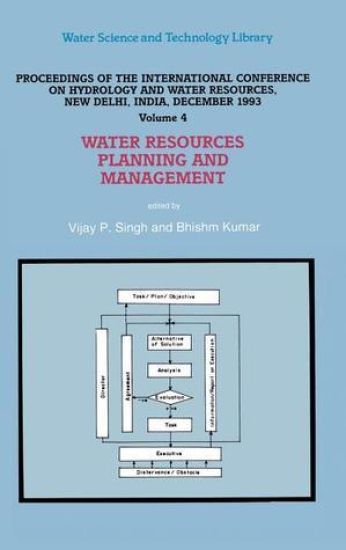
Water Resources Planning and Management
Water is vital to life, maintenance of ecological balance, economic development, and sustenance of civilization. Planning and management of water resources and its optimal use are a matter of urgency for most countries of the world, and even more so for India with a huge population. Growing population and expanding economic activities exert increasing demands on water for varied needs--domestic, industrial, agricultural, power generation, navigation, recreation, etc. In India, agriculture is the highest user of water. The past three decades have witnessed numerous advances as well as have presented intriguing challenges and exciting opportunities in hydrology and water resources. Compounding them has been the growing environmental consciousness. Nowhere are these challenges more apparent than in India. As we approach the twenty­ first century, it is entirely fitting to take stock of what has been accomplished and what remains to be accomplished, and what accomplishments are relevant, with particular reference to Indian conditions.
Water Resources Management in the Face of Climatic/Hydrologic Uncertainties
This text is the first international and comprehensive discussion of the impacts of climatic fluctuations and climate change on water resources management. The book presents an overview of the impacts of climatic change/fluctuations on a wide variety of water resources sectors including river runoff, water quality, water temperature, water use and demand, reservoir management and water resource planning and management. The book is unique in that it then presents a series of case studies to both demonstrate the application of climate change impact assessment methodologies and to provide insights to catchment, river basin, and national scale impacts of climate change/fluctuations on the water resources of Africa, Europe, and North America. Audience: Researchers, scholars and students of hydrology and water management who are concerned with the issues of climate change as well as the climate change impact assessment community.
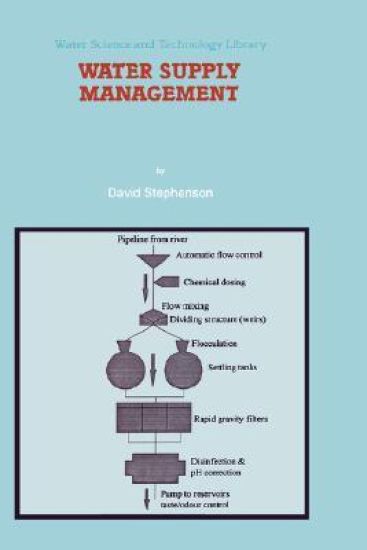
Water Supply Management

Water Supply Management

D. Stephenson

Springer
1998
sidottu
Supply of sufficient clean drinking water is often taken for granted, but it requires a considerable technical and financial effort to ensure reliable and economic water supply. This volume presents an up-to-date overview of water supply management and aims at efficient management of water supply schemes rather than design of new works. Various chapters of the book are devoted to water demands, management of reservoirs and conjunctive use of alternative sources. Asset management and loss control are also considered. Water quality and provision of water to developing communities are also discussed. Water supply management is of concern to developed urban environments as well as developing communities. The book will be equally valuable to the practising water engineer and the newcomer or graduate student in the subject.
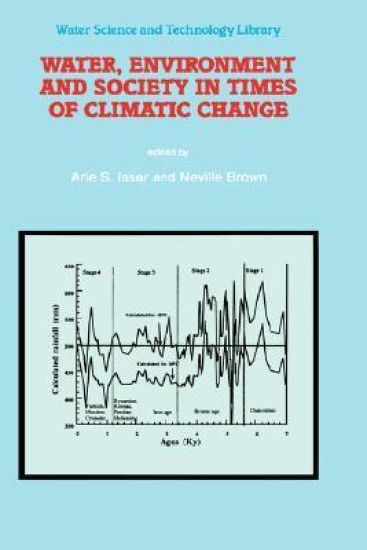
Water, Environment and Society in Times of Climatic Change
Since the greenhouse effect emerged as a predictable threat, necessitating the evalu­ ation of its future impact on the environment in the various parts of the globe, interest in the climate changes during the Holocene has gained momentum. The background can be summarized by the sentence: The past is a key to the future. As a matter of fact, this sentence is in the opposite direction, on the dimension of time, to the principle adopted by the founders of the science of geology. They proposed that geological processes in the present should be used as a key for understanding the past. Another reason for the interest in the history of the climate of the Holocene can be described as the renaissance of a modified deterministic approach to the inter­ relation between physical and human geography. This relates in the first place to the fact that various investigations, especially as carried out by Hubert Lamb, showed that the sequence of climate changes previously suggested by Blytt and Sernander for Europe and adopted by most Holocene climatologists was far too general, and that there were more climate changes during recent history than previously taken account of. In the second place it was found out that these changes had had an impact on the history of human communities. Thus, one can conclude that once the taboo on geographical determinism (i. e.
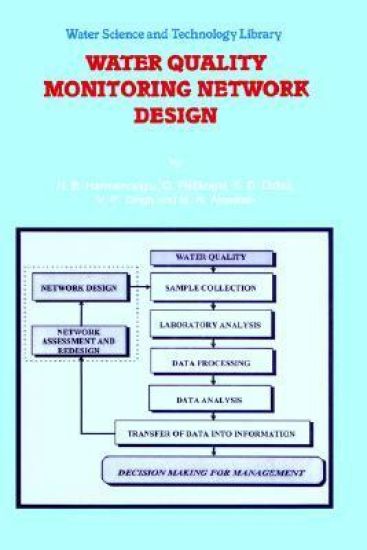
Water Quality Monitoring Network Design

Water Quality Monitoring Network Design

Nilgun B. Harmanciogammalu; O. Fistikoglu; S.D. Ozkul; V.P. Singh; M.N. Alpaslan

Springer
1998
sidottu
In recent years, the adequacy of collected water quality data and the performance of existing monitoring networks have been seriously evaluated for two basic reasons. First, an efficient information system is required to satisfy the needs of water quality management plans and to aid in the decision-making process. Second, this system has to be realized under the constraints of limited financial resources, sampling and analysis facilities, and manpower. Problems observed in available data and shortcomings of current networks have led researchers to focus more critically on the design procedures used. The book is intended to present an up-to-date overview of the current network design procedures and develop basic guidelines to be followed in both the design and the redesign of water quality monitoring networks. The book treats the network design problem in a comprehensive and systematic framework, starting with objectives of monitoring and elaborating on various technical design features, e.g. selection of sampling sites, sampling frequencies, variables to be monitored, and sampling duration. The design procedures presented are those that the authors have recently applied in a number of national and international projects on the design and redesign of water quality monitoring networks. Thus, the book covers real case studies where not only the methods described in the earlier titles are used but also new techniques are introduced. Where earlier methods are used, they are assessed with respect to their efficiency and applicability to real case problems. Audience: Essentially, the framework adopted in the book applies as well to other hydrometric data collection networks besides those of water quality. In this respect, it is expected that planners, designers, scientists, and engineers who are involved in hydrometric network design will benefit from the in-depth approach assumed in this book. It will also be of interestto research and data centers, international programs and organizations related to environmental monitoring. The book may also be used as a reference text in graduate courses of water resources and environmental engineering programs.
Water Quality

Water Quality

Claude E. Boyd

Springer
2000
sidottu
Water quality is important to everyone, but professionals in many disciplines need an understanding of this subject. Although water quality is complex, its general aspects can be grasped readily and with little background - only introductory chemistry and biology and a little algebra are needed. Unfortunately, the teaching of water quality is not well organized. In most colleges and universities, water quality instruction is given in certain engineering curricula and in aquatic ecology or fisheries curricula. There also is brief attention to selected topics on water quality in numerous classes in other curricula. Water quality training in engineering is highly specialized and directed by necessity towards water supply and water treatment, while the focus in aquatic ecology and fisheries is on biological water quality and pollution. Few students venture into specialized classes outside of their curricula, and as a result, their formal training in water quality is greatly restricted. Self-education by reading texts and reference books on water quality is difficult. Authors of water quality books seem to be more interested in presenting a rigorous, detailed treatment than in focusing on simplicity and clarity. Chemical aspects of water quality often are presented at a level requiring fairly advanced mathematics and physical chemistry, and biological discussions may be quite advanced and theoretical. I have taught water quality to seniors and graduate students in agriculture, wildlife and fisheries, environmental sciences, economics, and similar disciplines for many years.
Walter Carter

Walter Carter

Carter Walter

Hal Leonard Corporation
1996
nidottu
Guitar industry expert Walter Carter relates the story of one of the 20th century's most innovative companies, from its owner's humble beginnings as a helicopter manufacturer to its rise as the biggest acoustic guitar maker in the U.S. Features beautiful color photos of Ovation guitars, interviews with Ovation artists, and an appendix of guitar serial numbers for collectors.
Water-Like Leaders & Strategy

Water-Like Leaders & Strategy

Nellie Swanepoel

Digital on Demand
2024
pokkari
In "Water-Like Leaders and Strategy," Dr. Nellie Swanepoel invites you on a journey where her passions for water and leadership converge into a powerful synthesis. Imagine yourself floating down a serene river, feeling the gentle yet unstoppable force of the current. This is how leadership should feel-graceful, powerful, and transformative.As you navigate the pages, you'll experience the wisdom of leadership through the lens of water. Picture a river carving out a majestic canyon over thousands of years, its path shaped by unwavering determination and vision. This is the essence of true leadership. And like the mighty waterfall that cascades with decisive, powerful force, leaders must know when to take bold actions.Dr. Swanepoel's book is more than a guide; it's a practical manual for modern, adaptable, and compassionate leadership. By drawing parallels between the natural water cycle and leadership cycles, she unveils the complexities and endless possibilities within organizational life.Leaders find themselves in uncharted waters, navigating hybrid offices and the rise of artificial intelligence. This new environment challenges traditional leadership principles, blending the emotional impact of the pandemic with the efficient, sometimes impersonal nature of AI."Water-Like Leaders and Strategy" will not only question your leadership skills but will delve into your deepest passions and motivations. Our world does not only need competent leaders-it needs kind and resilient leaders, combined in one. Dr. Swanepoel's insights will inspire you to become a transformational leader.This book is essential for anyone who aspires to lead with empathy, resilience, and vision. Prepare to be challenged, inspired, and ultimately transformed. Dive in and discover a refreshing perspective on leadership that will empower you to flow and lead like water.
Water for a Thirsty Land

Water for a Thirsty Land

K. C. Hanson

Augsburg Fortress
2001
pokkari
Explores form, tradition, and theology The chapters in this volume provide the general reader an opportunity to learn from one of the greatest biblical scholars of the twentieth century. Beginning with the most general and moving to focused topics, this work provides a rationale for continuing to engage the Old Testament in the modern world. Combining his research strengths in the literary history of Israel, form criticism, tradition history, and the history of religion, this volume covers narrative, prophecy, and the Psalms. Rather than artifacts of a former generation, these essays are as fresh as ever in their perspective. To make it more helpful for students, each essay has been expanded with additional notes and bibliography to show where the discussion has continued since Gunkel. This work will provide an excellent supplementary textbook for courses in the Old Testament or Bible.
Walter Wink

Walter Wink

Henry F. French; Walter Wink

Fortress Press,U.S.
2013
pokkari
Walter Wink's writing has been described as brilliant, provocative, passionate, and innovative. His skills in critical scholarship were matched by an engaging and honest style that make his work a must read for twenty-first century theologians and all who seek deeper understanding at the intersection of Bible, theology, social ethics, and more.