Kirjojen hintavertailu. Mukana 12 016 292 kirjaa ja 12 kauppaa.

Kirjahaku

Etsi kirjoja tekijän nimen, kirjan nimen tai ISBN:n perusteella.

1000 tulosta hakusanalla Wilhelm Busch

Wilhelm Herrmanns Stellung in der Ritschlschen Schule
Albrecht Ritschl bestimmte mit seiner theologischen Schule die deutsche protestantische Theologie von ca. 1875 bis zum ersten Weltkrieg. Sein Schüler Adolf Harnack war unbestritten der bedeutendste akademische Theologe der Jahrhundertwende und eine zentrale Figur in der Welt der Wissenschaften. Die dialektische Theologie, die nach 1914 einen entschlossenen Bruch mit der Generation ihrer Lehrer vollzog, war durch die Fragestellungen und zu einem bedeutenden Teil auch noch durch Lösungsstrategien der Ritschlianer geprägt.Der Briefwechsel zwischen Ritschl und Harnack eröffnet einen tiefen Einblick in die Formierung der Ritschlschen Schule, in die fundamentaltheologischen Auseinandersetzungen zwischen den verschiedenen Richtungen der deutschen evangelischen Theologie in der Kaiserzeit und in die bisher nur spärlich erschlossene Biografie und den theologischen Werdegang des jungen Harnack. Der Sohn des konfessionellen Lutheraners Theodosius Harnack wurde von Ritschl nicht nur zu seiner traditionskritischen Dogmengeschichtsforschung inspiriert. Vielmehr kreist Harnacks Denken in der Zeit des Werdens gerade um Ritschls Entwurf einer dogmatischen Position. Der "Unterricht in der christlichen Religion" von 1875 bietet für Harnack eine Alternative zur anerzogenen lutherischen Orthodoxie. Allerdings wünscht er nach einer gewissen Zeit, dass Ritschl sich noch stärker von der Tradition - auch von der biblischen - lossage und sich deutlicher zur Aufklärungstheologie bekenne. Ritschl aber profiliert sich nun gerade gegen dieselbe. Es kommt zu einem Zerwürfnis, das kaum noch zu überbrücken ist.
Wilhelm Hennis' Politische Wissenschaft
Wilhelm Hennis, der am 18. Februar 2013 seinen 90. Geburtstag gefeiert hätte, war einer der bedeutendsten Vertreter der deutschen Politikwissenschaft. Wie kaum ein anderer seines Fachs hat er sich über die akademische Tätigkeit hinaus in das politische Geschehen eingemischt und sich so in die Geschichte der Bundesrepublik eingeschrieben. Mit großer Leidenschaft und Urteilskraft werden in seinem Werk die politischen Ideen und Institutionen untersucht. Wir begegnen dabei Max Weber, Goya und Tocqueville ebenso wie den Parteien, dem Bundestag oder der Bildungspolitik. Denn er verstand seine Disziplin als eine praktische Wissenschaft, die danach fragt, in welcher Ordnung die Menschen zusammenleben. Was Hennis' Studien faszinierend macht, ist eine existentielle Dimension, die das heutige Fach verloren zu haben scheint. In diesem Band beschäftigen sich international renommierte Wissenschaftler und Publizisten mit seinen Fragestellungen und Diagnosen.
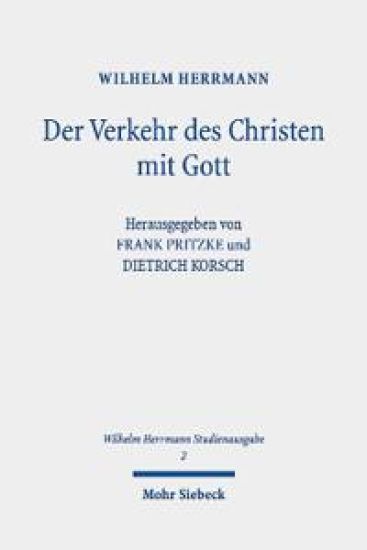
Wilhelm Herrmann-Studienausgabe

Wilhelm Herrmann-Studienausgabe

Wilhelm Herrmann

Mohr Siebeck
2024
nidottu
Worin besteht der christliche Glaube, wie kommt er zustande und wie wirkt er sich im Leben der Menschen aus? Auf diese Fragen gibt Wilhelm Herrmanns Buch eine stringente Antwort. Der christliche Glaube ist Vertrauen auf Gott, welches das menschliche Leben trägt. Er entsteht durch ein Erleben, welches den Menschen neu bestimmt und das deshalb als Offenbarung Gottes betrachtet werden muss. Und er befreit den Menschen zu einem selbstverantwortlichen Umgang mit Gott, der Welt, den Nächsten und sich selbst. Das alles ist enthalten im "Verkehr des Christen mit Gott", der im Bild Jesu seinen Inbegriff besitzt und der unter Aufnahme der Frömmigkeit Martin Luthers dargestellt wird.
Wilhelm Ostwald

Wilhelm Ostwald

Springer International Publishing AG
2017
sidottu
This book is the translated and commented autobiography of Wilhelm Ostwald (1853-1932), who won the Nobel Prize for Chemistry in 1909. It is the first translation of the German original version “Lebenslinien: Eine Selbstbiographie,” published by Ostwald in 1926/27, and has been painstakingly translated. The book includes comments and explanations, helping readers to understand Ostwald’s text in the historical context of Germany at the beginning of the 20th century.In his autobiography, Ostwald describes his impressive research career and his life from his own personal view. Readers will find information on how Ostwald immortalized himself through his research on catalysis, chemical equilibria, technical chemistry, and especially as one of the founders of modern physical chemistry. His broad interests in science, ranging from philosophy to the theory of colors and the idea of a universal scientific language are further remarkable aspects covered.This work will appeal toa broad audience of contemporary scientists: Wilhelm Ostwald has been tremendously influential for the development of chemistry and science, and many of today’s best-known international scientific schools can be traced back to Ostwald’s students. Ostwald was active in Germany and what is now Latvia and Estonia, while also travelling to the USA, England and France. In his discussions and analyses of the working conditions of the time, readers will find many issues reflected that continue to be of relevance today.
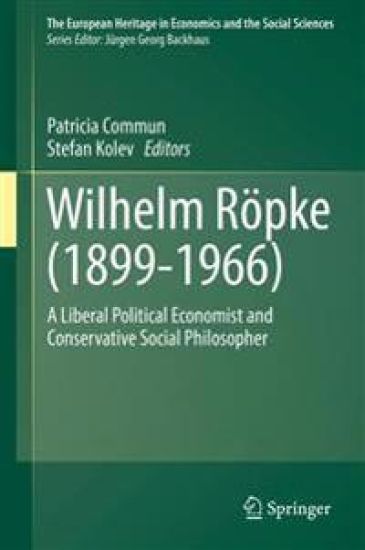
Wilhelm Röpke (1899–1966)

Wilhelm Röpke (1899–1966)

Springer International Publishing AG
2018
sidottu
This volume provides a comprehensive account of Wilhelm Röpke as a liberal political economist and social philosopher. Wilhelm Röpke (1899-1966) was a key protagonist of transatlantic neoliberalism, a prominent public intellectual and a gifted international networker. As an original thinker, he always positioned himself at the interface between political economy and social philosophy, as well as between liberalism and conservatism. Röpke’s endeavors to combine these elements into a coherent whole, as well as his embeddedness in European and American intellectual networks of liberal and conservative thinkers, are a central theme throughout the book. The volume includes papers by international experts from a conference in Geneva on the occasion of the 50th anniversary of Röpke’s passing. The first part focuses on new biographical insights into his exile years in Istanbul and Geneva, while the second part discusses his business cycle theory in the context of the Great Depression, and the third part elaborates on his multifaceted social philosophy.Wilhelm Röpke was among the most important thinkers within the classical liberal revival post-WWII, with intriguing tensions between liberalism and conservatism. A highly recommended volume.–– Peter J. Boettke, 2016-2018 President of the Mont Pèlerin Society and Professor of Economics and Philosophy, George Mason University This important collection of papers provides an in-depth assessment of Wilhelm Röpke’s contributions, placing him in the context of his time. A fine contribution. –– Bruce J. Caldwell, Director of the Center for the History of Political Economy and Research Professor of Economics, Duke University
Wilhelm Ostwald

Wilhelm Ostwald

Springer International Publishing AG
2018
nidottu
This book is the translated and commented autobiography of Wilhelm Ostwald (1853-1932), who won the Nobel Prize for Chemistry in 1909. It is the first translation of the German original version “Lebenslinien: Eine Selbstbiographie,” published by Ostwald in 1926/27, and has been painstakingly translated. The book includes comments and explanations, helping readers to understand Ostwald’s text in the historical context of Germany at the beginning of the 20th century.In his autobiography, Ostwald describes his impressive research career and his life from his own personal view. Readers will find information on how Ostwald immortalized himself through his research on catalysis, chemical equilibria, technical chemistry, and especially as one of the founders of modern physical chemistry. His broad interests in science, ranging from philosophy to the theory of colors and the idea of a universal scientific language are further remarkable aspects covered.This work will appeal toa broad audience of contemporary scientists: Wilhelm Ostwald has been tremendously influential for the development of chemistry and science, and many of today’s best-known international scientific schools can be traced back to Ostwald’s students. Ostwald was active in Germany and what is now Latvia and Estonia, while also travelling to the USA, England and France. In his discussions and analyses of the working conditions of the time, readers will find many issues reflected that continue to be of relevance today.
Wilhelm Röpke (1899–1966)

Wilhelm Röpke (1899–1966)

Springer International Publishing AG
2019
nidottu
This volume provides a comprehensive account of Wilhelm Röpke as a liberal political economist and social philosopher. Wilhelm Röpke (1899-1966) was a key protagonist of transatlantic neoliberalism, a prominent public intellectual and a gifted international networker. As an original thinker, he always positioned himself at the interface between political economy and social philosophy, as well as between liberalism and conservatism. Röpke’s endeavors to combine these elements into a coherent whole, as well as his embeddedness in European and American intellectual networks of liberal and conservative thinkers, are a central theme throughout the book. The volume includes papers by international experts from a conference in Geneva on the occasion of the 50th anniversary of Röpke’s passing. The first part focuses on new biographical insights into his exile years in Istanbul and Geneva, while the second part discusses his business cycle theory in the context of the Great Depression, and the third part elaborates on his multifaceted social philosophy.Wilhelm Röpke was among the most important thinkers within the classical liberal revival post-WWII, with intriguing tensions between liberalism and conservatism. A highly recommended volume.–– Peter J. Boettke, 2016-2018 President of the Mont Pèlerin Society and Professor of Economics and Philosophy, George Mason University This important collection of papers provides an in-depth assessment of Wilhelm Röpke’s contributions, placing him in the context of his time. A fine contribution. –– Bruce J. Caldwell, Director of the Center for the History of Political Economy and Research Professor of Economics, Duke University
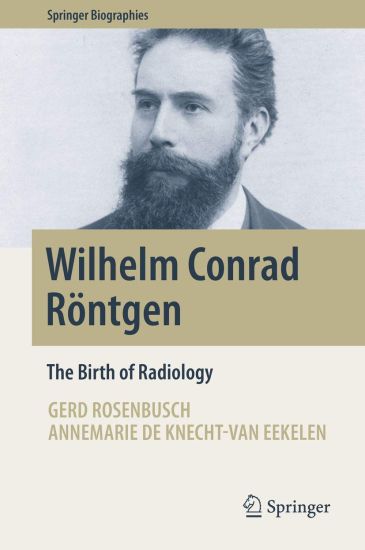
Wilhelm Conrad Röntgen

Wilhelm Conrad Röntgen

Gerd Rosenbusch; Annemarie de Knecht-van Eekelen

Springer International Publishing AG
2019
sidottu
This book, which will appeal to all with an interest in the history of radiology and physics, casts new light on the life and career of Wilhelm Conrad Röntgen, showing how his personality was shaped by his youth in the Netherlands and his teachers in Switzerland. Beyond this, it explores the technical developments relevant to the birth of radiology in the late nineteenth century and examines the impact of the discovery of X-rays on a broad range of scientific research. Röntgen (1845-1923) was born in Lennep, Germany, but emigrated with his family to the Netherlands in 1848. As a 17-year-old he moved to Utrecht, entering the Technical School and living at the home of Dr. Jan Willem Gunning. In this well-educated family he was stimulated to continue his studies at university. In 1868 he received a diploma from the Federal Polytechnic School in Zurich and just a year later completed a PhD in physics. He followed his mentor, August Kundt, to the universities of Würzburg (1870) and Strasburg (1872) and married Anna Ludwig in 1872. In 1879 Röntgen gained his first professorship at a German University, in Giessen, followed by a chair in Würzburg in 1888. Here he discovered X-rays in 1895, for which he received the first Nobel Prize in physics in 1901. From 1900 until his retirement in 1921 he occupied the chair of physics at the Munich University.
Wilhelm Meisters Lehrjahre

Wilhelm Meisters Lehrjahre

Johann Wolfgang Von Goethe

Hansebooks
2017
pokkari
Wilhelm Meisters Lehrjahre - Band 2 ist ein unver nderter, hochwertiger Nachdruck der Originalausgabe. Hansebooks ist Herausgeber von Literatur zu unterschiedlichen Themengebieten wie Forschung und Wissenschaft, Reisen und Expeditionen, Kochen und Ern hrung, Medizin und weiteren Genres. Der Schwerpunkt des Verlages liegt auf dem Erhalt historischer Literatur. Viele Werke historischer Schriftsteller und Wissenschaftler sind heute nur noch als Antiquit ten erh ltlich. Hansebooks verlegt diese B cher neu und tr gt damit zum Erhalt selten gewordener Literatur und historischem Wissen auch f r die Zukunft bei.
Wilhelm Meisters Lehrjahre

Wilhelm Meisters Lehrjahre

Johann Wolfgang Von Goethe

Hansebooks
2018
pokkari
Wilhelm Meisters Lehrjahre - Band 4 ist ein unver nderter, hochwertiger Nachdruck der Originalausgabe. Hansebooks ist Herausgeber von Literatur zu unterschiedlichen Themengebieten wie Forschung und Wissenschaft, Reisen und Expeditionen, Kochen und Ern hrung, Medizin und weiteren Genres. Der Schwerpunkt des Verlages liegt auf dem Erhalt historischer Literatur. Viele Werke historischer Schriftsteller und Wissenschaftler sind heute nur noch als Antiquit ten erh ltlich. Hansebooks verlegt diese B cher neu und tr gt damit zum Erhalt selten gewordener Literatur und historischem Wissen auch f r die Zukunft bei.
Wilhelm Meisters Lehrjahre

Wilhelm Meisters Lehrjahre

Johann Wolfgang Von Goethe

Hansebooks
2017
pokkari
Wilhelm Meisters Lehrjahre - Band 6 ist ein unver nderter, hochwertiger Nachdruck der Originalausgabe. Hansebooks ist Herausgeber von Literatur zu unterschiedlichen Themengebieten wie Forschung und Wissenschaft, Reisen und Expeditionen, Kochen und Ern hrung, Medizin und weiteren Genres. Der Schwerpunkt des Verlages liegt auf dem Erhalt historischer Literatur. Viele Werke historischer Schriftsteller und Wissenschaftler sind heute nur noch als Antiquit ten erh ltlich. Hansebooks verlegt diese B cher neu und tr gt damit zum Erhalt selten gewordener Literatur und historischem Wissen auch f r die Zukunft bei.