Kirjahaku
Etsi kirjoja tekijän nimen, kirjan nimen tai ISBN:n perusteella.
1000 tulosta hakusanalla Adrian Lysenko
The book is a developed history of the radiological sciences – covering the back-story to Röntgen’s discovery, the discovery itself and immediate reception the early days of radiology leading to classical radiology (the pre-digital world). The 1970s as the ‘golden decade’ of radiology will be covered in detail, with the development of CT, MRI and modern interventional radiology. It will appeal to interested members of the public, to those working in the field, and to historians of medicine and science.Key Features:• Accessible and engaging, even for readers without any formal scientific training or education• Authored by an authority in the field • Contains previously unpublished materials from the author's extensive personal library and archive

Now in a fully updated seventh edition, this book remains an established treatise in the field of civil jurisdiction and judgments. It aims to make a full and complete statement of English law on civil jurisdiction and the effect of foreign judgments against the backdrop of significant uncertainty about the consequence of Brexit on the law of civil jurisdiction and judgments. The book looks in detail at: the law after the Brussels Regulation has ceased to operate as part of English law; the substance of the Lugano Convention, which the government hopes to join; the incorporation of the 2005 Hague Convention on Choice of Court Agreements into English law, and developments in the common law rules of jurisdiction, injunctions, and foreign judgments.This text aims to be an authoritative and comprehensive reference for all legal practitioners working in commercial law across jurisdictions as well as the judiciary.
This innovative new book combines environmental justice scholarship with a material ecocriticism to explore the way in which early Victorian literature (1837–1860) responded to the growing problem of environmental injustice. As this book emphasises, environmental injustice – simply, the convergence of poverty and pollution – was not an isolated phenomenon, but a structural form of inequality; a product of industrial modernity’s radical reformation of British society, it particularly affected the working classes. As each chapter reveals in detail, this form of environmental inequality (or ‘classism’) drew sharply critical reactions from figures as diverse as Thomas Carlyle, Friedrich Engels, Charles Dickens, and John Ruskin, and from within the Chartist movement, as working-class writers themselves reacted to the hazardous realities of a divided society. But as this book also reveals, these writers recognised that a truly just society respects the needs of the nonhuman and takes account of the material world in all its own aliveness; even if only tentatively, they reached for a more inclusive, emergent form of justice that might address the social and ecological impacts of industrial modernity, an idea which is no less relevant today.This book represents an indispensable resource for scholars and students working in the fields of Victorian literature, environmental justice, and ecocriticism.
The Global Architecture of Multilateral Development Banks
Adrian Robert Bazbauers; Susan Engel
Routledge
2021
sidottu
This book explores the evolution of the 30 functioning multilateral development banks (MDBs). MDBs have their roots in the growing system of international finance and multilateral cooperation, with the first recognisable MDB being proposed by Latin America in financial cooperation with the US in the late 1930s. That Inter-American Bank did not eventuate but was a precursor to the World Bank being negotiated at Bretton Woods in 1944. Since then, a complex network of regional, sub-regional, and specialised development banks has progressively emerged across the globe, including two significant recent entrants established by China and the BRICS. MDBs arrange loans, credits, and guarantees for investment in member states, generally with the stated aim of fostering economic growth. They operate in both the Global North and South, though there are more MDBs focusing on emerging and developing states. While the World Bank and some of the larger regional banks have been scrutinised, little attention has been paid to the smaller banks or the overall system. This book provides the first study of all 30 MDBs and it evaluates their interrelationships. It analyses the emergence of the MDBs in relation to geopolitics, development paradigms and debt. It includes sections on each of the banks as well as on how MDBs have approached the key sectors of infrastructure, human development, and climate.This book will be of particular interest to researchers of development finance, global governance, and international political economy.
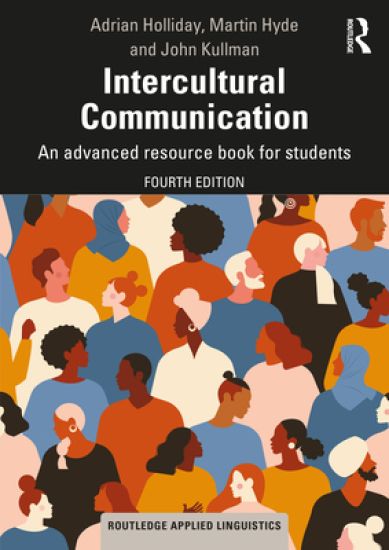
Intercultural Communication provides a critical introduction to the dynamic arena of communication across different cultural and social strata. Throughout this book, topics are revisited, extended, interwoven, and deconstructed, with the reader’s understanding strengthened by tasks and follow-up questions.The fourth edition of this popular textbook has been updated to feature:¦ new readings by Kwame Antony Appiah, Yoshitaka Miike, Edward Ademolu and Siobhan Warrington, Helena Liu, and Michael Zirulnik and Mark Orbe, which reflect the most recent developments in the field;¦ refreshed and expanded examples and tasks including new material on an Asiacentric approach to intercultural communication, selfies as a global discourse, the impact on intercultural communication of English as a lingua franca in multinational organisations, and representations of Africa in charity media campaigns;¦ extended discussions of topics including intercultural training, voluntourism, challenging essentialism in business contexts, and intersectional approaches to identity;¦ revised further reading suggestions.Written by experienced teachers and researchers in the field, this fourth edition of Intercultural Communication is an essential textbook for advanced students studying this topic.
Contesting Grand Narratives of the Intercultural uses an autoethnographic account of the author’s experience of living in Iran in the 1970s to demonstrate the constant struggle to prevent the intercultural from being dominated by essentialist grand narratives that falsely define us within separate, bounded national or civilisational cultures.This book provides critical insight that: DeCentres how we encounter and research the intercultural by means of a third-space methodology Recovers the figurative, creative, flowing, and boundary-dissolving power of culture Recognises hybrid integration which enables us the choice and agency to be ourselves with others in intercultural settings Demonstrates how early native-speakerism pulls us back to essentialist large-culture blocks.Aimed at students and researchers in applied linguistics, intercultural studies, sociology, and education, this volume shows how cultural difference in stories, personal space, language, practices, and values generates unexpected and transcendent threads of experience to which we can all relate within small culture formation on the go.
Academies and Free Schools in England argues that there is a high degree of philosophical consensus and historical continuity on the policy of ‘academisation’ across the main political parties in England. It attempts to make sense of what are all essentially free schools by interviewing the architects of policy and their closest advisors, analysing the extent to which they invoke historical expressions of conservatism and/or liberalism in their articulation of that convergence. The book offers a unique insight into educational policy-making during the Conservative/Liberal-Democrat coalition era (2010-2015), and an in-depth analysis of the nature of liberty as it relates to state education in England. Providing original interview transcripts of the key reformers, and new accounts of a sometimes contentious history, Hilton identifies an elite ‘policy community’, connected by educational background, moral-religious frameworks, life experiences and shared networks of common ideology.Academies and Free Schools in England will be vital reading to academics and researchers in the field of education and education policy. It will also be of great interest to school governors, business leaders, political philosophers and those involved and interested in free schools.
Free Trade Agreements and Global Labour Governance
Adrian Smith; James Harrison; Liam Campling; Ben Richardson; Mirela Barbu
TAYLOR FRANCIS LTD
2022
nidottu
Exploring the contentious relationship between trade and labour, this book looks at the impact of the EU’s ‘new generation’ free trade agreements on workers. Drawing upon extensive original research, including over 200 interviews with key actors across the EU and its trading partners, it considers the effectiveness of the trade-labour linkage in an era of global value chains.The EU believes trade can work for all, claiming that labour provisions in its free trade agreements ensure that economic growth and high labour standards go hand-in-hand. Yet whether these actually make a difference to workers is strongly contested. This book explains why labour provisions have been profoundly limited in the EU’s agreements with the CARIFORUM group, South Korea and Moldova. It also shows how the provisions were mismatched with the most pressing workplace concerns in the key export industries of sugar, automobiles and clothing, and how these concerns were exacerbated by the agreements’ commercial provisions. This pioneering approach to studying the trade-labour linkage provides insights into key debates on the role of civil society in trade governance, the relationship between public and private labour regulation, and the progressive possibilities for trade policy in the twenty-first century.This book will appeal to research scholars, post-graduate students, trade policy practitioners, policy researchers allied to labour movements, and informed activists.
This book introduces and defines the burgeoning concepts of transculturalism and essentialism and how they relate to one another, as articulated with reference to the work of Jørn Utzon. It introduces critical contemporary perspectives of the design thinking and career of this renowned Danish architect, internationally recognised for his competition-winning, iconic design for the Sydney Opera House – an outstanding exemplar of transcultural essentialism in architecture. Transcultural essentialism is analysed through the lens of critical regionalism and architectural phenomenology, with emphasis on the sense of place and tectonics in Utzon’s architectural works. It provides a new understanding of the Danish architect as an early proponent of a still emergent and increasingly relevant direction in architecture. Going beyond biographical studies, it presents a more comprehensive understanding of the broad range of transcultural influences that formed his thinking. The volume includes numerous previously unpublished photographs, drawings, and interviews with Utzon’s family members, former students, and colleagues, offering a significant contribution to the existing body of knowledge for any architecture scholar interested in Utzon’s work and design principles. The book also comprises a Foreword by eminent architecture theorist Juhani Pallasmaa in which he provides insights into the wider architectural and cultural context of Utzon’s worldview.
Jørn Utzon and Transcultural Essentialism
Adrian Carter; Marja Sarvimäki
TAYLOR FRANCIS LTD
2023
nidottu
This book introduces and defines the burgeoning concepts of transculturalism and essentialism and how they relate to one another, as articulated with reference to the work of Jørn Utzon. It introduces critical contemporary perspectives of the design thinking and career of this renowned Danish architect, internationally recognised for his competition-winning, iconic design for the Sydney Opera House – an outstanding exemplar of transcultural essentialism in architecture. Transcultural essentialism is analysed through the lens of critical regionalism and architectural phenomenology, with emphasis on the sense of place and tectonics in Utzon’s architectural works. It provides a new understanding of the Danish architect as an early proponent of a still emergent and increasingly relevant direction in architecture. Going beyond biographical studies, it presents a more comprehensive understanding of the broad range of transcultural influences that formed his thinking. The volume includes numerous previously unpublished photographs, drawings, and interviews with Utzon’s family members, former students, and colleagues, offering a significant contribution to the existing body of knowledge for any architecture scholar interested in Utzon’s work and design principles. The book also comprises a Foreword by eminent architecture theorist Juhani Pallasmaa in which he provides insights into the wider architectural and cultural context of Utzon’s worldview.
Applying the principles of marketing to nonprofit organisations and the fundraising sector is vital for the modern fundraiser who wants to increase profitability and diversify their fundraising efforts in this challenging industry. This comprehensive how-to guide provides a thorough grounding in the principles underpinning professional practices and critically examines the key issues in fundraising policy, planning and implementation. This new edition of Fundraising Management builds on the successful previous editions by including an integrated theoretical framework to help fundraisers develop a critical and reflective approach to their practice. Also new to this edition are how-tos on budgeting and making a strong and compelling case for investment, two vital core skills, as well as comprehensive coverage of digital fundraising and fundraising through social media. The new edition also accounts for recent changes in the fundraising environment, notably in the UK, the introduction of a new fundraising regulator and new thinking on professional ethics.Combining scholarly analysis with practical real-life examples, Fundraising Management has been endorsed by the Chartered Institute of Fundraising, and is mapped to the Certificate and Diploma in Fundraising, making it the definitive guide to best practice both in the UK and globally. This is a clear, problem-solving guide that no fundraising student or professional should be without.
An Introduction to Forensic Phonetics and Forensic Linguistics
Adrian Leemann; Ria Perkins; Grace Sullivan Buker; Paul Foulkes
TAYLOR FRANCIS LTD
2024
nidottu
This textbook provides a practical introduction to the fields of forensic phonetics and forensic linguistics. Addressing how these fields are both distinct yet closely related, the book demonstrates how experts from both fields can work together to investigate and deliver justice in complex legal situations.With pedagogical features including real-life case studies, exercises, and links to further reading, topics covered include:Profiling from spoken and written textsDisputed meaning, and how meaning is made and evolvesInterviewing techniques, including working around those who might be considered linguistically vulnerableAuthor and speaker determinationAudio enhancement and authentication of recordingsLanguage analysis in the asylum procedure (LAAP)Accompanied by online audio and video resources as well as signposting readers to freely available software to aid their studies, this book is the ideal springboard for students beginning work in forensic phonetics, forensic speech science, forensic linguistics, and law and language.
An Introduction to Forensic Phonetics and Forensic Linguistics
Adrian Leemann; Ria Perkins; Grace Sullivan Buker; Paul Foulkes
TAYLOR FRANCIS LTD
2024
sidottu
This textbook provides a practical introduction to the fields of forensic phonetics and forensic linguistics. Addressing how these fields are both distinct yet closely related, the book demonstrates how experts from both fields can work together to investigate and deliver justice in complex legal situations.With pedagogical features including real-life case studies, exercises, and links to further reading, topics covered include:Profiling from spoken and written textsDisputed meaning, and how meaning is made and evolvesInterviewing techniques, including working around those who might be considered linguistically vulnerableAuthor and speaker determinationAudio enhancement and authentication of recordingsLanguage analysis in the asylum procedure (LAAP)Accompanied by online audio and video resources as well as signposting readers to freely available software to aid their studies, this book is the ideal springboard for students beginning work in forensic phonetics, forensic speech science, forensic linguistics, and law and language.
Pyrrhonian Buddhism reconstructs the path to enlightenment shared both by early Buddhists and the ancient Greek sceptics inspired by Pyrrho of Elis, who may have had extended contacts with Buddhists when he accompanied Alexander the Great to India in the third century BCE.This volume explores striking parallels between early Buddhism and Pyrrhonian scepticism, suggesting their virtual identity. Both movements saw beliefs—fictions mistaken for truths—as the principal source of human suffering. Both practiced suspension of judgment about beliefs to obtain release from suffering, and to achieve enlightenment, which the Buddhists called bodhi and the Pyrrhonists called ataraxia. And both came to understand the structure of human experience without belief, which the Buddhists called dependent origination and the Pyrrhonists described as phenomenalistic atomism.This book is intended for the general reader, as well as historians, classicists, Buddhist scholars, philosophers, and practitioners of spiritual techniques.
The Global Architecture of Multilateral Development Banks
Adrian Robert Bazbauers; Susan Engel
TAYLOR FRANCIS LTD
2022
nidottu
This book explores the evolution of the 30 functioning multilateral development banks (MDBs). MDBs have their roots in the growing system of international finance and multilateral cooperation, with the first recognisable MDB being proposed by Latin America in financial cooperation with the US in the late 1930s. That Inter-American Bank did not eventuate but was a precursor to the World Bank being negotiated at Bretton Woods in 1944. Since then, a complex network of regional, sub-regional, and specialised development banks has progressively emerged across the globe, including two significant recent entrants established by China and the BRICS. MDBs arrange loans, credits, and guarantees for investment in member states, generally with the stated aim of fostering economic growth. They operate in both the Global North and South, though there are more MDBs focusing on emerging and developing states. While the World Bank and some of the larger regional banks have been scrutinised, little attention has been paid to the smaller banks or the overall system. This book provides the first study of all 30 MDBs and it evaluates their interrelationships. It analyses the emergence of the MDBs in relation to geopolitics, development paradigms and debt. It includes sections on each of the banks as well as on how MDBs have approached the key sectors of infrastructure, human development, and climate.This book will be of particular interest to researchers of development finance, global governance, and international political economy.
Now in a fully updated seventh edition, this book remains an established treatise in the field of civil jurisdiction and judgments. It aims to make a full and complete statement of English law on civil jurisdiction and the effect of foreign judgments against the backdrop of significant uncertainty about the consequence of Brexit on the law of civil jurisdiction and judgments. The book looks in detail at: the law after the Brussels Regulation has ceased to operate as part of English law; the substance of the Lugano Convention, which the government hopes to join; the incorporation of the 2005 Hague Convention on Choice of Court Agreements into English law, and developments in the common law rules of jurisdiction, injunctions, and foreign judgments.This text aims to be an authoritative and comprehensive reference for all legal practitioners working in commercial law across jurisdictions as well as the judiciary.
Although articles in this volume fall into three thematic clusters, each of those groups exemplifies three general themes: micro-social processes; innovations and the question of continuity versus discontinuity; and the relationship between ideas and practice. Most of these essays touch upon, and some of them are exclusively concerned with, small scale social processes: e.g. the routines of the all-female early-modern childbirth ritual, the different ways that male practitioners were summoned to such occasions, the functioning of voluntary hospitals, the protocols underlying patient records. Such social practices are well worth studying as both the sites and drivers of larger-scale historical change. Whenever there comes into being something new - whether an institution (a hospital), a social practice (the summoning of men as midwives) or a concept (a new approach to disease) - the question arises as to its relationship with what went before. This concept resonates throughout these essays, but is most to the fore in the chapters on early Hanoverian London (which asks explanatory questions) and on Porter versus Foucault (who represent the extremes of continuity and discontinuity respectively). A couple of generations ago, the ’history of ideas’ was pursued largely without reference to practice; in recent times, the danger has appeared of the very reverse taking place. This book ranges across a broad spectrum in this respect, the emphasis being sometimes upon practice (Eleanor Willughby’s work as a midwife) and sometimes upon ideas (concepts of pleurisy across the centuries); but in every case there is at least the potential for relating the two to one another. None of these themes is specific to medical history; on the contrary, they are the bread-and-butter of historical reconstruction in general.