Kirjojen hintavertailu. Mukana 12 016 292 kirjaa ja 12 kauppaa.

Kirjahaku

Etsi kirjoja tekijän nimen, kirjan nimen tai ISBN:n perusteella.

1000 tulosta hakusanalla Amos Perry

Founder

Founder

Amos Elon

Faber Faber
2011
nidottu
By mid-nineteenth century, Meyer Amschel Rothschild's five sons controlled one of the most massive fortunes in Europe. The Rothschild name had become synonymous with the enormous political and social power that often accompanied that wealth, the amassing of which is remarkable considering the painfully modest beginnings of its founder.Born in the unimaginable squalor of Frankfurt's Jewish ghetto (where he chose to spend his entire life), Meyer Rothschild established a small trading and banking business that - despite political, legal, and social constrictions segregating Jews from the outside world -evolved into an empire that included the financial centers of the world.Founder is the story of Meyer Rothschild's times, of the condition of the Jews, of the city-states before they were overrun by Napoleon's troops. It is about the threshold of the modern era, when the world of aristocrats and gentlemen was profoundly influenced by a shrewd, dedicated, loyal father and his family. Amos Elon's rich and evocative depiction of life in mid-eighteenth-century Europe provides a vivid background against which we come to understand and marvel at the strength and perseverance driving this obviously extraordinary, humble man. 'Elon... has written a terrifically readable biography that does more than illuminate the formerly shadowy figure who served princes in what is now Germany. Through the prism of Mayer Rothschild's life, Mr. Elon gives us a fascinating glimpse into how Europe - and by implication, the New World - made the journey from mercantilism to modern entrepreneurship....Mr. Elon's feat is in chronicling all this with clarity and drama. Founder skillfully weaves history into this story of human endeavour to create a memorable narrative of Mayer Rothschild's time.'Deborah Stead, New York Times Book Review

The Palm-Wine Drinkard

The Palm-Wine Drinkard

Amos Tutuola

Faber Faber
2014
pokkari
This classic novel tells the phantasmagorical story of an alcoholic man and his search for his dead palm-wine tapster. As he travels through the land of the dead, he encounters a host of supernatural and often terrifying beings - among them the complete gentleman who returns his body parts to their owners and the insatiable hungry-creature. Mixing Yoruba folktales with what T. S. Eliot described as a 'creepy crawly imagination', The Palm-Wine Drinkard is regarded as the seminal work of African literature.'Brief, thronged, grisly and bewitching.' Dylan Thomas, Observer'Tutuola's art conceals - or rather clothes - his purpose, as all good art must do.' Chinua Achebe
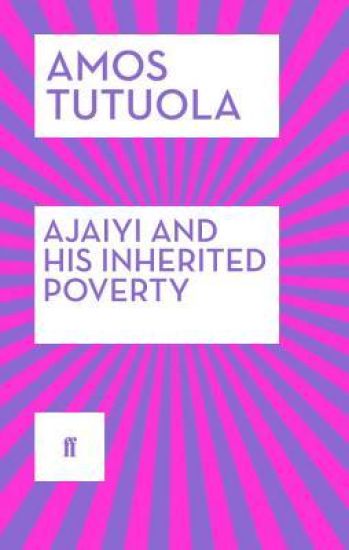
Ajaiyi and His Inherited Poverty

Ajaiyi and His Inherited Poverty

Amos Tutuola

Faber Faber
2015
pokkari
This is the story of Ajaiyi, a man born into poverty who is determined to improve his situation. In the hope of finding the money he needs, he travels through unfamiliar lands filled with strange creatures. He meets the Spirit of Fire with its huge feathered head and flaming body, and receives assistance from a wizard and a unicorn. Yet, in the end, the answer to his woes is not far from home.Amos Tutuola was born in Abeokuta, Nigeria, in 1920. His first novel, The Palm-Wine Drinkard, was acquired by T. S. Eliot and published by Faber in 1952.
The Village Witch Doctor and Other Stories
Yoruba legend and culture were the source of much of Amos Tutuola's writing and the stories collected here are no exception. They feature characters from folklore, archetypal figures from Yoruba society, supernatural or magical happenings, acute human observation and often a moral point. Their very titles - from 'The Duckling Brothers and their Disobedient Sister' to 'Don't Pay Bad for Bad' - are evocative of a unique blend of tradition and imagination, which belongs to the same universal culture as Aesop and the Brothers Grimm.
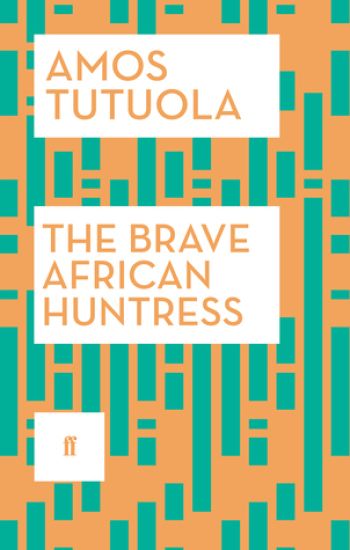
The Brave African Huntress

The Brave African Huntress

Amos Tutuola

Faber Faber
2014
pokkari
This is the story of Adebisi, a brave African huntress who sets out for the Jungle of the Pigmies to rescue her four brothers. Along the way, she conquers a giant, serves as the barber to a king and endures the horrors of the pigmies' prison. Yet she will not give up. By employing her strength and intelligence, she finds a way to release her brothers and returns home to a hero's welcome.
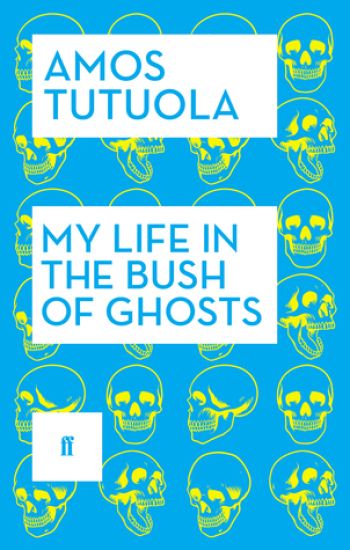
My Life in the Bush of Ghosts

My Life in the Bush of Ghosts

Amos Tutuola

Faber Faber
2014
pokkari
My Life in the Bush of Ghosts, Amos Tutuola's second novel, was first published in 1954. It tells the tale of a small boy who wanders into the heart of a fantastical African forest, the dwelling place of innumerable wild, grotesque and terrifying beings. He is captured by ghosts, buried alive and wrapped up in spider webs, but after several years he marries and accepts his new existence. With the appearance of the television-handed ghostess, however, comes a possible route of escape.'Tutuola ... has the immediate intuition of a creative artist working by spell and incantation.' V. S. Pritchett, New Statesman
Simbi and the Satyr of the Dark Jungle
Simbi and the Satyr of the Dark Jungle is the fabulous tale of Simbi, a rich and beautiful girl with a wonderful singing voice. She tires of her comfortable lifestyle, and decides that she must come to know poverty and punishment. The story tells, with terrifying imagination and comic invention, of how she achieves this experience and how, in the end, she escapes from it.Amos Tutuola was born in Abeokuta, Nigeria, in 1920. His first novel, The Palm-Wine Drinkard, was acquired by T. S. Eliot and published by Faber in 1952.
Feather Woman of the Jungle

Feather Woman of the Jungle

Amos Tutuola

Faber Faber
2015
pokkari
In Feather Woman of the Jungle, the people of a Yoruba village gather on ten memorable nights to hear the stories and wisdom of their chief. They learn of his adventures, among them his encounter with the Jungle Witch and her ostrich, his visit to the town of the water people and his imprisonment by the Goddess of Diamonds. Each night the people return, eager to discover if there is a happy ending.Amos Tutuola was born in Abeokuta, Nigeria, in 1920. His first novel, The Palm-Wine Drinkard, was acquired by T. S. Eliot and published by Faber in 1952.
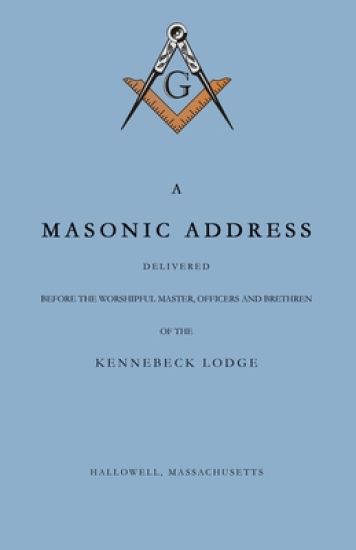
A Masonic Address Delivered Before The Worshipful Master and Brethren of the Kennebeck Lodge in the New Meeting House, Hallowell, Massachusetts, June 24, Anno Lucis, 5797
Reproduction reprint: "A Masonic Address Delivered Before The Worshipful Master and Brethren of the Kennebeck Lodge in the New Meeting House, Hallowell, Massachusetts, June 24, Anno Lucis, 5797." This is a reproduction of an oration given by Brother Amos Stoddard, a founding member of the Masonic Lodge at Hallowell, Massachusetts, on June 24, 1797 at Hallowell, Massachusetts (today, Maine) on St. John's Day in 1797. His oratory notes were then printed, published and sold by Brother Howard S. Robinson. The subject matter of Amos Stoddard's oratory is about the history and virtues of Freemasonry principles. This reproduction was laboriously created by an ancestral relative of Amos Stoddard from a copy of the original with the intent of honoring Amos Stoddard's efforts, words and thoughts. Every effort was made in the process of recreating this publication to duplicate the original work and to respect authenticity. Grammar, spelling, punctuation and formatting are as original. This is a reproduction and not a modern copy. Amos Stoddard was a veteran of the American Revolution. His name was submitted to the U.S. Senate for confirmation as a captain in the 2nd U.S. Corp of Artillerists and Engineers by President John Adams in May 1798. Capt. Amos Stoddard served honorably as a military officer from May 28, 1798 until his death on May 11,1813. He died during the Siege of Fort Meigs (Ohio) during the War of 1812. The story of the life of Amos Stoddard, as part autobiography and part biography, is told in the book,"The Autobiography Manuscript of Major Amos Stoddard, Edited and with an Introduction by Robert A. Stoddard."
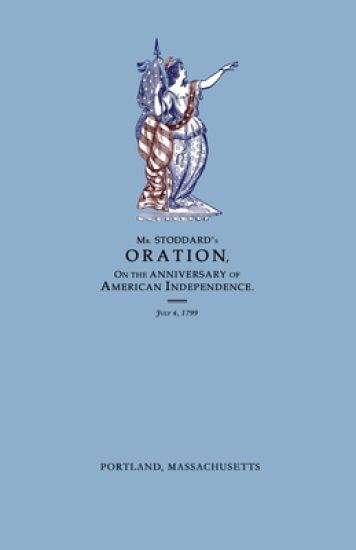
An Oration, Delivered Before The Citizens of Portland, And The Supreme Judicial Court In The Commonwealth of Massachusetts, On the Fourth Day of July 1799; Being the Anniversary of American Independence
Reproduction reprint: "An Oration, Delivered Before The Citizens of Portland, And The Supreme Judicial Court In The Commonwealth of Massachusetts, On the Fourth Day of July 1799; Being the Anniversary of American Independence." By Amos Stoddard. Originally Printed and Sold by E.A. Jenks, Portland, Massachusetts, 1799. This reproduction was laboriously created by an ancestral relative of Amos Stoddard from a copy of the original with the intent of honoring Amos Stoddard's efforts, words and thoughts. Every effort was made in the process of recreating this publication to duplicate the original work and to respect authenticity. Grammar, spelling, punctuation and formatting are as original. This is a reproduction and not a modern copy. This is a reproduction of an oration given by Capt. Amos Stoddard on July 4, 1799 at Portalnd, Massachusetts (today, Maine). His notes were then printed and sold ny E.A. Jenks at Portland. The subject matter of Capt. Stoddard's oratory is primarily about the political tensions of the day, and is expressed from the perspective of a veteran of the American Revolution, a current military officer, and a supporter of Washington and Adams and of the Federalist Party. Capt. Amos Stoddard honorably served as a military officer from May 28, 1798 until his death on May 11, 1813. He died during the Siege of Fort Meigs (Ohio) during the War of 1812. The story of the life of Amos Stoddard, as part autobiography and part biography, is told in the book,"The Autobiography Manuscript of Major Amos Stoddard, Edited and with an Introduction by Robert A. Stoddard."
Water-Soluble Polymer Applications in Foods

Water-Soluble Polymer Applications in Foods

Amos Nussinovitch

Blackwell Science Ltd
2003
sidottu
Water-soluble polymers or hydrocolloids are widely used in many fields, including food, agriculture, ceramics, paper and ink technology, explosives and the textile industry. This important new book provides a comprehensive overview of novel aspects of their use in food products. Interest in the science and technology of water-soluble polymers is rapidly increasing and this book provides a much-needed and up-to-date overview. Chapters review important new food applications, giving short historical overviews, the latest information on uses and possible future applications. Topics covered include the use of hydrocolloids for texturization, as adhesives within food products, as coatings in products such as fruit, vegetables, cheese, meat and dried foods, and for flavour encapsulation.
Revelation

Revelation

Amos Yong

WESTMINSTER/JOHN KNOX PRESS,U.S.
2021
sidottu
The book of Revelation stands as one of the most challenging and inspiring in the Christian canon. While giving rise to much unhelpful speculation, its core message of the active sovereignty of God in a hostile world has given courage and comfort throughout Christian history. In this volume, Amos Yong analyzes the message of Revelation to its earliest readers and speaks to its ongoing meaning for believers today.The volumes in the Belief series offer a fresh and invigorating approach to all the books of the Bible. Building on a wide range of sources from biblical studies and the Christian tradition, renowned scholars focus less on traditional historical and literary angles in favor of a theologically focused commentary that considers the contemporary relevance of the text. Why then, and why now are overarching questions asked throughout the volumes in the series.
Learning Theology

Learning Theology

Amos Yong

Westminster/John Knox Press,U.S.
2018
nidottu
Theology&#8212the attempt to come to a deeper, more faithful understanding of one's encounter with God&#8212is something to which all Christians are called. In Learning Theology, Amos Yong invites the reader to lay claim to that calling and to see it as yet another opportunity to love God.Written for those taking their first course in the subject, this book introduces the foundational sources and tasks of theology. It asks what difference theology makes in our lives, how it can influence the way we write and study, and how we understand other forms of learning as part of the Spirit's leadership. Yong encourages the reader to see all of life through the lens of faith, and Learning Theology offers tools to more thoughtfully and faithfully perform that task.
Revelation

Revelation

Amos Yong

WESTMINSTER/JOHN KNOX PRESS,U.S.
2021
nidottu
The book of Revelation stands as one of the most challenging and inspiring in the Christian canon. While giving rise to much unhelpful speculation, its core message of the active sovereignty of God in a hostile world has given courage and comfort throughout Christian history. In this volume, Amos Yong analyzes the message of Revelation to its earliest readers and speaks to its ongoing meaning for believers today.The volumes in the Belief series offer a fresh and invigorating approach to all the books of the Bible. Building on a wide range of sources from biblical studies and the Christian tradition, renowned scholars focus less on traditional historical and literary angles in favor of a theologically focused commentary that considers the contemporary relevance of the text. Why then, and why now are overarching questions asked throughout the volumes in the series.
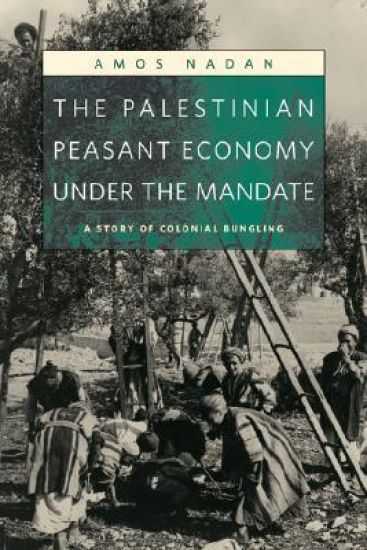
The Palestinian Peasant Economy under the Mandate

The Palestinian Peasant Economy under the Mandate

Amos Nadan

Harvard Center for Middle Eastern Studies
2006
nidottu
Challenging the claim that Palestine's peasant economy progressed during the 1920s and 1930s, Amos Nadan skillfully integrates a wide variety of sources to demonstrate that the period was actually one of deterioration on both the macro (per capita) and micro levels. The economy would have most likely continued its downward spiral during the 1940s had it not been for the temporary prosperity that resulted from World War II. Nadan argues that this deterioration continued despite the British authorities' channeling of funds from the Jewish sector and the wealthier Arab sectors into projects for the Arab rural economy. The British were hoping that Palestine's peasants would not rebel if their economic conditions improved. These programs were, on the whole, defective because the British chose programs based on an assumption that the peasants were too ignorant to manage their farms wisely, instead of working with the peasants and their own institutions.
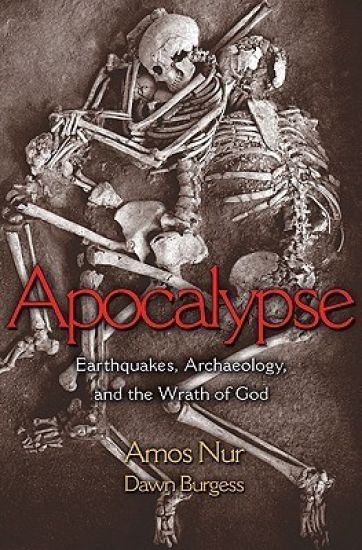
Apocalypse

Apocalypse

Amos Nur; Dawn Burgess

Princeton University Press
2008
sidottu
What if Troy was not destroyed in the epic battle immortalized by Homer? What if many legendary cities of the ancient world did not meet their ends through war and conquest as archaeologists and historians believe, but in fact were laid waste by a force of nature so catastrophic that religions and legends describe it as the wrath of god? Apocalypse brings the latest scientific evidence to bear on biblical accounts, mythology, and the archaeological record to explore how ancient and modern earthquakes have shaped history--and, for some civilizations, seemingly heralded the end of the world. Archaeologists are trained to seek human causes behind the ruins they study. Because of this, the subtle clues that indicate earthquake damage are often overlooked or even ignored. Amos Nur bridges the gap that for too long has separated archaeology and seismology. He examines tantalizing evidence of earthquakes at some of the world's most famous archaeological sites in the Mediterranean and elsewhere, including Troy, Jericho, Knossos, Mycenae, Armageddon, Teotihuacan, and Petra. He reveals what the Bible, the Iliad, and other writings can tell us about the seismic calamities that may have rocked the ancient world. He even explores how earthquakes may have helped preserve the Dead Sea Scrolls. As Nur shows, recognizing earthquake damage in the shifted foundations and toppled arches of historic ruins is vital today because the scientific record of world earthquake risks is still incomplete. Apocalypse explains where and why ancient earthquakes struck--and could strike again.
How to Cure a Fanatic

How to Cure a Fanatic

Amos Oz

PRINCETON UNIVERSITY PRESS
2010
nidottu
Internationally acclaimed novelist Amos Oz grew up in war-torn Jerusalem, where as a boy he witnessed firsthand the poisonous consequences of fanaticism. In two concise, powerful essays, the award-winning author offers unique insight into the true nature of extremism and proposes a reasoned and respectful approach to resolving the Israeli-Palestinian conflict. He also comments on related issues--the Gaza pullout, Yasser Arafat's death, and the war in Iraq--in an extended interview at the end of the book. The brilliant clarity of these essays, coupled with Oz's ironic sense of humor in illuminating the serious, breathes new life into this old debate. Oz argues that the Israeli-Palestinian conflict is not a war of religion or cultures or traditions, but rather a real estate dispute--one that will be resolved not by greater understanding, but by painful compromise. Fresh, insightful, and inspiring, How to Cure a Fanatic brings a new voice of sanity to the cacophony on Israeli-Palestinian relations--a voice no one can afford to ignore.
The Silence of Heaven

The Silence of Heaven

Amos Oz

Princeton University Press
2012
pokkari
In The Silence of Heaven, the world renowned Israeli novelist Amos Oz introduces us to an extraordinary masterpiece of Hebrew literature that is just now appearing in English, S. Y. Agnon's Only Yesterday. For Oz, Agnon is a treasure trove of a world no longer available to today's writers, yet deeply meaningful for his wonderment about God, the submerged eroticism of his writing, and his juggling of multiple texts from the historical Hebrew religious library. This collection of Oz's reflections on Agnon, which includes an essay on the essence of his ideology and poetics, is a rich interpretive work that shows how one great writer views another. Oz admires Agnon especially for his ability to invoke and visualize the religious world of the simple folk in Eastern European Jewry, looking back from the territorial context of the Zionist revival in Palestine. The tragedy of Agnon's visions, Oz maintains, lies in his perspicacity. Long before the Holocaust, Agnon saw the degeneration, ruin, and end of Jewish culture in Eastern Europe. He knew, too, that the Zionist project was far from being a secure conquest and its champions far from being happy idealists. Oz explores these viewpoints in a series of thick readings that consider the tensions between faith and the shock of doubt, yearnings and revulsion, love and hate, and intimacy and disgust. Although Oz himself is interested in particular ideological questions, he has the subtle sensibility of a master of fiction and can detect every technical device in Agnon's arsenal. With the verve of an excited reader, Oz dissects Agnon's texts and subtexts in a passionate argument about the major themes of Hebrew literature. This book also tells much about Oz. It represents the other side of Oz's book of reportage, In the Land of Israel, this time exploring the ideologies of Jewish identity not on the land but in texts of the modern classical heritage. The Silence of Heaven hence takes us on a remarkable journey into the minds of two major literary figures.