
Kirjahaku
Etsi kirjoja tekijän nimen, kirjan nimen tai ISBN:n perusteella.
1000 tulosta hakusanalla Andrew Merrifield

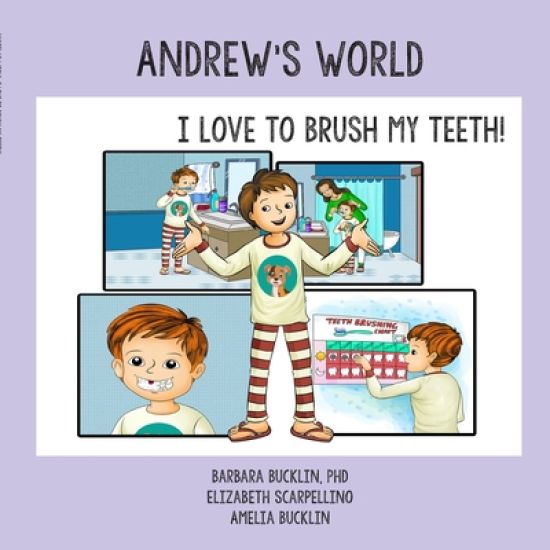
Inspired by Andrew who is on the spectrum, this book in the "Andrew's World" series is a social story about going to a doctor's office. It's intended to prepare children on the spectrum for the experience, transitions, emotions, and skills needed when they're sick and must go to the doctor. A child can curl up with a loved one and learn about what happens on a visit to the doctor, through Andrew's lens of the world. Andrew's actions and reactions provide a behavior model for other children to learn from, and the Skills Checklist helps adults work with them to apply what they learned. As they advance and gain more skills, this book and Skills Checklist can grow with them.
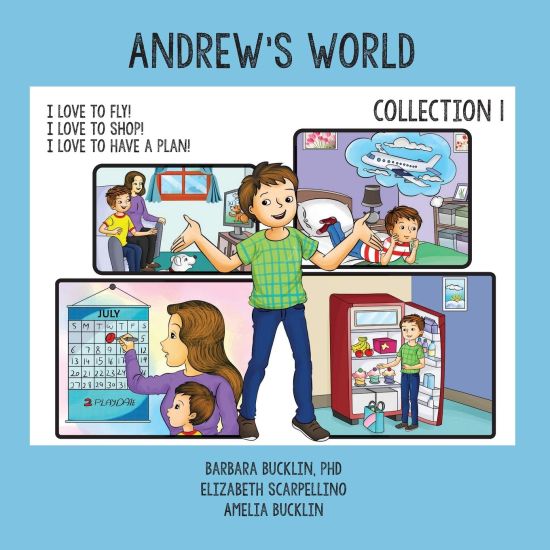
This collection of stories is for children on the spectrum, with a main character who resembles them. In the first story, Andrew goes shopping; in the second one Andrew takes a trip on an airplane; in the third story, Andrew learns to cope with canceled plans. This series is inspired by Elizabeth's son Andrew who is on the spectrum. She and her sister Barbara, who has a PhD in Applied Behavior Analysis, were talking about how difficult it was for Elizabeth to find books for Andrew. None had characters that resembled him or appealed to his literal view of the world. Most children's books had too many abstract concepts and didn't stick to a linear story line that he could follow, and much less learn from. Elizabeth and Barbara thought, "Why not create a series of books based on social stories that work for kids on the spectrum?" These stories are intended to prepare children on the spectrum for the life experiences, transitions, emotions, environments, and skills that many of them are unprepared for. With these books, a child can curl up with a loved one and learn about upcoming events in an enjoyable way through Andrew's lens of the world. Andrew's actions and reactions will provide a behavior model for other children to learn from, and the Skills Checklists will help adults work with them to apply what they learned. Images in the book series are inspired by 10-year-old Amelia's illustrations. Amelia is Barbara's daughter and Andrew's cousin; she is thrilled to contribute her artistic talents in a meaningful way to Andrew and friends like him.
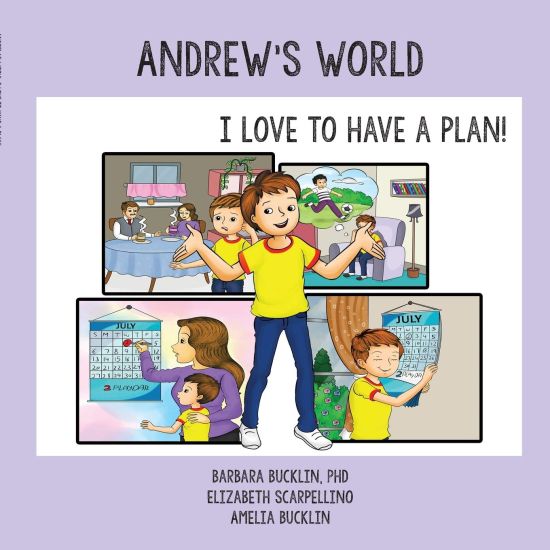
Inspired by Andrew who is on the spectrum, this book in the "Andrew's World" series is a social story about plans that are cancelled. It's intended to prepare children on the spectrum for the experience, transitions, emotions, and skills needed when a plan is cancelled or changed. A child can curl up with a loved one and learn about how to cope with a change in plans, through Andrew's lens of the world. Andrew's actions and reactions provide a behavior model for other children to learn from, and the Skills Checklist helps adults work with them to apply what they learned. As they advance and gain more skills, this book and Skills Checklist can grow with them.

Custom and Myth (1874). By: Andrew Lang: (World's classic's)
Andrew Lang
Createspace Independent Publishing Platform
2018
nidottu
Andrew Lang, FBA (31 March 1844 - 20 July 1912) was a Scottish poet, novelist, literary critic, and contributor to the field of anthropology. He is best known as a collector of folk and fairy tales. The Andrew Lang lectures at the University of St Andrews are named after him. Biography: Lang was born in Selkirk. He was the eldest of the eight children born to John Lang, the town clerk of Selkirk, and his wife Jane Plenderleath Sellar, who was the daughter of Patrick Sellar, factor to the first duke of Sutherland. On 17 April 1875, he married Leonora Blanche Alleyne, youngest daughter of C. T. Alleyne of Clifton and Barbados. She was (or should have been) variously credited as author, collaborator, or translator of Lang's Color/Rainbow Fairy Books which he edited. He was educated at Selkirk Grammar School, Loretto, and at the Edinburgh Academy, St Andrews University and at Balliol College, Oxford, where he took a first class in the final classical schools in 1868, becoming a fellow and subsequently honorary fellow of Merton College. He soon made a reputation as one of the most able and versatile writers of the day as a journalist, poet, critic, and historian. In 1906, he was elected FBA. He died of angina pectoris at the Tor-na-Coille Hotel in Banchory, Banchory, survived by his wife. He was buried in the cathedral precincts at St Andrews, where a monument can be visited in the south-east corner of the 19th century section. olklore and anthropology: Lang is now chiefly known for his publications on folklore, mythology, and religion. The interest in folklore was from early life; he read John Ferguson McLennan before coming to Oxford, and then was influenced by E. B. Tylor. The earliest of his publications is Custom and Myth (1884). In Myth, Ritual and Religion (1887) he explained the "irrational" elements of mythology as survivals from more primitive forms. Lang's Making of Religion was heavily influenced by the 18th century idea of the "noble savage" in it, he maintained the existence of high spiritual ideas among so-called "savage" races, drawing parallels with the contemporary interest in occult phenomena in England.His Blue Fairy Book (1889) was a beautifully produced and illustrated edition of fairy tales that has become a classic. This was followed by many other collections of fairy tales, collectively known as Andrew Lang's Fairy Books. In the preface of the Lilac Fairy Book he credits his wife with translating and transcribing most of the stories in the collections. Lang examined the origins of totemism in Social Origins (1903)....

The Blue Fairy Book (1889). By: Andrew Lang: (Children's Classics)
Andrew Lang
Createspace Independent Publishing Platform
2018
nidottu
The Blue Fairy Book was the first volume in the series and so it contains some of the best known tales, taken from a variety of sources: not only from Grimm, but exciting adventures by Charles Perrault and Madame D'Aulnoy, the Arabian Nights, and other stories from popular traditions. Here in one attractive paperbound volume - with enlarged print - are Sleeping Beauty, Rumpelstiltzkin, Beauty and the Beast, Hansel and Gretel, Puss in Boots, Trusty John, Jack and the Giantkiller, Goldilocks, and many other favorites that have become an indispensable part of our culture heritage. All in all, this collection contains 37 stories, all arranged in the clear, lively prose for which Lang was famous. Not only are Lang's generally conceded to be the best English versions of standard stories, his collections are the richest and widest in range. His position as one of England's foremost folklorists as well as his first-rate literary abilities makes his collection invaluable in the English language.................. Andrew Lang's Fairy Books are a series of 25 collections of true and fictional stories for children published between 1889 and 1913. The best known books of the series are the 12 collections of fairy tales known as Andrew Lang's "Coloured" Fairy Books or Andrew Lang's Fairy Books of Many Colors. In all, the volumes feature 798 stories, besides the 153 poems in The Blue Poetry Book. Andrew Lang, FBA (31 March 1844 - 20 July 1912) was a Scottish poet, novelist, literary critic, and contributor to the field of anthropology. He is best known as a collector of folk and fairy tales. The Andrew Lang lectures at the University of St Andrews are named after him. Biography: Lang was born in Selkirk. He was the eldest of the eight children born to John Lang, the town clerk of Selkirk, and his wife Jane Plenderleath Sellar, who was the daughter of Patrick Sellar, factor to the first duke of Sutherland. On 17 April 1875, he married Leonora Blanche Alleyne, youngest daughter of C. T. Alleyne of Clifton and Barbados. She was (or should have been) variously credited as author, collaborator, or translator of Lang's Color/Rainbow Fairy Books which he edited. He was educated at Selkirk Grammar School, Loretto, and at the Edinburgh Academy, St Andrews University and at Balliol College, Oxford, where he took a first class in the final classical schools in 1868, becoming a fellow and subsequently honorary fellow of Merton College. He soon made a reputation as one of the most able and versatile writers of the day as a journalist, poet, critic, and historian. In 1906, he was elected FBA. He died of angina pectoris at the Tor-na-Coille Hotel in Banchory, Banchory, survived by his wife. He was buried in the cathedral precincts at St Andrews, where a monument can be visited in the south-east corner of the 19th century section. Folklore and anthropology: Lang is now chiefly known for his publications on folklore, mythology, and religion. The interest in folklore was from early life; he read John Ferguson McLennan before coming to Oxford, and then was influenced by E. B. Tylor. The earliest of his publications is Custom and Myth (1884). In Myth, Ritual and Religion (1887) he explained the "irrational" elements of mythology as survivals from more primitive forms. Lang's Making of Religion was heavily influenced by the 18th century idea of the "noble savage" in it, he maintained the existence of high spiritual ideas among so-called "savage" races, drawing parallels with the contemporary interest in occult phenomena in England.His Blue Fairy Book (1889) was a beautifully produced and illustrated edition of fairy tales that has become a classic. This was followed by many other collections of fairy tales, collectively known as Andrew Lang's Fairy Books. In the preface of the Lilac Fairy Book he credits his wife with translating and transcribing most of the stories in the collections. Lang examined the origins of totemism in Social Origins (1903).
Andrew Jackson: A Captivating Guide to the Man Who Served as the Seventh President of the United States
Captivating History
Createspace Independent Publishing Platform
2018
nidottu
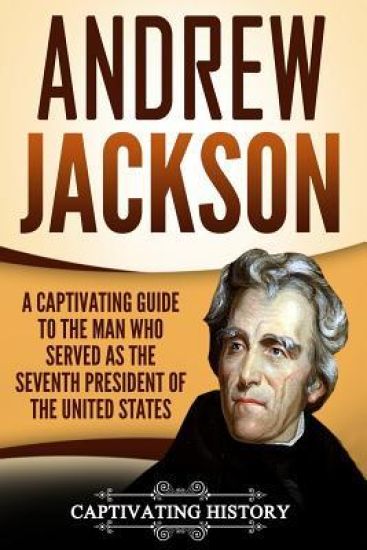
Explore the Captivating Life of Andrew Jackson When Jackson left the White House after two presidential terms, he had achieved a rare feat: he left office with even more popularity than when he first entered it. His reputation as a strong president and a "champion of working-class democracy" has nevertheless been viewed through a more nuanced lens in recent years. In 2016, President Barack Obama decided to replace Andrew Jackson's visage on the front of the $20 bill with a portrait of abolitionist Harriet Tubman. Meanwhile, current President Donald Trump has repeatedly drawn parallels between himself and Jackson via his infamous Twitter account and public spAeeches. He even put a portrait of Jackson in the Oval Office and visited his tomb in Nashville shortly after being sworn in. The present day is thus an apt time for a look into Jackson's divisive life and legacy and that is what this captivating book offers. Some of the topics covered in this book include: The War OrphanThe GentlemanThe Scarlet WomanThe CongressmanSupreme Court Justice and Major GeneralOld HickorySharp KnifeWar HeroExpansionPresidential CandidateA Tumultuous PresidencyJacksonian ReformRetirementAnd much more Scroll to the top and select the "Add to Cart" button to learn more about Andrew Jackson
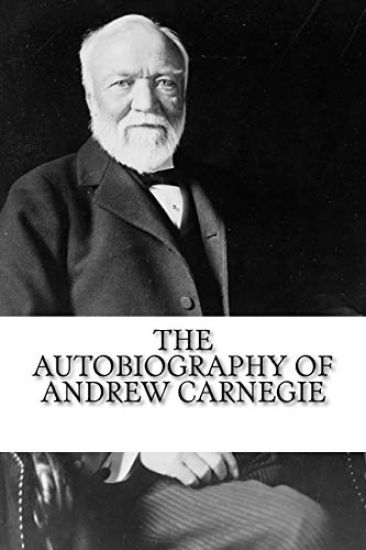
The Autobiography of Andrew Carnegie
Andrew Carnegie
Createspace Independent Publishing Platform
2018
nidottu

Andrew Hooper of McMinn County and Bradley County, Tennessee
Richard Hooper; Barry H. Hooper; Floyd Harold Reno
Createspace Independent Publishing Platform
2018
nidottu
Andrew Hooper moved to McMinn County, Tennessee and bought land in 1826. He started selling land in 1827. His sister Sarah Hooper married James Shelton and also moved to McMinn county. Andrew and Sarah's brother Absolom Hooper moved to Polk County, Tennessee and raised a large family. Andrew Hooper bought land in the Ocoee District in 1837 from Lewisey Melton and eventually owned 990 acres. Families in this book include Hooper, Seabourn, Wilhite, Geren, Foster, Graham, McPherson, Allen and many others. Several of these families have ties to the Revolutionary War. Also included in the book are the Civil War records of the sons of Andrew Hooper named John, Kinsey, Jahue, William and James. The Civil War Diary of Kinsey Hooper is also included as well as additional comments by Rick Hooper who discovered the Diary. An outline of Descendants of Andrew Hooper includes more than 2200 individual names and their relationships. Original records of Hooper Mill on Candy's Creek in Bradley County, Tennessee are included. Mount Ebal in Tennessee which had symbols thought to be writing is part of the book as well as the Isaac Hooper book related to Mount Ebal. Anne Goodwin, a Hooper researcher and owner of the Hooper Compass, has contributed information to the book.

Andrew's Money Woes explores how Andrew learns about money. Autism is a wide spectrum, which explains how people with it function. My type of Autism is high functioning, which helps me be more social and self-sufficient. However, other levels of Autism affect other people's social skills and ability to be selfsufficient. Some would fidget, scream, or slobber, and would need certain vest and support from others. People with severe Autism are in need of help and care. But this doesn't mean they're not people. I believe people with less-severe Autism are uniquely gifted. Those who have it severely, I believe are still unique and wonderfully made people. If there are people out there who laugh and make fun of others' differences, they definitely need a change of heart. For everyone out there with other disorders and disabilities, I want to say you are special human beings, and are created for a purpose. God bless
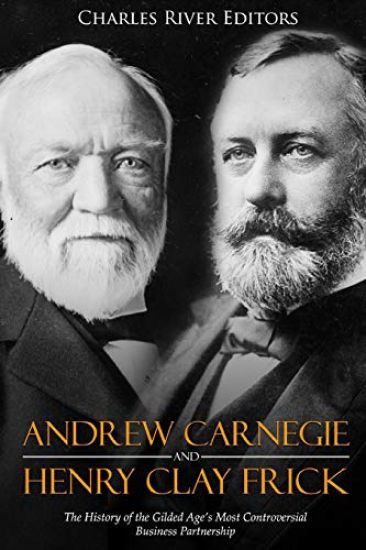
Andrew Carnegie and Henry Clay Frick: The History of the Gilded Age's Most Controversial Business Partnership
Charles River
Createspace Independent Publishing Platform
2018
nidottu
*Includes pictures *Includes online resources and a bibliography for further reading The Gilded Age and the dawn of the 20th century are often remembered as an era full of monopolies, trusts, and economic giants in heavy industries like oil and steel. Men like John Rockefeller built empires and financiers like J.P. Morgan merged and consolidated them. The era also made names like Astor, Cooke, and Vanderbilt instantly recognizable across the globe. Over time, the unfathomable wealth generated by the businesses made the individuals on top incredibly rich, and that in turn led to immense criticism and an infamous epithet used to rail against them: robber barons. The term robber baron has largely fallen into disuse in the 21st century but there was a time when it was a popular epithet that described the kind of man who, it was believed, built his fortune by taking things belonging to others. The Gilded Age and the dawn of the 20th century are often remembered as an era full of monopolies, trusts, and economic giants in heavy industries like oil and steel. Men like Andrew Carnegie built empires like Carnegie Steel, and financiers like J.P. Morgan merged and consolidated them. The era also made names like Astor, Cooke, and Vanderbilt instantly recognizable across the globe. Over time, the unfathomable wealth generated by the businesses made the individuals on top incredibly rich, and that in turn led to immense criticism and an infamous epithet used to rail against them: robber barons. The industrial might wielded by men like Gould in the later 19th century directly led to a public backlash and made President Teddy Roosevelt the "trust buster", and there has since been countless regulations to attempt to avoid the types of monopolies found over 100 years ago. However, many 20th century historians and writers pushed back against the allegations hurled at the "robber barons" and even took issue with the name. For example, Libertarian writer John Stossel argued, "They weren't robbers, because they didn't steal from anyone, and they weren't barons-they were born poor..." Dozens of these men would be pilloried as "robber barons," but few of them were as wealthy or influential as Andrew Carnegie, who built America's foremost steel empire. Ironically, Carnegie epitomized the American Dream, migrating with his poor family to America in the mid-19th century and rising to the top of the business world in his adopted country. A prodigious writer in addition to his keen sense of business, Carnegie was one of the most outspoken champions of capitalism at a time when there was pushback among lower social classes who witnessed the great disparities in wealth; as he once put it, "Upon the sacredness of property civilization itself depends-the right of the laborer to his hundred dollars in the savings bank, and equally the legal right of the millionaire to his millions." In a similar vein, he said, "Those who would administer wisely must, indeed, be wise, for one of the serious obstacles to the improvement of our race is indiscriminate charity." Though his was not the "rags to riches" story one often hears of this era, Henry Clay Frick's drive and ambition helped transform a young man from a solidly middle class family into a millionaire by the age of 30. At the same time, despite the characteristic ruthlessness with which he dealt with business associates and foes alike, he was devoted and sometime even tender to his friends and family. After surviving an assassination attempt, he lived to toast the 20th century and avoided going down with so many others of his era on the Titanic, only to see the world he had worked to create consumed by a European war that spread around the world.
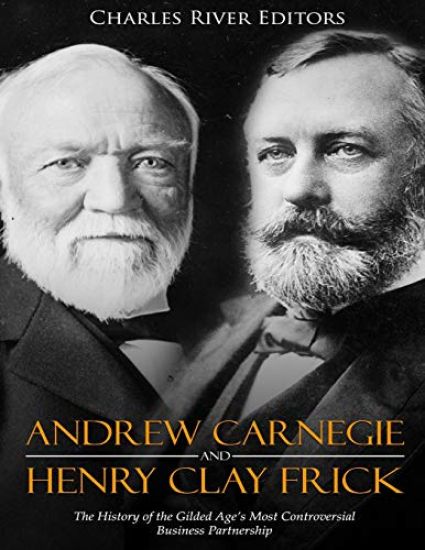
Andrew Carnegie and Henry Clay Frick: The History of the Gilded Age's Most Controversial Business Partnership
Charles River
Createspace Independent Publishing Platform
2018
nidottu
*Includes pictures *Includes online resources and a bibliography for further reading The Gilded Age and the dawn of the 20th century are often remembered as an era full of monopolies, trusts, and economic giants in heavy industries like oil and steel. Men like John Rockefeller built empires and financiers like J.P. Morgan merged and consolidated them. The era also made names like Astor, Cooke, and Vanderbilt instantly recognizable across the globe. Over time, the unfathomable wealth generated by the businesses made the individuals on top incredibly rich, and that in turn led to immense criticism and an infamous epithet used to rail against them: robber barons. The term robber baron has largely fallen into disuse in the 21st century but there was a time when it was a popular epithet that described the kind of man who, it was believed, built his fortune by taking things belonging to others. The Gilded Age and the dawn of the 20th century are often remembered as an era full of monopolies, trusts, and economic giants in heavy industries like oil and steel. Men like Andrew Carnegie built empires like Carnegie Steel, and financiers like J.P. Morgan merged and consolidated them. The era also made names like Astor, Cooke, and Vanderbilt instantly recognizable across the globe. Over time, the unfathomable wealth generated by the businesses made the individuals on top incredibly rich, and that in turn led to immense criticism and an infamous epithet used to rail against them: robber barons. The industrial might wielded by men like Gould in the later 19th century directly led to a public backlash and made President Teddy Roosevelt the "trust buster", and there has since been countless regulations to attempt to avoid the types of monopolies found over 100 years ago. However, many 20th century historians and writers pushed back against the allegations hurled at the "robber barons" and even took issue with the name. For example, Libertarian writer John Stossel argued, "They weren't robbers, because they didn't steal from anyone, and they weren't barons-they were born poor..." Dozens of these men would be pilloried as "robber barons," but few of them were as wealthy or influential as Andrew Carnegie, who built America's foremost steel empire. Ironically, Carnegie epitomized the American Dream, migrating with his poor family to America in the mid-19th century and rising to the top of the business world in his adopted country. A prodigious writer in addition to his keen sense of business, Carnegie was one of the most outspoken champions of capitalism at a time when there was pushback among lower social classes who witnessed the great disparities in wealth; as he once put it, "Upon the sacredness of property civilization itself depends-the right of the laborer to his hundred dollars in the savings bank, and equally the legal right of the millionaire to his millions." In a similar vein, he said, "Those who would administer wisely must, indeed, be wise, for one of the serious obstacles to the improvement of our race is indiscriminate charity." Though his was not the "rags to riches" story one often hears of this era, Henry Clay Frick's drive and ambition helped transform a young man from a solidly middle class family into a millionaire by the age of 30. At the same time, despite the characteristic ruthlessness with which he dealt with business associates and foes alike, he was devoted and sometime even tender to his friends and family. After surviving an assassination attempt, he lived to toast the 20th century and avoided going down with so many others of his era on the Titanic, only to see the world he had worked to create consumed by a European war that spread around the world.
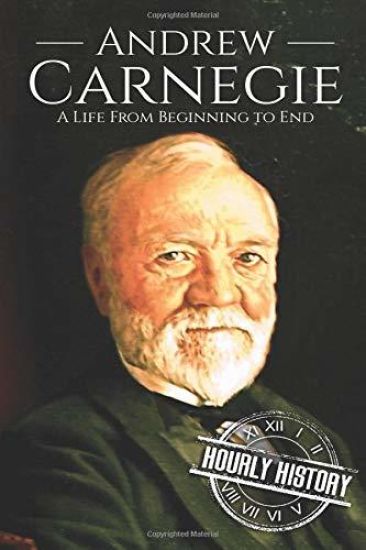
Andrew CarnegieHe has roads, schools, libraries, and the famous Carnegie Hall all named after him. But who was this industrialist and business titan of the late nineteenth and early twentieth century? What were his struggles and how did he help the world with his philanthropic contributions? Was the story of this Scottish immigrant truly a rags to riches one? And what was it that caused Andrew Carnegie's desire to give his great wealth away? Inside you will read about...✓ The Life of a Scottish Bobbin Boy✓ Carnegie Enters the Railroad Business✓ Carnegie During the Civil War✓ Return to Scotland✓ The Gospel of Wealth✓ False Claims and FraudAnd much more He built the greatest business empire the world had ever seen. He founded incredible libraries, art museums, and donated to charities by the boatload. In this book, we will discover the incredible story of Andrew Carnegie's life from beginning to end.
"How was my day? I'm trying not to remember." A wry, unconventional character study, Andrew (A to Z) is a sort of mosaic that the reader assembles subconsciously. Focusing on the narrator's family, friends, co-workers, and neighbors, it is the story of a quasi-neurotic malcontent on the edge of the edge of middle middle-age. An amateur photographer, the office satirist, an evening's dinner guest, Andrew pastes together in alphabetical disorder a collage portrait of his baffled suburban life. Excerpt: "Arizona. There is a rumor I was born there, but I don't believe it. I don't feel like a person who was born in Arizona, I feel like a person who was born somewhere else-somewhere with trees and an ocean and a liberal political tradition. Somewhere like Washington or Oregon or Massachusetts."

Join an adventurous young boy named Andrew on an exciting biking adventure When he takes a fall, he meets a bee who changes everything After his mother told him that he shouldn't pop wheelies, he just had to do one to impress the other bikers in the park. Down he went, and he was surprised to find a bee who came to his aid. He never expected that this chance encounter would lead him to far away lands, a lush forest, and a magnificent palace All the while, he is learning how to keep his word and be a good friend.
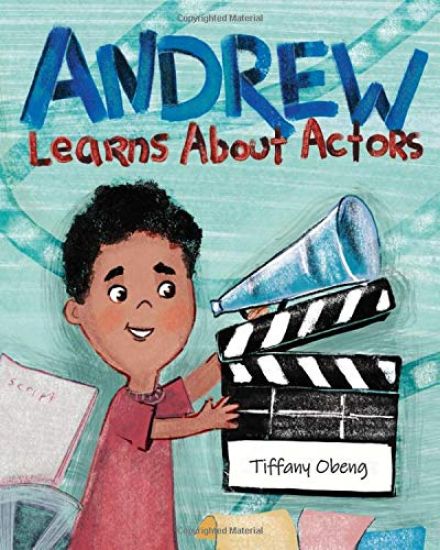
What will you be when you grow up? YOU can be ANYTHING you want to be Enjoy the first children's picture book about actors, being and becoming. Inspired by the author's son's curiosity and enjoyment of TV.Andrew is first confused but ultimately inspired as his mom tells him that his favorite TV friend is really an actor. What do actors do? Join Andrew as he learns what an acting career entails. This is the perfect book to introduce the career of acting to curious readers. You will love this fun, educational rhyming book because it inspires young readers to believe they can be anything.This is the debut book in the Andrew's "Career Day" book series and is ideal for children and families.

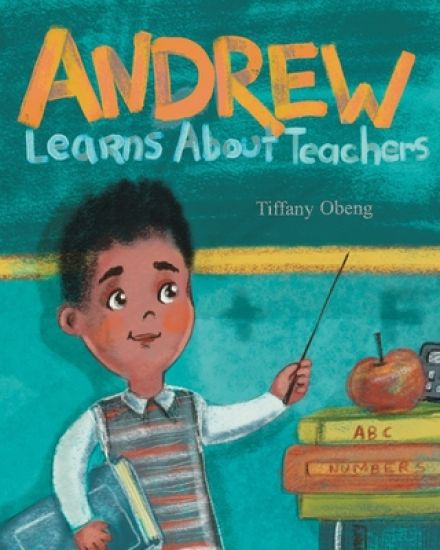
What will you be when you grow up? YOU can be ANYTHING you want to be Andrew is filled with awe and excitement as he listens to his mom talk about his new teacher on their way to his first day of school. What exactly do teachers do? Join Andrew as he learns about the great impacts teachers make. This is the perfect book to introduce the teaching career to curious readers. You will love this fun, educational rhyming book because it inspires young readers to believe they can be anything.This is the second book in the Andrew's "Career Day" book series and is ideal for children, families, and classrooms.