It is well known and researched, that deprivation of oxygen to the brain can quickly result in irreversible damage and death. What is less well known, is that some vertebrate species are exceptionally tolerant of brain hypoxia. The Brain Without Oxygen: Causes of failure - Physiological and molecular mechanisms for survival, Third edition, discusses the mechanisms of brain hypoxia tolerance in these exceptional vertebrates, which include diving marine mammals, high altitude dwellers and the hibernating mammal. Special attention is given to the extraordinary adaptations that allow a few turtle and fish species to tolerate months of brain anoxia. This third, fully updated edition addresses the potential of these animal models as targets for human clinical intervention. Perhaps the most interesting of these, are those involved in the suppression of metabolic activities to new set points well below their normoxic minima or maintenance levels. This volume will be valuable reading for researchers in physiology, medicine and general biological sciences, and of great importance to pharmaceutical companies researching novel models for stroke and brain ischemia.
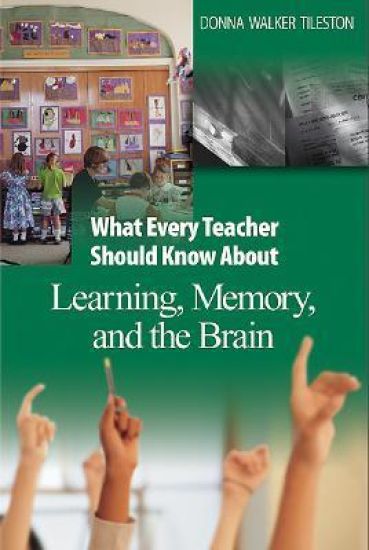
Basic research for classroom teachers about how the brain acquires, processes, and remembers information organized as a model to facilitate student learning.
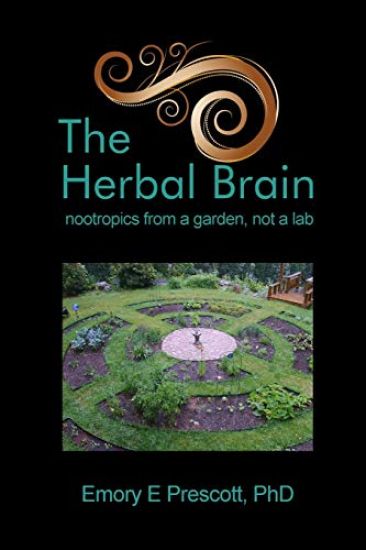
Do you want to improve your ability to pay attention, think, and remember? The Herbal Brain introduces a unique blend of twelve "nootropics" - highly beneficial herbs containing vital nutrients and properties needed for cognitive health. These same herbs are also collectively neuroprotective, regenerative, restorative, antioxidant, anti-inflammatory, good for your heart and good for your immune system. Sadly, global toxicity is increasing at an alarming rate along with an unprecedented general decline for many in language skills, intelligence, and memory. The Herbal Brain focuses on natural ways to enrich your mind and body and improve your overall well-being. Included are the twelve safest and most effective nootropics you can consume, expanded with straight talk about natural medicine, the limits of western healthcare, and healthy lifestyle modifications you can make in order to survive and thrive on our toxic planet. Whether you want to improve brain health, plant a nootropic herb garden, increase your knowledge of brain-boosting aromatherapy, or just drink the ideal herbal tea blend for better health, Dr. Prescott's guide of herbal nootropics has the beneficial information and ideas you need for stronger mind and memory. About the AuthorEmory E Prescott, Ph D, MS, CCC/SLP is the founder and owner of The Herbal BrainTM, a doctor of natural health, master herbalist, and medical speech-language pathologist with 26 years of experience helping patients with neurological issues. Completing doctoral and post-doctoral cognitive research has given her a unique perspective on brain health as it applies to adults with memory issues. With a passion for healing, Dr. Prescott has created a unique blend of highly beneficial herbs known to help memory and boost brain function. The Herbal BrainTM produces teas, spices, and aromatherapy specifically blended for enhanced brain health. Her gardens are located on the Balsam mountain range overlooking Sylva, NC. Contact Dr. Prescott or visit her website at www.theherbalbrain.com.
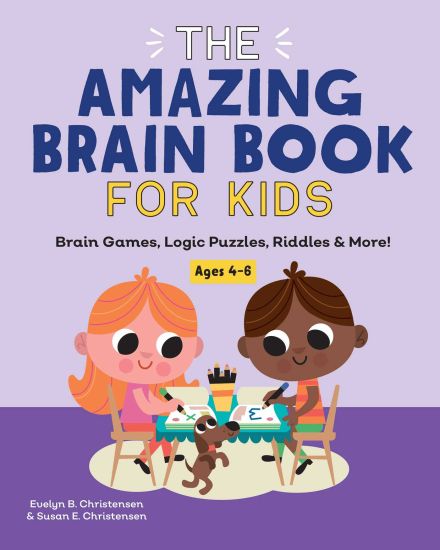
Help kids ages 4 to 6 build problem-solving skills Playing brain games is one of the easiest and most engaging ways for pre-K and kindergarten students to strengthen thinking skills, grow their confidence, and get creative. This activity book for kids is packed with puzzles designed to challenge their developing brains. Children will learn the skills to focus on a problem and build a solution, creating a critical-thinking tool kit that will set them up for success in the classroom and beyond. This exciting choice in brain books for kids encourages them to: Learn through fun-Get kids excited to learn with a wide variety of brain teasers, including word games, patterns, riddles, and more. Build up skills-Help kids develop deductive reasoning, pattern detection, inferential thinking, and many other foundational skills with exercises that start simple and grow more challenging.Have a growth mindset-Parents will find tools and tips that help them reframe challenges as growth opportunities and support the development of their child's growth mindset.Challenge little ones to boost their brainpower with this kids' riddle book.
How to get past the myths, tap into the creativity of the ADHD mind, and thrive ADHD affects millions of people-some 3 to 5% of the general population. Written by a neuroscientist who has studied ADHD, a clinician who has diagnosed and treated it for 30 years, and a special educator who sees it daily, The Energetic Brain provides the latest information from neuroscience on how the ADHD brain works and shows how to harness its potential for success. It distills the latest research findings to give readers the most up-to-date information available and provides practical strategies for managing ADHD-and thriving-at school, at work, and at home, from childhood through adulthood. Debunks popular (and destructive) myths about ADHDCovers how to manage ADHD with medication or without, what parents can do to help, and how to thrive with ADHD throughout the lifespanOffers effective academic and behavioral interventions for school, and helpful accommodations for the workplace The Energetic Brain provides a truly thorough view of ADHD, making it an invaluable guide for parents, teachers, and those living with ADHD.
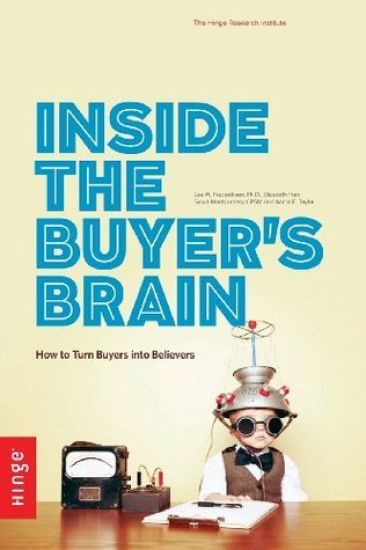
Inside the Buyer's Brain Why do companies select one professional services firm over another? What do they really value in the firms they hire? And how do you build a firm that engages your audience - one that is primed for growth? Research-Based Insights In this groundbreaking new book from Hinge, you get answers to these questions and a peek at the research behind them. You'll learn why there is so much friction between buyers and sellers and what you can do about it. Discover what qualities clients look for in a professional services firm and what one trait will tip the scale in your favor. And find out what changes you can make to attract fiercely loyal clients who will make referrals more often. Inside the Buyer's Brain equips you with a new perspective on the professional services marketplace. Once you understand what motivates your target clients and what mistakes to avoid, your firm will have new leverage - and a true advantage - in the marketplace. What You'll Learn Several critical gaps separate buyers from sellers How to bridge those gaps and think more like your clients What winners do differently to close the professional services sale How to expand the relationship with your clients Techniques for getting more referrals How to build an engaging brand that stimulates growth What's Inside Introduction Part I. Looking Inside the Buyer's Brain 1. Buyers vs. Sellers 2. Turning Buyers into Believers 3. The Research Part II. Lessons Learned 4. Target the Right Clients 5. Make the Connection 6. Close the Sale 7. Build Buyer Loyalty 8. Expand the Relationship 9. Get the Referral Part III. Building a Better Brand 10. Get the Strategy Right 11. The Tools You'll Need 12. Build the Brand 13. Your Brand Building Plan: Step by Step Resources About the Authors
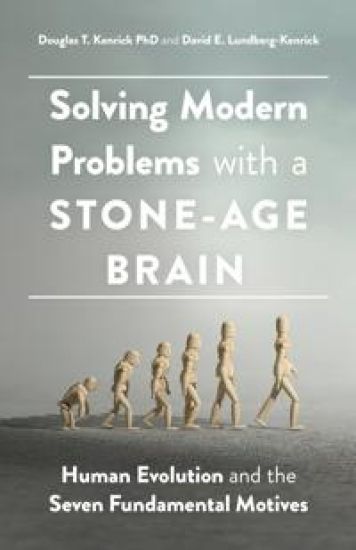
Sharing stories and advice rooted in the science of evolutionary psychology, father and son authors Doug Kenrick and David Lundberg-Kenrick pinpoint the dangers of stone-age problem solving for our lives today, and present a new, systematic way to survive and be happy in the modern world. Over millennia, we humans have evolved a set of motivational systems to help us solve the seven basic problems of existence: surviving, protecting ourselves from dangerous others, forming friendships, winning respect, attracting mates, hanging onto mates, and caring for our families. We seek the same goals in the 2 st century. However, the saber-tooth tigers and rival tribes that once threatened us have been replaced by marketers peddling sugar-laden foods, pundits fanning the culture war flames, and payday loan companies scamming those who can least afford it. Through a series of engaging narratives and science-based life tips, this book helps us see past our electronics and lattes and gain helpful insights into achieving the life we want.
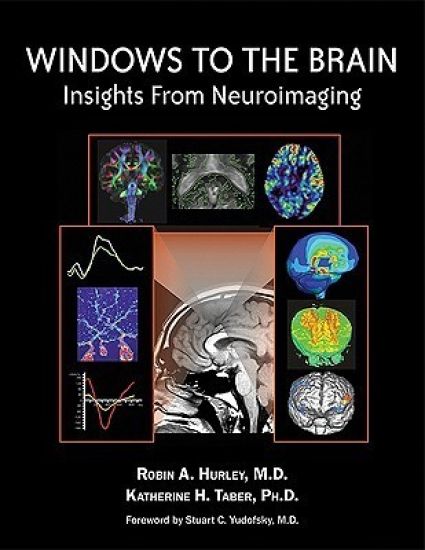
Windows to the Brain is the only book to synthesize neuroanatomical and imaging research as it pertains to selected neuropsychiatric diseases, containing all of the "Windows to the Brain" papers published from 1999-2006 in the Journal of Neuropsychiatry and Clinical Neurosciences. These reader-friendly summaries by more than sixty contributors present modern imaging techniques that assist in the diagnosis of neuropsychiatric illness, enhanced by easily understood color graphics of the neuroanatomical circuits of behavior, memory, and emotion. They provide a basic understanding of how to apply a variety of imaging techniques to the study of adult neuropsychiatric disease and how to use neuroimaging to assist in diagnostic work-ups for conditions ranging from sleep disorders to epilepsy to borderline personality. Integrated, color-coded graphics present functional anatomical information in a manner that promotes understanding and use in clinical practice, while the text encompasses a wide range of diseases and injuries across the adult lifespan. The book is organized into four sections that will help readers increase their appreciation of the wide range of research and clinical applications for imaging in neuropsychiatry: chapters on imaging techniques discuss underlying principles, strengths and weaknesses, and applications; chapters on specific diseases demonstrate a range of investigative techniques; anatomy/circuit chapters focus on particular brain structures or functional neuropsychiatric circuits; and final chapters present image-based approaches to understanding or selecting treatment options. Some of the applications described are: • Use of fMRI in posttraumatic stress disorder to reveal the delicate balance between the structures of the emotion and memory tracks;• Use of high-resolution MRI and nuclear imaging to distinguish between panic disorder and simple partial seizure disorder;• Use of functional imaging studies to detect corticobasal degeneration, as a means of better understanding dementia;• Use of newer imaging techniques in identifying progressive multifocal leukoencephalopathy, to enable more rapid and reliable tailoring of individual therapy for HIV;• Use of functional neuroimaging in the study of fear, in order to better understand and treat anxiety-based psychiatric disorders;• Use of neuroimaging studies in conversion disorder, showing implications for the disruption of selfhood in dissociative identity disorder and schizophrenia;• Use of FDG-PET scans to look for predictors of treatment response in childhood-onset obsessive-compulsive disorder. Windows to the Brain can help bring less-experienced readers up to speed on advanced imaging and anatomical details that pertain to the modern practice of neuropsychiatry. It is must-reading for specialists in neuropsychiatry and cognitive/behavioral neurology, or for general psychiatrists with an interest in neuroimaging.
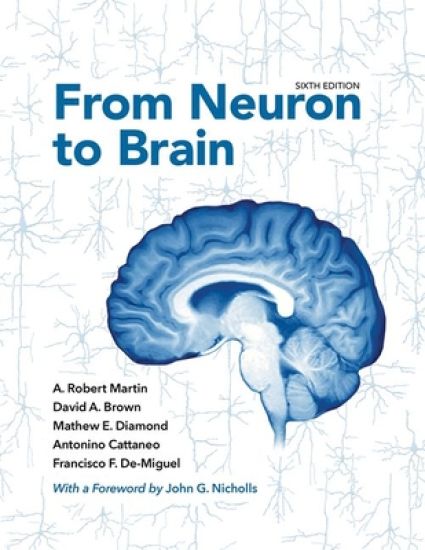
From Neuron to Brain, Sixth Edition, provides a readable, up-to-date book for use in undergraduate, graduate, and medical school courses in neuroscience. As in previous editions, the emphasis is on experiments made by electrical recordings, molecular and cellular biological techniques, and behavioral studies on the nervous system, from simple reflexes to cognitive functions. Lines of research are followed from the inception of an idea to new findings being made in laboratories and clinics today. From Neuron to Brain will be of interest to anyone--with or without a specialized background in biological sciences--who is curious about the workings of the nervous system.
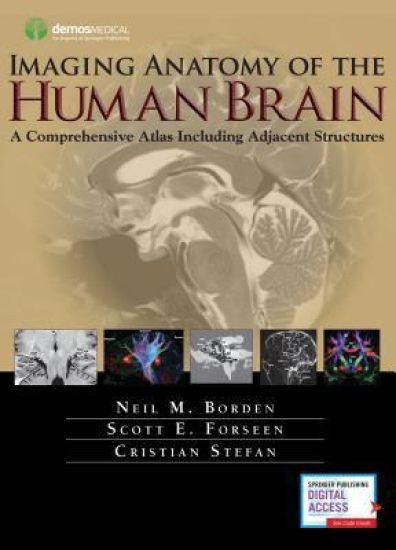
The most precise, cutting-edge images of normal cerebral anatomy available today are the centerpiece of this spectacular atlas for clinicians, trainees, and students in the neurologically-based medical and non-medical specialties. Truly an “atlas for the 21st century,” this comprehensive visual reference presents a detailed overview of cerebral anatomy acquired through the use of multiple imaging modalities including advanced techniques that allow visualization of structures not possible with conventional MRI or CT. Beautiful colour illustrations using 3-D modeling techniques based upon 3D MR volume data sets further enhances understanding of cerebral anatomy and spatial relationships. The anatomy in these colour illustrations mirror the black and white anatomic MR images presented in this atlas.Written by two neuroradiologists and an anatomist who are also prominent educators, along with more than a dozen contributors, the atlas begins with a brief introduction to the development, organization, and function of the human brain. What follows is more than 1,000 meticulously presented and labelled images acquired with the full complement of standard and advanced modalities currently used to visualize the human brain and adjacent structures—including MRI, CT, diffusion tensor imaging (DTI) with tractography, functional MRI, CTA, CTV, MRA, MRV, conventional 2-D catheter angiography, 3-D rotational catheter angiography, MR spectroscopy, and ultrasound of the neonatal brain. The vast array of data that these modes of imaging provide offers a wider window into the brain and allows the reader a unique way to integrate the complex anatomy presented. Ultimately the improved understanding you can acquire using this atlas can enhance clinical understanding and have a positive impact on patient care. Additionally, various anatomic structures can be viewed from modality to modality and from multiple planes.This state-of-the-art atlas provides a single source reference, which allows the interested reader ease of use, cross-referencing, and the ability to visualize high-resolution images with detailed labeling. It will serve as an authoritative learning tool in the classroom, and as an invaluable practical resource at the workstation or in the office or clinic.Key Features:Provides detailed views of anatomic structures within and around the human brain utilizing over 1,000 high quality images across a broad range of imaging modalitiesContains extensively labeled images of all regions of the brain and adjacent areas that can be compared and contrasted across modalitiesIncludes specially created colour illustrations using computer 3-D modeling techniques to aid in identifying structures and understanding relationshipsGoes beyond a typical brain atlas with detailed imaging of skull base, calvaria, facial skeleton, temporal bones, paranasal sinuses, and orbitsServes as an authoritative learning tool for students and trainees and practical reference for clinicians in multiple specialties
500 pratiche per santa e amore. Compilato e scritto da Jeffrey Briar, con Dr. Madan Kataria e molti altri. Include gli esercizi originali della Fondazione Dr. Kataria (insieme alle revisioni del 2015), Tecniche di respirazione della risata e Meditazione della risata. In due sezioni: 1. Esercizi di Fondazione del Dr. Kataria 2. Enciclopedia di Esercizi di Risata QUESTO LIBRO VA OLTRE BATTUTE E SKETCH COMICI. pieno di esercizi che i partecipanti fanno mentre ridono volontariamente: "Yoga della risata" o "Risate per la salute". Scopri come strutturare una sessione, come condurre e creare nuovi esercizi.
G. Berlucchi; G. S. Brindley; B. Brooks; O. D. Creutzfeldt; E. Dodt; R. W. Doty; H.-J. Freund; C. G. Gross; D. A. Jeffreys; R. Jung; U. Kuhnt; D. M. MacKay; E. Marg; N. Negrão; G. Rizzolatti; J. M. Sprague; G. Székely; J. Szentágothai; D. Whitteridge
Can traumatic life events cause depression? Studies generally point to a connection between adverse life events and depression. However, establishing a causal rather than associative connection, the key concern of this book, is more problematic. What neurobiological changes may be induced by stress and depression, and to what extent do these changes correspond? The authors structure their examination around three major themes: the pathophysiological role of stress in depression; whether or not a subtype of depression exists that is particularly stress-inducible; and, finally, how best to diagnose and treat depression in relation to its biological underpinnings.
Can traumatic life events cause depression? Studies generally point to a connection between adverse life events and depression. However, establishing a causal rather than associative connection, the key concern of this book, is more problematic. What neurobiological changes may be induced by stress and depression, and to what extent do these changes correspond? The authors structure their examination around three major themes: the pathophysiological role of stress in depression; whether or not a subtype of depression exists that is particularly stress-inducible; and, finally, how best to diagnose and treat depression in relation to its biological underpinnings.
In recent years, U.S. policies implementing the Law of Armed Conflict have increasingly restricted military activities. In this report, RAND researchers identify the ongoing or anticipated strategic, technological, and normative trends that could shift U.S. policies, how these trends might change battlefield and legal or normative dynamics, and the implications for the U.S. military that might result from these possible changes.
How and why does job stress manifest as negative emotions, disordered thoughts, deleterious behaviors, and physical illness? How can positive outcomes like growth and mastery be encouraged instead? Job stress theories provide insights that guide practical decision making on how to mitigate the negative effects, and promote the positive outcomes, of job demands for the organization and its constituents. This book provides a review of the empirical support for nearly 100 job stress frameworks, and presents guidance for theoretical applications, testing, refinement, and integrations.In addition to providing an overview of the theories, models, and hypotheses related to job stress, the authors present organizational and individual implications for both management and personal improvement. For scholars, gaps in the literature are identified to facilitate future research. Instructors and students will find this knowledge valuable for organizational psychology/behavior, occupational health psychology, or job stress classes, among others.Altogether, students, researchers, and practitioners will find this Introduction integral to their learning, and benefit from the actionable research ideas and suggestions for stress reduction.