Kirjahaku
Etsi kirjoja tekijän nimen, kirjan nimen tai ISBN:n perusteella.
1000 tulosta hakusanalla Brother Gilbert
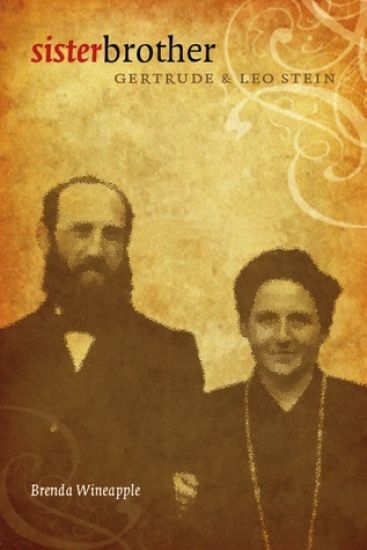
Devoted, eccentric, and compelling, Gertrude and Leo Stein were constant companions, from childhood to adulthood, until, finally, they spoke no more. Americans, expatriates, and virtually orphans, they lived together for almost forty years, collaborating in one of the great artistic and literary adventures of the twentieth century. Sister Brother tells the story of that adventure and relationship. With a personality that drew people toward her—regardless of what they thought of her inventive, hermetic prose—Gertrude Stein dazzled and perplexed. Enigmatic, intelligent, and self-absorbed, Leo also dazzled but in his own way. One of the crucial figures in Gertrude's early years, he was the original guiding spirit of the famed salon at 27 rue de Fleurus, which continued for almost two decades. From her early days as a medical student to her first days in Paris, Gertrude was passionately driven toward the career in which she distinguished herself, demanding appreciation as an exceptional writer who knew precisely what she intended. This book shows how Gertrude slowly struggled with what became a unique voice—and why her brother spurned it. With its wealth of new and rare material, its reconstruction of Leo's famed art collection, and its array of characters—from Bernard Berenson to Pablo Picasso—this biography offers the first glimpse into the smoldering sibling relationship that helped form two of the twentieth century's most unusual figures.
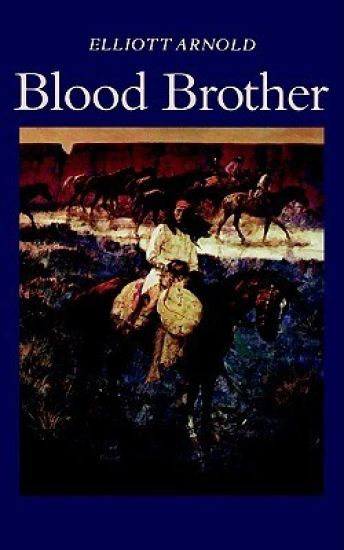
A classic of Southwestern literature and the basis for the highly acclaimed 1950 film, Broken Arrow, Blood Brother is "a history in fiction form, of the Southwest, from the time of the Gadsden Purchase in 1856 until the end of the Indian wars, about 1870. The author has translated matter-of-fact historical incidents into thrilling episodes, following the adventures of Cochise, noted chief of the Chiricahua Apaches, and Tom Jeffords, famous peace maker and Indian agent, with great detail.."-Library Journal "Elliott Arnold has written a historical novel about the Apache Indians.with a knowledge truly astonishing for its comprehensiveness...[It is] authentic history, presented, however, with fictional vividness."-New York Sun "Blood Brother is dramatic, fast-moving fiction. It is superb history. It is excellent biography. It takes place with the major works on the American Indian."-Chicago Tribune
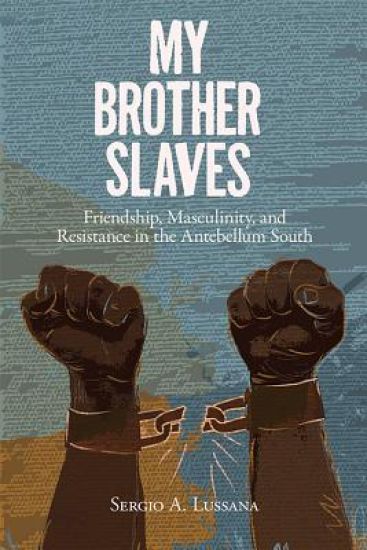
Trapped in a world of brutal physical punishment and unremitting, back-breaking labor, Frederick Douglass mused that it was the friendships he shared with other enslaved men that carried him through his darkest days.In this pioneering study, Sergio A. Lussana offers the first in-depth investigation of the social dynamics between enslaved men and examines how individuals living under the conditions of bondage negotiated masculine identities. He demonstrates that African American men worked to create their own culture through a range of recreational pursuits similar to those enjoyed by their white counterparts, such as drinking, gambling, fighting, and hunting. Underscoring the enslaved men's relationships, however, were the sex-segregated work gangs on the plantations, which further reinforced their social bonds.Lussana also addresses male resistance to slavery by shifting attention from the visible, organized world of slave rebellion to the private realms of enslaved men's lives. He reveals how these men developed an oppositional community in defiance of the regulations of the slaveholder and shows that their efforts were intrinsically linked to forms of resistance on a larger scale. The trust inherent in these private relationships was essential in driving conversations about revolution.My Brother Slaves fills a vital gap in our contemporary understanding of southern history and of the effects that the South's peculiar institution had on social structures and gender expression. Employing detailed research that draws on autobiographies of and interviews with former slaves, Lussana's work artfully testifies to the importance of social relationships between enslaved men and the degree to which these fraternal bonds encouraged them to resist.
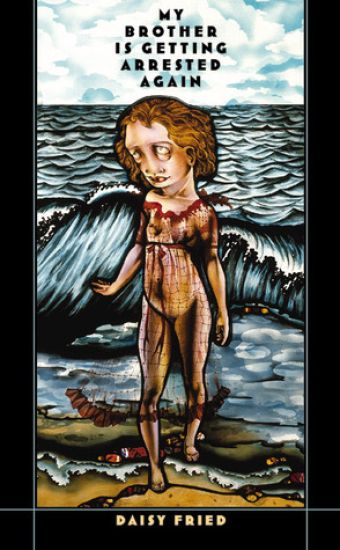
My Brother Is Getting Arrested Again celebrates the contradictions and quandaries of contemporary American life. These subversive, frequently self-mocking narrative poems are by turns funny and serious, book-smart and street-smart, lyrical and colloquial. Set in Philadelphia, Paris and New Jersey, the poems are at ease with sex happiness and sex trouble, girl-talk and grownup married life, genre parody and antiwar politics, family warfare and family love. Unsentimental but full of emotion, Daisy Fried's new collection, a finalist for the 2005 James Laughlin Prize, is unforgettable.

UNTAPPED NEW YORK: THE BEST NYC BOOKS OF ALL TIME Few people today have ever heard of North Brother Island, though a hundred years ago it was place known to—and often feared by—nearly everyone in New York City. The island, a small dot in the East River, twenty acres slotted between today's gritty industrial shores of the Bronx and Queens, was a minor piece of the New York archipelago until the late 19th century, when calls for social and sanitary reform—and the massive expansion of the city's population—combined to remake NBI as a hospital island, a place to contain infectious disease and, later, other societal ills. Abandoned since 1963, North Brother Island is a ruin and a wildlife sanctuary (it is the protected nesting ground of the Black-crowned Night Heron), closed to the public and virtually invisible to it. But one cannot mistake its abandoned state as a sign of its irrelevance to the city's history and culture. Traces of the extensive hospital campus remain, as do sites linked to notorious people (it was the final home of "Typhoid Mary") and events (the steamship General Slocum sank by its shores). It has stories to tell. Photographer Christopher Payne (Asylum: Inside the Closed World of State Mental Hospitals) was granted permission by New York City's Parks & Recreation Department to photograph the island over a period of years. The results are both beautiful and startling. On North Brother Island, devoid of human habitation for fifty years, buildings great and small are being consumed by the unchecked growth of vegetation. In just a few decades, a forest has sprung up where once there were the streets and manicured lawns of a hospital campus. North Brother Island: The Last Unknown Place in New York City includes a history by University of Pennsylvania preservationist Randall Mason, who has studied the island extensively, and an essay by the writer Robert Sullivan (Rats, The Meadowlands), who came along on one of the rare expeditions.
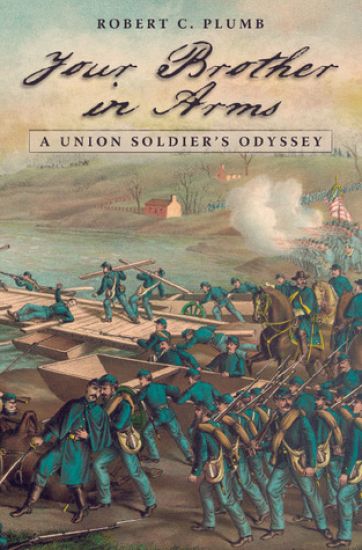
George P. McClelland, a member of the 155th Pennsylvania Infantry in the Civil War, witnessed some of the war’s most pivotal battles during his two and a half years of Union service. Death and destruction surrounded this young soldier, who endured the challenges of front line combat in the conflict Lincoln called “the fiery trial through which we pass.” Throughout his time at war, McClelland wrote to his family, keeping them abreast of his whereabouts and aware of the harrowing experiences he endured in battle. Never before published, McClelland’s letters offer fresh insights into camp life, battlefield conditions, perceptions of key leaders, and the mindset of a young man who faced the prospect of death nearly every day of his service. Through this book, the detailed experiences of one soldier—examined amidst the larger account of the war in the eastern theater—offer a fresh, personal perspective on one of our nation’s most brutal conflicts. Your Brother in Arms follows McClelland through his Civil War odyssey, from his enlistment in Pittsburgh in the summer of 1862 and his journey to Washington and march to Antietam, followed by his encounters in a succession of critical battles: Fredericksburg, Chancellorsville, Gettysburg, Spotsylvania Court House, the North Anna River, Petersburg, and Five Forks, Virginia, where he was gravely injured. McClelland’s words, written from the battlefield and the infirmary, convey his connection to his siblings and his longing for home. But even more so, they reflect the social, cultural, and political currents of the war he was fighting. With extensive detail, Robert C. Plumb expounds on McClelland’s words by placing the events described in context and illuminating the collective forces at play in each account, adding a historical outlook to the raw voice of a young soldier. Beating the odds of Civil War treatment, McClelland recovered from his injury at Five Forks and was discharged as a brevet-major in 1865—a rank bestowed on leaders who show bravery in the face of enemy fire. He was a common soldier who performed uncommon service, and the forty-two documents he and his family left behind now give readers the opportunity to know the war from his perspective. More than a book of battlefield reports, Your Brother in Arms: A Union Soldier’s Odyssey is a volume that explores the wartime experience through a soldier’s eyes, making it an engaging and valuable read for those interested in American history, the Civil War, and military history.
Elder Brother and the Law of the People
Robert Alexander Innes
University of Manitoba Press
2013
sidottu
In the pre-reserve era, Aboriginal bands in the northern plains were relatively small multicultural communities that actively maintained fluid and inclusive membership through traditional kinship practices. These practices were governed by the Law of the People as described in the traditional stories of Wîsashkêcâhk, or Elder Brother, that outlined social interaction, marriage, adoption, and kinship roles and responsibilities.In Elder Brother and the Law of the People, Robert Innes offers a detailed analysis of the role of Elder Brother stories in historical and contemporary kinship practices in Cowessess First Nation, located in southeastern Saskatchewan. He reveals how these tradition-inspired practices act to undermine legal and scholarly definitions of ""Indian"" and counter the perception that First Nations people have internalized such classifications. He presents Cowessess's successful negotiation of the 1996 Treaty Land Agreement and their high inclusion rate of new ""Bill-C31s"" as evidence of the persistence of historical kinship values and their continuing role as the central unifying factor for band membership.Elder Brother and the Law of the People presents an entirely new way of viewing Aboriginal cultural identity on the northern plains.
Elder Brother and the Law of the People
Robert Alexander Innes
University of Manitoba Press
2013
nidottu
In the pre-reserve era, Aboriginal bands in the northern plains were relatively small multicultural communities that actively maintained fluid and inclusive membership through traditional kinship practices. These practices were governed by the Law of the People as described in the traditional stories of Wîsashkêcâhk, or Elder Brother, that outlined social interaction, marriage, adoption, and kinship roles and responsibilities.In Elder Brother and the Law of the People, Robert Innes offers a detailed analysis of the role of Elder Brother stories in historical and contemporary kinship practices in Cowessess First Nation, located in southeastern Saskatchewan. He reveals how these tradition-inspired practices act to undermine legal and scholarly definitions of “Indian” and counter the perception that First Nations people have internalized such classifications. He presents Cowessess's successful negotiation of the 1996 Treaty Land Agreement and their high inclusion rate of new “Bill-C31s” as evidence of the persistence of historical kinship values and their continuing role as the central unifying factor for band membership. Elder Brother and the Law of the People presents an entirely new way of viewing Aboriginal cultural identity on the northern plains.
First published over 50 years ago, 'The Shining Brother' remains as fresh as ever thanks to its dynamic but gentle message. It includes many scripts and messages purporting to come from St Francis with deeply interesting comments on his life in Assisi and communicated to Laurence Temple, a practising architect. Their simplicity bears the hallmark of authenticity and this is enhanced by Temple's over practicality and humility.
Award-winning Italian author of ' Iqbal' explores the subject of PTSD in young soldiers. Johnny is a young airman who's flown dozens of missions. When he comes home from the war, his family and friends greet him as a hero. But Johnny doesn't feel like a hero. He's sick at the thought of the destruction he's caused to people in the villages over there. What's wrong with him? Why is he doing this? And when he sets up an anti-war protest in the centre of town, nobody wants to listen... ...Until the war comes home to them, that is.

When his dad leaves for a job in New York Ash is left to cope with his drug-addicted, alcoholic mother Rhonda, who decides to move away from the life she hates in Bristol to her home town of Liverpool, taking Ash away from his school, his mates and his gran. Not only does Ash have problems at home with a harassing, demanding mother, he becomes the easy target of a gang of bullies at his new school, the Jessop crew, because he talks with a different accent and wears a hearing aid. Then one day Ash meets the mysterious Big Brother, who wants to help Ash seek revenge on the Jessops, but it seems Big Brother has an agenda of his own. Just why is he so keen to help Ash destroy his enemies, and where did he come from? The pair strike up a partnership Ash is very soon desperate to break; the problem is Big Brother refuses to let him go.
BASKETBALL BROTHER is a fast-paced basketball book perfect for middle grade readers who love sports. Like all Bo Rush books, BASKETBALL BROTHER uses sports to celebrate diversity and inclusion, grapple with important life lessons, and reaffirm important values like courage, determination, and friendship. Eleven-year-old Leo Looper is recovering from knee surgery and doesn't know if he will ever be able to play basketball again. To make matters worse, he has to move to a new school in the middle of the year. That's never easy, especially when you have to hide the fact that you can't read. But Leo overcomes those obstacles, reaching new heights by slam dunking on the school bully and making an unexpected best friend -- the girl who becomes his teammate and reading tutor. The reading level for BASKETBALL BROTHER is in the third through sixth grade range. Struggling readers who love playing sports will be able to connect with BASKETBALL BROTHER on a personal level. Proficient readers will reinforce their skills while enjoying the sports action and youthful issues presented in the text.
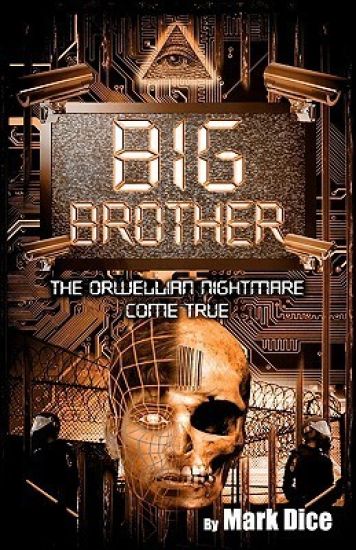
In Big Brother: The Orwellian Nightmare Come True, Mark Dice details actual NSA high-tech spy systems, mind-reading machines, secret government projects, and emerging artificial intelligence programs that seem as if they came right out of George Orwell's novel Nineteen Eighty-Four. Orwell's famous book was first published in 1949, and tells the story of a nightmarish future where citizens have lost all privacy and are continuously monitored by the omniscient Big Brother surveillance system which keeps them obedient to a totalitarian government. The novel is eerily prophetic as many of the fictional systems of surveillance described have now become a reality. Mark Dice shows you the scary documentation that Big Brother is watching you, and is more powerful than you could imagine. - The National Security Agency - Facial Recognition Scanners - Mind Reading Machines - Neural Interfaces - Psychotronic Weapons - Orwellian Government Programs - The Nanny State - Orwellian Weapons - Artificial Intelligence - Cybernetic Organisms - A Closer Look at 1984 - Our Social Structure - The Control of Information - Perpetual State of War - The Personification of the Party - Telescreens - A Snitch Culture - Relationships in Shambles - A Heartless Society - Foreign Countries Painted as Enemies - Power Hungry Officials - An Erosion of the Language - Double Think - And More By the author of The Illuminati: Facts & Fiction

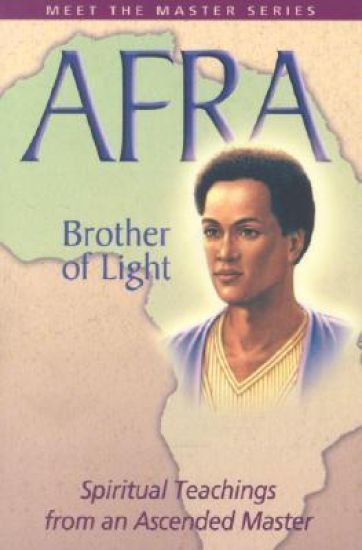
There is a brotherhood of light-masterful beings from all races and nationalities who have graduated from earth's schoolroom. From the heaven realm, these masters assist mankind in all fields of human endeavour, helping to raise the consciousness of earth.This book introduces you to the master Afra, ancient patron of the continent of Africa, who is dedicated to bringing about unity among all peoples and to solving the problems of discord that keep us apart. We need him today as never before.You will learn about the true meaning of race, ancient golden ages that existed in Africa, how to overcome obstacles to unity, the factors of karma and forgiveness, and spiritual tools to heal personal and world conditions.
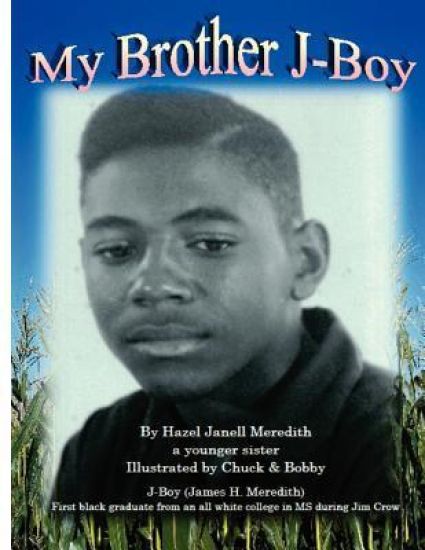
"My Brother J-Boy" is written by a younger sister of Second Reconstruction pioneer, James Howard Meredith during the Jim Crow south. Readers learn about many of the fun times these children had growing up on an 84 acre farm.The book includes a homework assignment on citizenship, and a certificate signed by the author and James Meredith