Kirjojen hintavertailu. Mukana 11 699 587 kirjaa ja 12 kauppaa.

Kirjahaku

Etsi kirjoja tekijän nimen, kirjan nimen tai ISBN:n perusteella.

1000 tulosta hakusanalla Bryan H. Suits

Richard Strauss's Elektra

Richard Strauss's Elektra

Bryan Gilliam

Clarendon Press
1996
nidottu
Elektra was the fourth of fifteen operas by Strauss and opened his successful partnership with the librettist Hugo von Hofmannsthal. It is one of the most important operas of the early twentieth century and it solidified Strauss's status as the leading German opera-composer of his day.Bryan Gilliam's study of this major work examines its musical-historical context and also provides a detailed analysis of some of its musical features. He establishes a chronology of the evolution of the opera and places it in the larger framework of German opera of the time. His detailed examination of the sketch-books enables him to offer fresh insight into Strauss's use of motifs and overall tonal structure. In so doing he shows how the work's arresting dissonance and chromaticism has hiddenits similarities to his later, seemingly more tonally conservative opera, Der Rosenkavalier - not only does Strauss in both operas exploit a variety of musical styles to express irony, parody, and other emotions, but both are in fact thoroughly tonal.
A State Under Siege

A State Under Siege

Bryan A. Follis

Clarendon Press
1995
sidottu
The origins of the Northern Irish state are of great importance for the study of Irish history and Anglo-Irish relations, but this subject has never been tackled in great detail. In this diligent ad detailed account, Follis makes up for this oversight. He examines the turbulent early years of Northern Ireland, looking at how its administration was established and how it survived in the face of widespread communal violence, near bankruptcy, and political uncertainty, exacerbated by problematical relations with the governments in Westminster and Dublin. The highly controversial subject matter is subject to careful analysis, and if a particular standpoint emerges at its conclusion, an expression of it is long overdue. This is an honest and extremely lucid piece of research on a subject of vital importance.
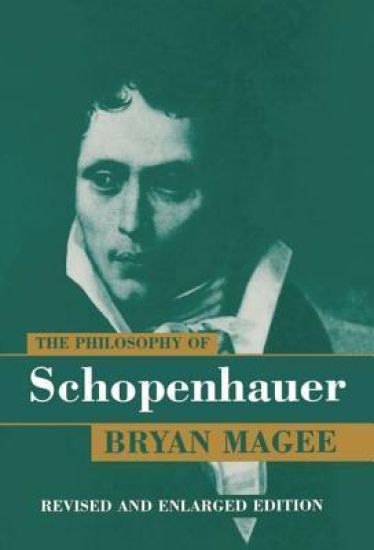
The Philosophy of Schopenhauer

The Philosophy of Schopenhauer

Bryan Magee

Clarendon Press
1997
nidottu
This is a revised and enlarged version of Bryan Magee's widely praised study of Schopenhauer, the most comprehensive book on this great philosopher. It contains a brief biography of Schopenhauer, a systematic exposition of his thought, and a critical discussion of the problems to which it gives rise and of its influence on a wide range of thinkers and artists. For this new edition Bryan Magee has added three new chapters and made many minor revisions and corrections throughout. this new edition will consolidate the book's standing as the definitive study of Schopenhauer. `This is a book of many virtues and vices...The book reads well. It deserves to be well read...surpass(es) all current English-language treatments of Schopenhauer.' David Cartwright, Schopenhauer-Jahrbuch `an ambitious book and, on the whole, a highly readable one. Magee moves with confidence and ability among the connecting structures of philosophy, the history of ideas, the arts, and human psychology.' Diane Collinson, Philosophically Quarterly Magee's study should however not merely be reviewed but also read; for it is thorough, lucid and wide-ranging...a substantial work.' Times Higher Education Supplement `He brings out well the development of the German philosopher's thought, and the fact that in the course of doing so he does some philosophising of his own increases the interest of the volume. Further, Schopenhauer's influence on a number of other eminent people is discussed much more at length than is usual in monographs on his philosophy. As for the author's criticism of Schopenhauer, it seems to me sound.' Frederick Copleston, The month `Philosophers have long known that Schopenhauer was the first of the very few philosophers Wittgenstein studied intensely. Magee supplies the detail of the debt with impressive and original fullness. Bryan Magee may leave himself open to critical nigglings of various degrees of significance by his enthusiastic resolution to stand up for Schopenhauer and not just to expound him from a safe distance. The compensation is that his own excitement is communicated to the reader.' Anthony Quinton, The Times `il convient de saluer et d'apprecier, pour le public qui ne l'aurait pas encore lu, ce livre elegant, suggestif, perspicace...clair, excellent.' P. Trotignon, Revue Philosophique `Bryan Magee's book is...to be welcomed as the most illuminating and admirable study of Schopenhauer's philosophy yet to appear in English.' I. B. Gleaves, Wagner `He sets about the task of explaining Schopenhauer's ideas with a commitment and enthusiasm all too rare in philosophical writing, and succeeds admirably in communicating his excitement to the reader.' Sean Sayers, Philosophy and Psychology `This is a wide ranging book and Mr Magee's enthusiasm makes it stimulating.' The Economist `Bryan Magee has given us and extremely well-organized book...an accurate and innovative introduction...Its great merit is that it takes Schopenhauer seriously and relates his work to contemporary concerns.' James Moulder, South African Journal of Philosphy
The Philosophy of Schopenhauer

The Philosophy of Schopenhauer

Bryan Magee

Clarendon Press
1997
sidottu
This is a revised and enlarged version of Bryan Magee's widely praised study of Schopenhauer, the most comprehensive book on this great philosopher. It contains a brief biography of Schopenhauer, a systematic exposition of his thought, and a critical discussion of the problems to which it gives rise and of its influence on a wide range of thinkers and artists. For this new edition Bryan Magee has added three new chapters and made many minor revisions and corrections throughout. this new edition will consolidate the book's standing as the definitive study of Schopenhauer. `This is a book of many virtues and few vices...The book reads well. It deserves to be well read....surpass(es) all current English-language treatments of Schopenhauer' David Cartwright, Schopenhauer-Jahrbuch `an ambitious book and, on the whole, a highly readable one. Magee moves with confidence and ability among the connecting structures of philosophy, the history of ideas, the arts, and human psychology' Diane Collinson, Philosophical Quarterly `Magee's study should however not merely be reviewed but also read; for it is throrough, lucid and wide-ranging...a substantial work.' Times Higher Education Supplement `He brings out well the development of the German philosopher's thought, and the fact that in the course of doing so does some philosophising of his own increases the interest of the volume. Further, Schopenhauer's influence on a number of other eminent people is discussed much more at length than is usual in monographs on his philosophy. As for the author's criticism of Schopenhauer, it seems to me sound.' Frederick Copleston, The Month `Philosophers have long known that Schopenhauer was the first of the very few philosophers Wittgenstein studied intensely. Magee supplies the detail of the debt with impressive and original fullness. Bryan Magee may leave himself open to critical nigglings of various degrees of significance by his enthusiastic resolution to stand up for Schopenhauer, and not just to expound from a safe distance. The compensation is that his own excitement is communicated to the reader.' Anthony Quinton, the Times `il convient de saluer et d'apprecier, pour le public qui ne l'aurait pas encore lu, ce livre elegant, suggestif, perspicace...clair, excellent.' P. Trotignon, Revue Philosophique `Bryan Magge's book is...to be welcomed as the most illuminating and admirable study of Schopenhauer's philosophy yet to appear in English.' I. B. Gleaves Wagner `He sets about the task of explaining Schopenahuer's ideas with a commitment and enthusiasm all too rare in philosophical writing, and succeeds admirably in communicating his excitement to his readers.' Sean Sayers, Philosophy and Psychology `This is a wide-ranging bookand Mr Magee's enthusiasm makes it stimulating.' The Economist `Bryan Magee has given us an extremely well-organized book... an accurate and innovative introduction...Its great merit is that it takes Schopenhauer seriously and relates his work to contemporary concerns.' James Moulder, South African Journal of Philosophy.
A Time to Chant

A Time to Chant

Bryan Wilson; Karel Dobbelaere

Clarendon Press
1994
sidottu
Fifty years ago Soka Gakkai was an organization of a few hundred people, all of them in Japan. Today it is one of the world's most rapidly expanding religious movements with members in virtually every country in Europe, the Americas, and Australasia, in most of Asia, and in several parts of Africa. It is also increasingly well publicized, sponsoring and promoting a variety of cultural and educational causes and establishing a high profile for itself in world affairs. All of this has created a movement which is a significant social phenomenon; yet to date Soka Gakkai has received little attention from Western academics. Bryan Wilson and Karel Dobbelaere have undertaken a thorough survey of the UK membership to try to trace the source of the movement's attraction and analyse its potential. In addition to a questionnaire survey they carried out some thirty interviews with members, who were encouraged to tell their story in their own way. These interviews and the questionnaire responses are liberally quoted throughout the book and add illuminating detail to its analysis. The decline in belief in an anthropomorphic deity; the sense that traditional religious institutions have become hollow; the emphasis on the private nature of belief and on personal autonomy are all characteristic features of contemporary western values. The authors suggest that Soka Gakkai has found a ready resonance with these changing currents of thought in contemporary society and conclude that Soka Gakkai's appeal to young people in particular makes it a faith whose time may have come.
Oxford Reading Tree inFact: Level 11: Our Siberian Journey

Oxford Reading Tree inFact: Level 11: Our Siberian Journey

Bryan Alexander

Oxford University Press
2014
nidottu
In Our Siberian Journey, join an Arctic photographer on his long trek across the ice and snow with a herd of reindeer. Find out what he eats, wears and how he travels. Oxford Reading Tree inFact is a non-fiction series that aims to engage children in reading for pleasure as powerfully as fiction does. The variety of topics means there are books to interest every child in this compelling series. The series is written by top children's authors and subject experts. The books are carefully levelled, making it easy to match every child to the right book.
The Biology of African Savannahs

The Biology of African Savannahs

Bryan Shorrocks; William Bates

Oxford University Press
2014
sidottu
Savannah habitats comprise an ecologically important, but ultimately fragile, ecosystem. They constitute one of the largest biomes on Earth, covering almost 20% of the land surface, and can be simply described as tropical and subtropical grasslands with scattered bushes and trees. Most savannahs occur in Africa, although smaller areas can be found in South America, India, and Australia. They form a rich mosaic of diverse ecosystems, and this book offers a concise but comprehensive introduction to their ecology, biodiversity, and conservation. The Biology of African Savannahs describes the major plants (grasses, and trees such as Acacia) and animals (mainly large mammals) that live in this habitat, and examines the biological and ecological factors that influence their population size, interactions (such as predation), and community composition. Conservation issues such as climate change, hunting, and conflict between wildlife and domestic animals are also discussed. This new edition has been updated throughout with the latest research in the field, and contains new technique boxes which introduce readers to some of the analytical methods used to study African savannahs. This accessible text is suitable for both senior undergraduate and graduate students taking courses in savannah and tropical ecology as part of a wider ecology and/or conservation biology degree programme. It will also be of relevance and use to the many professional ecologists and conservation practitioners requiring a concise but authoritative overview of the topic.
The Biology of African Savannahs

The Biology of African Savannahs

Bryan Shorrocks; William Bates

Oxford University Press
2014
nidottu
Savannah habitats comprise an ecologically important, but ultimately fragile, ecosystem. They constitute one of the largest biomes on Earth, covering almost 20% of the land surface, and can be simply described as tropical and subtropical grasslands with scattered bushes and trees. Most savannahs occur in Africa, although smaller areas can be found in South America, India, and Australia. They form a rich mosaic of diverse ecosystems, and this book offers a concise but comprehensive introduction to their ecology, biodiversity, and conservation. The Biology of African Savannahs describes the major plants (grasses, and trees such as Acacia) and animals (mainly large mammals) that live in this habitat, and examines the biological and ecological factors that influence their population size, interactions (such as predation), and community composition. Conservation issues such as climate change, hunting, and conflict between wildlife and domestic animals are also discussed. This new edition has been updated throughout with the latest research in the field, and contains new technique boxes which introduce readers to some of the analytical methods used to study African savannahs. This accessible text is suitable for both senior undergraduate and graduate students taking courses in savannah and tropical ecology as part of a wider ecology and/or conservation biology degree programme. It will also be of relevance and use to the many professional ecologists and conservation practitioners requiring a concise but authoritative overview of the topic.
Leadership for Sergeants and Inspectors

Leadership for Sergeants and Inspectors

Bryan Boon

Oxford University Press
2015
nidottu
Leadership for Sergeants and Inspectors offers an easily accessible and practical guide to leadership in routine and complex situations across all areas of police work. The need to demonstrate leadership can occur at any moment: in public order situations, community meetings and among colleagues at work. Enhancing your leadership skills is an effective way of ensuring that you inspire and motivate others, as well as improving interactions with the wide range of people you will meet over the course of your career, from members of the public to social services and partner agencies. This book discusses leadership and teamwork, as well as other leadership skills, through a series of questions that you might consider within the course of your everyday police work. With clear and concise explanations, the author draws on 30 years' experience as a police officer to bring you detailed theory and practice across a range of leadership areas, including team work, equality and diversity, delegation, misconduct and discipline, communication, and assertiveness. There are also helpful hints and tips along the way, providing context to leadership issues within policing, as well as offering examples of leadership skills in practice. The second part of the book amounts to a series of skills checklists, closely aligned to the coverage of the 21 chapters and which you can dip into when immediate help is required. The checklists act as 'tool kit' for the busy police officer trying, with perhaps little time ahead, to deal with events efficiently and effectively. Whether you are just embarking on your police career, have been recently promoted, or simply want to refresh your leadership skills, Leadership for Sergeants and Inspectors will support and assist you, helping you to get the best out of your team, your colleagues, and your encounters with members of the public.
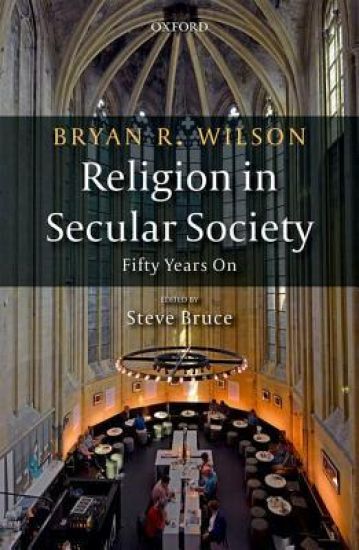
Religion in Secular Society

Religion in Secular Society

Bryan R. Wilson

Oxford University Press
2016
sidottu
Fifty years after its publication, Bryan Wilson's Religion in Secular Society (1966) remains a seminal work. It is one of the clearest articulations of the secularization thesis: the claim that modernizations brings with it fundamental changes in the nature and status of religion. For Wilson, secularization refers to the fact that religion has lost influence at the societal, the institutional, and the individual level. Individual secularization is about the loss of authority of the Churches to define what people should believe, practise and accept as moral principles guiding their lives. In other words, individual piety may still persist, however, if it develops independently of religious authorities, then it is an indication of individual secularization. Wilson stresses that the consequences of the process of societalization in modern societies and on this basis he formulated his thesis that secularization is linked to the decline of community and is a concomitant of societalization. Revised and updated, Steve Bruce builds on Wilson's work by noting the changes in religious culture of the UK and US, in an appendix on major changes since the 1960s. Bruce also provides a critical response to the core ideas of Religion in Secular Society.
The Ghetto

The Ghetto

Bryan Cheyette

Oxford University Press
2020
nidottu
For three hundred years the ghetto defined Jewish culture in the late medieval and early modern period in Western Europe. In the nineteenth-century it was a free-floating concept which travelled to Eastern Europe and the United States. Eastern European “ghettos”, which enabled genocide, were crudely rehabilitated by the Nazis during World War Two as if they were part of a benign medieval tradition. In the United States, the word ghetto was routinely applied to endemic black ghettoization which has lasted from 1920 until the present. Outside of America “the ghetto” has been universalized as the incarnation of class difference, or colonialism, or apartheid, and has been applied to segregated cities and countries throughout the world. In this Very Short Introduction Bryan Cheyette unpicks the extraordinarily complex layers of contrasting meanings that have accrued over five hundred years to ghettos, considering their different settings across the globe. He considers core questions of why and when urban, racial, and colonial ghettos have appeared, and who they contain. Exploring their various identities, he shows how different ghettos interrelate, or are contrasted, across time and space, or even in the same place. ABOUT THE SERIES: The Very Short Introductions series from Oxford University Press contains hundreds of titles in almost every subject area. These pocket-sized books are the perfect way to get ahead in a new subject quickly. Our expert authors combine facts, analysis, perspective, new ideas, and enthusiasm to make interesting and challenging topics highly readable.
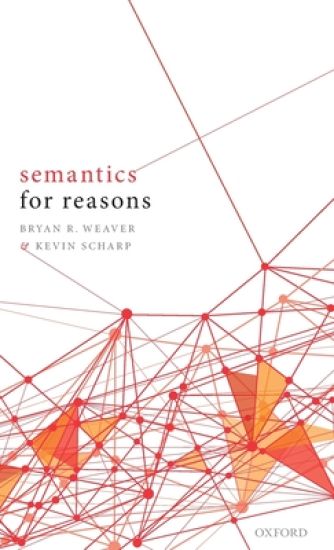
Semantics for Reasons

Semantics for Reasons

Bryan R. Weaver; Kevin Scharp

Oxford University Press
2019
sidottu
Semantics for Reasons is a book about what we mean when we talk about reasons. It not only brings together the theory of reasons and natural language semantics in original ways but also sketches out a litany of implications for metaethics and the philosophy of normativity. In their account of how the language of reasons works, Bryan R. Weaver and Kevin Scharp propose and defend a view called Question Under Discussion (QUD) Reasons Contextualism. They use this view to argue for a series of novel positions on the ontology of reasons, indexical facts, the reasons-to-be- rational debate, moral reasons, and the reasons-first approach.
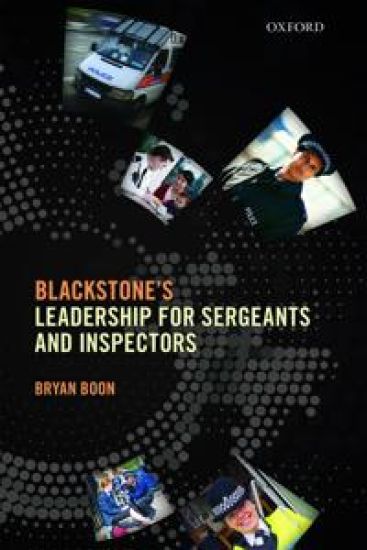
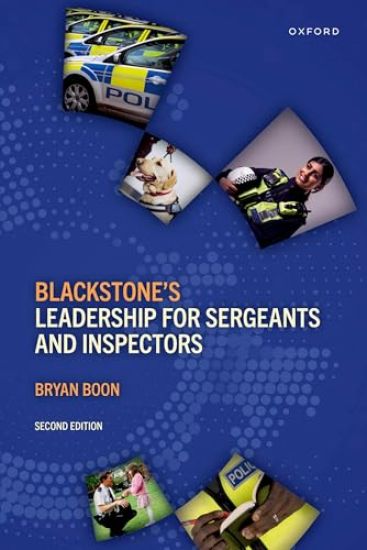
Blackstone's Leadership for Sergeants and Inspectors
Thoroughly revised to reflect significant changes in policing over the past decade, this new edition of Blackstone's Leadership for Sergeants and Inspectors offers an accessible, practical guide to leadership in routine and complex situations across all areas of police work. In policing, the need to demonstrate leadership can arise at any moment: in public order situations, community meetings and among colleagues at work. Enhancing your leadership skills can help ensure that you inspire and motivate others, improving interactions with the wide range of people you will encounter, from members of the public to social services and partner agencies. This book discusses leadership and teamwork skills through a series of questions to consider during your everyday police work. With clear and concise explanations, the author draws on 30 years' experience as a police officer to bring you detailed theory and practice across a range of leadership areas, including ethical professionalism, stress management, equality, diversity and neurodiversity, multi-cultural teams, delegation, coaching, misconduct and discipline. Helpful hints and tips provide context to leadership issues and examples of leadership skills in practice. The book's 32 skills checklists act as a 'tool kit' for the busy police officer needing to deal with events efficiently and effectively. Whether you are just embarking on your police career, have been recently promoted, or simply want to refresh your leadership skills, Leadership for Sergeants and Inspectors will support and assist you, helping you to get the best out of your team, your colleagues, and your encounters with the public.
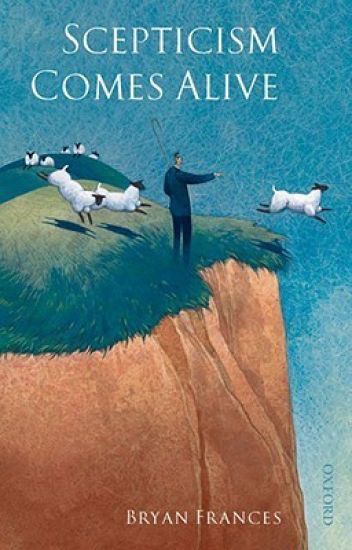
Scepticism Comes Alive

Scepticism Comes Alive

Bryan Frances

Clarendon Press
2005
sidottu
In epistemology the nagging voice of the sceptic has always been present. Over the last thirty years or so philosophers have thought of several promising ways to counter the radical sceptic: for instance, facts about the reliability of our cognitive processes, principles determining which possibilities must be ruled out in order to have knowledge, and principles regarding the context-sensitivity of knowledge attributions. In this entertaining and provocative book, Bryan Frances presents a new argument template for generating new kinds of radical scepticism, ones that hold even if all the clever anti-sceptical fixes defeat the traditional sceptic. Not only is the argument schema novel, but the sceptical consequences are entirely unexpected. Although the new sceptic concludes that we don't know that fire engines are red, that we sometimes have pains in our knees, or even that we believe that fire engines are red or that knees sometimes throb, he admits that we know millions of exotic truths such as the fact that black holes exist. You can know about the existence of black holes, but not about the colour of your shirt or even about what you believe regarding the colour of your shirt. The new sceptical arguments proceed in the usual way (here's a sceptical hypothesis; you can't neutralize it, you have to be able to neutralize it to know P; so you don't know P), but the sceptical hypotheses plugged into it are 'real live' scientific-philosophical hypotheses often thought to be actually true, such as error theories about belief, colour, pain location, and character traits. Frances investigates the questions, 'Under what conditions do we need to rule out these error theories in order to know things inconsistent with them?' and 'Can we rule them out?' Particular attention is paid to recent methods used to counter the traditional sceptic. Sharp, witty, and fun to read, Scepticism Comes Alive will be highly provocative for anyone interested in knowledge and its limits.
Will to Survive: A History of Hungary

Will to Survive: A History of Hungary

Bryan Cartledge

Oxford University Press
2011
nidottu
The Will to Survive describes how a small country, for much of its existence squeezed between two empires, surrounded by hostile neighbours and subjected to invasion and occupation, survived the frequent tragedies of its eventful history to become a sovereign democratic republic within the European Union. The Mongol, Ottoman, Habsburg, Nazi and Soviet empires have all since vanished; but Hungary, a victim of all five and despite suffering the consequences of being on the losing side in every war she has fought, still occupies the territory the Magyar tribes claimed for themselves in the ninth century. The author, whose interest in Hungary stems from his service there as British Ambassador during the declining years of Kadar's Communist regime, traces Hungary's story from the arrival of the Magyars in Europe to the accession of Hungary to membership of NATO and the European Union. The eleven hundred years covered by this stirring account embrace medieval greatness, Turkish occupation, Habsburg domination, unsuccessful struggles for independence, massive deprivation of territory and population after the First World War, a disastrous alliance with Nazi Germany motivated by the hope of redress, and forty years of Soviet-imposed Communism interrupted by a gallant but brutally suppressed revolution in 1956.
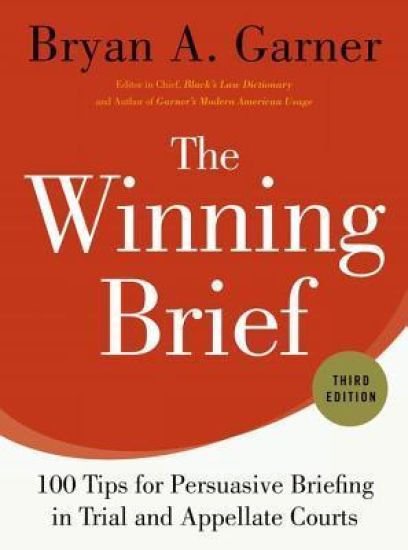
The Winning Brief

The Winning Brief

Bryan Garner

Oxford University Press Inc
2014
sidottu
It its first two editions The Winning Brief explained the art of effective writing in 100 concise, practical, and easy-to-use tips, proving that the key to writing well is to understand the judicial readership. This third edition of Bryan A. Garner's modern classic delivers the same invaluable guidelines with even more supporting evidence. Covering everything from the rules for planning and organizing a brief to openers that can capture a judge's attention from the first few words, these tips add up to the most compelling, orderly, and visually appealing brief that an advocate can present. In Garner's view, good writing is good thinking put to paper. "Never write a sentence that you couldn't easily speak," he warns - and demonstrates how to do just that. Every tip begins with a set of quotable quotes from experts, followed by Garner's masterly advice on building sound paragraphs, drafting crisp sentences, choosing the best words ("Strike pursuant to from your vocabulary."), quoting authority, citing sources, and designing a document that looks as impressive as it reads. Throughout, Garner shows how to edit for maximal impact, using vivid before-and-after examples that apply the basics of rhetoric to persuasive writing. In this much-expanded third edition, Garner has perfected the text with nine new tips, hundreds of new examples, and amplified explanations throughout-all in his trademark style. Among the new sections are tips on understanding judges' reading habits, answering opponents' arguments, writing effective reply briefs, using authorities persuasively, and organizing arguments based on statutes and contracts. Quotable quotes, which Garner carefully assembled after years of wide reading and close study, have been expanded and improved throughout the book. There is also a new appendix on a remarkable brief that some consider the best ever written ("a beautiful marriage of rhetorical skill, thorough research, and humane lawyering"). Perhaps the biggest change to this edition is that every tip now ends with a summary checklist that recaps and crystalizes the subpoints just covered, with further ideas for improvement. Garner conceived these checklists in part as a way to help readers approach his book as a set of 100 tutorials. Reviewing and practicing each tip will offer brief-writers a degree of mastery that more cavalier colleagues will find difficult to equal. An invaluable resource for attorneys, law clerks, judges, paralegals, law students and their teachers, The Winning Brief has the qualities that make all of Garner's books so popular: authority, accessibility, and page after page of techniques that work. If you're writing to win a case, this book shouldn't merely be on your shelf--it should be open on your desk.
Scepticism Comes Alive

Scepticism Comes Alive

Bryan Frances

Oxford University Press
2008
nidottu
In epistemology the nagging voice of the sceptic has always been present. Over the last thirty years or so philosophers have thought of several promising ways to counter the radical sceptic: for instance, facts about the reliability of our cognitive processes, principles determining which possibilities must be ruled out in order to have knowledge, and principles regarding the context-sensitivity of knowledge attributions. In this entertaining and provocative book, Bryan Frances presents a new argument template for generating new kinds of radical scepticism, ones that hold even if all the clever anti-sceptical fixes defeat the traditional sceptic. Not only is the argument schema novel, but the sceptical consequences are entirely unexpected. Although the new sceptic concludes that we don't know that fire engines are red, that we sometimes have pains in our knees, or even that we believe that fire engines are red or that knees sometimes throb, she admits that we know millions of exotic truths such as the fact that black holes exist. You can know about the existence of black holes, but not about the colour of your shirt or even about what you believe regarding the colour of your shirt. The new sceptical arguments proceed in the usual way (here's a sceptical hypothesis; you can't neutralize it, you have to be able to neutralize it to know P; so you don't know P), but the sceptical hypotheses plugged into it are 'real live' scientific-philosophical hypotheses often thought to be actually true, such as error theories about belief, colour, pain location, and character traits. Frances investigates the questions, 'Under what conditions do we need to rule out these error theories in order to know things inconsistent with them?' and 'Can we rule them out?' Particular attention is paid to recent methods used to counter the traditional sceptic. Sharp, witty, and fun to read, Scepticism Comes Alive will be highly provocative for anyone interested in knowledge and its limits.
Phase Space Methods for Degenerate Quantum Gases

Phase Space Methods for Degenerate Quantum Gases

Bryan J. Dalton; John Jeffers; Stephen M. Barnett

Oxford University Press
2014
sidottu
Recent experimental progress has enabled cold atomic gases to be studied at nano-kelvin temperatures, creating new states of matter where quantum degeneracy occurs - Bose-Einstein condensates and degenerate Fermi gases. Such quantum states are of macroscopic dimensions. This book presents the phase space theory approach for treating the physics of degenerate quantum gases, an approach already widely used in quantum optics. However, degenerate quantum gases involve massive bosonic and fermionic atoms, not massless photons. The book begins with a review of Fock states for systems of identical atoms, where large numbers of atoms occupy the various single particle states or modes. First, separate modes are considered, and here the quantum density operator is represented by a phase space distribution function of phase space variables which replace mode annihilation, creation operators, the dynamical equation for the density operator determines a Fokker-Planck equation for the distribution function, and measurable quantities such as quantum correlation functions are given as phase space integrals. Finally, the phase space variables are replaced by time dependent stochastic variables satisfying Langevin stochastic equations obtained from the Fokker-Planck equation, with stochastic averages giving the measurable quantities. Second, a quantum field approach is treated, the density operator being represented by a distribution functional of field functions which replace field annihilation, creation operators, the distribution functional satisfying a functional FPE, etc. A novel feature of this book is that the phase space variables for fermions are Grassmann variables, not c-numbers. However, we show that Grassmann distribution functions and functionals still provide equations for obtaining both analytic and numerical solutions. The book includes the necessary mathematics for Grassmann calculus and functional calculus, and detailed derivations of key results are provided.