

Kirjahaku
Etsi kirjoja tekijän nimen, kirjan nimen tai ISBN:n perusteella.
1000 tulosta hakusanalla Chad Cramer

In this book, Chad Jorgenson challenges the view that for Plato the good life is one of pure intellection, arguing that his last writings increasingly insist on the capacity of reason to impose measure on our emotions and pleasures. Starting from an account of the ontological, epistemological, and physiological foundations of the tripartition of the soul, he traces the increasing sophistication of Plato's thinking about the nature of pleasure and pain and his developing interest in sciences bearing on physical reality. These theoretical shifts represent a movement away from a conception of human happiness as a purification or flight of the soul from the sensible to the intelligible, as in the Phaedo, towards a focus on the harmony of the individual as a psychosomatic whole under the hegemonic power of reason.
This book is for a broad audience of practitioners, policymakers, scholars, and anyone interested in scenarios, simulations, and disaster planning. Readers are led through several different planning scenarios that have been developed over several years under the auspices of the US Department of Energy, the US Air Force, and continued work at GlobalInt LLC. These scenarios present different security challenges and their potential cascading impacts on global systems - from the melting of glaciers in the Andes, to hurricanes in New York and Hawaii, and on to hybrid disasters, cyberoperations and geoengineering. The book provides a concise and up-to-date overview of the 'lessons learned', with a focus on innovative solutions to the world's pressing energy and environmental security challenges.
This book is for a broad audience of practitioners, policymakers, scholars, and anyone interested in scenarios, simulations, and disaster planning. Readers are led through several different planning scenarios that have been developed over several years under the auspices of the US Department of Energy, the US Air Force, and continued work at GlobalInt LLC. These scenarios present different security challenges and their potential cascading impacts on global systems - from the melting of glaciers in the Andes, to hurricanes in New York and Hawaii, and on to hybrid disasters, cyberoperations and geoengineering. The book provides a concise and up-to-date overview of the 'lessons learned', with a focus on innovative solutions to the world's pressing energy and environmental security challenges.
A guide to building wealth by designing, creating, and marketing a successful app across any platform Chad Mureta has made millions starting and running his own successful app business, and now he explains how you can do it, too, in this non-technical, easy-to-follow guide. App Empire provides the confidence and the tools necessary for taking the next step towards financial success and freedom. The book caters to many platforms including iPhone, iPad, Android, and BlackBerry. This book includes real-world examples to inspire those who are looking to cash in on the App gold rush. Learn how to set up your business so that it works while you don't, and turn a simple idea into a passive revenue stream. Discover marketing strategies that few developers know and/or useLearn the success formula for getting thousands of downloads a day for one AppLearn the secret to why some Apps get visibility while others don'tGet insights to help you understand the App store market App Empire delivers advice on the most essential things you must do in order to achieve success with an app. Turn your simple app idea into cash flow today!
Discover the strategies, tools, and technologies necessary for developing successful mobile learning programs In the modern, rapidly-expanding mobile learning environment, only clear guidelines and state-of-the-art technologies will stand up to the challenges that lie ahead. With a smart focus that combines a proven process with all-important strategies and practical applications, Mastering Mobile Learning stands as the most modern, comprehensive resource on the subject. It also features unique technical content previously unavailable among the literature of the mobile learning field. This book will help you turn concept into reality. This book will show you best practices for obtaining and providing educational, training, and professional development content on devices like smartphones, tablets and other mobile devices. Trainers, educators, designers, instructional technologists, workplace learning professionals, and HR professionals will learn how mobile learning differs from other forms of e-learning, and will be introduced to the challenges and—more importantly—the advantages of mobile learning strategies and technologies for 21st century business environments. The book provides: An overview of mobile learning, including evolving definitions and reasons for executives to embrace this approachA discussion of the business drivers of mobile learning, advice for creating a mobile learning content strategy, and easy ways to inexpensively launch mobile learningValuable tips on how to use unique affordances of mobile devices to better serve your learners while they are on the goInformation on the ROI of mobile learning, using mobile devices as research tools, and why training in mobile development is criticalAn overview of the technical aspects of the design and development of mobile learning Written by experts in this burgeoning field, Mastering Mobile Learning provides a roadmap for creating the most effective learning content, strategies, and applications possible.

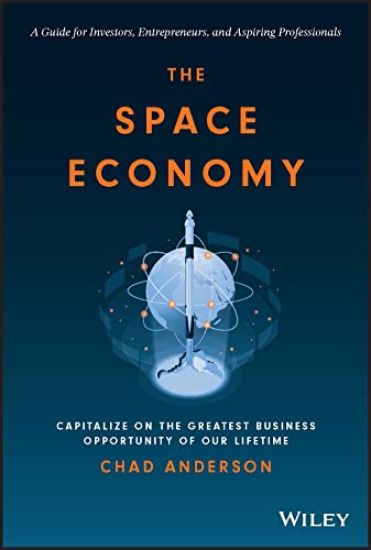
Climb aboard an astronomical business opportunity before it takes off. The new Space Age has already begun, but there is still time for you to get in early. In The Space Economy: Capitalize on the Greatest Business Opportunity of Our Lifetime, accomplished venture capitalist and Space Capital founder Chad Anderson offers investors, entrepreneurs, and aspiring professionals powerful tools and information for understanding how space-based technologies have, and will continue to, transform enterprise, government, and consumer markets for decades to come. Whether you're seeking entrepreneurial ideas worth exploring, a career worth pursuing, or investments worth making, the burgeoning Space Economy represents a hidden opportunity larger than the nascent internet at the dawn of the Millennium. From global positioning, geospatial intelligence, and satellite communications to commercial human spaceflight and interplanetary transportation, this book explains how and why the space economy is the greatest opportunity of our lifetime. Readers will learn: How to develop a thesis for investing in innovation at a global scaleThe major and minor players in a business ecosystem of epic potential—and how to identify and exploit vast areas of blue-sky opportunity still unexploredLessons from entrepreneurs and investors on what it takes to thrive in this new arena, including case studies of exciting startups successfully leveraging space-based technologyIn-depth advice on hiring and retaining out-of-this-world talent in an increasingly competitive landscapeThe in-demand skills and aptitudes of space careers—and tips on networking and getting hired at the hottest companiesDeep dives into the legal, political, and diplomatic implications of space-based entrepreneurship A fascinating and accessible treatment of the latest, greatest, and most promising area of business opportunity since the internet, The Space Economy will be essential reading for anyone interested in seizing a brighter future.
Mega-events such as the Olympic Games, World Cup finals and international political summits are occasions of almost unparalleled economic, political and social significance for host nations and cities. The scale and scope of mega-event security has continued to grow enormously since 11 September 2001, consistently involving the largest policing and security operations for event hosts outside of wartime. This book is the first to focus exclusively on the organisational dynamics underpinning the design and delivery of mega-event security. Using the G20 Summit in Brisbane, Australia in November 2014 as a case study, in conjunction with comparisons with events such as the Toronto 2010 G20, the authors engage in a comprehensive assessment of the networks, strategies and tensions involved in mega-event security. By drawing on the insightful experiences of those responsible for securing the Brisbane 2014 G20, the authors look behind-the-scenes to capture the complexity of mega-eventsecurity. The authors argue that such an approach is essential to better appreciate how different conceptions of security, ways of thinking and acting, impact a range of security ideals and outcomes.
The Karakoram Highway was constructed by the Pakistani state in the 1970s as a major development project that furthered the national interest and solidified state control over the disputed region of northern Pakistan. Focusing on this highway, this book provides a unique analysis of the links between space, travel and history in the formation of the Pakistani nation-state.The book discusses how the highway was a symbol for an imagined national identity, and goes on to look at how it offered Pakistan a pre-Partition history and a fixed territory, by providing a historical link to the Silk Route and a contemporary geographical linkage to Central Asia. Examining the influence of the diverse travellers along the Karakoram Highway, the book shows how global flows of development, trade, labour, and tourism have remapped the Pakistani nation-state and reshaped the local. Providing a fresh perspective on the nation-state of Pakistan, this book is an important contribution to studies on South Asian History, Anthropology, Politics and Geography.

Heidegger’s Shadow is an important contribution to the understanding of Heidegger’s ambivalent relation to transcendental philosophy. Its contention is that Heidegger recognizes the importance of transcendental philosophy as the necessary point of entry to his thought, but he nonetheless comes to regard it as something that he must strive to overcome even though he knows such an attempt can never succeed. Engelland thoroughly engages with major texts such as Kant and the Problem of Metaphysics, Being and Time, and Contributions and traces the progression of Heidegger’s readings of Kant and Husserl to show that Heidegger cannot abandon his own earlier breakthrough work in transcendental philosophy. This book will be of interest to those working on phenomenology, continental philosophy, and transcendental philosophy.

This book focuses on the history and development of criminological thought from the pre-Enlightenment period to the present and offers a detailed and chronological overview of competing theoretical perspectives in criminology in their social and political context.This book covers: A discussion of how major theorists came to espouse their ideas and how the social context of the time influenced the development criminological thought; An exploration of the scientific method and the way in which theories are tested; Details of the origins of each theory as well as their recent developments in scholarship and research; Comparative and international research in theory; The empirical support for theory and the relationship between research and policy; Biosocial and developmental criminology, including the biosocial underpinnings of criminal behavior and the influence of neuroscience and brain psychology; Theoretical applications for explaining different crime types, such as genocide, white-collar crime, and environmental crime; A summary of the current state of criminological knowledge and a vision for the future of criminology. The book includes lists of further reading and chapter summaries, and is supported by timelines of key works and events. This book is essential reading for courses on criminological theory, criminal behaviour, criminal psychology and biosocial criminology.

This book focuses on the history and development of criminological thought from the pre-Enlightenment period to the present and offers a detailed and chronological overview of competing theoretical perspectives in criminology in their social and political context.This book covers: A discussion of how major theorists came to espouse their ideas and how the social context of the time influenced the development criminological thought; An exploration of the scientific method and the way in which theories are tested; Details of the origins of each theory as well as their recent developments in scholarship and research; Comparative and international research in theory; The empirical support for theory and the relationship between research and policy; Biosocial and developmental criminology, including the biosocial underpinnings of criminal behavior and the influence of neuroscience and brain psychology; Theoretical applications for explaining different crime types, such as genocide, white-collar crime, and environmental crime; A summary of the current state of criminological knowledge and a vision for the future of criminology. The book includes lists of further reading and chapter summaries, and is supported by timelines of key works and events. This book is essential reading for courses on criminological theory, criminal behaviour, criminal psychology and biosocial criminology.

This book explores the role of theory and research in criminology. Adopting a unique and refreshing approach to criminological theory, it focuses on the great debates in criminology from its inception as a field to the present day. It explores the debates that have motivated criminological thought, that have represented turning points in theoretical and empirical trajectories, that have offered mini-paradigm shifts, and that have moved the field forward. Coverage includes:Classical debates, including the work of Lombroso, Durkheim, and Sutherland;Sociological vs. psychological debates in criminology;Control theory and cultural deviance theory;Criminal career and trait-based theory;Theory testing in criminology;Critical theories in criminology;Debates on the state of criminology and criminal justice;Policy issues in criminology.Each chapter explores several key debates, summarizes key points, and offers a discussion of the current empirical status. This book is novel in emphasising the role of debate in criminology and offering an enlightening synthesis of theorists and their perspectives. It is essential reading for students taking courses on criminological theory and teachers of those theories.
This book explores the role of theory and research in criminology. Adopting a unique and refreshing approach to criminological theory, it focuses on the great debates in criminology from its inception as a field to the present day. It explores the debates that have motivated criminological thought, that have represented turning points in theoretical and empirical trajectories, that have offered mini-paradigm shifts, and that have moved the field forward. Coverage includes:Classical debates, including the work of Lombroso, Durkheim, and Sutherland;Sociological vs. psychological debates in criminology;Control theory and cultural deviance theory;Criminal career and trait-based theory;Theory testing in criminology;Critical theories in criminology;Debates on the state of criminology and criminal justice;Policy issues in criminology.Each chapter explores several key debates, summarizes key points, and offers a discussion of the current empirical status. This book is novel in emphasising the role of debate in criminology and offering an enlightening synthesis of theorists and their perspectives. It is essential reading for students taking courses on criminological theory and teachers of those theories.

Networks as sets of autonomous organisations working together to achieve individual and shared goals are becoming increasingly important across many areas of public administration. The importance of networks is well known but most analysts would agree that we do not know enough about the dynamics and effectiveness of networks in relation to their internal operations. This is a significant problem as security, intelligence, law enforcement and many other agencies are increasingly required to organise in and through networks to provide national security. In this comprehensive analysis, Chad Whelan presents a highly innovative, qualitative study of networks in the field of national security. Developing our understanding of 'organisational networks' in organisational theory, management and public administration, and 'security networks' in criminology and international relations, he presents a multi-disciplinary analysis of network forms of organisation. Whelan puts forward a methodological framework involving five levels of analysis - structural, cultural, policy, technological and relational - with which we can better analyse and understand the dynamics and effectiveness of networks. This framework is applied to public sector networks operating in the field of counter-terrorism in Australia in a way that is highly relevant to researchers and practitioners in many contexts where government departments and agencies, and the private sector, need to work together. Networks and National Security: Dynamics, Effectiveness and Organisation not only advances our knowledge of networks and national security but also assists with the essential tasks of evaluating and managing networks. Written in a clear and accessible style and featuring a wealth of first-hand accounts concerning the inside operations of networks, this book deals with the crucial subject of inter-agency coordination in the important field of national security.
Illustrated with case studies which explain key concepts and provide practical examples, this book provides a detailed and comprehensive introduction to water management issues from a European perspective. The book begins with a brief history of water management, followed by a consideration of the major frameworks used for managing water in its qualitative and quantitative aspects. Several chapters treat key water management issues, including; dams, privatization, hydropolitics, climate change and finally provides a synoptic treatment of major water management issues across Europe's geographical regions.

St Augustine's pneumatology remains one of his most distinctive, decisive, and ultimately divisive contributions to the story of Christian thought. How did his understanding of the Spirit develop? Why does he identity the Spirit with divine love and cosmic order? And from what personal and literary sources did he receive inspiration? This examination of Augustine's pneumatology - the first book-length study of this important topic available - seeks answers in Augustine's earliest extant writings, penned during the years surrounding his famed return to the Catholic Church and the height of his efforts to synthesize Catholic theology and the Platonic philosophy of his day which had postulated a divine 'trinity' of its own. Careful analysis of these initial texts casts fresh light upon Augustine's more mature and well-known theology of the Holy Spirit while also illuminating on-going discussions about his early thought such as the nature and extent of his Platonic sympathies and the possibility that the recent convert remained committed to the divinity of the human soul.
As first responders to public problems, administrators must survey situations, identify solutions, and occasionally make executive decisions that are binding upon the government as a whole. The ability for administrators to assert claims that orient the government in a particular direction is not only powerful, but it can also be problematic and even dangerous.For administrators, the tension between moving in a spirited way, and remaining sensible, is a problem of how to exercise one’s discretion, especially in the U.S. context, which demands that both be considered and actualized. In dealing with these competing expectations, Chad B. Newswander analyzes how administrators can incorporate executive, legislative, and judicial tendencies to help them handle the problem of discretion.Expanding the thinking of the constitutional school of public administration thought, Administrative Ethics and Executive Decisions is a theoretically grounded and empirically rich study of how administrators incorporate a constitutional ethos to handle the problem of discretion.

For as long as humans have been inhabiting coastal areas and recording what occurs in their environments, coastal zones have been defined through dynamic interactions. And this is further underlined by a more recent development: observed sea level rise. In a thorough but not overly technical approach, Adapting to Sea Level Rise in the Coastal Zone: Law and Policy Considerations provides a legal-policy framework for facing the challenges of sea level rise. The book includes an analysis of sea level rise adaptation strategies that examines the legal impacts of coastal land use decisions based on the current interpretation of private property rights in relation to public control over those rights. The author discusses the science behind sea level rise and highlights policy complexities and options. He then presents an overview of related legalities, and bringing it all together, applies the principles offered in the book, concluding with strategies and solutions and a perspective on the future. If we accept the premise that sea level rise is occurring and will continue for the foreseeable future, then we must begin to consider policy responses to this risk in coastal regions. Part of any pragmatic policy response must include a review of the options available to public institutions when developing and implementing rational adaptation policies. This book offers practical legal/policy approaches to sea level rise adaptation that promotes sound planning in the face of climate change and rising seas.