Kirjojen hintavertailu. Mukana 12 083 983 kirjaa ja 12 kauppaa.

Kirjahaku

Etsi kirjoja tekijän nimen, kirjan nimen tai ISBN:n perusteella.

1000 tulosta hakusanalla Chartier-E

Ashamed

Ashamed

Camille Charrière

HARPERCOLLINS PUBLISHERS
2026
sidottu
The debut book from writer and pioneer of digital culture Camille Charrière Ashamed is a painfully relatable, deeply honest and sharply funny memoir in essays from one of the most influential fashion voices in the world. From female friendship and the perils of dating to social media addiction, mental health and fertility, with her trademark candour and wit Camille explores the many facets of contemporary womanhood in the digital age.
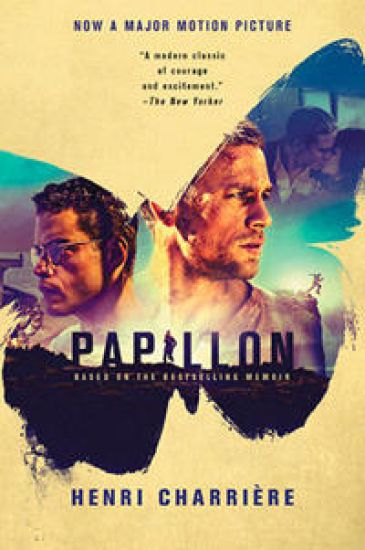
Papillon

Papillon

Henri Charriere

William Morrow Company
2006
nidottu
"A modern classic of courage and excitement." --The New Yorker Soon to be a Major Motion Picture Starring Charlie Hunnam and Rami MalekHenri Charri re, nicknamed "Papillon," for the butterfly tattoo on his chest, was convicted in Paris in 1931 of a murder he did not commit. Sentenced to life imprisonment in the penal colony of French Guiana, he became obsessed with one goal: escape. After planning and executing a series of treacherous yet failed attempts over many years, he was eventually sent to the notorious prison, Devil's Island, a place from which no one had ever escaped . . . until Papillon. His flight to freedom remains one of the most incredible feats of human cunning, will, and endurance ever undertaken.Charri re's astonishing autobiography, Papillon, was first published in France to instant acclaim in 1968, more than twenty years after his final escape. Since then, it has become a treasured classic--the gripping, shocking, ultimately uplifting odyssey of an innocent man who would not be defeated."A first-class adventure story." -- New York Review of Books
PAPILLON FILM

PAPILLON FILM

HENRI CHARRIERE

HARPERCOLLINS PUBLISHERS INC
2018
nidottu
"A modern classic of courage and excitement." --The New YorkerNOW A MAJOR MOTION PICTURE STARRING CHARLIE HUNNAM AND RAMI MALEKHenri Charri re, nicknamed "Papillon," for the butterfly tattoo on his chest, was convicted in Paris in 1931 of a murder he did not commit. Sentenced to life imprisonment in the penal colony of French Guiana, he became obsessed with one goal: escape. After planning and executing a series of treacherous yet failed attempts over many years, he was eventually sent to the notorious prison, Devil's Island, a place from which no one had ever escaped . . . until Papillon. His flight to freedom remains one of the most incredible feats of human cunning, will, and endurance ever undertaken.Charri re's astonishing autobiography, Papillon, was first published in France to instant acclaim in 1968, more than twenty years after his final escape. Since then, it has become a treasured classic--the gripping, shocking, ultimately uplifting odyssey of an innocent man who would not be defeated.
Get in the Game

Get in the Game

Tim Chartier

THE UNIVERSITY OF CHICAGO PRESS
2022
nidottu
An award-winning math popularizer, who has advised the US Olympic Committee, NFL, and NBA, offers sports fans a new way to understand truly improbable feats in their favorite games. In 2013, NBA point guard Steph Curry wowed crowds when he sunk 11 out of 13 three-pointers for a game total of 54 points—only seven other players, including Michael Jordan and Kobe Bryant, had scored more in a game at Madison Square Garden. Four years later, the University of Connecticut women’s basketball team won its hundredth straight game, defeating South Carolina 66–55. And in 2010, one forecaster—an octopus named Paul—correctly predicted the outcome of all of Germany’s matches in the FIFA World Cup. These are surprising events—but are they truly improbable? In Get in the Game, mathematician and sports analytics expert Tim Chartier helps us answer that question—condensing complex mathematics down to coin tosses and dice throws to give readers both an introduction to statistics and a new way to enjoy sporting events. With these accessible tools, Chartier leads us through modeling experiments that develop our intuitive sense of the improbable. For example, to see how likely you are to beat Curry’s three-pointer feat, consider his 45.3 percent three-point shooting average in 2012–13. Take a coin and assume heads is making the shot (slightly better than Curry at a fifty percent chance). Can you imagine getting heads eleven out of thirteen times? With engaging exercises and fun, comic book–style illustrations by Ansley Earle, Chartier’s book encourages all readers—including those who have never encountered formal statistics or data simulations, or even heard of sports analytics, but who enjoy watching sports—to get in the game.
Nonstandard Notebook

Nonstandard Notebook

Tim Chartier; Amy Langville; Ben Orlin

THE UNIVERSITY OF CHICAGO PRESS
2024
nidottu
A revolutionary notebook that challenges us to play outside (and with) the lines. A standard notebook displays page after page of horizontal lines. But what if we break the pattern? What if the ruled pages grew unruly? In this Nonstandard Notebook, lines twist, fragment, curve, and crisscross in beautiful formations. Each sheet is a distinctive work of imagination, asking us to draw, doodle, and journal in the same spirit. Page after page, as we journey from lines to parabolas to waves, deep questions arise—about form, art, and mathematics. How do we harness the infinite? Why do patterns permeate nature? What are the limitations and possibilities of human vision? Nonstandard Notebook explores these questions and more through its provocative and inspirational images, each displayed with the mathematics that generated it. We see how straight lines can form fractal crenellations, how circles can disrupt and unify, and how waves and scaling can form complex landscapes (or even famous faces). Created by mathematicians, educators, and math popularizers Tim Chartier and Amy Langville, and with a foreword from Ben Orlin (bestselling author of Math with Bad Drawings), Nonstandard Notebook shows that rules—both the rules of mathematics and the rules of a notebook—do not mark the end of creativity, but the beginning.
No deb? llamarte as?...!!

No deb? llamarte as?...!!

Ricardo Chartier Campagne; Amaranta Tablada Ángel

Lulu.com
2019
pokkari
No deb? llamarte as?...!! Es un libro que narra no solo la historia del mayor personaje que la humanidad jam's haya conocido sino, la Verdad oculta y todo lo que trasciende de esta triqui?uela realizada por los mismos de siempre, que en el transcurso de los siglos solo han cambiado de nombre pero, sus intencionalidades y objetivos se mantienen inc?lumes. La Verdad siempre ha sido y ser? importante debido al significado que ella conlleva y lo trascendental que es para que el Ser-Humano pueda desarrollarse libre y sin prejuicios. Este mundo real, deformado y ca?tico que actualmente compartimos, se debe solo y exclusivamente a dos conceptos fundamentales: la carencia de la Verdad y la manipulaci?n del Ser-Humano por medio del Control Mental. Adem?s, explicamos algunas historias y hechos el cual el oficialismo ha ocultado premeditadamente la Verdad y la ha tergiversado, as? seguir generando desavenencias y conflictos en la sociedad, con ello el deseo de instaurar el NOM.
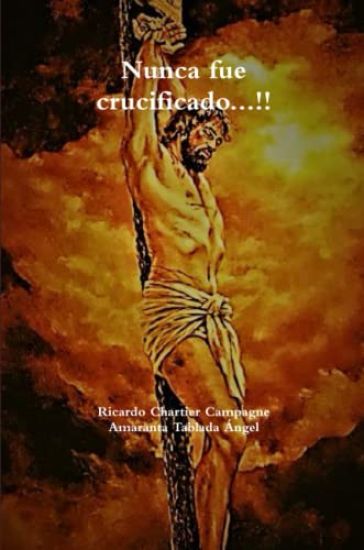
Nunca fue crucificado...!!

Nunca fue crucificado...!!

Ricardo Chartier Campagne; Amaranta Tablada Ángel

Lulu.com
2019
pokkari
Este libro est? dedicado a todos los buscadores de respuestas y de la Verdad, a todos aquellos que por un u otro motivo han hallado la ?iluminaci?n?, o por lo menos la est?n buscando por medios diversos, ya que con ella se llega a entender muy bien el ?sistema? impuesto, que no tiene nada de bueno ni beneficioso, y por tal raz?n, se puede librar una batalla espiritual y sistem?tica de forma inteligente, de manera que podamos tambi?n por medio de ella, conocer a nuestro Creador. Adem?s, este volumen tiene varias finalidades, primero: demostrar lo mal que estamos respecto a lo que creemos que es lo correcto y m's a?n, cuando ?ntegramente lo hemos asumido como cierto producto de no investigar por nuestros medios, y no nos hacemos la pregunta clave ?Por qu Ser? que todo lo que nos han contado es ver?dico, es la realidad, es la Verdad? No es f?cil para nadie, darse cuenta del enga?o pero, es mucho mejor ?despertar y ponerse colorado de una vez que estar por siempre rosado?.
The Logic of Commitment

The Logic of Commitment

Gary Chartier

Routledge
2020
nidottu
This book develops and defends a conception of commitment and explores its limits. Gary Chartier shows how commitment serves to resolve conflicts between ordinary moral intuitions and the reality that the basic aspects of human well-being are incommensurable. He outlines a variety of overlapping and mutually reinforcing rationales for making commitments, explores the relationship between commitment and vocation and the relevance of commitment to love, and notes some reasons why it might make sense to disregard one’s commitments. The Logic of Commitment will appeal to ethicists interested in the connection between commitment and personal well-being, and to anyone who wonders why and when it might make sense to make or keep commitments.
Introduction to Optics

Introduction to Optics

Germain Chartier

Springer-Verlag New York Inc.
2005
sidottu
Choice Outstanding Title! (January 2006) Since the discovery of the lasers in 1960 and optical fibers in 1970, optics underwent deep changes which accentuated its multi-field character. This work covers essential concepts of comprehension and reports the great progress of current knowledge in optics. The method of presentation is inspired by Richard Feynman, with an emphasis on "telling" optics, rather than deducing it from fundamental laws. For its excellent teaching style, the book received the Arnulf-Francon Award by the French Optical Society. The concepts are formulated in a way such that the necessary mathematical tools do not hinder comprehension of the phenomena. Global in vision, the book can also be used as a reference. In addition to the traditional aspects of optics, it includes the tools and methods currently used by researchers and engineers as well as explanation and implications of the most recent developments.
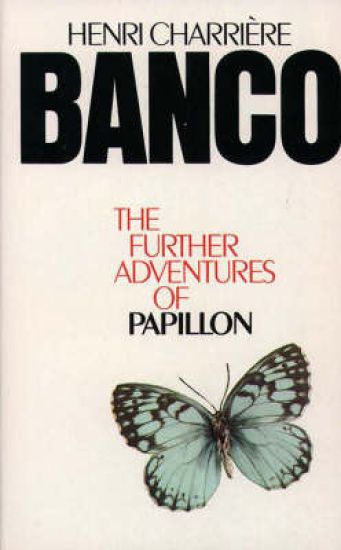
Banco

Banco

Henri Charrière

HARPERCOLLINS PUBLISHERS
1991
nidottu
The sensational sequel to ‘Papillon’. ‘Banco’ continues the adventures of Henri Charriere – nicknamed Papillon – in Venezuela, where he has finally won his freedom after thirteen years of escape and imprisonment. Despite his resolve to become an honest man, Charriere is soon involved in hair-raiding exploits with goldminers, gamblers, bank-robbers and revolutionaries – robbing and being robbed, his lust for life as strong as ever. He also runs night clubs in Caracas until an earthquake ruins him in 1967 – when he decides to write the book that brings his international fame.
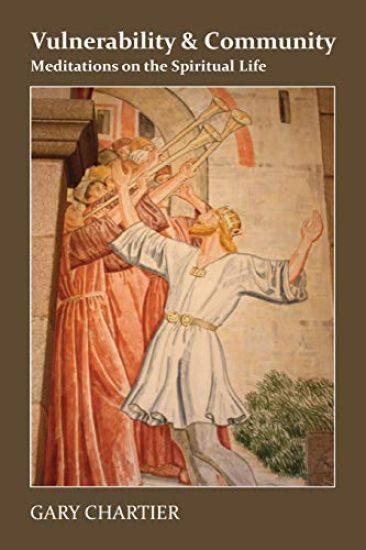
Vulnerability and Community: Meditations on the Spiritual Life
These brief meditations offer invigorating perspectives on the spiritual life in today's world. They are united by two central emphases: They reflect an understanding of God as vulnerable to the choices of creatures and of divine activity in the world as persuasive rather than coercive. And they stress the importance of seeing flourishing religious communities as vulnerable, and thus as inclusive. Vulnerability and Community examines the nature of religious belief and life, considers the implications of faith for what we do and who we are, explores the nature of community, reflects on the historical presence and activity of the God who is vulnerable, and emphasizes the worth of passionate, and thus vulnerable, delight in God's good creation. It expresses the working-out of a possible vision, not the report of proofs or confident certainties or infallible disclosures: the very focus on vulnerability and contingency that is expressed in the individual meditations underlies the entire book. This book is designed to present an attractive and realistic understanding of the spiritual life, as a life lived in the face of ambiguity but marked with the potential for enjoyment, growth, and responsible action. Written in a conversational style, it seeks to encourage readers to bring their own stories to bear on the task of living flourishing lives together in God's world.
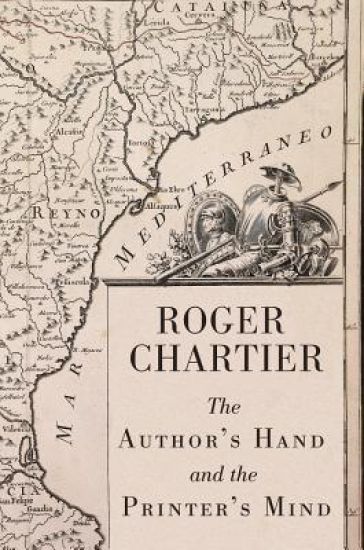
The Author's Hand and the Printer's Mind

The Author's Hand and the Printer's Mind

Roger Chartier

Polity Press
2013
sidottu
In Early Modern Europe the first readers of a book were not those who bought it. They were the scribes who copied the author’s or translator’s manuscript, the censors who licensed it, the publisher who decided to put this title in his catalogue, the copy editor who prepared the text for the press, divided it and added punctuation, the typesetters who composed the pages of the book, and the proof reader who corrected them. The author’s hand cannot be separated from the printers’ mind. This book is devoted to the process of publication of the works that framed their readers’ representations of the past or of the world. Linking cultural history, textual criticism and bibliographical studies, dealing with canonical works - like Cervantes’ Don Quixote or Shakespeare’s plays - as well as lesser known texts, Roger Chartier identifies the fundamental discontinuities that transformed the circulation of the written word between the invention of printing and the definition, three centuries later, of what we call 'literature'.
The Author's Hand and the Printer's Mind

The Author's Hand and the Printer's Mind

Roger Chartier

Polity Press
2013
nidottu
In Early Modern Europe the first readers of a book were not those who bought it. They were the scribes who copied the author’s or translator’s manuscript, the censors who licensed it, the publisher who decided to put this title in his catalogue, the copy editor who prepared the text for the press, divided it and added punctuation, the typesetters who composed the pages of the book, and the proof reader who corrected them. The author’s hand cannot be separated from the printers’ mind. This book is devoted to the process of publication of the works that framed their readers’ representations of the past or of the world. Linking cultural history, textual criticism and bibliographical studies, dealing with canonical works - like Cervantes’ Don Quixote or Shakespeare’s plays - as well as lesser known texts, Roger Chartier identifies the fundamental discontinuities that transformed the circulation of the written word between the invention of printing and the definition, three centuries later, of what we call 'literature'.
Cardenio between Cervantes and Shakespeare
How should we read a text that does not exist, or present a play the manuscript of which is lost and the identity of whose author cannot be established for certain? Such is the enigma posed by Cardenio – a play performed in England for the first time in 1612 or 1613 and attributed forty years later to Shakespeare (and Fletcher). Its plot is that of a ‘novella’ inserted into Don Quixote, a work that circulated throughout the major countries of Europe, where it was translated and adapted for the theatre. In England, Cervantes’ novel was known and cited even before it was translated in 1612 and had inspired Cardenio. But there is more at stake in this enigma. This was a time when, thanks mainly to the invention of the printing press, there was a proliferation of discourses. There was often a reaction when it was feared that this proliferation would become excessive, and many writings were weeded out. Not all were destined to survive, in particular plays for the theatre, which, in many cases, were never published. This genre, situated at the bottom of the literary hierarchy, was well suited to the existence of ephemeral works. However, if an author became famous, the desire for an archive of his works prompted the invention of textual relics, the restoration of remainders ruined by the passing of time or, in order to fill in the gaps, in some cases, even the fabrication of forgeries. Such was the fate of Cardenio in the eighteenth century. Retracing the history of this play therefore leads one to wonder about the status, in the past, of works today judged to be canonical. In this book the reader will rediscover the malleability of texts, transformed as they were by translations and adaptations, their migrations from one genre to another, and their changing meanings constructed by their various publics. Thanks to Roger Chartier’s forensic skills, fresh light is cast upon the mystery of a play lacking a text but not an author.
Cardenio between Cervantes and Shakespeare
How should we read a text that does not exist, or present a play the manuscript of which is lost and the identity of whose author cannot be established for certain? Such is the enigma posed by Cardenio – a play performed in England for the first time in 1612 or 1613 and attributed forty years later to Shakespeare (and Fletcher). Its plot is that of a ‘novella’ inserted into Don Quixote, a work that circulated throughout the major countries of Europe, where it was translated and adapted for the theatre. In England, Cervantes’ novel was known and cited even before it was translated in 1612 and had inspired Cardenio. But there is more at stake in this enigma. This was a time when, thanks mainly to the invention of the printing press, there was a proliferation of discourses. There was often a reaction when it was feared that this proliferation would become excessive, and many writings were weeded out. Not all were destined to survive, in particular plays for the theatre, which, in many cases, were never published. This genre, situated at the bottom of the literary hierarchy, was well suited to the existence of ephemeral works. However, if an author became famous, the desire for an archive of his works prompted the invention of textual relics, the restoration of remainders ruined by the passing of time or, in order to fill in the gaps, in some cases, even the fabrication of forgeries. Such was the fate of Cardenio in the eighteenth century. Retracing the history of this play therefore leads one to wonder about the status, in the past, of works today judged to be canonical. In this book the reader will rediscover the malleability of texts, transformed as they were by translations and adaptations, their migrations from one genre to another, and their changing meanings constructed by their various publics. Thanks to Roger Chartier’s forensic skills, fresh light is cast upon the mystery of a play lacking a text but not an author.
Why France?

Why France?

Roger Chartier

Cornell University Press
2009
pokkari
France has long attracted the attention of many of America's most accomplished historians. The field of French history has been vastly influential in American thought, both within the academy and beyond, regardless of France's standing among U.S. political and cultural elites. Even though other countries, from Britain to China, may have had a greater impact on American history, none has exerted quite the same hold on the American historical imagination, particularly in the post-1945 era. To gain a fresh perspective on this passionate relationship, Laura Lee Downs and Stéphane Gerson commissioned a diverse array of historians to write autobiographical essays in which they explore their intellectual, political, and personal engagements with France and its past. In addition to the essays, Why France? includes a lengthy introduction by the editors and an afterword by one of France's most distinguished historians, Roger Chartier. Taken together, these essays provide a rich and thought-provoking portrait of France, the Franco-American relationship, and a half-century of American intellectual life, viewed through the lens of the best scholarship on France. Contributors: Ken Alder, Northwestern University; John W. Baldwin, The Johns Hopkins University; Edward Berenson, New York University; Herrick Chapman, New York University; Roger Chartier, cole des Hautes tudes en Sciences Sociales; Clare Haru Crowston, University of Illinois at Urbana-Champaign; Barbara Diefendorf, Boston University; Laura Lee Downs, cole des Hautes tudes en Sciences Sociales; Stéphane Gerson, New York University; Jan Goldstein, The University of Chicago; Lynn Hunt, UCLA; Steven Kaplan, Cornell University; Thomas Kselman, Notre Dame University; Herman Lebovics, SUNY Stony Brook; Robert Paxton, Columbia University; Todd Shepard, The Johns Hopkins University; Leonard V. Smith, Oberlin College; Gabrielle Spiegel, The Johns Hopkins University; Tyler Stovall, University of California, Berkeley
The Order of Books

The Order of Books

Roger Chartier

STANFORD UNIVERSITY PRESS
1994
sidottu
Between the end of the Middle Ages and the eighteenth century, what methods were used to monitor and control the increasing number of texts—from the early handwritten books to the later, printed volumes—that were being put into circulation? In The Order of Books, Chartier examines the different systems required to regulate the world of writing through the centuries, from the registration of titles to the classification of works. The modern world has, he argues, directly inherited the products of this labor: the basic principle of referring to texts, the dream of a universal library, real or imaginary, containing all the works ever written, and the emergence of a new definition of the book leading to some of the innovations that transformed the relationship of the reader to the text. The Order of Books will be welcomed by students and researchers of cultural history, and the history of reading in particular.
Forms and Meanings

Forms and Meanings

Roger Chartier

University of Pennsylvania Press
1995
pokkari
In this provocative work, Roger Chartier continues his extraordinarily influential consideration of the forms of production, dissemination, and interpretation of discourse in Early Modern Europe. Chartier here examines the relationship between patronage and the market, and explores how the form in which a text is transmitted not only constrains the production of meaning but defines and constructs its audience.
Won in Translation

Won in Translation

Roger Chartier

UNIVERSITY OF PENNSYLVANIA PRESS
2022
sidottu
In Won in Translation Roger Chartier, one of the world's leading historians of books, publishing, and reading, considers the mobility of the early modern text and the plurality of circulating versions of the same work. The agent for both is translation, for through their lexical, aesthetic, and cultural decisions, translators always assign new meaning or new status to what they translate. Won in Translation proceeds by way of four case studies, three dedicated to works originally in Spanish, the fourth to a Portuguese dramatic adaptation of Don Quixote. Bartolomé de Las Casas' Brevísima relación de la destrucción de las Indias, first printed in 1552, was a powerful instrument for the construction of what was later called the "black legend" of Spanish monarchy. Baltasar Gracián's Oráculo Manual, published in 1647, became the most famous courtier's manual in Europe. Both traveled more widely and were translated more often than any other books of their era. For Chartier they illustrate the great power of translation, which allowed Las Casas' account to be placed in multiple and successive contexts and enabled Gracián's book to take on a range of meanings it had not originally had. Chartier's next two chapters are devoted to plays, one by Lope de Vega, the other by Antônio José da Silva. In the case of Lope's Fuente Ovejuna, the "translation" was one from historical chronicle to dramatic performance. In Antônio José da Silva's Vida do Grande D. Quixote, the textual migration is twofold, as Cervantes' hero moves from Spanish to Portuguese and from novel to play. In an Epilogue, Chartier moves three centuries forward to consider the paradox that it is the absolute immobility of the text, "reinvented" word for word, that creates its mobility in Jorge Luis Borges' fiction "Pierre Menard, Author of the Quixote." Works are transformed through changes of genre or language, to be sure; but even when the texts remain fixed, their readers give them different or inverted meaning.
The Cultural Origins of the French Revolution

The Cultural Origins of the French Revolution

Roger Chartier

Duke University Press
1991
pokkari
Reknowned historian Roger Chartier, one of the most brilliant and productive of the younger generation of French writers and scholars now at work refashioning the Annales tradition, attempts in this book to analyze the causes of the French revolution not simply by investigating its “cultural origins” but by pinpointing the conditions that “made is possible because conceivable.”Chartier has set himself two important tasks. First, while acknowledging the seminal contribution of Daniel Mornet’s Les origens intellectuelles de la Révolution française (1935), he synthesizes the half-century of scholarship that has created a sociology of culture for Revolutionary France, from education reform through widely circulated printed literature to popular expectations of government and society. Chartier goes beyond Mornet’s work, not be revising that classic text but by raising questions that would not have occurred to its author.Chartier’s second contribution is to reexamine the conventional wisdom that there is a necessary link between the profound cultural transformation of the eighteenth century (generally characterized as the Enlightenment) and the abrupt Revolutionary rupture of 1789. The Cultural Origins of the French Revolution is a major work by one of the leading scholars in the field and is likely to set the intellectual agenda for future work on the subject.