Kirjojen hintavertailu. Mukana 11 487 490 kirjaa ja 12 kauppaa.

Kirjahaku

Etsi kirjoja tekijän nimen, kirjan nimen tai ISBN:n perusteella.

1000 tulosta hakusanalla Colin Lago

Crime Reduction Partnerships

Crime Reduction Partnerships

Colin Rogers

Oxford University Press
2012
nidottu
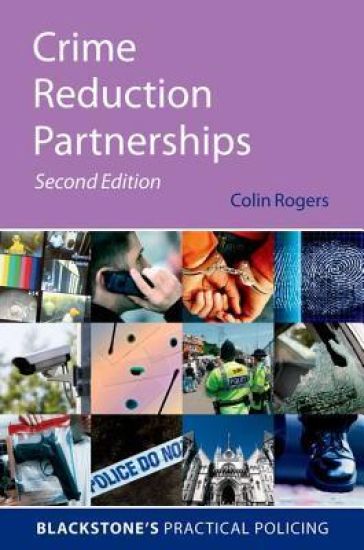
This unique book discusses and explains the practical aspects of crime reduction partnerships from a police officer's perspective. Policing communities in the UK has changed dramatically over the last 20 years, with the partnership approach to crime reduction introducing new ideas and different ways of policing. The rise in terrorist activity and the realisation that many 'terrorists' come from within our own communities, in particular, has refocused much recent partnership work. Beginning with a discussion of what a crime reduction partnership is, this book describes how the theory can be put into practice and considers all relevant legislation and case law that has been introduced to deal with crime and disorder using the partnership approach. The book uses a blend of theories and practical examples, including examples of best practice, information boxes, scenario boxes and key points to note. Flowcharts and summary sections are also included to help officers consolidate and apply their knowledge. Written in an accessible and straightforward manner, this book is an essential best practice guide for police officers and other professionals involved in crime reduction activities. The Blackstone's Practical Policing Series covers a range of topical subjects of vital importance in today's policing arena. Each practical guide contains clear and detailed explanations of the relevant legislation, accompanied by practical scenarios, illustrative diagrams and useful checklists. Packed with a wealth of information, Blackstone's Practical Policing ensures you have ready access to the tools you need to take on any policing challenge.
The Law of Reinsurance

The Law of Reinsurance

Colin Edelman QC; Andrew Burns

Oxford University Press
2013
sidottu
This concise and accessible guide to reinsurance law is an easy-to-read specialist reference focusing solely on reinsurance. The second edition builds on the success of the first which filled a gap in the market for an easy to use and pithy explanation of the law in this field avoiding the need to recount the whole of general insurance law. With usability and practicality in mind a number of features have been further developed in this edition. The authors have provided more guidance on areas which are undecided by the courts such as Follow the Settlements, incorporation, non-disclosure, and misrepresentation. Areas of complexity such as the role of good faith in reinsurance contracts have also been given greater coverage in this second edition. Also new to this edition is a glossary of reinsurance terms which helps to make the volume even more accessible. This book is both practical and authoritative, and is successful in isolating the key issues in reinsurance law to provide an easy and reliable reference source. It is a must-have work for all reinsurance practitioners.
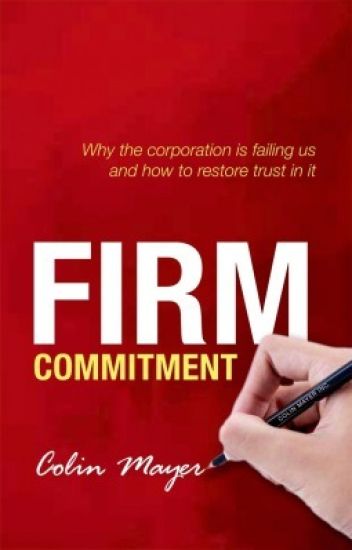
Firm Commitment

Firm Commitment

Colin Mayer

Oxford University Press
2013
sidottu
The corporation is one of the most important and remarkable institutions in the world. It affects all our lives continuously. It feeds, entertains, houses and, employs us. It generates vast amounts of revenue for those who own it and it invests a substantial proportion of the wealth that we possess. But the corporation is also the cause of immense problems and suffering, a source of poverty and pollution, and its failures are increasing. How is the corporation failing us? Why is it happening? What should we do to restore trust in it? While governments are subject to repeated questioning and scrutiny, the corporation receives relatively little attention. Firm Commitment provides a lucid and insightful account of the role of the corporation in modern society and explains why its problems are growing. It gives a fresh perspective on the crises in financial markets, developing countries, and the environment.Based on decades of analysis and research, it describes a new approach to thinking about the firm which not only stops it destroying us but turns it into the means of protecting our environment, addressing social problems, and creating new sources of entrepreneurship and innovation. It sets out an agenda for converting the corporation into a twenty-first century organization that we will value and trust. It takes you on a journey that starts in the Galapagos, ends in Ancient Egypt, and in the process brings you to a new level of appreciation of the economic world we inhabit.
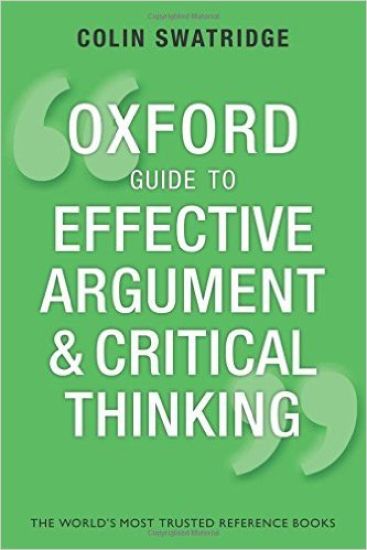
Oxford Guide to Effective Argument and Critical Thinking

Oxford Guide to Effective Argument and Critical Thinking

Colin Swatridge

Oxford University Press
2014
nidottu
How do you approach an essay or discussion question? How do you review what claims others have made and offer counter-claims? And how do you weigh up the strengths and weaknesses of your own argument before putting together a persuasive conclusion? This accessible book takes you step by step through the art of argument, from thinking about what to write and how you might write it, to how you may strengthen your claims, and how to come to a strong conclusion. Engagingly written and featuring useful summaries at the end of each chapter, this new book offers easily transferable practical advice on assessing the arguments of others and putting forward effective arguments of your own. The book's strength lies in its clear guidance and the use of real-life arguments - both contemporary and historical - and real-life essay questions from a variety of disciplines across the humanities and social sciences. These interesting, relevant, and often entertaining, examples are used not to illustrate, but to make essential points about what can be learnt, what techniques can be borrowed, and what pitfalls to avoid in the area of analytical thinking and writing. The Oxford Guide to Effective Argument and Critical Thinking is sure to improve the written work of any student required to demonstrate the key skills of critical writing and thinking. It is equally as valuable for professionals needing these skills (e.g. journalists, lawyers, researchers, politicians) as well as for anyone who has a case to put forward and would like to do so convincingly.
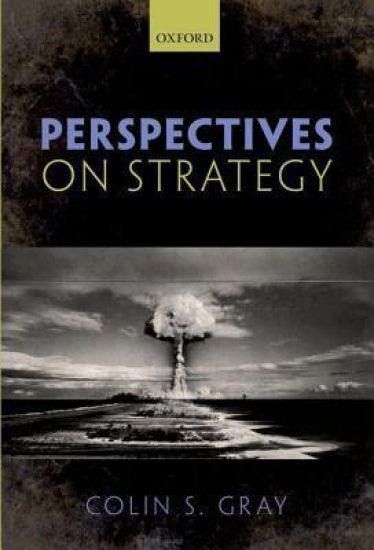
Perspectives on Strategy

Perspectives on Strategy

Colin S. Gray

Oxford University Press
2013
sidottu
Perspectives on Strategy examines in depth five aspects of strategy. Strategic thought and behaviour are explored and explained from the perspectives of intellect, morality, culture, geography, and technology. Each perspective has attracted persisting controversy. Perspectives on Strategy is strongly complementary to the author's previous book, The Strategy Bridge: Theory for Practice (OUP, 2010). This new work takes a notably holistic view of strategic phenomena, which serves as a master framework within which detailed examination of strategic history and issues can usefully be pursued in the light of particular perspectives. Foundational for the argument in Perspectives on Strategy is the proposition that distinctive aspects of strategy (e.g. ethics, culture, inter alia) can only be appreciated properly when they are regarded in context. The author shares this view with T. E. Lawrence (of Arabia), who wrote of the 'whole house of war'. Perspectives on Strategy gratefully adapts Lawrence and writes about the 'whole house of strategy'. The book insists that the nature of strategy is best represented by a Venn diagram that shows overlapping perspectives. Thus, the subject of each chapter is shown as having meaning for, and in turn is influenced by, the subjects of the other chapters. For example, the book explores the importance of strategic ideas relative to the significance of the material weapons of war. The author poses the hardest of questions pertinent to each chosen perspective (e.g. do ideas matter more than muscle?-in practice how robust is the ethical code with which warfare is waged?-is geography destiny, as some theorists have claimed?-and do technically superior weapons win wars? Perspectives on Strategy demonstrates that it is possible to look closely at strategic matters from limited but arguably powerful perspectives, without being captured by them. This book asks and answers the most challenging and rewarding questions that can be posed in order to reveal the persisting universal nature, but ever changing character, of strategy.
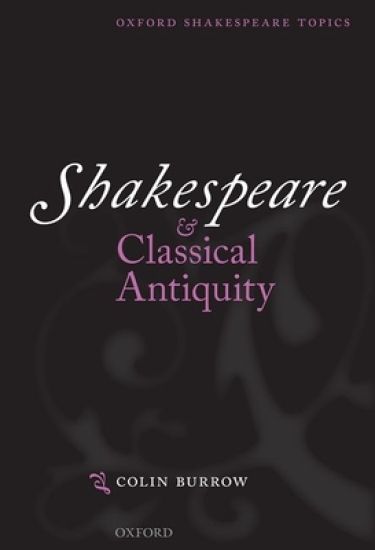
Shakespeare and Classical Antiquity

Shakespeare and Classical Antiquity

Colin Burrow

Oxford University Press
2013
sidottu
OXFORD SHAKESPEARE TOPICS General Editors: Peter Holland and Stanley Wells Oxford Shakespeare Topics provide students and teachers with short books on important aspects of Shakespeare criticism and scholarship. Each book is written by an authority in its field, and combines accessible style with original discussion of its subject. This book explains that Shakespeare did not have 'small Latin and less Greek' as Ben Jonson claimed. Shakespeare and Classical Antiquity shows the range, extent and variety of Shakespeare's responses to classical antiquity. Individual chapters on Virgil, Ovid, Classical Comedy, Seneca, and Plutarch show how Shakespeare's understanding of and use of classical authors, and of the classical past more generally, changed and developed in the course of his career. An opening chapter shows the kind of classical learning he acquired through his education, and subsequent chapters provide stimulating introductions to a range of classical authors as well as to Shakespeare's responses to them. Shakespeare and Classical Antiquity shows how Shakespeare's relationship to classical authors changed in response to contemporary events and to contemporary authors. Above all, it shows that Shakespeare's reading in classical literature informed more or less every aspect of his work.
Shakespeare and Classical Antiquity

Shakespeare and Classical Antiquity

Colin Burrow

Oxford University Press
2013
nidottu
OXFORD SHAKESPEARE TOPICS General Editors: Peter Holland and Stanley Wells Oxford Shakespeare Topics provide students and teachers with short books on important aspects of Shakespeare criticism and scholarship. Each book is written by an authority in its field, and combines accessible style with original discussion of its subject. This book explains that Shakespeare did not have 'small Latin and less Greek' as Ben Jonson claimed. Shakespeare and Classical Antiquity shows the range, extent and variety of Shakespeare's responses to classical antiquity. Individual chapters on Virgil, Ovid, Classical Comedy, Seneca, and Plutarch show how Shakespeare's understanding of and use of classical authors, and of the classical past more generally, changed and developed in the course of his career. An opening chapter shows the kind of classical learning he acquired through his education, and subsequent chapters provide stimulating introductions to a range of classical authors as well as to Shakespeare's responses to them. Shakespeare and Classical Antiquity shows how Shakespeare's relationship to classical authors changed in response to contemporary events and to contemporary authors. Above all, it shows that Shakespeare's reading in classical literature informed more or less every aspect of his work.
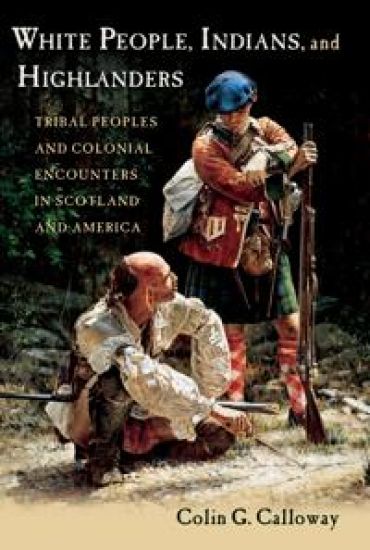
White People, Indians, and Highlanders

White People, Indians, and Highlanders

Colin Calloway

Oxford University Press Inc
2010
nidottu
In nineteenth century paintings, the proud Indian warrior and the Scottish Highland chief appear in similar ways--colorful and wild, righteous and warlike, the last of their kind. Earlier accounts depict both as barbarians, lacking in culture and in need of civilization. By the nineteenth century, intermarriage and cultural contact between the two--described during the Seven Years' War as cousins--was such that Cree, Mohawk, Cherokee, and Salish were often spoken with Gaelic accents. In this imaginative work of imperial and tribal history, Colin Calloway examines why these two seemingly wildly disparate groups appear to have so much in common. Both Highland clans and Native American societies underwent parallel experiences on the peripheries of Britain's empire, and often encountered one another on the frontier. Indeed, Highlanders and American Indians fought, traded, and lived together. Both groups were treated as tribal peoples--remnants of a barbaric past--and eventually forced from their ancestral lands as their traditional food sources--cattle in the Highlands and bison on the Great Plains--were decimated to make way for livestock farming. In a familiar pattern, the cultures that conquered them would later romanticize the very ways of life they had destroyed. White People, Indians, and Highlanders illustrates how these groups alternately resisted and accommodated the cultural and economic assault of colonialism, before their eventual dispossession during the Highland Clearances and Indian Removals. What emerges is a finely-drawn portrait of how indigenous peoples with their own rich identities experienced cultural change, economic transformation, and demographic dislocation amidst the growing power of the British and American empires.
The Meaning of Disgust

The Meaning of Disgust

Colin McGinn

Oxford University Press Inc
2011
sidottu
Disgust has a strong claim to be a distinctively human emotion. But what is it to be disgusting? What unifies the class of disgusting things? Colin McGinn sets out to analyze the content of disgust, arguing that life and death are implicit in its meaning. Disgust is a kind of philosophical emotion, reflecting the human attitude to the biological world. Yet it is an emotion we strive to repress. It may have initially arisen as a method of curbing voracious human desire, which itself results from our powerful imagination. Because we feel disgust towards ourselves as a species, we are placed in a fraught emotional predicament: we admire ourselves for our achievements, but we also experience revulsion at our necessary organic nature. We are subject to an affective split. Death involves the disgusting, in the shape of the rotting corpse, and our complex attitudes towards death feed into our feelings of disgust. We are beings with a "disgust consciousness ", unlike animals and gods-and we cannot shake our self-ambivalence. Existentialism and psychoanalysis sought a general theory of human emotion; this book seeks to replace them with a theory in which our primary mode of feeling centers around disgust. The Meaning of Disgust is an original study of a fascinating but neglected subject, which attempts to tell the disturbing truth about the human condition.
Basic Structures of Reality

Basic Structures of Reality

Colin McGinn

Oxford University Press Inc
2012
sidottu
In Basic Structures of Reality, Colin McGinn deals with questions of metaphysics, epistemology, and philosophy of mind from the vantage point of physics. Combining general philosophy with physics, he covers such topics as the definition of matter, the nature of space, motion, gravity, electromagnetic fields, the character of physical knowledge, and consciousness and meaning. Throughout, McGinn maintains an historical perspective and seeks to determine how much we really know of the world described by physics. He defends a version of "structuralism": the thesis that our knowledge is partial and merely abstract, leaving a large epistemological gap at the center of physics. McGinn then connects this element of mystery to parallel mysteries in relation to the mind. Consciousness emerges as just one more mystery of physics. A theory of matter and space is developed, according to which the impenetrability of matter is explained as the deletion of volumes of space. McGinn proposes a philosophy of science that distinguishes physics from both psychology and biology, explores the ontology of energy, and considers the relevance of physics to seemingly remote fields such as the theory of meaning. In the form of a series of aphorisms, the author presents a metaphysical system that takes laws of nature as fundamental. With its broad scope and deep study of the fundamental questions at the heart of philosophy of physics, this book is not intended primarily for specialists, but for the general philosophical reader interested in how physics and philosophy intersect.
Truth by Analysis

Truth by Analysis

Colin McGinn

Oxford University Press Inc
2012
sidottu
What kind of subject is philosophy? Colin McGinn takes up this perennial question, defending the view that philosophy consists of conceptual analysis, construed broadly. Conceptual analysis is understood to involve the search for de re essences, but McGinn takes up various challenges to this meta-philosophy: that some concepts are merely family resemblance concepts with no definition in terms of necessary and sufficient conditions ("game", "language"); that it is impossible to provide sufficient conditions for some philosophically important concepts without circularity ("knowledge", "intentional action"); that there exists an unsolved paradox of analysis; that there is no well-defined analytic-synthetic distinction; that names have no definition; and that conceptual analysis is not properly naturalistic. Ultimately, McGinn finds none of these objections convincing: analysis emerges as both possible and fruitful. At the same time, he rejects the idea of the "linguistic turn", arguing that analysis is not directed to language as such, but at reality. Going on to distinguish several types of analysis, with an emphasis on classical decompositional analysis, he shows different philosophical traditions to be engaged in conceptual analysis when properly understood. Philosophical activity has the kind of value possessed by play, McGinn claims, which differs from the kind of value possessed by scientific activity. The book concludes with an analytic discussion of the prospects for traditional ontology and the nature of instantiation. McGinn's study of the nature of philosophy shows us how philosophy can maintain its connection to the past while looking forward to a bright future.
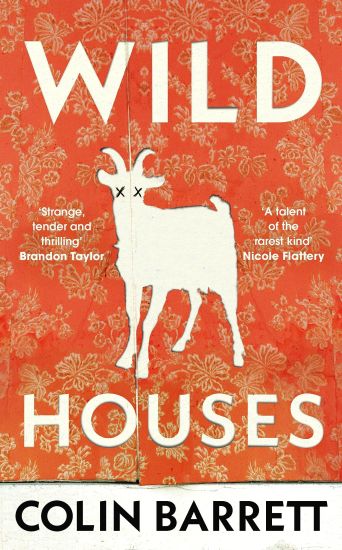
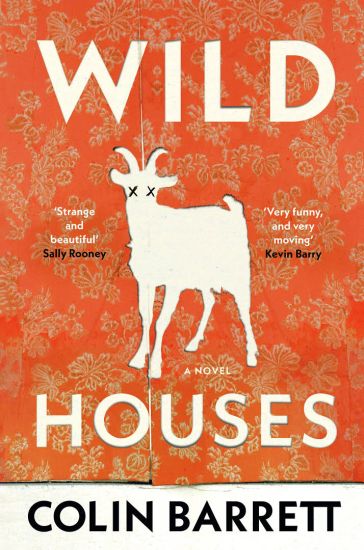
Wild Houses

Wild Houses

Colin Barrett

Vintage Publishing
2024
sidottu
**LONGLISTED FOR THE BOOKER PRIZE 2024****WINNER OF THE NERO BOOK AWARDS DEBUT FICTION AWARD 2024**‘Beautiful…brings to life an entire world’ SALLY ROONEY‘Sublime… A thrillingly moreish novel’ SUNDAY TIMES*It’s the biggest weekend of the year and everything is about to change – the thrilling debut novel from the prize-winning author.In Ballina, the simmering feud between small-time drug-dealer Cillian English and County Mayo’s enforcers, Gabe and Sketch Ferdia, spills over into violence and an ugly ultimatum. Soon the reclusive Dev and Cillian’s teenage brother Doll are drawn headlong into the Ferdias’ revenge fantasy. Meanwhile, Doll’s girlfriend Nicky sets out on a feverish mission to save him.Life in this ordinary town will never be the same again…AN OBSERVER BEST DEBUT NOVELIST SHORTLISTED FOR IRISH BOOK AWARDS NOVEL OF THE YEARLONGLISTED FOR THE DUBLIN LITERARY AWARD 2025*‘A whole world is captured for the reader’ COLM TÓIBÍN‘As sharp, funny and bitingly bittersweet as life’ BOOKER JUDGES, 2024‘A gift of true storytelling’ ANNE ENRIGHT‘A heartbreaker of a debut’ NEW YORK TIMES**A BOOK OF THE YEAR FOR THE GUARDIAN, OBSERVER AND DAZED DIGITAL**
The Global Pigeon

The Global Pigeon

Colin Jerolmack

University of Chicago Press
2013
sidottu
The pigeon is the quintessential city bird. Domesticated thousands of years ago as a messenger and a source of food, its presence on our side walks is so common that people consider the bird a nuisance - if they notice it at all. Yet pigeons are also kept by people all over the world for pleasure, sport, and profit, from the "pigeon wars" waged by breeding enthusiasts in the skies over Brooklyn to the Million Dollar Pigeon Race held every year in South Africa. Drawing on more than three years of fieldwork across three continents, Colin Jerolmack traces our complex and often contradictory relationship with these versatile animals in public spaces such as Venice's Piazza San Marco and London's Trafalgar Square and in working-class and immigrant communities of pigeon breeders in New York and Berlin. By exploring what he calls "the social experience of animals," Jerolmack shows how our interactions with pigeons offer surprising insights into city life, community, culture, and politics. Theoretically understated and accessible to interested readers of all stripes, "The Global Pigeon" is one of the best and most original ethnographies to be published in decades.
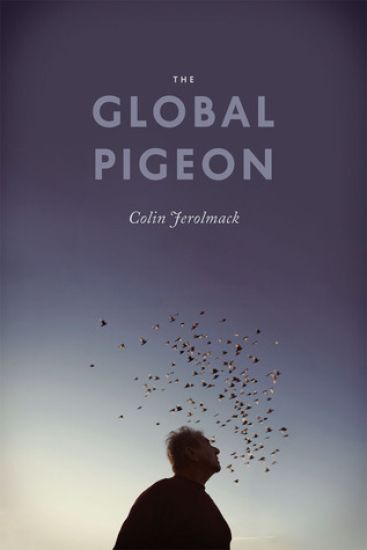
The Global Pigeon

The Global Pigeon

Colin Jerolmack

University of Chicago Press
2013
nidottu
The pigeon is the quintessential city bird. Domesticated thousands of years ago as a messenger and a source of food, its presence on our sidewalks is so common that people consider the bird a nuisance - if they notice it at all. Yet pigeons are also kept by people all over the world for pleasure, sport, and profit, from the "pigeon wars" waged by breeding enthusiasts in the skies over Brooklyn to the Million Dollar Pigeon Race held every year in South Africa. Drawing on more than three years of fieldwork across three continents, Colin Jerolmack traces our complex and often contradictory relationship with these versatile animals in public spaces such as Venice's Piazza San Marco and London's Trafalgar Square and in working-class and immigrant communities of pigeon breeders in New York and Berlin. By exploring what he calls "the social experience of animals," Jerolmack shows how our interactions with pigeons offer surprising insights into city life, community, culture, and politics. Theoretically understated and accessible to interested readers of all stripes, "The Global Pigeon" is one of the best and most original ethnographies to be published in decades.
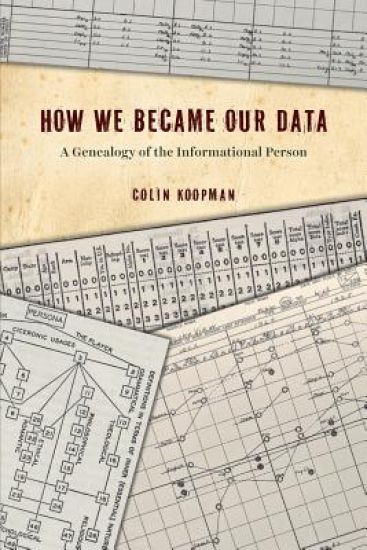
How We Became Our Data

How We Became Our Data

Colin Koopman

University of Chicago Press
2019
pokkari
We are now acutely aware, as if all of the sudden, that data matters enormously to how we live. How did information come to be so integral to what we can do? How did we become people who effortlessly present our lives in social media profiles and who are meticulously recorded in state surveillance dossiers and online marketing databases? What is the story behind data coming to matter so much to who we are? In How We Became Our Data, Colin Koopman excavates early moments of our rapidly accelerating data-tracking technologies and their consequences for how we think of and express our selfhood today. Koopman explores the emergence of mass-scale record keeping systems like birth certificates and social security numbers, as well as new data techniques for categorizing personality traits, measuring intelligence, and even racializing subjects. This all culminates in what Koopman calls the "informational person" and the "informational power" we are now subject to. The recent explosion of digital technologies that are turning us into a series of algorithmic data points is shown to have a deeper and more turbulent past than we commonly think. Blending philosophy, history, political theory, and media theory in conversation with thinkers like Michel Foucault, J rgen Habermas, and Friedrich Kittler, Koopman presents an illuminating perspective on how we have come to think of our personhood--and how we can resist its erosion.
Distinguishing Disability

Distinguishing Disability

Colin Ong-Dean

University of Chicago Press
2009
sidottu
Students in special education programs can have widely divergent experiences. For some, special education amounts to a dumping ground where schools unload problem students, while for others, it provides access to services and accommodations that drastically improve chances of succeeding in school and beyond. "Distinguishing Disability" argues that this inequity in treatment is directly linked to the disparity in resources possessed by the students' parents. Since the mid-1970s, federal law has empowered parents of public school children to intervene in virtually every aspect of the decision making involved in special education. However, Colin Ong-Dean reveals that this power is generally available only to those parents with the money, educational background, and confidence needed to make effective claims about their children's disabilities and related needs. Ong-Dean documents this class divide by examining a wealth of evidence, including historic rates of learning disability diagnosis, court decisions, and advice literature for parents of disabled children. In an era of expanding special education enrollment, "Distinguishing Disability" is a timely analysis of the way this expansion has created new kinds of inequality.
Distinguishing Disability

Distinguishing Disability

Colin Ong-Dean

University of Chicago Press
2009
nidottu
Students in special education programs can have widely divergent experiences. For some, special education amounts to a dumping ground where schools unload problem students, while for others, it provides access to services and accommodations that drastically improve chances of succeeding in school and beyond. "Distinguishing Disability" argues that this inequity in treatment is directly linked to the disparity in resources possessed by the students' parents. Since the mid-1970s, federal law has empowered parents of public school children to intervene in virtually every aspect of the decision making involved in special education. However, Colin Ong-Dean reveals that this power is generally available only to those parents with the money, educational background, and confidence needed to make effective claims about their children's disabilities and related needs. Ong-Dean documents this class divide by examining a wealth of evidence, including historic rates of learning disability diagnosis, court decisions, and advice literature for parents of disabled children. In an era of expanding special education enrollment, "Distinguishing Disability" is a timely analysis of the way this expansion has created new kinds of inequality.
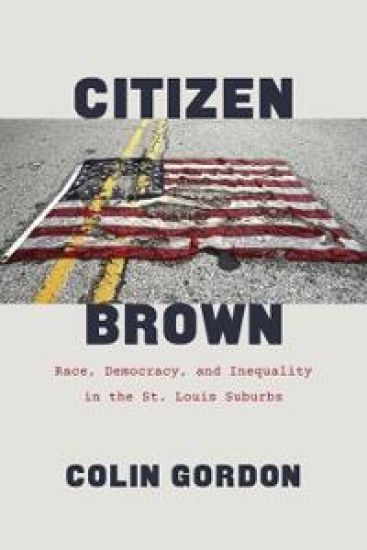
Citizen Brown

Citizen Brown

Colin Gordon

University of Chicago Press
2019
sidottu
The 2014 death of Michael Brown in Ferguson, Missouri, ignited nationwide protests and brought widespread attention to tragically relevant issues like police brutality and institutional racism. But Ferguson is not alone. As Colin Gordon shows in this urgent and timely book, the events in Ferguson exposed not only the deep racism of the local police department, but the ways in which decades of public policy effectively segregated and curtailed citizenship across the St. Louis suburbs... Citizen Brown uncovers half a century of private practices and public policies that resulted in bitter inequality and sustained segregation in Ferguson and beyond. Gordon shows how municipal and school district boundaries were pointedly drawn to contain or exclude African Americans, how local policies and services--especially policing, education, and urban renewal--were weaponized to maintain civic separation. He also makes clear that the outcry that arose in Ferguson was no impulsive outburst, but an explosion of pent-up rage against longstanding local systems of segregation and inequality--of which a police force which viewed citizens not as subjects to serve and protect, but as sources of revenue, was just the most immediate example. Worse, Citizen Brown illustrates the fact that, though the greater St. Louis area provides some extraordinarily clear examples of fraught racial dynamics, it is hardly alone among American cities and regions.
Conversion Factors

Conversion Factors

Colin J. Pennycuick

University of Chicago Press
1988
nidottu
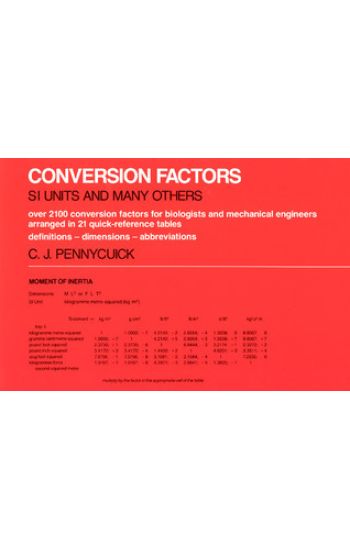
This invaluable reference manual provides well-organized tables of over 2100 conversion factors for measures ranging from time and length to metabolic rate and viscosity. An index defines each term: acres, dynes, joules, liters, knots, and so on. Also included are guides to abbreviations, to physical and technical dimensions, and to the système internationale (SI).