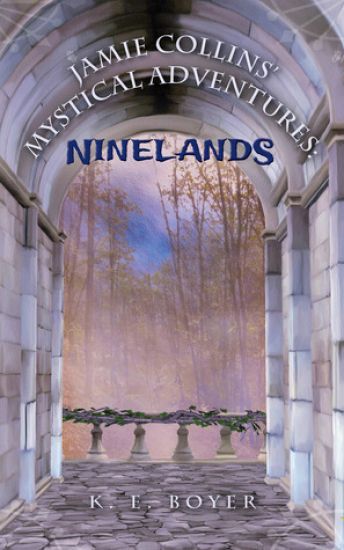
Fantasy fans will be delighted to delve into the mystical realm of K.E. Boyer's Ninelands-where all the elf worlds meet, time is measured in microseconds, and unbelievable sights are an everyday affair.One morning, twelve-year-old Jamie Collins hears strange sounds coming from the attic. Being the son of a wizard and capable of magic himself, this doesn't seem too odd. But when he goes upstairs to explore, he discovers something totally unexpected. Minkel, a delightful, elfish creature, has come to take him to Ninelands, a place Jamie never knew existed.Meanwhile Zard, the future head of the Ketch clan of evil wizards, has his own dark ambitions and has been threatening Jamie. He is determined to stop Jamie from coming to Ninelands. Suddenly Jamie finds himself caught in a dangerous web of magic and he must choose whether or not he will train to be a wizard and join his father in the fight against evil.The first title in the Jamie Collins' Mystical Adventures series, Ninelands is filled with unforgettably imaginative characters and settings you'll love immediately.
Readers will learn about the life and works of Suzanne Collins. This young adult author's life leading up to her success as the best-selling author of the Hunger Games trilogy is discussed. Readers will also learn about the author's writing process and what inspires her to write. What's next for this author and other interesting details are also included.
Readers will learn about the life and works of Suzanne Collins. This young adult author's life leading up to her success as the best-selling author of the Hunger Games trilogy is discussed. Readers will also learn about the author's writing process and what inspires her to write. What's next for this author and other interesting details are also included.
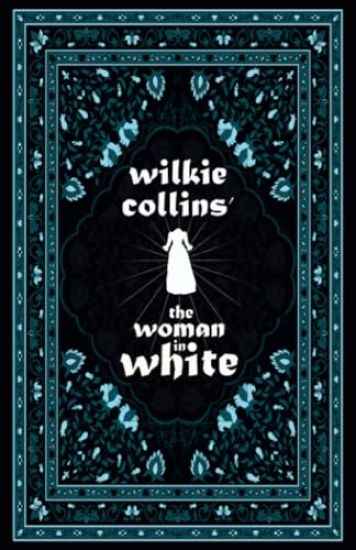
In an early example of detective fiction, this gothic mystery novel is a thrilling tale of mistaken identities, forbidden love, and a woman shrouded in mystery. Walter Hartright is a young drawing master who finds himself unwittingly entangled in a web of intrigue when he encounters a mysterious woman dressed entirely in white. Little does he know that this chance meeting will set off a chain of events leading him into a labyrinth of secrets. As Walter delves deeper into the enigma surrounding the woman in white, he becomes embroiled in a complex plot involving family secrets, hidden identities, and manipulative schemes. First published in 1859, The Woman in White showcases Wilkie Collins' masterful grasp of the gothic genre with his ability to craft suspenseful and atmospheric scenes.
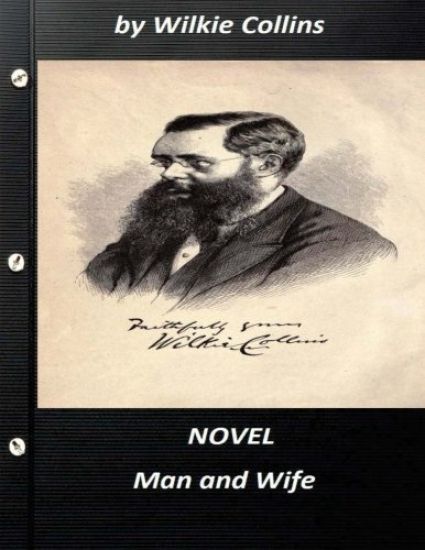
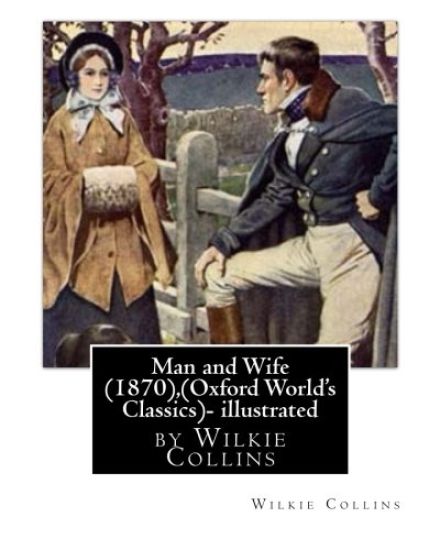
Man and Wife was Wilkie Collins' ninth published novel. It is the second of his novels (after No Name) in which social questions provide the main impetus of the plot. Collins increasingly used his novels to explore social abuses, which according to critics tends to detract from their qualities as fiction. The social issue which drives the plot is the state of Scots marriage law; at the time the novel was written, any couple who were legally entitled to marry and who asserted that they were married before witnesses, or in writing, were regarded in Scotland as being married in law.The novel has a complex plot, common in Collins' work. In a Prologue, a selfish and ambitious man casts off his wife in order to marry a wealthier and better-connected woman, by taking advantage of a loophole in the marriage laws of Ireland.The initial action takes place in the widowed Lady Lundie's house in Scotland. Geoffrey Delamayn has promised marriage to his lover Anne Silvester (governess to Lady Lundie's stepdaughter Blanche), who has incurred the enmity of her employer. The spendthrift Geoffrey is about to be disinherited, and wishes to escape from his promise and marry a wealthy wife. Nevertheless he is obliged to arrange a rendezvous with Anne, in the character of his wife, at an inn, and documents this in an exchange of notes with her. Subsequently, urgent matters force him to send his friend Arnold Brinkworth, Blanche's fianc , to Anne in his place. To gain access to her, Arnold must ask for "his wife". Although nothing improper passes between them, they appear to the landlady and to Bishopriggs, a waiter, to be man and wife.Thus both Geoffrey and Arnold might be deemed to be married to Anne, depending on the weight put on the spoken and written evidence. Most of the novel concerns Anne's, Geoffrey's and Arnold's attempts to clarify their marital status: Anne needs to be married to save her reputation Geoffrey wishes to cast off Anne by asserting that she is married to Arnold Arnold wishes to marry Blanche, but fears he has accidentally already married Anne under Scots law. In subsequent chapters Geoffrey, a keen athlete, courts Mrs Glenarm, a wealthy young widow, while Anne consults lawyers who give her conflicting advice about her position, and later tries to explain the situation to Mrs Glenarm, who rebuffs her. Arnold seeks the advice of Lady Lundie's brother-in-law Sir Patrick Lundie, a retired lawyer. Sir Patrick approaches the problem with energy, but owing to various mishaps, Geoffrey's determination that his scheme shall succeed, and the unsatisfactory state of the law, is not immediately successful. However he ascertains that the correspondence linking Geoffrey and Anne exists and was stolen at the inn by Bishopriggs, who tries to extort money for it. Anne, who strongly wishes to remove any impediment to Blanche and Arnold's marriage, comes to the same conclusion and forces Bishopriggs to give her the letter by threatening to reveal its contents, which would make it worthless for blackmail. Eventually Anne offers to reveal her relations with Geoffrey, even at the cost of her reputation - impressing Sir Patrick with her courageous and honourable behaviour. At a meeting of all the parties and their lawyers, she makes her revelations. Geoffrey can no longer avoid honouring his promise to her and acknowledges her as his wife. A sub-plot concerns Geoffrey's athleticism. While training for an important race, Geoffrey is discovered to have a serious physical ailment rendering him liable to a paralytic stroke. In the race itself, in which Geoffrey represents the South of England against the North, he collapses near the end, leaving his opponent the victor. His "friends" desert him, having lost their bets placed on him.
An exploration of 'destined spirits' and supernatural visions, with a romantic twist. William Wilkie Collins (8 January 1824 - 23 September 1889) was an English novelist, playwright, and short story writer. His best-known works are The Woman in White (1859), No Name (1862), Armadale (1866), and The Moonstone (1868). The last is considered the first modern English detective novel. Born into the family of painter William Collins in London, he lived with his family in Italy and France as a child and learned French and Italian. He worked as a clerk for a tea merchant. After his first novel, Antonina, was published in 1850, he met Charles Dickens, who became a close friend, mentor and collaborator. Some of Collins's works were first published in Dickens' journals All the Year Round and Household Words and the two collaborated on drama and fiction. Collins published his best known works in the 1860s, achieved financial stability and an international reputation. During that time he began suffering from gout. After taking opium for the pain, he developed an addiction. During the 1870s and 1880s the quality of his writing declined along with his health.Collins was critical of the institution of marriage and never married; he split his time between Caroline Graves, except for a two-year separation, and his common-law wife Martha Rudd, with whom he had three children.Collins was born at 11 New Cavendish Street, Marylebone, London, the son of a well-known Royal Academician landscape painter, William Collins and his wife, Harriet Geddes. Named after his father, he swiftly became known by his second name, which honoured his godfather, David Wilkie. The family moved to Pond Street, Hampstead, in 1826. In 1828 Collins's brother Charles Allston Collins was born. Between 1829 and 1830, the Collins family moved twice, first to Hampstead Square and then to Porchester Terrace, Bayswater.Wilkie and Charles received their early education from their mother at home. The Collins family was deeply religious, and Collins's mother enforced strict church attendance on her sons, which Wilkie disliked.In 1835, Collins began attending school at the Maida Vale academy. From 1836 to 1838, he lived with his parents in Italy and France, which made a great impression on him. He learned Italian while the family was in Italy and began learning French, in which he would eventually become fluent.From 1838 to 1840, he attended the Reverend Cole's private boarding school in Highbury, where he was bullied by a boy who would force Collins to tell him a story before allowing him to go to sleep. "It was this brute who first awakened in me, his poor little victim, a power of which but for him I might never have been aware...When I left school I continued story telling for my own pleasure", Collins later said.In 1840 the family moved to 85 Oxford Terrace, Bayswater. In late 1840, he left school and was apprenticed as a clerk to the firm of tea merchants Antrobus & Co, owned by a friend of Wilkie's father. He disliked his clerical work but remained employed by the company for more than five years. Collins's first story The Last Stage Coachman, was published in the Illuminated Magazine in August 1843.In 1844 he travelled to Paris with Charles Ward. That same year he wrote his first novel, Iolani, or Tahiti as It Was; a Romance, which was submitted to Chapman and Hall but rejected in 1845. The novel remained unpublished during his lifetime.Collins said of it: "My youthful imagination ran riot among the noble savages, in scenes which caused the respectable British publisher to declare that it was impossible to put his name on the title page of such a novel." It was during the writing of this novel that Collins's father first learned that his assumptions that Wilkie would follow him in becoming a painter were mistaken....
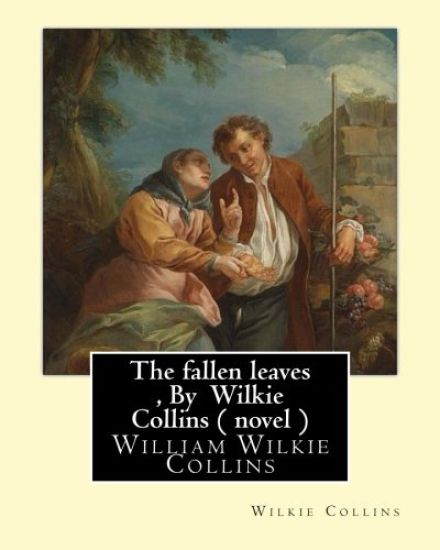
Wilkie Collins's The Fallen Leaves was first published in 1879. Amelius Goldenheart is deported from his Utopian community because of a relationship with an older woman.A Story of Life for All Ages. William Wilkie Collins (8 January 1824 - 23 September 1889) was an English novelist, playwright, and short story writer. His best-known works are The Woman in White (1859), No Name (1862), Armadale (1866), and The Moonstone (1868). The last is considered the first modern English detective novel. Born into the family of painter William Collins in London, he lived with his family in Italy and France as a child and learned French and Italian. He worked as a clerk for a tea merchant. After his first novel, Antonina, was published in 1850, he met Charles Dickens, who became a close friend, mentor and collaborator. Some of Collins's works were first published in Dickens' journals All the Year Round and Household Words and the two collaborated on drama and fiction. Collins published his best known works in the 1860s, achieved financial stability and an international reputation. During that time he began suffering from gout. After taking opium for the pain, he developed an addiction. During the 1870s and 1880s the quality of his writing declined along with his health.Collins was critical of the institution of marriage and never married; he split his time between Caroline Graves, except for a two-year separation, and his common-law wife Martha Rudd, with whom he had three children.Collins was born at 11 New Cavendish Street, Marylebone, London, the son of a well-known Royal Academician landscape painter, William Collins and his wife, Harriet Geddes. Named after his father, he swiftly became known by his second name, which honoured his godfather, David Wilkie. The family moved to Pond Street, Hampstead, in 1826. In 1828 Collins's brother Charles Allston Collins was born. Between 1829 and 1830, the Collins family moved twice, first to Hampstead Square and then to Porchester Terrace, Bayswater.Wilkie and Charles received their early education from their mother at home. The Collins family was deeply religious, and Collins's mother enforced strict church attendance on her sons, which Wilkie disliked.In 1835, Collins began attending school at the Maida Vale academy. From 1836 to 1838, he lived with his parents in Italy and France, which made a great impression on him. He learned Italian while the family was in Italy and began learning French, in which he would eventually become fluent.From 1838 to 1840, he attended the Reverend Cole's private boarding school in Highbury, where he was bullied by a boy who would force Collins to tell him a story before allowing him to go to sleep. "It was this brute who first awakened in me, his poor little victim, a power of which but for him I might never have been aware...When I left school I continued story telling for my own pleasure", Collins later said.In 1840 the family moved to 85 Oxford Terrace, Bayswater. In late 1840, he left school and was apprenticed as a clerk to the firm of tea merchants Antrobus & Co, owned by a friend of Wilkie's father. He disliked his clerical work but remained employed by the company for more than five years. Collins's first story The Last Stage Coachman, was published in the Illuminated Magazine in August 1843.In 1844 he travelled to Paris with Charles Ward. That same year he wrote his first novel, Iolani, or Tahiti as It Was; a Romance, which was submitted to Chapman and Hall but rejected in 1845. The novel remained unpublished during his lifetime.Collins said of it: "My youthful imagination ran riot among the noble savages, in scenes which caused the respectable British publisher to declare that it was impossible to put his name on the title page of such a novel." It was during the writing of this novel that Collins's father first learned that his assumptions that Wilkie would follow him in becoming a painter were mistaken....