Kirjojen hintavertailu. Mukana 12 390 323 kirjaa ja 12 kauppaa.

Kirjahaku

Etsi kirjoja tekijän nimen, kirjan nimen tai ISBN:n perusteella.

1000 tulosta hakusanalla Conley E. Murray

Beer Pairing

Beer Pairing

Julia Herz; Gwen Conley

Quarto Publishing Group USA Inc
2021
pokkari
Inspire a lifelong exploration of your senses as you learn to pair beer and food like a pro. *2016 International Association of Culinary Professionals Award Finalist* Beer has reclaimed its place at the dinner table. Yet unlike wine, there just aren’t many in-depth resources to guide both beginners and beer geeks in pairing beer with food. Julia Herz and Gwen Conley are here to change that. As you start your journey with Beer Pairing, you’ll learn how aroma, taste, preference, and personal experience can affect flavor. Just as important, you’ll become a tasting Anarchist—throw out the conventional advice and figure out what works for you! Then, on to the pairing. Begin with beer styles, start with your favorite foods, or join the authors on a series of wild palate trips. From classics like barbecue ribs with American Brown Ale to unusual matches like pineapple upside-down cake with Double India Pale Ale, you’ll learn why some pairings stand the test of time and you’ll find plenty of new ideas as well. Discover: How we experience flavor and the science and anatomy behind itHow to taste beer, step by step, with pouring and glassware tipsPairings by beer style and specific foodsComplete information for planning beer dinnersHow to work beer into your cooking repertoireTips and stories from pro brewersGeek Out science features with facts to impress your friends Never look at beer—or food—the same way again!
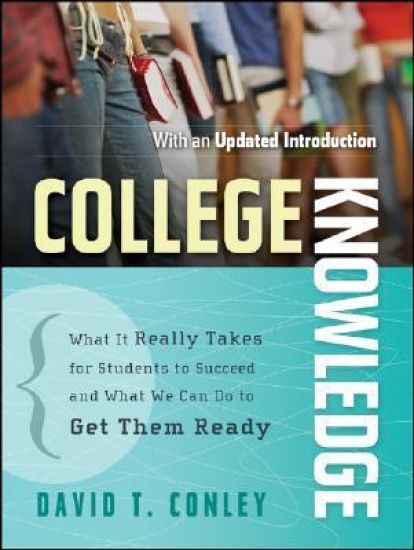
College Knowledge

College Knowledge

David T. Conley

Jossey-Bass Inc.,U.S.
2008
nidottu
Although more and more students have the test scores and transcripts to get into college, far too many are struggling once they get there. These students are surprised to find that college coursework demands so much more of them than high school. For the first time, they are asked to think deeply, write extensively, document assertions, solve non-routine problems, apply concepts, and accept unvarnished critiques of their work. College Knowledge confronts this problem by looking at the disconnect between what high schools do and what colleges expect and proposes a solution by identifying what students need to know and be able to do in order to succeed. The book is based on an extensive three-year project sponsored by the Association of American Universities in partnership with The Pew Charitable Trusts. This landmark research identified what it takes to succeed in entry-level university courses. Based on the project's findings - and interviews with students, faculty, and staff - this groundbreaking book delineates the cognitive skills and subject area knowledge that college-bound students need to master in order to succeed in today's colleges and universities. These Standards for Success cover the major subject areas of English, mathematics, natural sciences, social sciences, second languages, and the arts.
Women in Medical Education

Women in Medical Education

Francis K. Conley

State University of New York Press
1996
pokkari
An anthology of personal narratives reflecting the issues confronting women in the medical academy today, including sexual harassment, equity issues, and maternity leave policies.Women in Medical Education combines personal narratives written by sixteen women medical educators who, as clinicians, basic scientists, administrators, and medical humanities faculty, write of their experiences with students, patients, colleagues, and administrators. Their narratives reflect the issues confronting women in the medical academy today, including working in situations where power relations are embedded and enacted daily in the ethos of the institution; where rigid disciplinary boundaries do not include or invite inquiry into gender, race, ethnicity, or class; where integrating one's personal and work life often seems overwhelming. Yet their stories reflect the success and recognition that women in academic medicine have achieved.The book includes essays written by Beth Alexander, Janet Bickel, Dale G. Blackstock, Kate H. Brown, Lucy M. Candib, Pamela Charney, Frances Conley, Leah J. Dickstein, Jacalyn Duffin, Deborah Jones, Perri Klass, Mary Mahowald, Marian Gray Secundy, Marjorie S. Sirridge, Rebekah Wang-Cheng, and the editor.
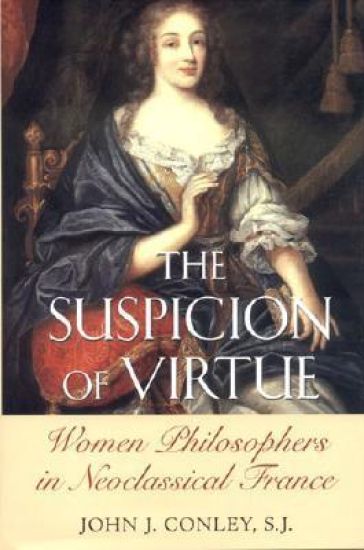
The Suspicion of Virtue

The Suspicion of Virtue

John J. Conley

Cornell University Press
2002
sidottu
The salon was of particular importance in mid- to late-seventeenth-century France, enabling aristocratic women to develop a philosophical culture that simultaneously reflected and opposed the dominant male philosophy. In The Suspicion of Virtue, John J. Conley, S. J., explores the moral philosophies developed by five women authors of that milieu: Madame de Sablé, Madame Deshoulières, Madame de la Sabliére, Mlle de la Vallière, and Madame de Maintenon. Through biography, extensive translation, commentary, and critical analysis, The Suspicion of Virtue presents the work of women who participated in the philosophical debates of the early modern period but who have been largely erased from the standard history of philosophy. Conley examines the various literary genres (maxim, ode, dialogue) in which these authors presented their moral theory. He also unveils the philosophical complexity of the arguments presented by these women and of the salon culture that nurtured their preoccupations. Their pointed critiques of virtue as a mask of vice, Conley asserts, are relevant to current controversy over the revival of virtue theory by contemporary ethicians.
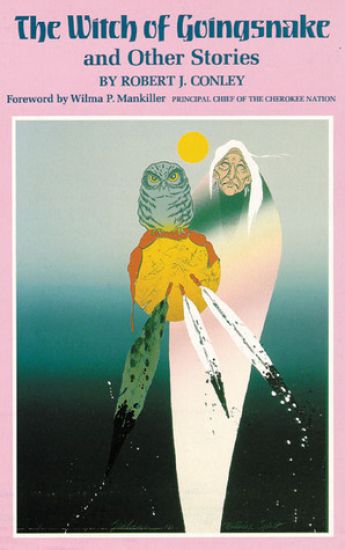
The Witch of Goingsnake

The Witch of Goingsnake

Robert J. Conley

University of Oklahoma Press
1991
nidottu
Based on Cherokee history, oral storytelling, and personal experience, these stories, taken as a whole, reflect the depth of Cherokee historical experience and the range of contemporary Cherokee life. Several stories, including the one from which the collection takes its name, deal with the spiritual world. In the title story a man and his family are devastated by the evil powers of a tsigli, a witch. In other stories ""medicine"" is used to more constructive ends. Some of the stories feature human-animal transformations, the ability to become invisible, and the power to manipulate events. In the context of the Cherokee world such stories are not fantasies. They are stories about reality - the reality known to Cherokees.The collection also includes tales of Cherokee ""outlaws,"" one of the most intriguing aspects of Cherokee history to Cherokees and non-Cherokees alike. Set in the days of Indian Territory, before Oklahoma statehood, these stories provide a taste of the wild West, seasoned with Cherokee cultural experience.Still other stories describe modern-day Cherokees confronting the past and the present and continually struggling to find a place in the white people's world while maintaining a Cherokee belief system and way of life. Some Cherokees confront ignorant whites, others confront ignorant Cherokees, and still others simply make their own way, dealing with each other, with outsiders, with their environment, and with their spirituality in uniquely personal, albeit Cherokee, ways.Clearly, these stories differ from stories that grow out of a European tradition, for behind them lie completely different cultural referents; different notions about interpreting events, time, and language; and a different view of the purpose and art of storytelling. Their author speaks with a clear Cherokee Indian voice to show how these cultural characteristics have survived centuries of abrupt change and to give readers an understanding of the fullness and humanity of the Cherokees as a people.As Wilma P. Mankiller, Principal Chief of the Cherokee Nation, says in her foreword to the stories: ""Much has been written about the Cherokee people. Not enough has been written by the Cherokee people. The subtle nuances of language, the memories of tribal life, and the strong sense of the past and its integration with the present are lost even to the most gifted non-Cherokee writer. There is a movement among contemporary Cherokee writers to produce more indigenous literature. Robert Conley is a leader of that movement.""
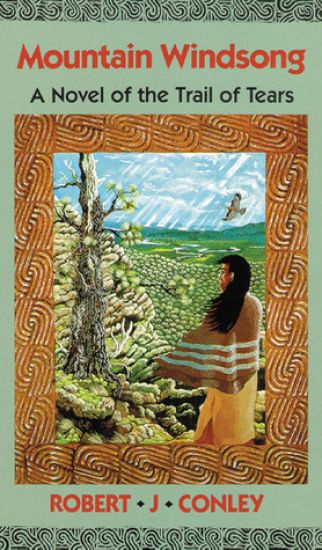
Mountain Windsong

Mountain Windsong

Robert J. Conley

University of Oklahoma Press
1995
nidottu
Set against the tragic events of the Cherokees' removal from their traditional lands in North Carolina to Indian Territory between 1835-1838, Mountain Windsong is a love story that brings to life the suffering and endurance of the Cherokee people. It is the moving tale of Waguli (Whippoorwill"") and Oconeechee, a young Cherokee man and woman separated by the Trail of Tears. Just as they are about to be married, Waguli is captured be federal soldiers and, along with thousands of other Cherokees, taken west, on foot and then by steamboat, to what is now eastern Oklahoma. Though many die along the way, Waguli survives, drowning his shame and sorrow in alcohol. Oconeechee, among the few Cherokees who remain behind, hidden in the mountains, embarks on a courageous search for Waguli.Robert J. Conley makes use of song, legend, and historical documents to weave the rich texture of the story, which is told through several, sometimes contradictory, voices. The traditional narrative of the Trail of Tears is told to a young contemporary Cherokee boy by his grandfather, presented in bits and pieces as they go about their everyday chores in rural North Carolina. The telling is neiter bitter nor hostile; it is sympathetic by unsentimental. An ironic third point of view, detached and often adversarial, is provided by the historical documents interspersed through the novel, from the text of the removal treaty to Ralph Waldo Emerson's letter to the president of the United States in protest of the removal. In this layering of contradictory elements, Conley implies questions about the relationships between history and legend, storytelling and myth-making.Inspired by the lyrics of Don Grooms's song ""Whippoorwill,"" which open many chapters in the text, Conley has written a novel both meticulously accurate and deeply moving.
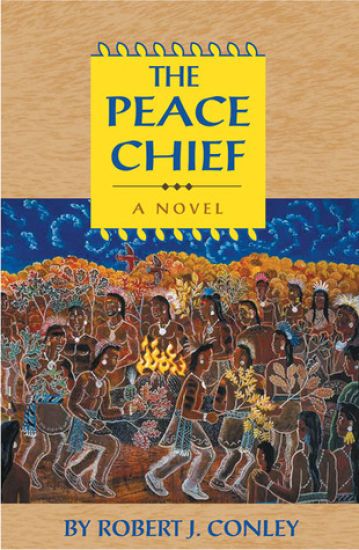
The Peace Chief

The Peace Chief

Robert J. Conley

University of Oklahoma Press
2001
nidottu
In The Peace Chief, one young Cherokee must be reborn to lead his people through the difficult early days of sixteenth-century European expansion into America. Conley tells the story of Young Puppy, a member of the Long Hair Clan who mistakenly kills his best friend, Asquani. To avoid being killed--the usual remedy for restoring balance between the two clans--Young Puppy flees to the sanctuary of Kituwah, where, after a year in exile, his offense will be forgiven. Spiritually reborn as Comes Back to Life, he becomes the ceremonial leader of his people: the Peace Chief.
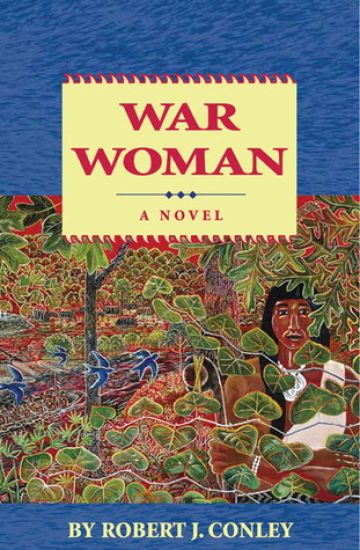
War Woman

War Woman

Robert J. Conley

University of Oklahoma Press
2001
nidottu
Few writers portray Native American life and history as richly, authentically, and insightfully as Robert J. Conley. Conley represents an important voice of the Cherokee past. The novels in his Real People series combine powerful characters, gripping plots, and vivid descriptions of tradition and mythology to preserve Cherokee culture and history. War Woman spans the late 1500s to mid-1600s.War Woman, a brave, headstrong, clever Cherokee, is believed by many in her town to be a witch. Having heard stories about the Spanish, and believing there is great profit to be made by trading with them, she leads a small band of youths on the treacherous road to La Florida. This journey, blessed with success and marred by terrible tragedy, marks the beginning of War Woman's own personal journey as she leads her people by example and by guidance through terrifying times.
Cherokee Dragon

Cherokee Dragon

Robert J. Conley

University of Oklahoma Press
2001
nidottu
Few writers portray Native American life and history as richly, authentically, and insightfully as Robert J. Conley. Conley represents an important voice of the Cherokee past. The novels in his Real People series combine powerful characters, gripping plots, and vivid descriptions of tradition and mythology to preserve Cherokee culture and history.In Cherokee Dragon, the tenth novel in the series, Robert Conley explores the life if Dragging Canoe, the last great war chief of the united Cherokee tribe. In the late eighteenth century, as the English settlers begin steadily encroaching upon the Cherokee lands, the Nation divided among several towns and many chiefs?unites in a series of battles. But the united front is not one that lasts: Dragging Canoe's belief that they must fight the settlers to preserve their lands and their culture is far from universal.
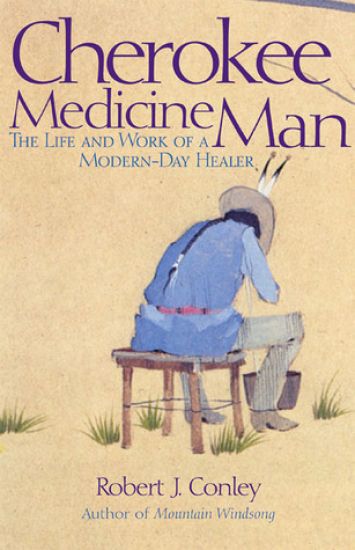
Cherokee Medicine Man

Cherokee Medicine Man

Robert J. Conley

University of Oklahoma Press
2007
nidottu
A modern medicine man portrayed through the words of the people he has helpedRobert J. Conley did not set out to chronicle the life of Cherokee medicine man John Little Bear. Instead, the medicine man came to him. Little Bear asked Conley to write down his story, to reveal to the world ""what Indian medicine is really about."" For Little Bear, as for the Cherokee ancestors who brought their traditions over the Trail of Tears to Indian Territory, the medicine is about helping people. Visitors from neighboring states and Mexico come to him, each one seeking help for a different kind of problem. Each seeker's story is presented here exactly as it was told to Conley.Little Bear has cured problems involving health, relationships, and money by uncovering the source of the problem rather than simply treating the symptoms. Whereas mainstream medicine and counseling have failed his patients, Little Bear's healing practices have proven beneficial time and again.
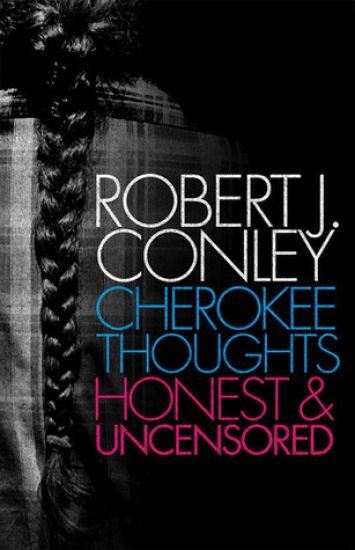
Cherokee Thoughts

Cherokee Thoughts

Robert J. Conley

University of Oklahoma Press
2008
nidottu
Gaming and chiefing. Imposters and freedmen. Distinguished novelist Robert J. Conley examines some of the most interesting facets of the Cherokee world. In 26 essays laced with humor, understatement, even open sarcasm, this popular writer takes on politics, culture, his people's history, and what it means to be Cherokee.Readers who think they know Conley will find an abundance of surprises in these pages. He reveals historical information not widely known or written about, such as Cherokee Confederate general Stand Watie's involvement in the infamous Reconstruction treaty forced upon his people in 1866, and he explains his admiration for such characters as Ned Christie and Henry Starr, whom some might consider criminals. From legendary figures Dragging Canoe and Nancy Ward to popular icons like Will Rogers to contemporary ""Cherokee Wannabes"" - people seeking ancestral roots whether actual or fanciful - Conley traces the dogged persistence of the Cherokee people in the face of relentless incursions upon their land and culture.""Cherokees are used to controversy,"" observes Conley; ""in fact, they enjoy it."" As provocative as it is entertaining, Cherokee Thoughts will intrigue tribal members and anyone with an interest in the Cherokee people.
Wil Usdi

Wil Usdi

Robert J. Conley; Luther Wilson

University of Oklahoma Press
2015
nidottu
Adopted into the Cherokee tribe as a teenager, William Holland Thomas (1805-1893), known to the Cherokees as Wil Usdi (Little Will), went on to have a distinguished career as lawyer, politician, and soldier. He spent the last decades of his life in a mental hospital, where the pioneering ethnographer James Mooney interviewed him extensively about Cherokee lifeways. The true story of Wil Usdi's life forms the basis for this historical novella, the final published work of fiction by the late award-winning Cherokee author Robert J. Conley. Conley tells Wil's story through the recollection of the old man's memories. Wil learns the Cherokee language while working at a trading post. The chief Yonaguska adopts the fatherless Wil, seeing to it that the boy dresses like a Cherokee and, for all practical purposes, becomes one. Later, representing the Eastern Band of the Cherokees in their negotiations with the federal government, Wil helps them remain in their ancestral lands in North Carolina when most other Cherokees are sent off on the Trail of Tears to the Indian Territory. Thus, Wil becomes popularly known as the white chief of the tribe. He continues making money as a merchant and in 1848 is elected to the North Carolina state senate, where he assists in the creation of a railroad system to serve the copper mines in neighboring Tennessee. During the Civil War, he leads a Cherokee battalion in the Confederate Army and tries to persuade his cousin Jefferson Davis to expand the battalion of fierce warriors into a regiment. His achievements make his admission into an insane asylum all the more tragic. The Wil Usdi of Conley's story is in increasingly bad health, mistreated in a mental institution that to twenty-first-century readers is little more than a jail. He dreams of women and warfare and boyhood games of stickball. Yet even in his demented state, Wil is proud of his accomplishments and never loses his conviction that Indians are ""more human than whites."" Weaving together the disconnected stories of Wil Usdi's life, Conley's blend of thorough research and imaginative prose gives readers a deep sense of post-removal Cherokee history.
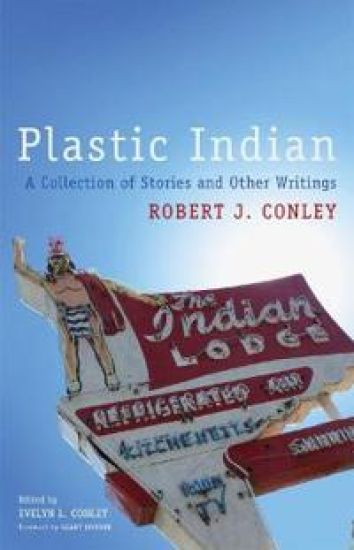
Plastic Indian

Plastic Indian

Robert J. Conley; Geary Hobson

University of Oklahoma Press
2018
nidottu
So what does it mean to be a Cherokee?"" asks Cherokee author Robert J. Conley at the start of this delightful collection of his writings. Throughout his prolific career, Conley used his art to explore Cherokee identity and experience. With his passing in 2014, Native American literature - and American literature in general - lost a major voice. Fortunately, this posthumous publication, edited by the author's wife, Evelyn L. Conley, offers readers the opportunity to appreciate anew the blend of humor, candor, and creativity that makes his work so exceptional. Best known as a novelist, especially for his beloved Real People series, Conley was also a masterful writer of short stories, essays, plays, and speeches. The breadth of his talents is on full display in this wide-ranging collection, which begins with his very last public address, delivered in North Carolina in 2013. Following that speech, the reader is treated to what may be Conley's most famous short story, ""Plastic Indian,"" the hilarious tale of three Cherokee youths who try to take down a giant plastic Indian located along Highway 51 between Tahlequah and Tulsa. Like many of Conley's works, ""Plastic Indian"" is set in contemporary times, but as we discover through the stories that follow, the author drew inspiration from traditional Cherokee folktales and oral storytelling. His delight in the spoken word is evident in the single play featured in this volume, based on the writings of ethnographer James Mooney and originally performed for radio. Conley is also celebrated for his accurate depictions of the Old West (it is no accident that he was the first American Indian president of the distinguished Western Writers of America association), so the collection would not be complete without two of his cowboy stories, namely ""The Execution"" and ""Nate's Revenge."" The volume concludes with four of the author's speeches. Laced with the author's typical dry humor, these personal testimonies serve as a moving coda to the author's extensive and illustrious career.
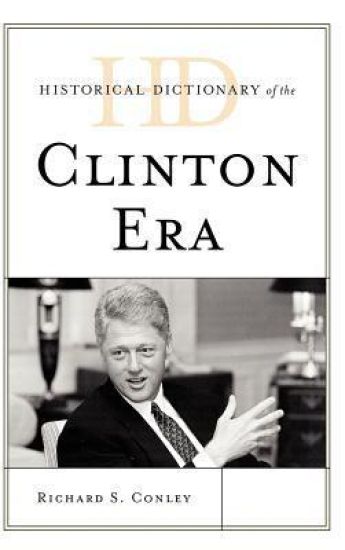
Historical Dictionary of the Clinton Era

Historical Dictionary of the Clinton Era

Richard S. Conley

Scarecrow Press
2012
sidottu
William Jefferson Clinton’s legacy remains a matter of significant contention among historians, political scientists, and pundits even after a decade of time to reflect. The narrative of Clinton’s two terms may be, in some sense, the tale of two different men—or at least two incongruous public views of the nation’s 42nd chief executive. On the one hand, there is the Clinton who left the White House more popular than when he took office—entering with a 58 percent approval rating and leaving with a 66 percent approval rating. On the other hand, an ABC News poll conducted on his last day showed that 67 percent of Americans said Clinton was not honest and trustworthy. The Historical Dictionary of the Clinton Era covers both sides of the Clinton presidency through a chronology, an introductory essay, appendixes, and an extensive bibliography. The dictionary section has over 300 cross-referenced entries on important personalities, including the president, his advisors, his family, his opponents, and his critics, as well as members of Congress, military leaders, and international leaders. This book is a vital access point for students, researchers, and anyone interested in the presidency of Bill Clinton.
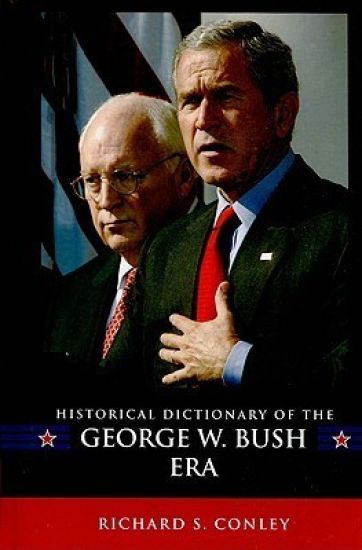
Historical Dictionary of the George W. Bush Era

Historical Dictionary of the George W. Bush Era

Richard S. Conley

Scarecrow Press
2009
sidottu
The Historical Dictionary of the George W. Bush Era details the key events and major trends that defined the 43rd president of the United States from 2001-2008. The dictionary comprises detailed entries on important personalities, including the president, his advisors, his family, his opponents, and his critics, as well as members of Congress, military leaders, and international leaders. Other entries summarize important events, including those connected to the War on Terror, the War in Afghanistan, and the War in Iraq, as well as significant legislation and prominent policy issues. Detailed chronologies track major events during Bush's presidency, including the 2000 election and Hurricane Katrina. The appendixes furnish data and graphics on Bush's advisors and cabinet, presidential success in Congress, vetoes, presidential approval, troop levels in Iraq, and military and civilian casualties in Iraq and Afghanistan. The extensive bibliography provides an invaluable resource for additional reading and research. This book is a vital reference tool for any researcher interested in the presidency of George W. Bush.
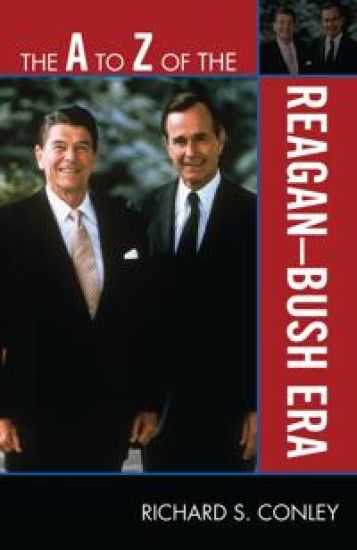
The A to Z of the Reagan-Bush Era

The A to Z of the Reagan-Bush Era

Richard S. Conley

Scarecrow Press
2009
nidottu
The 1980s and early 1990s were remarkable for the triumph of conservatism in the United States and its closest allies. The victories of Presidents Ronald Reagan and George H.W. Bush in the United States were complemented by the electoral successes of Margaret Thatcher in the United Kingdom and Brian Mulroney in Canada. The relationship between Reagan and Bush and their conservative counterparts was particularly important in providing a united front on foreign policy, whether the target was the Soviet Union, Communist insurgencies in Africa or Latin America, or Iraqi dictator Saddam Hussein. The Reagan-Bush era witnessed some of the most dramatic events of the latter half of the 20th century: the collapse of the Soviet Union, a presidential assassination attempt, political scandal, a stock market crash, military invasions, and the explosion of the space shuttle Challenger. The A to Z of the Reagan-Bush Era relates these events and provides extensive political, economic, and social background on this era through a detailed chronology, an introduction, appendixes, a bibliography, and several hundred cross-referenced dictionary entries on important persons, events, institutions, policies, and issues.
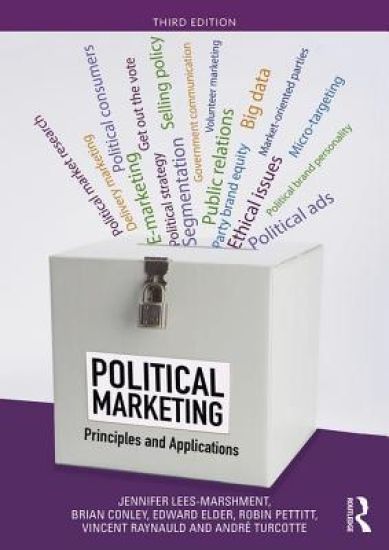
Political Marketing

Political Marketing

Jennifer Lees-Marshment; Brian Conley; Edward Elder; Robin Pettitt; Vincent Raynauld; André Turcotte

CRC Press Inc
2019
sidottu
Substantially revised throughout, the third edition of Political Marketing continues to offer students the most comprehensive introduction to this rapidly growing field. It provides an accessible but in-depth guide to what political marketing is and how it is used in practice and encourages reflection on how it should be used in the future.New Features and benefits of the third edition: Fully updated throughout with new research on emerging practices in the field and ethical implications such as the use of big data, authenticity and the limitations of voters as consumers in light of Brexit; A new employability section on political marketing in the workplace; Extensive pedagogical features including new peer-reviewed case studies, democratic debates, and fully updated practitioner perspectives, best practice guides, and class discussion points and assessments.Led by a leading expert in the field and including contributions from other key academics in the field, this textbook is essential reading for all students of political marketing, parties and elections, and comparative politics.
Political Marketing

Political Marketing

Jennifer Lees-Marshment; Brian Conley; Edward Elder; Robin Pettitt; Vincent Raynauld; André Turcotte

CRC Press Inc
2019
nidottu
Substantially revised throughout, the third edition of Political Marketing continues to offer students the most comprehensive introduction to this rapidly growing field. It provides an accessible but in-depth guide to what political marketing is and how it is used in practice and encourages reflection on how it should be used in the future.New Features and benefits of the third edition: Fully updated throughout with new research on emerging practices in the field and ethical implications such as the use of big data, authenticity and the limitations of voters as consumers in light of Brexit; A new employability section on political marketing in the workplace; Extensive pedagogical features including new peer-reviewed case studies, democratic debates, and fully updated practitioner perspectives, best practice guides, and class discussion points and assessments.Led by a leading expert in the field and including contributions from other key academics in the field, this textbook is essential reading for all students of political marketing, parties and elections, and comparative politics.
Prophecy and Diplomacy

Prophecy and Diplomacy

John J. Conley; Joseph W. Koterski

Fordham University Press
1999
sidottu
Stemming from two conferences, held in 1994, and 1996, Prophecy and Diplomacy: The Moral Doctrine of John Paul II explores the general orientations and the specific applications of the moral teaching of Pope John Paul II. The first part of the book places the Pope's moral theory within a broader theological framework, attempting to identify the overarching philosophical and theological attitudes that shape the Pope's fundamental moral perspective. In part two, the work studies the Pope's teaching in the areas of applied ethics. Both the major lecturers and the respondents focus upon those areas of applied ethics that have provoked the greatest tension between the magisterium and the academy and between the Church and the state in the West. The volume concludes by presenting a homily that places the ethics of John Paul II within a spiritual framework of repentance and redemption. The Pope's moral teaching is not an academic survey of ethical themes. Nor is it a Pelagian call to human self-regeneration. The ultimate truth concerning human conduct and moral judgement emerges only with the proclamation of God's grace.
Prophecy and Diplomacy

Prophecy and Diplomacy

John J. Conley; Joseph W. Koterski

Fordham University Press
1999
pokkari
Stemming from two conferences, held in 1994, and 1996, Prophecy and Diplomacy: The Moral Doctrine of John Paul II explores the general orientations and the specific applications of the moral teaching of Pope John Paul II. The first part of the book places the Pope's moral theory within a broader theological framework, attempting to identify the overarching philosophical and theological attitudes that shape the Pope's fundamental moral perspective. In part two, the work studies the Pope's teaching in the areas of applied ethics. Both the major lecturers and the respondents focus upon those areas of applied ethics that have provoked the greatest tension between the magisterium and the academy and between the Church and the state in the West. The volume concludes by presenting a homily that places the ethics of John Paul II within a spiritual framework of repentance and redemption. The Pope's moral teaching is not an academic survey of ethical themes. Nor is it a Pelagian call to human self-regeneration. The ultimate truth concerning human conduct and moral judgement emerges only with the proclamation of God's grace.