
Kirjahaku
Etsi kirjoja tekijän nimen, kirjan nimen tai ISBN:n perusteella.
1000 tulosta hakusanalla Conrad Mbewe
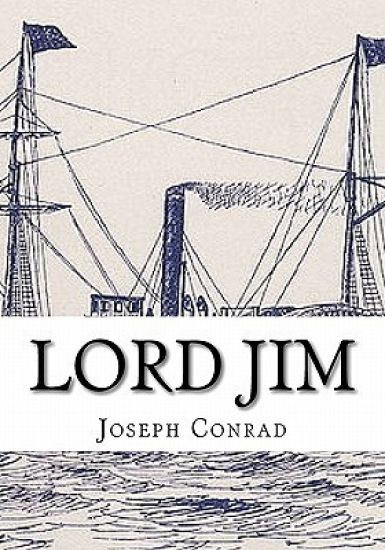
Lord Jim Joseph Conrad
Lord Jim; Joseph Conrad
Createspace Independent Publishing Platform
2010
nidottu
The novel is in two main parts, firstly Jim's lapse aboard the Patna and his consequent fall, and secondly an adventure story about Jim's rise and the tale's denouement amongst the people of Patusan - set in the Indonesian archipelago. The main themes surround young Jim's potential ("...he was one of us", says the narrator, Marlow) thus sharpening the drama and tragedy of his fall, his subsequent struggle to redeem himself, and Conrad's further hints that personal character flaws will almost certainly emerge given an appropriate catalyst. Conrad, speaking through his character Stein, called Jim a romantic figure, and indeed Lord Jim is arguably Conrad's most romantic novel. In addition to the lyricism and beauty of Conrad's descriptive writing, the novel is remarkable for its sophisticated structure. The bulk of the novel is told in the form of a story recited by the character Marlow to a group of listeners, and the conclusion is presented in the form of a letter from Marlow. Within Marlow's narration, other characters also tell their own stories in nested dialogue. Thus, events in the novel are described from several view points, and often out of chronological order. (wikipedia)
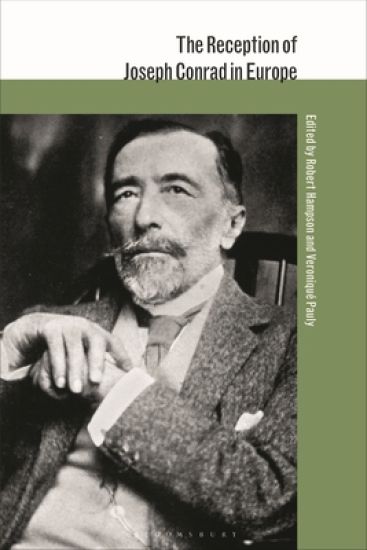
The Reception of Joseph Conrad in Europe
BLOOMSBURY PUBLISHING PLC
2022
sidottu
Born and brought up in Poland bilingually in French and Polish but living for most of his professional life in England and writing in English, Joseph Conrad was, from the start, as much a European writer as he was a British one and his work – from his earliest fictions through Heart of Darkness, Nostromo and The Secret Agent to his later novels– has repeatedly been the focal point of discussions about key issues of the modern age.With chapters written by leading international scholars, this book provides a wide-ranging survey of the reception, translation and publication history of Conrad’s works across Europe. Covering reviews and critical discussion, and with some attention to adaptations in other media, these chapters situate Conrad's works in their social and political context. The book also includes bibliographies of key translations in each of the European countries covered and a timeline of Conrad’s reception throughout the continent.
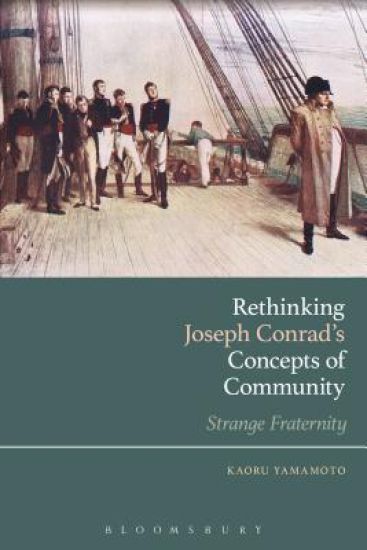
Rethinking Joseph Conrad’s Concepts of Community uses Conrad’s phrase ‘strange fraternity’ from The Rover as a starting point for an exploration of the concept of community in his writing, including his neglected vignettes and later stories. Drawing on the work of continental thinkers including Jacques Derrida, Jean Luc-Nancy and Hannah Arendt, Yamamoto offers original readings of Heart of Darkness, The Nigger of the ‘Narcissus’, The Rover and Suspense and the short stories “The Secret Sharer”, “The Warrior’s Soul” and “The Duel”. Working at the intersection between literature and philosophy, this is a unique and interdisciplinary engagement with Conrad’s work.



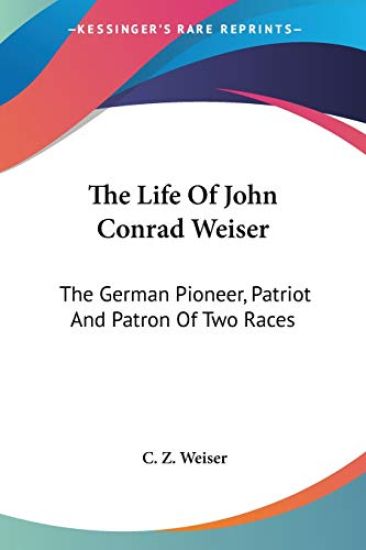
The Life of Conrad Weiser: German Pioneer, Patriot and Patron of Two Races
C. Z. Weiser
Literary Licensing, LLC
2014
nidottu
Almayer's folly Joseph Conrad (1895)
Iacob Adrian
Createspace Independent Publishing Platform
2017
nidottu
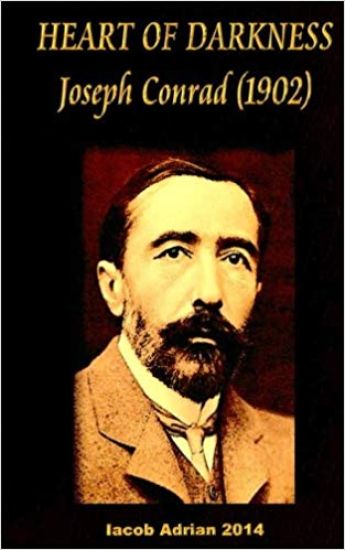
HEART OF DARKNESS Joseph Conrad (1902)
Iacob Adrian
Createspace Independent Publishing Platform
2017
nidottu

YOUTH A NARRATIVE Joseph Conrad (1902)
Iacob Adrian
Createspace Independent Publishing Platform
2017
nidottu
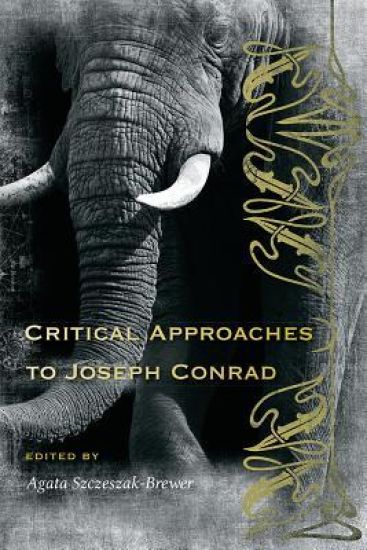
Critical Approaches to Joseph Conrad
University of South Carolina Press
2015
sidottu
Critical Approaches to Joseph Conrad is a collection of essays directed to both new and experienced readers of Conrad. The book takes into account recent developments in literary theory, including the prominence of ecocriticism, ecopostcolonial approaches, and gender studies. Editor Agata Szczeszak-Brewer offers a comprehensive and comprehensible introduction to Conrad’s most popular texts, also addressing the most recent academic debates as well as the conversations about narrative and genre in Conrad’s canon.Students and scholars of Conrad, twentieth-century literature, and modernism will appreciate the clear, accessible prose by nineteen internationally recognized contributors who approach Conrad in different ways, from postcolonial and ecocritical perspectives, through explorations of gender, to psychoanalysis, narrative theory, and political analysis. Beginning with a biographical introduction by Szczeszak-Brewer, the collection offers an essay outlining the cultural and historical contexts that influenced Conrad’s fiction and an essay on reception of Conrad’s work.Following that, contributors provide critical approaches to Heart of Darkness, Lord Jim, Typhoon, Nostromo, The Secret Agent, The Secret Sharer, and Under Western Eyes. In these sections scholars offer insights about complex issues in Conrad’s fiction, ranging from the study of specific literary tools and narrative development in his books to the political theories in Conrad’s portrayal of the threat of terrorism and violent revolutions.
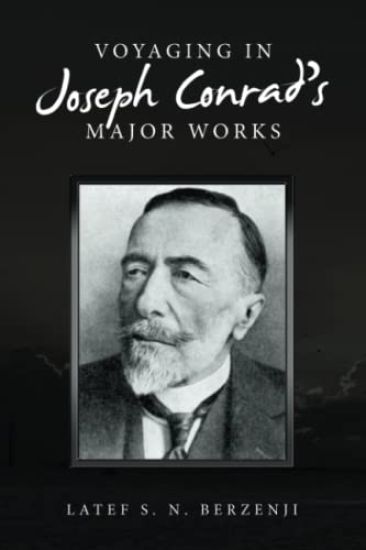
Joseph Conrad is one of the most intriguing and important modernist novelists and short story writers, whose writing continues to preoccupy readers. Conrad combined his unique personal background as a Polish emigre, his personal experiences and voyagings as a seaman and his literary readings with the tradition of his adopted country to produce literary works and fictions, which blended with his distinctive taste, gave the English novel a further originality and development. This study, which primarily concentrates on four of Conrad's major works - Heart of Darkness, Lord Jim, "The Secret Sharer," and The Shadow Line shows that Conrad conceives voyaging as a symbolic means, an insight and vision into the human psyche. It becomes a journey into the inner-world of man's psychological diving into his inner world of the self in quest of truth, of self-identity, self-knowledge, and self-control.

A rebel biker on the run. An outlaw motorcycle club in turmoil. A violent past that haunts them all.Austin Conrad narrowly survived the opening salvo in the war against his former brothers in the Rattlers Motorcycle Club. A war that started when the MC's ruthless leader crossed a line that even Austin's questionable morals could not condone. Now both sides are gathering their strength, plotting their next move, coiling to strike. The adventure moves from the gritty streets of Las Vegas to lonely desert outposts and the seedy underbelly of inland Southern California. Austin is in a race against time to dismantle the MC's nefarious plot before it can destroy more lives. Along the way, dark secrets from the past begin to surface, calling into question everything Austin thought he knew about brotherhood, family, loyalty and honor.Blood Out is the third book in the Austin Conrad Thrillers series. If you like fast-paced adventure, vividly real settings and a flawed but unstoppable antihero, then you'll love this action-packed thriller from breakout author Dusty Sharp.Download Blood Out today and find out why readers are hailing Austin Conrad as "Jack Reacher meets Sons of Anarchy "Warning: Contains violence, profanity and irreverence, in equal measure.
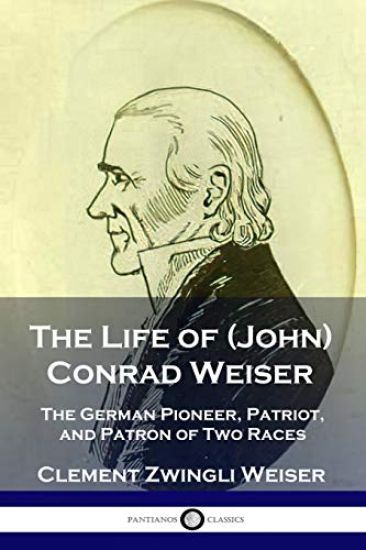
John Conrad Weiser was among very few colonial settlers to achieve fluency in Native American languages, working for decades as an interpreter and peacemaker between European settlers and native tribes.The services rendered by Conrad Weiser were immensely important to the colonists of North America. He spent time living with the Maqua tribe, learning their customs and culture, and achieving supreme command of their language. When disputes arose, Weiser was called upon - on several occasions, his mediation and diplomacy prevented disagreements from descending into violence. In maturity, he served as Superintendent of the Indian Bureau; an agency which promoted peaceful cooperation between Native Americans and white Europeans.This biography charts Weiser's humble beginnings in Germany, his boyhood emigration to America, and his first communications and residence with the Maqua. His greatest successes as interpreter and promoter of peaceful understanding are related in detail. Strongly revered for decades after his death in 1760, George Washington himself revisited Weiser's gravesite in 1793 to remember his contributions.Weiser remains a pivotal figure in the history of colonial America, and his house in Womelsdorf, Pennsylvania is today a museum dedicated to study of the era. The author of this biography, Clement Zwingli Weiser, was a descendent keen on family research, who lived at the turn of the 20th century.

With the pressing work of decolonising our reading lists gaining traction in UK higher educational contexts, Decolonising the Conrad Canon shows how those author-Gods most associated with the colonial literary canon can also be retooled through decolonial, queer, feminist readings. This book finds pockets of powerful anti-colonial resistance and queer dissonance in Joseph Conrad’s lesser-known works – breathing spaces from the colonial rhetoric that dominates his novels – and traces the female characters who voice them off the page and into their transmedia (digital/illustrative/cinematic) afterlives. From Immada and Edith’s queer gaze in The Rescue and the periodical illustrations that accompanied its initial serialization, to Aïssa’s sustained critique of imperialism in An Outcast of the Islands and her portrayal on mass-market paperback book covers, to the structural female bonds of Almayer’s Folly and Nina’s embodiment in Chantal Akerman’s adaptation La Folie Almayer, this book centres Conrad’s female characters as viable, meaning-making citizens of the canon. Through this intervention, Decolonising the Conrad Canon proposes an innovative model for teaching, reading and studying not just Joseph Conrad’s work but the colonial literary canon more broadly.
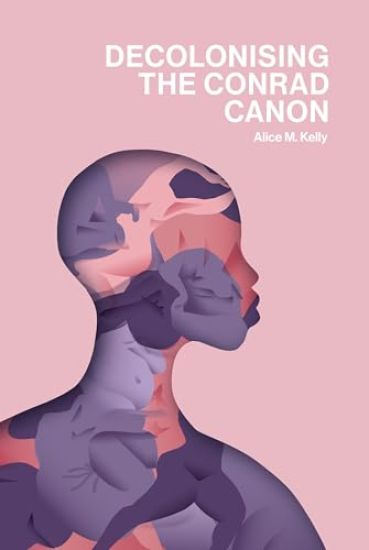
With the pressing work of decolonising our reading lists gaining traction in UK higher educational contexts, Decolonising the Conrad Canon shows how those author-Gods most associated with the colonial literary canon can also be retooled through decolonial, queer, feminist readings. This book finds pockets of powerful anti-colonial resistance and queer dissonance in Joseph Conrad’s lesser-known works – breathing spaces from the colonial rhetoric that dominates his novels – and traces the female characters who voice them off the page and into their transmedia (digital/illustrative/cinematic) afterlives. From Immada and Edith’s queer gaze in The Rescue and the periodical illustrations that accompanied its initial serialization, to Aïssa’s sustained critique of imperialism in An Outcast of the Islands and her portrayal on mass-market paperback book covers, to the structural female bonds of Almayer’s Folly and Nina’s embodiment in Chantal Akerman’s adaptation La Folie Almayer, this book centres Conrad’s female characters as viable, meaning-making citizens of the canon. Through this intervention, Decolonising the Conrad Canon proposes an innovative model for teaching, reading and studying not just Joseph Conrad’s work but the colonial literary canon more broadly.
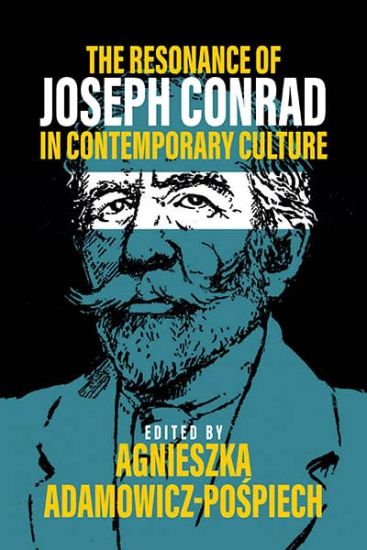
The Resonance of Joseph Conrad in Contemporary Culture
BERGHAHN BOOKS
2025
sidottu
A hundred years after his death, the life and legacy of the Polish-British novelist Joseph Conrad remains deeply felt in a wide range of global cultural contexts. The Resonance of Joseph Conrad in Contemporary Culture brings together scholars of wide-ranging backgrounds to provide a holistic assessment of the afterlife of Conrad’s work. Ranging from Conrad’s influence upon contemporary writers, to the impact of his translators and his adaptation within film and graphic novels, this volume illuminates how Conrad’s approach to questions of moral ambiguity and the haunting complexities of colonialism continues to inform the cultural output of our modern, globalized world.