

Kirjahaku
Etsi kirjoja tekijän nimen, kirjan nimen tai ISBN:n perusteella.
848 tulosta hakusanalla Cornut

Démonstration Élémentaire Du Théorème Sur La Distribution Des Nobres Premiers
Johannes Gualtherus Van Der Corput
Nabu Press
2011
pokkari

"M: Finance "is a market-driven corporate finance book with the latest in teaching and learning tools - all at an affordable price With "M: Finance," students receive a cost-effective, easy to read, focused text complete with study resources (both print and online) to help them review for tests and apply chapter concepts. Professors receive a text that contains all the pertinent information--yet in a more condensed format that is easier to cover. "M: Finance" Meet the Future

Remembering Concord: Articles from the Look Back Collection
Helen Arthur-Cornett
History Press
2005
nidottu
This humorous and historical compilation of anecdotes and vignettes is a valuable selection of Helen Arthur-Cornett's best work from her tenure as a writer for the Charlotte Observer and offers readers, whether old-timers or newcomers to the area, a warm and informative perspective on the history and folklore of Cabarrus County, North Carolina. We meet a delightful cast of characters whose stories offer a glimpse into the inner workings of a small town and tell of a truly independent way of life. Jacob Shinn discovering gold in a cotton field; the death of Little Miss Stonewall; the legend of Hamby Hill; these are just some of the stories that bring the history of the county to life. Spanning over a century of Concord's most memorable characters and events, this delightful collection is sure to inform and entertain, while at the same time, preserving the valuable work of Helen Arthur-Cornett and the history she seeks to protect and share.

La crémation microbienne, guerre aux micro-germes pathogènes
Édouard Bernard Henri Van Den Corput
Hachette Livre - BNF
2018
pokkari
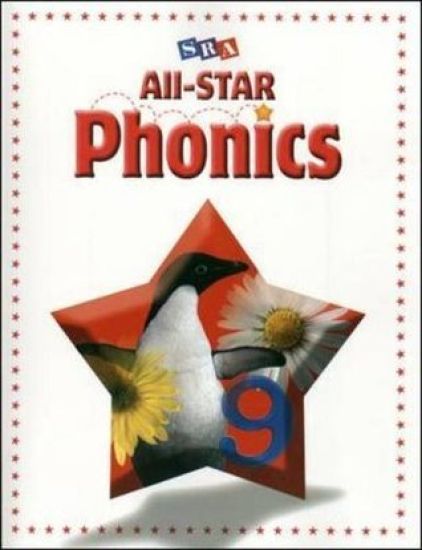
All-STAR Phonics & Word Studies, Student Workbook, Level K
Alvin Granowsky; Claudia Cornett
MCGRAW-HILL EDUCATION - EUROPE
2002
nidottu
Students will learn to sound out unfamiliar words using decoding strategies such as sense clues, structural analysis, and spelling sound clues.
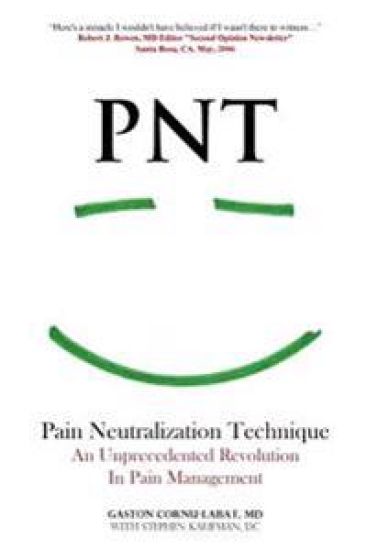
PNT Pain Neutralization Technique: An Unprecedented Revolution in Pain Management
Stephen Kaufman DC; Gaston Cornu-Labat MD
360 Home Group
2015
nidottu
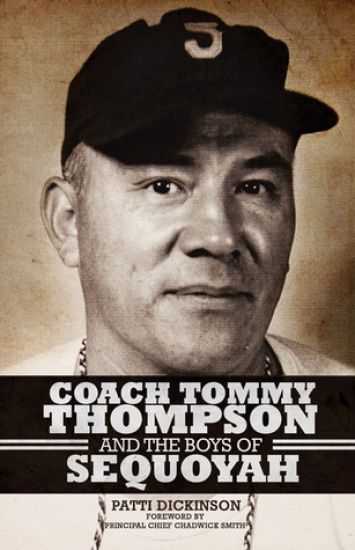
Coach Tommy Thompson and the Boys of Sequoyah
Patti Dickinson; Chad Corntassel Smith
University of Oklahoma Press
2009
nidottu
When eleven-year-old Tommy Thompson arrived at a government-run Indian boarding school in 1915, it seemed a last resort for the youngster. Instead, it turned out to be the first step toward a life dedicated to helping others. Thompson went on to become a star athlete and football coach - a Cherokee legend whose story is remembered by many and is now finally told for a wider audience.Following gridiron fame at Northeastern State College, Thompson returned to Sequoyah Vocational School in 1947 as Boys' Coach and Advisor. More than a thousand boys attended the boarding school during the eleven years he coached there. Writing for readers old and young, Patti Dickinson tells the inspiring story of how this one man made a difference in the lives of a generation of Indian youth.Through football, Thompson taught his boys the skills and values they would need to succeed in life, and twice led his team to the state finals. Dickinson describes the success of that program, including one epic, rain-soaked championship game. She paints compelling portraits of Thompson's boys - the men whose firsthand stories and reminiscences form the basis of the narrative - and re-creates daily life at the school.To his boys, Thompson was Ah-sky-uh, ""the man,"" a Cherokee term of respect. Half a century after his death, Sequoyah High School still reveres his memory. This book secures his place in history as it opens a new window on the boarding school experience.
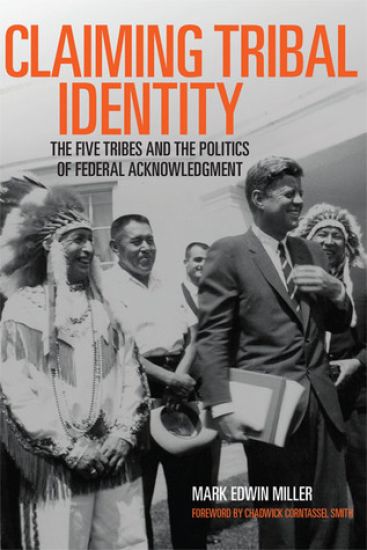
Claiming Tribal Identity
Mark Edwin Miller; Chad Corntassel Smith
University of Oklahoma Press
2013
nidottu
Who counts as an American Indian? Which groups qualify as Indian tribes? These questions have become increasingly complex in the past several decades, and federal legislation and the rise of tribal-owned casinos have raised the stakes in the ongoing debate. In this revealing study, historian Mark Edwin Miller describes how and why dozens of previously unrecognized tribal groups in the southeastern states have sought, and sometimes won, recognition, often to the dismay of the Five Tribes - the Cherokees, Chickasaws, Choctaws, Creeks, and Seminoles. Miller explains how politics, economics, and such slippery issues as tribal and racial identity drive the conflicts between federally recognized tribal entities like the Cherokee Nation of Oklahoma, and other groups such as the Southeastern Cherokee Confederacy that also seek sovereignty. Battles over which groups can claim authentic Indian identity are fought both within the Bureau of Indian Affairs' Federal Acknowledgment Process and in Atlanta, Montgomery, and other capitals where legislators grant state recognition to Indian-identifying enclaves without consulting federally recognized tribes with similar names. Miller's analysis recognizes the arguments on all sides - both the scholars and activists who see tribal affiliation as an individual choice, and the tribal governments that view unrecognized tribes as fraudulent. Groups such as the Lumbees, the Lower Muscogee Creeks, and the Mowa Choctaws, inspired by the civil rights movement and the War on Poverty, have evolved in surprising ways, as have traditional tribal governments. Describing the significance of casino gambling, the leader of one unrecognized group said, ""It's no longer a matter of red; it's a matter of green."" Either a positive or a negative development, depending on who is telling the story, the casinos' economic impact has clouded what were previously issues purely of law, ethics, and justice. Drawing on both documents and personal interviews, Miller unravels the tangled politics of Indian identity and sovereignty. His lively, clearly argued book will be vital reading for tribal leaders, policy makers, and scholars.

Heart of Palms is a clear-eyed memoir of Peace Corps service in the rural Panamanian village of Tranquilla through the eyes of a young American woman trained as a community forester.In the storied fifty-year history of the US Peace Corps, Heart of Palms is the first Peace Corps memoir set in Panama, the slender isthmus that connects two continents and two oceans. In her memoir, Meredith Cornett transports readers to the remote village of Tranquilla, where dugout canoes are the mainstay of daily transportation, life and nature are permeated by witchcraft, and a restful night’s sleep may be disturbed by a raiding phalanx of army ants.Cornett is sent to help counter the rapid deforestation that is destroying the ecosystem and livelihoods of the Panama Canal watershed region. Her first chapters chronicle her arrival and struggles not only with the social issues of language, loneliness, and insecurity, but also with the tragicomic basics of mastering open-fire cookery and intrusions by insects and poisonous snakes. As she grows to understand the region and its people, her keen eye discerns the overwhelming scope of her task. Unable to plant trees faster than they are lost, she writes with moving clarity about her sense of powerlessness.Combating deforestation leads Cornett into an equally fierce battle against her own feelings of fear and isolation. Her journey to Panama becomes a parallel journey into herself. In this way, Heart of Palms is much more than a record of her Peace Corps service; it is also a moving environmental coming-of-age story and nuanced meditation on one village’s relationship to nature. When she returns home two years later, Cornett brings with her both skills and experience and a remarkable, newfound sense of confidence and mission.Writing with rueful, self-deprecating humour, Cornett lets us ride along with her on a wave of naïve optimism, a wave that breaks not only on fear and intimidation, but also on tedium and isolation. Heart of Palms offers a bracing alternative to the romantic idealism common to Peace Corps memoirs and will be valued as a welcome addition to writing about the Peace Corps and environmental service.

Moderate Drinking My Way: A Woman's All-Natural Program to Control Alcohol and Get the Most Out of Life!
Donna J. Cornett M. a.
People Friendly Books
2012
nidottu

Recueil Manuel Et Pratique De TraitÃ(c)s Et Conventions
Friedrich Heinrich Geffcken; Ferdinand Cornot De Cussy; Karl Von Martens
Hutson Street Press
2025
sidottu

Recueil Manuel Et Pratique De TraitÃ(c)s Et Conventions
Friedrich Heinrich Geffcken; Ferdinand Cornot De Cussy; Karl Von Martens
Hutson Street Press
2025
pokkari

Recueil Manuel Et Pratique De TraitÃ(c)s Et Conventions
Friedrich Heinrich Geffcken; Ferdinand Cornot De Cussy; Karl Von Martens
Hutson Street Press
2025
sidottu

Recueil Manuel Et Pratique De TraitÃ(c)s Et Conventions
Friedrich Heinrich Geffcken; Ferdinand Cornot De Cussy; Karl Von Martens
Hutson Street Press
2025
pokkari
Spanish Commercial Correspondence And Technicalities, Etc. (1915)
William N. Cornett
KESSINGER PUBLISHING, LLC
2009
pokkari

Cambridge Preliminary Legal Studies 3ed Bundle
Paul Milgate; Daryl Le Cornu; Kate Dally; Phil Webster; Tim Kelly
Cambridge University Press
2013
muu
Cambridge HSC Legal Studies Bundle
Paul Milgate; Daryl Le Cornu; Ann Miller; Sarah Robinson; Tim Kelly; Kevin Steed
Cambridge University Press
2013
muu
Cambridge HSC Legal Studies Pack
Milgate Paul; Le Cornu Daryl; Ann Miller; Sarah Robinson; Tim Kelly; Steed Kevin
Cambridge University Press
2013
muu

Lettere Al Senato Veneto Di Giosafatte Barbaro (1852)
Giosafatte Barbaro; Enrico Cornet
KESSINGER PUBLISHING, LLC
2010
pokkari