
Kirjahaku
Etsi kirjoja tekijän nimen, kirjan nimen tai ISBN:n perusteella.
1000 tulosta hakusanalla D M Herrmann
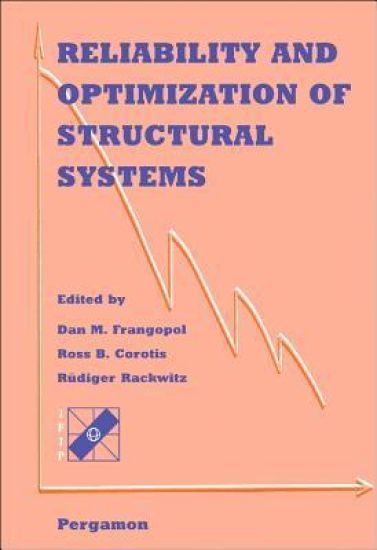
Reliability and Optimization of Structural Systems
Frangopol D.M.; Corotis R. B.; Rackwitz Rudiger
Pergamon Press
1997
sidottu
This book contains 38 papers presented at the seventh Working Conference on 'Reliability and Optimization of Structural Systems' held at Boulder, Colorado, USA, on April 2-4, 1996. The Working Conference was organized by the IFIP (International Federation for Information Processing) Working Group 7.5 of Technical Committee 7 and was the seventh in a series of similar conferences. The objectives of the Working Group and hence this publication are: • to promote modern structural systems optimization and reliability theory, • to advance international co-operation in the field of structural system optimization and reliability theory, • to stimulate research, development and application of structural system optimization and reliability theory, • to further dissemination and exchange of information on reliability and optimization of structural systems, and • to encourage education in structural system organization and reliability theory.

The Wanderings of an Elephant Hunter is the story of Walter Dalrymple Maitland Bell, a famous big game hunter in East Africa. 'Karamojo Bell, ' as he was known, devised many original techniques to seek out and capture his quarry, including a difficult rifle shot from a diagonal angle, later dubbed 'The Bell Shot.' Wanderings details Bell's ingenious ivory-hunting methodology, as well as his many interesting encounters on safari

The Wanderings of an Elephant Hunter is the story of Walter Dalrymple Maitland Bell, a famous big game hunter in East Africa. 'Karamojo Bell, ' as he was known, devised many original techniques to seek out and capture his quarry, including a difficult rifle shot from a diagonal angle, later dubbed 'The Bell Shot.' Wanderings details Bell's ingenious ivory-hunting methodology, as well as his many interesting encounters on safari.

Military Leadership in the British Civil Wars, 1642-1651
Stanley D.M. Carpenter
Routledge
2006
nidottu
Despite the wealth of British Civil Wars studies, little work addresses the nature of military leadership effectiveness in terms of the eventual result -parliamentary victory. It is no longer sufficient to credit religion, economics, localism or constitutional concepts for the outcome without considering the role of effective military leadership. The study of human conflict illustrates a simple, immutable truth -the finest, most inspired or motivated, well-trained, disciplined or experienced force is quite like a modern cruise missile. Without effective guidance, it is no more than a collection of very expensive parts. For the general military history reader, the work provides a concise strategic and operational narrative of the British Civil Wars of 1642-51 in northern England and Scotland. For historians, it offers an additional causative explanation for ultimate parliamentary victory. As a study of effective military leadership, it proposes, through a case study analysis based on a framework of characteristics and behavior of specific commanders from the wildly successful to the abysmal failure, a model of effective military leadership for present and successive generations of military, naval and air officers at all levels of command.

This book provides an in-depth analysis of UK-US intelligence cooperation in the post-9/11 world.Seeking to connect an analysis of intelligence liaison with the wider realm of Anglo-American Relations, the book draws on a wide range of interviews and consultations with key actors in both countries. The book is centred around two critical and empirical case studies, focusing on the interactions on the key issues of counterterrorism and weapons of mass destruction (WMD) counter-proliferation. These case studies provide substantive insights into a range of interactions such as 9/11, the 7/7 London bombings, the A.Q. Khan nuclear network, the prelude to the 2003 Iraq War, extraordinary rendition and special forces deployments. Drawing on over 60 interviews conducted in the UK and US with prominent decision-makers and practitioners, these issues are examined in the contemporary historical context, with the main focus being on the years 2000-05.This book will be of much interest to students of intelligence studies, foreign policy, security studies and International Relations in general.Adam Svendsen has a Phd in International History from the University of Warwick. He has been a Visiting Scholar at the Center for Peace and Security Studies, Georgetown University, and has contributed to the International Security Programme at Chatham House and to the work of IISS, London.

This book provides an in-depth analysis of UK-US intelligence cooperation in the post-9/11 world.Seeking to connect an analysis of intelligence liaison with the wider realm of Anglo-American Relations, the book draws on a wide range of interviews and consultations with key actors in both countries. The book is centred around two critical and empirical case studies, focusing on the interactions on the key issues of counterterrorism and weapons of mass destruction (WMD) counter-proliferation. These case studies provide substantive insights into a range of interactions such as 9/11, the 7/7 London bombings, the A.Q. Khan nuclear network, the prelude to the 2003 Iraq War, extraordinary rendition and special forces deployments. Drawing on over 60 interviews conducted in the UK and US with prominent decision-makers and practitioners, these issues are examined in the contemporary historical context, with the main focus being on the years 2000-05.This book will be of much interest to students of intelligence studies, foreign policy, security studies and International Relations in general.Adam Svendsen has a Phd in International History from the University of Warwick. He has been a Visiting Scholar at the Center for Peace and Security Studies, Georgetown University, and has contributed to the International Security Programme at Chatham House and to the work of IISS, London.



Military Leadership in the British Civil Wars, 1642-1651
Stanley D.M. Carpenter
Routledge
2005
sidottu
Despite the wealth of British Civil Wars studies, little work addresses the nature of military leadership effectiveness in terms of the eventual result -parliamentary victory. It is no longer sufficient to credit religion, economics, localism or constitutional concepts for the outcome without considering the role of effective military leadership. The study of human conflict illustrates a simple, immutable truth -the finest, most inspired or motivated, well-trained, disciplined or experienced force is quite like a modern cruise missile. Without effective guidance, it is no more than a collection of very expensive parts. For the general military history reader, the work provides a concise strategic and operational narrative of the British Civil Wars of 1642-51 in northern England and Scotland. For historians, it offers an additional causative explanation for ultimate parliamentary victory. As a study of effective military leadership, it proposes, through a case study analysis based on a framework of characteristics and behavior of specific commanders from the wildly successful to the abysmal failure, a model of effective military leadership for present and successive generations of military, naval and air officers at all levels of command.

Solar-terrestrial physics deals with phenomena in the region of space between the surface of the Sun and the upper atmosphere of the Earth, a region dominated by matter in a plasma state. This area of physics describes processes that generate the solar wind, the physics of geospace and the Earth's magnetosphere, and the interaction of magnetospheric processes with the upper atmosphere. Such processes are important for energy transfer between the Sun and the terrestrial environment. Many of these processes are mediated by long period wave phenomena, which are usually treated by magnetohydrodynamic methods. Magnetohydrodynamic Waves in Geospace: The Theory of ULF Waves and Their Interaction with Energetic Particles in the Solar-Terrestrial Environment provides the theoretician and experimentalist with a coherent account of the important theoretical ideas that underpin current understanding of ultra-low-frequency wave phenomena in solar-terrestrial physics, and that may be used to address future problems. Brief accounts of observational results are included, as well as appendices describing some key mathematical techniques and magnetic field properties in detail Written in a concise and clear manner, this book will prove valuable reading for advanced graduate students while active researchers in space plasma physics, solar physics, geophysics, planetary science, and astrophysics in need of a source of detailed information will also appreciate this work.
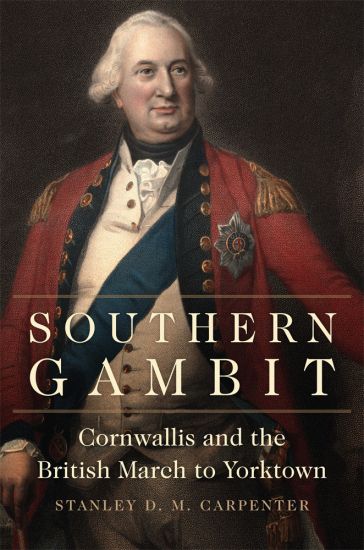
In a world rife with conflict and tension, how does a great power prosecute an irregular war at a great distance within the context of a regional struggle, all within a global competitive environment? The question, so pertinent today, was confronted by the British nearly 250 years ago during the American War for Independence. And the answer, as this book makes plain, is: not the way the British, under Lieutenant General Charles, Earl Cornwallis, went about it in the American South in the years 1778-81. Southern Gambit presents a closely observed, comprehensive account of this failed strategy. Approaching the campaign from the British perspective, this book restores a critical but little-studied chapter to the narrative of the Revolutionary War - and in doing so, it adds detail and depth to our picture of Cornwallis, an outsize figure in the history of the British Empire. Distinguished scholar of military strategy Stanley D. M. Carpenter outlines the British strategic and operational objectives, devoting particular attention to the strategy of employing Southern Loyalists to help defeat Patriot forces, reestablish royal authority, and tamp down resurgent Patriot activity. Focusing on Cornwallis's operations in the Carolinas and Virginia leading to the surrender at Yorktown in October 1781, Carpenter reveals the flaws in this approach, most notably a fatal misunderstanding of the nature of the war in the South and of the Loyalists' support. Compounding this was the strategic incoherence of seeking a conventional war against a brilliant, unconventional opponent, and doing so amidst a breakdown in the unity of command. Ultimately, strategic incoherence, ineffective command and control, and a misreading of the situation contributed to the series of cascading failures of the British effort. Carpenter's analysis of how and why this happened expands our understanding of British decision-making and operations in the Southern Campaign and their fateful consequences in the War for Independence.
In a world rife with conflict and tension, how does a great power prosecute an irregular war at a great distance within the context of a regional struggle, all within a global competitive environment? The question, so pertinent today, was confronted by the British nearly 250 years ago during the American War for Independence. And the answer, as this book makes plain, is: not the way the British, under Lieutenant General Charles, Earl Cornwallis, went about it in the American South in the years 1778-81. Southern Gambit presents a closely observed, comprehensive account of this failed strategy. Approaching the campaign from the British perspective, this book restores a critical but little-studied chapter to the narrative of the Revolutionary War - and in doing so, it adds detail and depth to our picture of Cornwallis, an outsize figure in the history of the British Empire. Distinguished scholar of military strategy Stanley D. M. Carpenter outlines the British strategic and operational objectives, devoting particular attention to the strategy of employing Southern Loyalists to help defeat Patriot forces, reestablish royal authority, and tamp down resurgent Patriot activity. Focusing on Cornwallis's operations in the Carolinas and Virginia leading to the surrender at Yorktown in October 1781, Carpenter reveals the flaws in this approach, most notably a fatal misunderstanding of the nature of the war in the South and of the Loyalists' support. Compounding this was the strategic incoherence of seeking a conventional war against a brilliant, unconventional opponent, and doing so amidst a breakdown in the unity of command. Ultimately, strategic incoherence, ineffective command and control, and a misreading of the situation contributed to the series of cascading failures of the British effort. Carpenter's analysis of how and why this happened expands our understanding of British decision-making and operations in the Southern Campaign and their fateful consequences in the War for Independence.

The study of evolution at the molecular level has given the subject of evolutionary biology a new significance. Phylogenetic 'trees' of gene sequences are a powerful tool for recovering evolutionary relationships among species, and can be used to answer a broad range of evolutionary and ecological questions. They are also beginning to permeate the medical sciences. In this book, the authors approach the study of molecular evolution with the phylogenetic tree as a central metaphor. This will equip students and professionals with the ability to see both the evolutionary relevance of molecular data, and the significance evolutionary theory has for molecular studies. The book is accessible yet sufficiently detailed and explicit so that the student can learn the mechanics of the procedures discussed. The book is intended for senior undergraduate and graduate students taking courses in molecular evolution/phylogenetic reconstruction. It will also be a useful supplement for students taking wider courses in evolution, as well as a valuable resource for professionals. First student textbook of phylogenetic reconstruction which uses the tree as a central metaphor of evolution. Chapter summaries and annotated suggestions for further reading. Worked examples facilitate understanding of some of the more complex issues. Emphasis on clarity and accessibility.