This Barcelona F.C. diary for the academic year 2019 enables you to keep organised and up to date, with plenty of space to write notes, lists or appointments. Diary runs from 1st january 2019 to 31st december 2019.
Christianity Today 2025 Book Award Finalist (Missions / Global Church)Outreach 2025 Resource of the Year (Missions and Cross-Cultural)Southwestern Journal of Theology 2023 Book Award (Honorable Mention, Evangelism / Missions / Global Church) Drawing on forty years of teaching and mission experience, leading missiological anthropologist Darrell Whiteman brings a wealth of insight to bear on cross-cultural ministry.After explaining the nature and function of culture and the importance of understanding culture for ministry, Whiteman addresses the most common challenges of ministering across cultures. He then provides practical solutions based on lived experience, helping readers develop healthy patterns so they can communicate the gospel effectively. Issues addressed include negotiating differences in worldview, the problem of nonverbal communication, understanding cultural forms and their meanings, and the challenge of overcoming culture shock.Professors, students, and anyone ministering cross-culturally will benefit from this informed yet accessible guide. Foreword by Miriam Adeney.
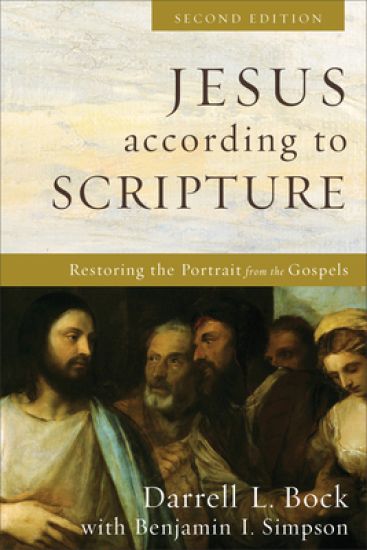
Updated Edition of a Bestselling Study of Jesus and the GospelsIn this work Darrell Bock, a leading evangelical New Testament scholar who speaks and teaches around the world, and Benjamin Simpson show that a coherent portrait of Jesus emerges from the four Gospels when they are taken seriously as historical documents. When read together, the Gospels provide a clear picture of Jesus and his unique claims to authority. This book surveys all the Gospel units and relates them to their parallel passages, showing how the literary and canonical relationships work. Offering up-to-date interaction with the latest discussions about Jesus, the second edition has been substantially revised and updated throughout and includes three new chapters on how we got the Gospels.
The problems facing the Islamic community in prison are things that can be resolved by the simple solution of Qur'an and Sunnah and the basic principles that are required for us to thrive and prosper. The Islamic community has since the advent of the World Trade Center bombings taken on or moved in a direction that is against the Shariah, the Muslims in prison seem to have adopted the idea that the only way the un-believer will accept them now is if we adopt the ways and actions of the un-believer in prison. This book is a logical guidebook on how the Muslims in using the Qur'an and Sunnah can reignite the flame of Islam within their own souls. Since some have come into the din for all the wrong reasons, and have nothing to do with attaining taqwa or coming close to following the commands. Nevertheless, the writer over the years has seen, quite a bit has come into the din just to sell drugs and get high as if the Qur'an has not forbidden such actions. This kind of devotion just does not come from simplemindedness or ignorance, but arises out of awareness of deep dedication to the din. Since looking to improve the mental and spiritual health of the community and, getting us in touch with Allah and his messenger is best place to start. However, real power of the book, which is the Qur'an and Sunnah, is the constancy and connection with it and our genuine effort we make to apply this in our lives while in prison. When facing challenges in prison, which have made us hide and disregard our beliefs and feel ashamed of them. This book is a basic and simple formula that should remove our inclination to sin and is a solution to provide a defense against the dunya. Fellow believers may be the infirm and strong. Nevertheless, both their infirmities and strength are a source of support to him. Whenever he feels disheartened, the strength of the strong ones comes to his aid and buckles up his courage. All other times when he is losing heart in face of his own fatigue and weaknesses, he is heartened when finds his fellow believers, worse tired and weaker, persevering, he does not find himself alone in this plight due the hardship s of the path. Thus, he goes on, supported and encouraged by the strength and infirmity of the believers and supporting them in turn by their own strength and infirmity. This comradeship is both by the teacher and spiritual guides and by the friendly and familiar believers. The present comes to their aid and the past supports them too. Whichever believer of this path, from living and dead, he finds in sympathetic unison with his own conditions they should seek their company. Those who can be brought to this path as believers, or with whom it is possible for them to keep step, he must seek their company practically in their journey. As for those whose lives and deeds have only inspirational value for him, they must develop mental and spiritual relations with them. Thus surrounded by the company of the living and the dead, they will never feel lonely or disheartened. This is in fact so essential for the mission that a person has often to cut himself off from his relatives and join the camp of the aliens. This stage is unpleasant indeed and great hardship but in the jihad (striving) against self for its purification and development, this 'migration' is inevitable. During the study of the issues raised in this book, the great importance of migration in the purification of mutual relations among men, and how this migration is essential for every one seeking self-purification and development, today as it had been in times gone by.
The complete child and youth safety guide resource for parenting and custodial adults. This full spectrum course of today's safety and security issues leaves no stone unturned.
Many Indonesian landscape artists in the early part of the twentieth century were clearly influenced by the somewhat romantic style landscape paintings of expatriate Europeans and Japanese living in Indonesia. However, there were also a number of indigenous and Indo- European realist landscape painters who, from the early to mid-twentieth century, developed a style commonly referred to as Mooi Indie. This book has its genesis in trips to England and southern Europe taken in the 1970s where the author experienced, and was attracted to, the beauty and technical skills of eighteenth- to mid-nineteenth century naturalist English landscape school painters and the derivative French Barbizon plein - air school. Although influenced by the above schools, Mooi Indie painters had their own unique subject matter, perspective, brush strokes and palette which make their work instantly recognizable and eminently worthy of respect. The largest concentration of Mooi Indie painters was in Bandung, West Java. Apart from Basuki Abdullah, Mas Pirngadie, Suriosubroto and Sukardji, most of their work is little known. One family living at Bandung included three superb Mooi Indie painters of which Basar Idjonati was the most distinguished.