Kirjojen hintavertailu. Mukana 12 390 323 kirjaa ja 12 kauppaa.

Kirjahaku

Etsi kirjoja tekijän nimen, kirjan nimen tai ISBN:n perusteella.

1000 tulosta hakusanalla David N

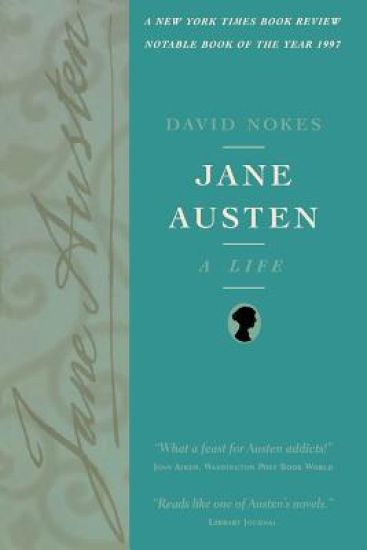
Jane Austen

Jane Austen

David Nokes

University of California Press
1998
pokkari
In this new biography of Jane Austen, David Nokes plays master sleuth and storyteller in presenting the great novelist 'not in the modest pose which her family determined for her, but rather, as she most frequently presented herself, as rebellious, satirical, and wild'.
Asylum Denied

Asylum Denied

David Ngaruri Kenney; Philip G. Schrag

University of California Press
2009
pokkari
"Asylum Denied" is the gripping story of political refugee David Ngaruri Kenney's harrowing odyssey through the world of immigration processing in the United States. Kenney, while living in his native Kenya, led a boycott to protest his government's treatment of his fellow farmers. He was subsequently arrested and taken into the forest to be executed. This book, told by Kenney and his lawyer Philip G. Schrag from Kenney's own perspective, tells of his near-murder, imprisonment, and torture in Kenya; his remarkable escape to the United States; and the obstacle course of ordeals and proceedings he faced as U.S. government agencies sought to deport him to Kenya. A story of courage, love, perseverance, and legal strategy, "Asylum Denied" brings to life the human costs associated with our immigration laws and suggests reforms that are desperately needed to help other victims of human rights violations.
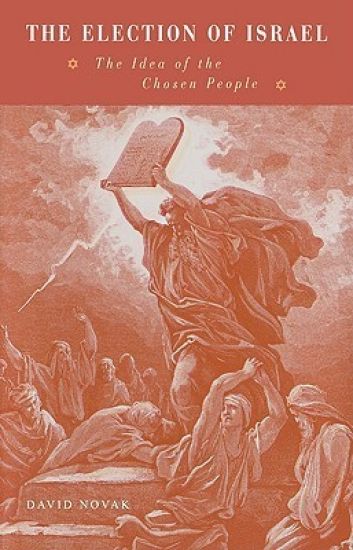
The Election of Israel

The Election of Israel

David Novak

Cambridge University Press
2007
pokkari
In this book, David Novak conducts an historical, philosophical and theological reflection on the central Jewish doctrine of Israel's election by God, also known as the idea of the chosen people. Historically, he analyses the great change in modern Jewish thought brought about by Spinoza's inversion of the doctrine: that it was not God who elected Israel, but Israel who elected God. The development of that inversion is illustrated by the thought of the German philosopher-theologian, Hermann Cohen. Philosophically, Novak explores the ontological implications of the two differing theologies of election. Theologically, he argues for the correlation of election and revelation, and maintains that a theology of election is required in order to deal with two central questions, namely: who are the Jews, and how are Jews to be related to the world? The constructive picture which results leads to a fresh understanding of Jewish modernity.
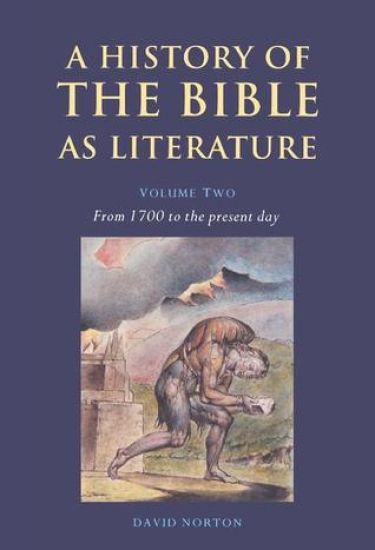
A History of the Bible as Literature: Volume 2, From 1700 to the Present Day
Early-eighteenth-century literary critics thought the King James Bible had 'all the disadvantages of an old prose translation'. But from the 1760s on criticism became increasingly favourable. In the nineteenth century it welled into a chorus of praise for 'the noblest monument of English prose'. This 1993 volume, the second of a two-volume work, traces how that reversal of opinion came about and helped to shape the making and reception of modern translations such as the Revised Version and the New English Bible. At the same time the story of the development of modern literary discussion of the Bible in general is told. From the Augustan discovery of Longinus' comments on Genesis through such major figures as Robert Louth to modern critics such as Frank Kermode and Robert Alter, this story reveals a fascinating world of insights and repetitions of received opinions. It shows not only how criticism has shaped understanding of the Bible, but how the Bible has shaped literary criticism.
The Learner-Centred Curriculum

The Learner-Centred Curriculum

David Nunan

Cambridge University Press
1988
pokkari
Traditionally, the curriculum has been regarded as a statement of what should be done in a course of study. This book takes as its starting point what is done by language teachers in their classes. Nunan develops a concept of the negotiated model in which the curriculum is a collaboration between teachers and students. The author looks at the curriculum from a teacher's perspective and reports on what instructors focus on in planning, implementing, and evaluating language courses. He synthesizes theoretical models and recent empirical studies, and considers the vital part by curriculum design in coordinating the many aspects of language teaching.
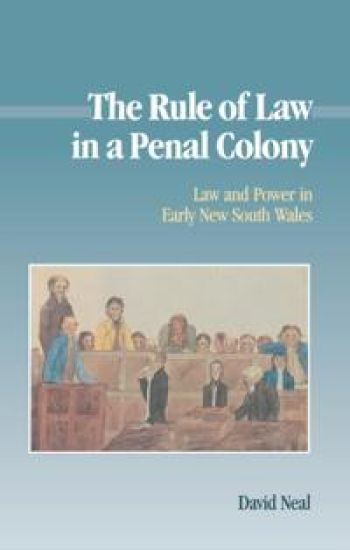
The Rule of Law in a Penal Colony

The Rule of Law in a Penal Colony

David Neal

Cambridge University Press
1992
sidottu
Ironically, the first civil case to be heard in Australia occurred at the behest of two convicts under sentence. Of course, convicts had first-hand experience of criminal law, but all the settlers were part of a culture which emphasised the rule of law as the guarantee of its fundamental political value, British liberty. This book, written by a lawyer and unique for its perspective based in both legal and social history, illuminates the important role played by the concept of the rule of law in the transformation of New South Wales from a penal colony to a free society. Dr Neal lucidly outlines the interaction between law and politics in early New South Wales and shows that because there were no official political structures, the courts served as a de facto parliament and a means of political expression.
The Election of Israel

The Election of Israel

David Novak

Cambridge University Press
1995
sidottu
In this book, David Novak conducts an historical, philosophical, and theological reflection on the central Jewish doctrine of Israel’s election by God, also known as the idea of the chosen people. Historically, he analyses the great change in modern Jewish thought brought about by Spinoza’s inversion of the doctrine: that it was not God who elected Israel, but Israel who elected God. The development of that inversion is illustrated by the thought of the German philosopher-theologian, Hermann Cohen. Philosophically, Novak explores the ontological implications of the two differing theologies of election. Theologically, he argues for the correlation of election and revelation, and maintains that a theology of election is required in order to deal with two central questions, namely: who are the Jews, and how are Jews to be related to the world? The constructive picture which results leads to a new understanding of Jewish modernity.
American Experimental Music 1890–1940

American Experimental Music 1890–1940

David Nicholls

Cambridge University Press
1991
pokkari
From the end of the nineteenth century a national musical consciousness gradually developed in the USA as composers began to turn away from the European conventions on which their music had hitherto been modelled. It was in this period of change that experimentation was born. In this book, the composer and scholar David Nicholls considers the most influential figures in the development of American experimental music, including Charles Ives, Charles Seeger, Ruth Crawford, Henry Cowell, and the young John Cage. He analyses the music and ideas of this group, explaining the compositional techniques invented and employed by them and the historical and cultural context in which they emerged.
Research Methods in Language Learning

Research Methods in Language Learning

David Nunan

Cambridge University Press
1992
pokkari
An introduction to research methods intended to help readers understand and evaluate research in language learning, this book presents a balanced, accessible view of a range of methods including: • formal experiments • introspective methods (including diaries, logs, journals, and stimulated recall) • interaction and transcript analysis • case studies It emphasises the value to language teachers of reading published research, as well as initiating their own research. After completing the tasks and exercises in each chapter, readers should acquire sufficient skills and knowledge to formulate research questions, collect relevant data, analyse and interpret it, and report the results to others.
The Self-Directed Teacher

The Self-Directed Teacher

David Nunan; Clarice Lamb

Cambridge University Press
1996
pokkari
Advances in second language teaching methodology, including new emphases on learner-centeredness and individualised instruction, have significantly changed the roles teachers play in the classroom and made ever greater demands upon their classroom management skills. Nunan and Lamb help language teachers to meet these new demands by providing them with the practical knowledge and skills necessary for the effective management of teaching and learning in today’s classrooms. The central focus of the book is on the independent decisions teachers must make in key areas such as lesson planning, teacher talk, group work, error correction, resource management, and evaluation. The text uses a task-based approach, and the material presented is well supported by theory and research.
The Rule of Law in a Penal Colony

The Rule of Law in a Penal Colony

David Neal

Cambridge University Press
2002
pokkari
Ironically, the first civil case to be heard in Australia occurred at the behest of two convicts under sentence. Of course, convicts had first-hand experience of criminal law, but all the settlers were part of a culture which emphasised the rule of law as the guarantee of its fundamental political value, British liberty. This book, written by a lawyer and unique for its perspective based in both legal and social history, illuminates the important role played by the concept of the rule of law in the transformation of New South Wales from a penal colony to a free society. Dr Neal lucidly outlines the interaction between law and politics in early New South Wales and shows that because there were no official political structures, the courts served as a de facto parliament and a means of political expression.
Task-Based Language Teaching

Task-Based Language Teaching

David Nunan

Cambridge University Press
2004
pokkari
The field of task-based language teaching has developed considerably since the publication of Designing Tasks for the Communicative Classroom (Nunan, 1989), a book which helped to set the research agenda in teaching methodology for the following decade. While Designing Tasks underpins this new title, the material has been thoroughly updated and includes four completely new chapters. Task-Based Language Teaching offers a comprehensive and up-to-date appraisal of the field.
The King James Bible

The King James Bible

David Norton

Cambridge University Press
2011
pokkari
The King James Bible was the result of an extraordinary effort over nearly a century to make many good English translations and turn them into what the translators called 'one principal good one, not justly to be excepted against'. David Norton traces the work of Tyndale and his successors, analysing the translation and revisions of two representative passages. His fascinating new account follows in detail the creation of the KJB, including attention to the translators' manuscript work. He also examines previously unknown evidence such as the diary of John Bois, the only man who made notes on the translation. At the centre of the book is a thorough discussion of the first edition. The latter part of the book traces the printing and textual history of the KJB and provides a concise account of its changing scholarly and literary reputations.
A History of the Bible as Literature: Volume 1, From Antiquity to 1700
It is regarded as a truism that the King James Bible is one of the finest pieces of English prose. Yet few people are aware that the King James Bible was generally scorned or ignored as English writing for a century and a half after its publication. The reputation of this Bible is the central, most fascinating, element in a larger history, that of literary ideas of the Bible as they have come into and developed in English culture; and the first volume of David Norton’s magisterial two-volume work surveys and analyses a comprehensive range of these ideas from biblical times to the end of the seventeenth century, providing a unique view of the Bible and translation.
A History of the Bible as Literature: Volume 2, From 1700 to the Present Day
Early-eighteenth-century literary critics thought the King James Bible had 'all the disadvantages of an old prose translation'. But from the 1760s on criticism became increasingly favourable. In the nineteenth century it welled into a chorus of praise for 'the noblest monument of English prose'. This 1993 volume, the second of a two-volume work, traces how that reversal of opinion came about and helped to shape the making and reception of modern translations such as the Revised Version and the New English Bible. At the same time the story of the development of modern literary discussion of the Bible in general is told. From the Augustan discovery of Longinus' comments on Genesis through such major figures as Robert Louth to modern critics such as Frank Kermode and Robert Alter, this story reveals a fascinating world of insights and repetitions of received opinions. It shows not only how criticism has shaped understanding of the Bible, but how the Bible has shaped literary criticism.
Jewish Inscriptions of Western Europe: Volume 1, Italy (excluding the City of Rome), Spain and Gaul
Although there was a substantial Jewish population in Western Europe from at least the first century BC, literary evidence for it before the end of the sixth century AD is very sparse, amounting to a few mainly hostile references by Roman writers and some material of doubtful historical value in rabbinic and hagiographic sources. Knowledge of the Jewish communities of the West is therefore almost entirely dependent on inscriptions, which contain information on community organisation, the use of biblical texts and religious symbols, linguistic habits, naming practices and social status, and burial customs and beliefs about life after death. This volume, the first of a two volume work, provides ready access to the Jewish inscriptions from Italy and the islands, Spain, France and Germany. Volume 2 concentrates on the inscriptions of the City of Rome. Hitherto it has been necessary to consult specialist publications to gain a complete picture of the inscriptions: this book fills a notable gap in the market.
Jewish Inscriptions of Western Europe: Volume 2, The City of Rome
Although there was a substantial Jewish population in Western Europe from at least the first century BC, literary evidence for it before the end of the sixth century AD is very sparse, amounting to a few mainly hostile references by Roman writers and some material of doubtful historical value in rabbinic and hagiographic sources. Knowledge of the Jewish communities of the West is therefore almost entirely dependent on inscriptions, which contain information on community organisation, the use of biblical texts and religious symbols, linguistic habits, naming practices and social status, and burial customs and beliefs about life after death. While Volume One provides ready access to the Jewish inscriptions from Italy and the islands, Spain and Gaul this second of two volumes concentrates on the inscriptions of the City of Rome. Hitherto it has been necessary to consult specialist publications to gain a complete picture of the inscriptions: this book fills a notable gap in the market.
A Textual History of the King James Bible

A Textual History of the King James Bible

David Norton

Cambridge University Press
2005
sidottu
David Norton has recently re-edited the King James Bible for Cambridge, and this book arises from his intensive work on that project. Here he shows how the text of the most important Bible in the English language was made, and how, for better and for worse, it changed in the hands of printers and editors until, in 1769, it became the text we know today. Using evidence as diverse as the manuscript work of the original translators, and the results of extensive computer collation of electronically held texts, Norton has produced a scholarly edition of the King James Bible for the new century that will restore the authority of the 1611 translation. This book describes this fascinating background, explains Norton’s editorial principles and provides substantial lists and tables of variant readings. It will be indispensable to scholars of the English Bible, literature, and publishing history.
A History of the English Bible as Literature

A History of the English Bible as Literature

David Norton

Cambridge University Press
2000
sidottu
Revised and condensed from David Norton’s acclaimed A History of the Bible as Literature, this book tells the story of English literary attitudes to the Bible. At first jeered at and mocked as English writing, then denigrated as having ‘all the disadvantages of an old prose translation’, the King James Bible somehow became ‘unsurpassed in the entire range of literature’. How so startling a change happened and how it affected the making of modern translations such as the Revised Version and the New English Bible is at the heart of this exploration of a vast range of religious, literary and cultural ideas. Translators, writers such as Donne, Milton, Bunyan and the Romantics, reactionary Bishops and radical students all help to show the changes in religious ideas and in standards of language and literature that created our sense of the most important book in English.