Kirjojen hintavertailu. Mukana 11 717 486 kirjaa ja 12 kauppaa.

Kirjahaku

Etsi kirjoja tekijän nimen, kirjan nimen tai ISBN:n perusteella.

1000 tulosta hakusanalla David a. Edwards

Pensions, Labor, and Individual Choice

Pensions, Labor, and Individual Choice

David A. Wise

University of Chicago Press
1985
sidottu
In recent years a decline in the labor force participation of older workers has combined with rapid current and projected increases in the number of older Americans, producing major policy debates over looming "crises" in social security and, to a lesser extent, in the private pension system. That private system is playing an increasing role in the support of retired workers and promises to be the subject of increasing scrutiny by economists and policymakers alike. Previous books on private pensions have largely neglected behavioral implications of the features of pension plans. The papers in this volume, developed from material presented at a recent National Bureau of Economic Research conference, address two aspects of the relation between varieties of labor coverage and participation in the labor force. First, age at retirement may be correlated with kind of pension coverage. The papers, in fact, provide strong evidence that individual decisions about when to retire are directly influenced by pension options. Second, pension plans usually impose a high cost on workers who change jobs, which suggests that pension coverage reduces instances of job change. Pensions, Labor, and Individual Choice quantifies these correlations and proposes a conceptual framework within which to view them.
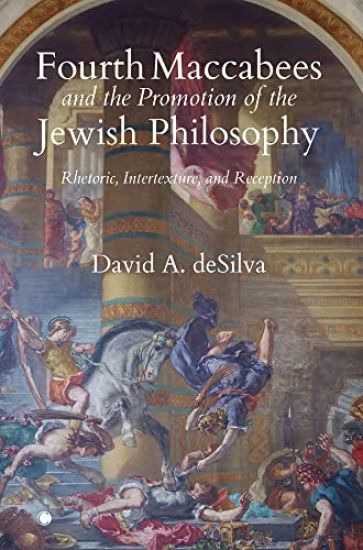
Fourth Maccabees and the Promotion of the Jewish Philosophy
Fourth Maccabees is a superbly craft­ed oration that presents a case for the Jewish way of life couched almost entirely in terms of Greek ethical ideals. Using an expansion upon previous scriptural narratives as an opportunity for philosophical exposition, its author delights in the Torah, the Law of Moses, as the divinely given path to becoming our best selves now. Moreover, drawing upon Greek logic tradition, he develops an elaborate rationalisation of that law based upon the promise of eternal life with God. In this collection of essays spanning two decades of study, David deSilva examines the formative training that produced such an author, the rhetorical craft present in his work, and the author's creative use of both Jewish and Greek literary resources. Finally, he demonstrates the book's enduring message and legacy in the Christian church, from theological influence on Origen to textual relations within Codex Sinaiticus.
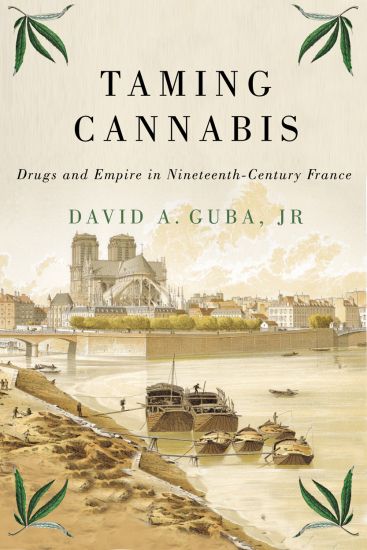
Taming Cannabis

Taming Cannabis

David A. Guba

McGill-Queen's University Press
2020
sidottu
Despite having the highest rates of cannabis use in the continent, France enforces the most repressive laws against the drug in all of Europe. Perhaps surprisingly, France was once the epicentre of a global movement to medicalize cannabis, specifically hashish, in the treatment of disease. In Taming Cannabis David Guba examines how nineteenth-century French authorities routinely blamed hashish consumption, especially among Muslim North Africans, for behaviour deemed violent and threatening to the social order. This association of hashish with violence became the primary impetus for French pharmacists and physicians to tame the drug and deploy it in the homeopathic treatment of mental illness and epidemic disease during the 1830s and 1840s. Initially heralded as a wonder drug capable of curing insanity, cholera, and the plague, hashish was deemed ineffective against these diseases and fell out of repute by the middle 1850s. The association between hashish and Muslim violence, however, remained and became codified in French colonial medicine and law by the 1860s: authorities framed hashish as a significant cause of mental illness, violence, and anti-state resistance among indigenous Algerians. As the French government looks to reform the nation's drug laws to address the rise in drug-related incarceration and the growing popular demand for cannabis legalization, Taming Cannabis provides a timely and fascinating exploration of the largely untold and living history of cannabis in colonial France.
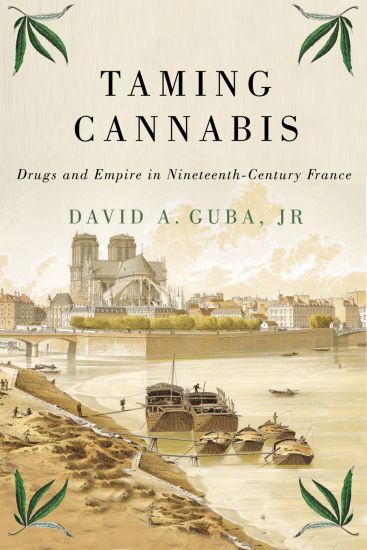
Taming Cannabis

Taming Cannabis

David A. Guba

McGill-Queen's University Press
2020
nidottu
Despite having the highest rates of cannabis use in the continent, France enforces the most repressive laws against the drug in all of Europe. Perhaps surprisingly, France was once the epicentre of a global movement to medicalize cannabis, specifically hashish, in the treatment of disease. In Taming Cannabis David Guba examines how nineteenth-century French authorities routinely blamed hashish consumption, especially among Muslim North Africans, for behaviour deemed violent and threatening to the social order. This association of hashish with violence became the primary impetus for French pharmacists and physicians to tame the drug and deploy it in the homeopathic treatment of mental illness and epidemic disease during the 1830s and 1840s. Initially heralded as a wonder drug capable of curing insanity, cholera, and the plague, hashish was deemed ineffective against these diseases and fell out of repute by the middle 1850s. The association between hashish and Muslim violence, however, remained and became codified in French colonial medicine and law by the 1860s: authorities framed hashish as a significant cause of mental illness, violence, and anti-state resistance among indigenous Algerians. As the French government looks to reform the nation's drug laws to address the rise in drug-related incarceration and the growing popular demand for cannabis legalization, Taming Cannabis provides a timely and fascinating exploration of the largely untold and living history of cannabis in colonial France.
Civilians at the Sharp End

Civilians at the Sharp End

David A. Borys

McGill-Queen's University Press
2021
sidottu
Mitigating the destruction and chaos wrought upon the civilian populations of northwest Europe during the latter years of the Second World War became the focus of Civil Affairs, a little-known branch of the First Canadian Army. Comprising a motley collection of civilians-turned-soldiers – too old for combat yet too valuable to remain off the front lines – the members of Civil Affairs served as liaisons between Canadian combat forces and the civilians they encountered on the ground.Civilians at the Sharp Endfollows the story of the Civil Affairs branch through France, Belgium, the Netherlands, and Germany in 1944-45. David Borys highlights how Civil Affairs helped civilians caught in the jaws of war by delivering food and medicine, providing shelter for refugees and displaced persons, establishing law and order, dealing with resistance groups, and aiding in the reconstruction of infrastructure in damaged urban areas. Once in Germany the branch was further challenged as it transformed into a military government and became a force of occupation, rehabilitating a war-torn Germany and purging the state of its Nazi leadership, while at times having to protect German civilians from the recently liberated prisoners of the Nazi state.Borys demonstrates that while the Canadian Army was indeed concerned for the welfare of civilians, military operations took priority over civilian needs. Civil Affairs was forced to negotiate this complex terrain, assisting civilian populations while ensuring that they never impeded the work of the Canadian military and the ultimate defeat of Nazi Germany.
Civilians at the Sharp End

Civilians at the Sharp End

David A. Borys

McGill-Queen's University Press
2021
nidottu
Mitigating the destruction and chaos wrought upon the civilian populations of northwest Europe during the latter years of the Second World War became the focus of Civil Affairs, a little-known branch of the First Canadian Army. Comprising a motley collection of civilians-turned-soldiers – too old for combat yet too valuable to remain off the front lines – the members of Civil Affairs served as liaisons between Canadian combat forces and the civilians they encountered on the ground.Civilians at the Sharp Endfollows the story of the Civil Affairs branch through France, Belgium, the Netherlands, and Germany in 1944-45. David Borys highlights how Civil Affairs helped civilians caught in the jaws of war by delivering food and medicine, providing shelter for refugees and displaced persons, establishing law and order, dealing with resistance groups, and aiding in the reconstruction of infrastructure in damaged urban areas. Once in Germany the branch was further challenged as it transformed into a military government and became a force of occupation, rehabilitating a war-torn Germany and purging the state of its Nazi leadership, while at times having to protect German civilians from the recently liberated prisoners of the Nazi state.Borys demonstrates that while the Canadian Army was indeed concerned for the welfare of civilians, military operations took priority over civilian needs. Civil Affairs was forced to negotiate this complex terrain, assisting civilian populations while ensuring that they never impeded the work of the Canadian military and the ultimate defeat of Nazi Germany.
Canadian Spy Story

Canadian Spy Story

David A. Wilson

MCGILL-QUEEN'S UNIVERSITY PRESS
2022
sidottu
In the mid-nineteenth century a group of Irish revolutionaries, known as the Fenians, set out to destroy Britain’s North American empire. Between 1866 and 1871 they launched a series of armed raids into Canadian territory.In Canadian Spy Story David Wilson takes readers into a dark and dangerous world of betrayal and deception, spies and informers, invasion and assassination, spanning Canada, the United States, Ireland, and Britain. In Canada there were Fenian secret societies in urban areas, including Quebec City, Montreal, Ottawa, and Toronto, and in some rural townships, all part of a wider North American network. Wilson tells the tale of Irishmen who attempted to liberate their country from British rule, and the Canadian secret police who infiltrated their revolutionary cells and worked their way to the top of the organization. With surprises at every turn, the story includes a sex scandal that nearly brought Canadian spy operations crashing down, as well as reports from Toronto about a plot to assassinate Queen Victoria.Featuring a cast of idealists, patriots, cynics, manipulators, and liars, Canadian Spy Story raises fundamental questions about state security and civil liberty, with important lessons for our own time.
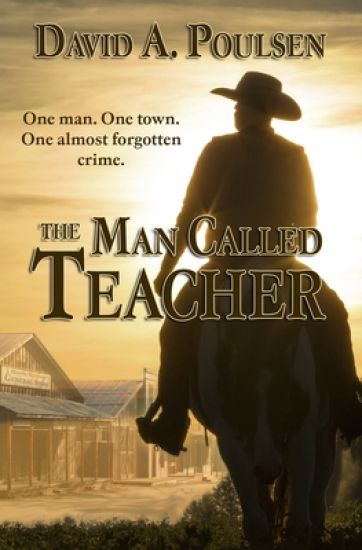
The Man Called Teacher

The Man Called Teacher

David a Poulsen

Ebound Canada
2019
pokkari
One man. One town. One almost forgotten crime. When the stranger who has answered the ad for the teaching position at Kecking Horse School climbs down from the stage on a sleepy Montana afternoon, things are about to change.With Virgil Watt, cowboy, horse-breaker and the first black man in the history of the town by his side, the stranger quickly upsets the tranquility of the town's leading citizens, administers a vicious beating to a couple of the town's toughs and sets out to avenge a long neglected wrong. A reader of books, a lover of laughter, a lawman/lawbreaker with a .44 strapped to his leg--he is the man called Teacher.
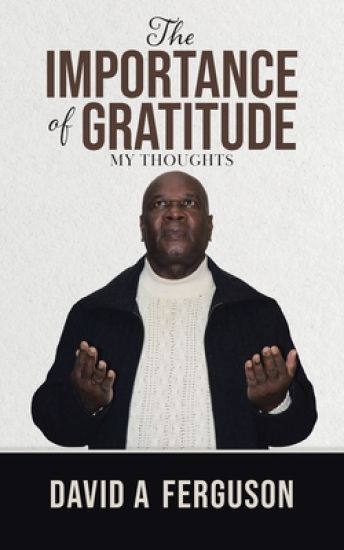
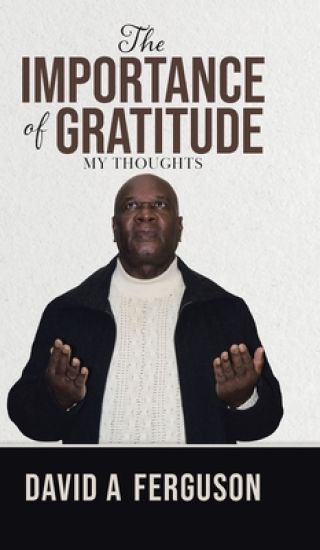
The Importance of Gratitude

The Importance of Gratitude

David A Ferguson

Tellwell Talent
2021
pokkari
The Importance of Gratitude is based on my own personal experience of how important it is to practice gratitude on a daily basis. It is about research that has been done on the benefits of making gratitude a part of your daily life. It's also based on personal stories that will hopefully inspire you. The book will describe in detail the benefits that you can get from being grateful. I guarantee that once you start reading this book you will not put it down until you are finished.
The Importance of Gratitude

The Importance of Gratitude

David A Ferguson

Tellwell Talent
2021
sidottu
The Importance of Gratitude is based on my own personal experience of how important it is to practice gratitude on a daily basis. It is about research that has been done on the benefits of making gratitude a part of your daily life. It's also based on personal stories that will hopefully inspire you. The book will describe in detail the benefits that you can get from being grateful. I guarantee that once you start reading this book you will not put it down until you are finished.
Animal Oppression and Human Violence

Animal Oppression and Human Violence

David A. Nibert

Columbia University Press
2013
sidottu
Jared Diamond and other leading scholars have argued that the domestication of animals for food, labor, and tools of war has advanced the development of human society. But by comparing practices of animal exploitation for food and resources in different societies over time, David A. Nibert reaches a strikingly different conclusion. He finds in the domestication of animals, which he renames "domesecration," a perversion of human ethics, the development of large-scale acts of violence, disastrous patterns of destruction, and growth-curbing epidemics of infectious disease. Nibert centers his study on nomadic pastoralism and the development of commercial ranching, a practice that has been largely controlled by elite groups and expanded with the rise of capitalism. Beginning with the pastoral societies of the Eurasian steppe and continuing through to the exportation of Western, meat-centered eating habits throughout today's world, Nibert connects the domesecration of animals to violence, invasion, extermination, displacement, enslavement, repression, pandemic chronic disease, and hunger. In his view, conquest and subjugation were the results of the need to appropriate land and water to maintain large groups of animals, and the gross amassing of military power has its roots in the economic benefits of the exploitation, exchange, and sale of animals. Deadly zoonotic diseases, Nibert shows, have accompanied violent developments throughout history, laying waste to whole cities, societies, and civilizations. His most powerful insight situates the domesecration of animals as a precondition for the oppression of human populations, particularly indigenous peoples, an injustice impossible to rectify while the material interests of the elite are inextricably linked to the exploitation of animals. Nibert links domesecration to some of the most critical issues facing the world today, including the depletion of fresh water, topsoil, and oil reserves; global warming; and world hunger, and he reviews the U.S. government's military response to the inevitable crises of an overheated, hungry, resource-depleted world. Most animal-advocacy campaigns reinforce current oppressive practices, Nibert argues. Instead, he suggests reforms that challenge the legitimacy of both domesecration and capitalism.
Animal Oppression and Human Violence

Animal Oppression and Human Violence

David A. Nibert

Columbia University Press
2013
pokkari
Jared Diamond and other leading scholars have argued that the domestication of animals for food, labor, and tools of war has advanced the development of human society. But by comparing practices of animal exploitation for food and resources in different societies over time, David A. Nibert reaches a strikingly different conclusion. He finds in the domestication of animals, which he renames "domesecration," a perversion of human ethics, the development of large-scale acts of violence, disastrous patterns of destruction, and growth-curbing epidemics of infectious disease. Nibert centers his study on nomadic pastoralism and the development of commercial ranching, a practice that has been largely controlled by elite groups and expanded with the rise of capitalism. Beginning with the pastoral societies of the Eurasian steppe and continuing through to the exportation of Western, meat-centered eating habits throughout today's world, Nibert connects the domesecration of animals to violence, invasion, extermination, displacement, enslavement, repression, pandemic chronic disease, and hunger. In his view, conquest and subjugation were the results of the need to appropriate land and water to maintain large groups of animals, and the gross amassing of military power has its roots in the economic benefits of the exploitation, exchange, and sale of animals. Deadly zoonotic diseases, Nibert shows, have accompanied violent developments throughout history, laying waste to whole cities, societies, and civilizations. His most powerful insight situates the domesecration of animals as a precondition for the oppression of human populations, particularly indigenous peoples, an injustice impossible to rectify while the material interests of the elite are inextricably linked to the exploitation of animals. Nibert links domesecration to some of the most critical issues facing the world today, including the depletion of fresh water, topsoil, and oil reserves; global warming; and world hunger, and he reviews the U.S. government's military response to the inevitable crises of an overheated, hungry, resource-depleted world. Most animal-advocacy campaigns reinforce current oppressive practices, Nibert argues. Instead, he suggests reforms that challenge the legitimacy of both domesecration and capitalism.
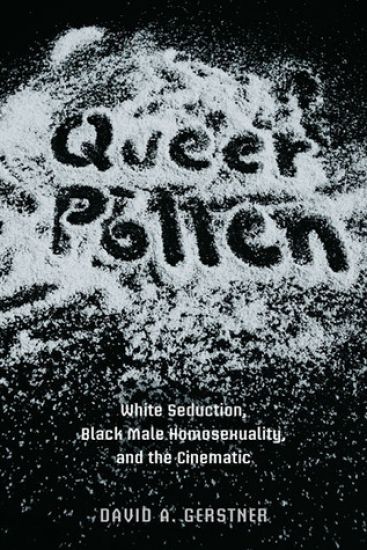
Queer Pollen

Queer Pollen

David A. Gerstner

University of Illinois Press
2011
sidottu
Queer Pollen discusses three notable black queer twentieth century artists--painter and writer Richard Bruce Nugent, author James Baldwin, and filmmaker Marlon Riggs--and the unique ways they turned to various media to work through their experiences living as queer black men. David A. Gerstner elucidates the complexities in expressing queer black desire through traditional art forms such as painting, poetry, and literary prose, or in the industrial medium of cinema. This challenge is made particularly sharp when the terms "black" and "homosexuality" come freighted with white ideological conceptualizations. Gerstner adroitly demonstrates how Nugent, Baldwin, and Riggs interrogated the seductive power and saturation of white queer cultures, grasping the deceit of an entrenched cultural logic that defined their identity and their desire in terms of whiteness. Their work confounds the notion of foundational origins that prescribe the limits of homosexual and racial desire, perversely refusing the cordoned-off classifications assigned to the "homosexual" and the "raced" body. Queer Pollen articulates a cinematic aesthetic that unfolds through painting, poetry, dance, novels, film, and video that marks the queer black body in relation to matters of race, gender, sexuality, nation, and death.
Beyond Left and Right

Beyond Left and Right

David A. Horowitz

University of Illinois Press
1996
nidottu
Beyond Left and Right is a sweeping overview of political insurgency in the United States from the 1880s to the present. It is at once a stunning synthesis, drawing on a large number of scholarly works, and an ambitious and original piece of research. The book ranges over diverse individuals and groups that have attacked the established order, from the left and the right, from the Populists of the 1890s to Ross Perot and the religious right of our times, dealing along the way with non-interventionists, Klans, monetary radicals, McCarthyites, Birchers, and Reaganites, among many others.
Law in Film

Law in Film

David A. Black

University of Illinois Press
1999
nidottu
The courtroom, like the movie theater, is an arena for the telling and interpreting of stories. Investigators piece them together, witnesses tell them, advocates retell them, and judges and juries assess their plausibility. These narratives reconstitute absent events through words, and their filming constitutes a double narrative: one important cultural practice rendered in the terms of another. Drawing on both film studies and legal scholarship, David A. Black explores the implications of representing court procedure, as well as other phases of legal process, in film. His study ranges from an inquiry into the common metaphorical ground between film and law, explored through "the detective" and "the witness," to a critical survey of legal writings about the cinema, to close analyses of key films about law. In examining multiple aspects of law in film, Black sustains a focus on the central importance of narrative while also unearthing the influences-pleasure in film, power in law-that lie beyond the narrative realm. Black's penetrating study treats questions of narrative authority and structure, social authority, and cultural history, revealing the underlying historical, cultural, and cognitive connections between legal and cinematic practices.
Queer Pollen

Queer Pollen

David A. Gerstner

University of Illinois Press
2011
nidottu
Queer Pollen discusses three notable black queer twentieth century artists--painter and writer Richard Bruce Nugent, author James Baldwin, and filmmaker Marlon Riggs--and the unique ways they turned to various media to work through their experiences living as queer black men. David A. Gerstner elucidates the complexities in expressing queer black desire through traditional art forms such as painting, poetry, and literary prose, or in the industrial medium of cinema. This challenge is made particularly sharp when the terms "black" and "homosexuality" come freighted with white ideological conceptualizations. Gerstner adroitly demonstrates how Nugent, Baldwin, and Riggs interrogated the seductive power and saturation of white queer cultures, grasping the deceit of an entrenched cultural logic that defined their identity and their desire in terms of whiteness. Their work confounds the notion of foundational origins that prescribe the limits of homosexual and racial desire, perversely refusing the cordoned-off classifications assigned to the "homosexual" and the "raced" body. Queer Pollen articulates a cinematic aesthetic that unfolds through painting, poetry, dance, novels, film, and video that marks the queer black body in relation to matters of race, gender, sexuality, nation, and death.
Hadrosaurs

Hadrosaurs

David A. Eberth; Michael J. Benton

Indiana University Press
2014
sidottu
Hadrosaurs—also known as duck-billed dinosaurs—are abundant in the fossil record. With their unique complex jaws and teeth perfectly suited to shred and chew plants, they flourished on Earth in remarkable diversity during the Late Cretaceous. So ubiquitous are their remains that we have learned more about dinosaurian paleobiology and paleoecology from hadrosaurs than we have from any other group. In recent years, hadrosaurs have been in the spotlight. Researchers around the world have been studying new specimens and new taxa seeking to expand and clarify our knowledge of these marvelous beasts. This volume presents the results of an international symposium on hadrosaurs, sponsored by the Royal Tyrrell Museum and the Royal Ontario Museum, where scientists and students gathered to share their research and their passion for duck-billed dinosaurs. A uniquely comprehensive treatment of hadrosaurs, the book encompasses not only the well-known hadrosaurids proper, but also Hadrosaouroidea, allowing the former group to be evaluated in a broader perspective. The 36 chapters are divided into six sections—an overview, new insights into hadrosaur origins, hadrosaurid anatomy and variation, biogeography and biostratigraphy, function and growth, and preservation, tracks, and traces—followed by an afterword by Jack Horner.
Double Diaspora in Sephardic Literature

Double Diaspora in Sephardic Literature

David A. Wacks

Indiana University Press
2015
sidottu
The year 1492 has long divided the study of Sephardic culture into two distinct periods, before and after the expulsion of Jews from Spain. David A. Wacks examines the works of Sephardic writers from the 13th to the 16th centuries and shows that this literature was shaped by two interwoven experiences of diaspora: first from the Biblical homeland Zion and later from the ancestral hostland, Sefarad. Jewish in Spain and Spanish abroad, these writers negotiated Jewish, Spanish, and diasporic idioms to produce a uniquely Sephardic perspective. Wacks brings Diaspora Studies into dialogue with medieval and early modern Sephardic literature for the first time.
French B Movies

French B Movies

David A. Pettersen

INDIANA UNIVERSITY PRESS
2023
sidottu
In the impoverished outskirts of French cities, known as the banlieues, minority communities are turning to American culture, history, and theory to make their own voices, cultures, and histories visible. Filmmakers have followed suit, turning to Hollywood genre conventions to challenge notions of identity, belonging, and marginalization in mainstream French film. French B Movies proposes that French banlieue films, far from being a fringe genre, offer a privileged site from which to understand the current state of the French film industry in an age of globalization. This gritty style appears in popular arthouse films such as Mathieu Kassovitz's La Haine and Bande de filles (Girlhood) along with the major Netflix hit series Lupin. David Pettersen traces how, in these works and others, directors fuse features of banlieue cinema with genre formulas associated with both Hollywood and Black cultural models, as well as how transnational genre hybridizations, such as B movies, have become part of the ecosystem of the French film industry. By combining film analysis, cultural history, critical theory, and industry studies, French B Movies reveals how featuring banlieues is as much about trying to imagine new identities and production models for French cinema as it is about representation.
French B Movies

French B Movies

David A. Pettersen

INDIANA UNIVERSITY PRESS
2023
pokkari
In the impoverished outskirts of French cities, known as the banlieues, minority communities are turning to American culture, history, and theory to make their own voices, cultures, and histories visible. Filmmakers have followed suit, turning to Hollywood genre conventions to challenge notions of identity, belonging, and marginalization in mainstream French film. French B Movies proposes that French banlieue films, far from being a fringe genre, offer a privileged site from which to understand the current state of the French film industry in an age of globalization. This gritty style appears in popular arthouse films such as Mathieu Kassovitz's La Haine and Bande de filles (Girlhood) along with the major Netflix hit series Lupin. David Pettersen traces how, in these works and others, directors fuse features of banlieue cinema with genre formulas associated with both Hollywood and Black cultural models, as well as how transnational genre hybridizations, such as B movies, have become part of the ecosystem of the French film industry. By combining film analysis, cultural history, critical theory, and industry studies, French B Movies reveals how featuring banlieues is as much about trying to imagine new identities and production models for French cinema as it is about representation.