Kirjojen hintavertailu. Mukana 11 717 486 kirjaa ja 12 kauppaa.

Kirjahaku

Etsi kirjoja tekijän nimen, kirjan nimen tai ISBN:n perusteella.

1000 tulosta hakusanalla Deborah C. Pollack

Swallowing Geography

Swallowing Geography

Deborah Levy

Penguin Books Ltd
2019
nidottu
A stunning early novel by the twice Booker-shortlisted author of Hot Milk and Swimming Home, Deborah Levy. Like her namesake Jack Kerouac, J.K. is always on the road, travelling Europe with her typewriter in a pillowcase. From J.K.'s irreverent, ironic perspective, Levy charts a new, dizzying, end-of-the-century world of shifting boundaries and displaced peoples._________________________________'An exciting writer, sharp and shocking as the knives her characters wield' Sunday Times 'Levy is a brilliant writer' Telegraph 'Levy's strength is her originality of thought and expression' Jeanette Winterson
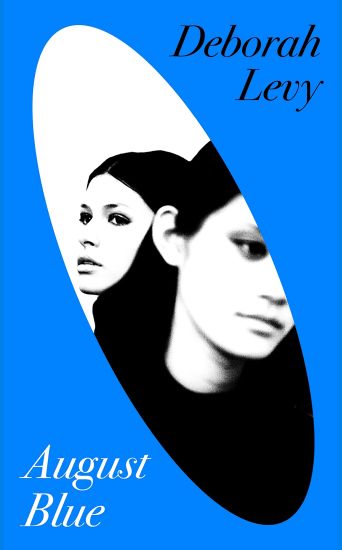
August Blue

August Blue

Deborah Levy

PENGUIN BOOKS LTD
2023
sidottu
A SUNDAY TIMES BESTSELLERBOOK OF THE YEAR 2023 ACCORDING TO FINANCIAL TIMES, GUARDIAN, INDEPENDENT, TIME MAGAZINEThe mesmerising new novel from the twice Booker-shortlisted author of Hot Milk and Swimming HomeAt the height of her career, concert pianist Elsa M. Anderson - former child prodigy, now in her thirties - walks off the stage in Vienna, mid-performance.Now she is in Athens, watching as another young woman, a stranger but uncannily familiar - almost her double - purchases a pair of mechanical dancing horses at a flea market. Elsa wants the horses too, but there are no more for sale. She drifts to the ferry port, on the run from her talent and her history.So begins a journey across Europe, shadowed by the elusive woman who bought the dancing horses.A dazzling portrait of melancholy and metamorphosis, August Blue uncovers the ways in which we seek to lose an old story, find ourselves in others and create ourselves anew.'A writer at the peak of her talents' Lisa Appignanesi'There's no one touching the brilliance of Deborah Levy's prose today' Lee Rourke'Levy's strength is her originality of thought and expression' Jeanette Winterson
Hot Milk

Hot Milk

Deborah Levy

Penguin Books Ltd.
2017
pokkari
SHORTLISTED FOR THE MAN BOOKER PRIZE 2016 SHORTLISTED FOR THE GOLDSMITHS PRIZE 2016 Plunge into this hypnotic tale of female sexuality and power - from the Man Booker shortlisted author of Swimming Home Two women arrive in a village on the Spanish coast. Rose is suffering from a strange illness andher doctors are mystified. Her daughter Sofia has brought her here to find a cure with the infamous and controversial Dr Gomez - a man of questionable methods and motives. Intoxicated by thick heat and the seductive people who move through it, both women begin to see their lives clearly for the first time in years. Through the opposing figures of mother and daughter, Deborah Levy explores the strange and monstrous nature of womanhood. Dreamlike and utterly compulsive, Hot Milk is a delirious fairy tale of feminine potency, a story both modern and timeless.
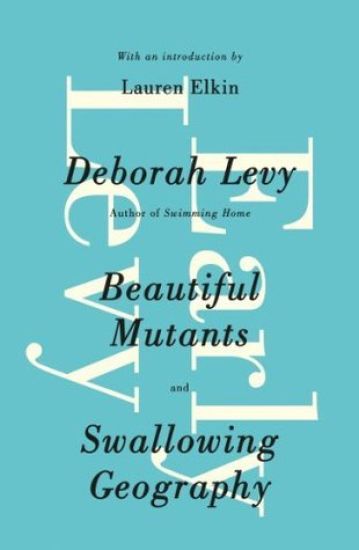
Early Levy

Early Levy

Deborah Levy

Penguin Books Ltd
2014
pokkari
Early Levy comprises two pioneering early works by Man Booker-shortlisted writer Deborah Levy.BEAUTIFUL MUTANTS Lapinski, a manipulative and magical Russian exile, summons forth a number of highly contemporary urban pilgrims. Through them, Levy explores broken dreams and self-destructive desires in a shimmering, dislocated allegory of its times.& SWALLOWING GEOGRAPHY Like her namesake Jack Kerouac, J.K. is always on the road, travelling Europe with her typewriter in a pillowcase. From J.K.'s irreverent, ironic perspective, Levy charts a new, dizzying, end-of-the-century world of shifting boundaries and displaced peoples.'She storms through the back door, refusing to be weighed down with rationalist and aesthetic baggage . . . [This] is a world on the brink of destruction but it's going down with a barnyard laugh and an explosive extravagance of imagination' Blitz'It throbs its way into the imagination like the unguided missile it decries' Observer on Beautiful MutantsDeborah Levy writes fiction, plays and poetry. Her work has been staged by the Royal Shakespeare Company, and she is the author of numerous highly praised books including Things I Don't Want to Know and The Unloved, both of which are now published by Penguin. Her novel Swimming Home was shortlisted for the 2012 Man Booker Prize, 2012 Specsavers National Book Awards (UK Author of the Year) and 2013 Jewish Quarterly Wingate Prize.
The Secret of Magic

The Secret of Magic

Deborah Johnson

Penguin Books Ltd
2015
pokkari
'[An] addictive tale of intrigue' - the Independent'A powerful portrait of the Deep South in the year before the civil rights movement' - Sunday TimesIf you liked The Help, you'll love this one!' - Entertainment WeeklyIn 1946 Regina Robichard is a rarity. A young New York civil rights lawyer, working for Thurgood Marshall, Reggie stumbles across a letter asking her boss to investigate the case of a young black soldier whose body has been found floating in the river in Mississippi. It fires her zeal.For Reggie, justice is not the only draw to this case. The letter is signed by the reclusive M. P. Calhoun, author of one of the most banned books in the country, a book Reggie loved as a child, about the friendship between three children, black and white, a magical forest - and a murder.Reggie has just three weeks in the South to investigate. But once down in Mississippi, amid the intoxicating landscape of cotton fields and lush plantations, Reggie not only finds herself further away from New York than she had ever imagined, but walking directly into M. P. Calhoun's book, a place where more than one type of justice exists.
Cost of Living

Cost of Living

Deborah Levy

Penguin
2019
pokkari
From the twice-Man Booker Prize-shortlisted author of Hot Milk and Swimming Home : Dazzling, essential, entirely unlike anything else -- a memoir on modern womanhood, rejecting oppressive social expectations and turning instead towards a thrilling, transformative freedom What does it mean to be free? What kind of women are we allowed to become? What would it feel like to live with truth, with integrity, with joy? And if we could find those things, would we be brave enough to claim them? In this astonishing memoir, Deborah Levy confronts the essential questions of modern womanhood with humour, pragmatism, and profoundly resonant wisdom. Reflecting on the period when she wrote the Man Booker Prize-shortlisted Hot Milk - when her mother was dying, her daughters were leaving home, her marriage was coming to an end - The Cost of Living is characteristically eloquent on mothers and daughters, social expectations and surreal realities, and the fraught, necessary creative process of the writer. Expanding out from these ideas, it becomes a manifesto for female experience, as the author embraces the exhilarating terror of freedom, seeking to understand what that freedom could mean and how it might feel. Praise for Deborah Levy's Hot Milk: 'Mythic, dreamlike... A literary triumph' Financial Times Books of the Year 'A beautifully rich, vividly atmospheric and psychologically complex exploration of mother-daughter interdependency. Every woman should read it' Bernardine Evaristo, author of Mr Loverman and the forthcoming Girl, Woman, Other 'A powerful novel about a daughter's struggle to define herself, Levy draws attention to the mythic in all of us [and] shows us the exquisite difficulty of realising that, in a world of myths, we have the freedom to write our own parts' Spectator
Real Estate

Real Estate

Deborah Levy

Penguin Books Ltd
2022
pokkari
From one of the great thinkers and writers of our time, comes the unmissable final instalment in Deborah Levy's critically acclaimed 'Living Autobiography'.'A beautifully crafted and thought-provoking snapshot of a life' The Evening Standard_________________________________'I began to wonder what myself and all unwritten and unseen women would possess in their property portfolios at the end of their lives. Literally, her physical property and possessions, and then everything else she valued, though it might not be valued by society. What might she claim, own, discard and bequeath? Or is she the real estate, owned by patriarchy? In this sense, Real Estate is a tricky business. We rent it and buy it, sell and inherit it - but we must also knock it down.'Following the critical acclaim of Things I Don't Want to Know and The Cost of Living, this final volume of Deborah Levy's 'Living Autobiography' is an exhilarating, thought-provoking and boldly intimate meditation on home and the spectres that haunt it._________________________________'Real Estate is a book to dive into. Come on in, the water's lovely' The Daily Telegraph'Her reflections on domesticity, freedom and romance are so beautiful, I found myself underlining multiple sentences a page. Wry, warm and uplifting, it's a book I'll return to again and again' Stylist'[Levy's living autobiography series is] a glittering triple echo of books that are as much philosophical discourse as a manifesto for living and writing' Financial Times
Man Who Saw Everything

Man Who Saw Everything

Deborah Levy

Penguin
2020
pokkari
In 1988 Saul Adler (a narcissistic, young historian) is hit by a car on the Abbey Road. He is apparently fine; he gets up and goes to see his art student girlfriend, Jennifer Moreau. They have sex then break up, but not before she has photographed Saul crossing the same Abbey Road.Saul leaves to study in communist East Berlin, two months before the Wall comes down. There he will encounter - significantly - both his assigned translator and his translator's sister, who swears she has seen a jaguar prowling the city. He will fall in love and brood upon his difficult, authoritarian father. And he will befriend a hippy, Rainer, who may or may not be a Stasi agent, but will certainly return to haunt him in middle age.Slipping slyly between time zones and leaving a spiralling trail, Deborah Levy's electrifying The Man Who Saw Everything examines what we see and what we fail to see, the grave crime of carelessness, the weight of history and our ruinous attempts to shrug it off.
Things I Don't Want to Know

Things I Don't Want to Know

Deborah Levy

Penguin Books Ltd.
2018
pokkari
Unmissable. Like chancing upon an oasis, you want to drink it slowly... Subtle, unpredictable, surprising' Guardian.Things I Don't Want to Know is the first in Deborah Levy's essential three-part 'Living Autobiography' on writing and womanhood.Taking George Orwell's famous essay, 'Why I Write', as a jumping-off point, Deborah Levy offers her own indispensable reflections of the writing life. With wit, clarity and calm brilliance, she considers how the writer must stake claim to that contested territory as a young woman and shape it to her need. Things I Don't Want to Know is a work of dazzling insight and deep psychological succour, from one of our most vital contemporary writers.'Superb sharpness and originality of imagination. An inspiring work of writing' Marina Warner.
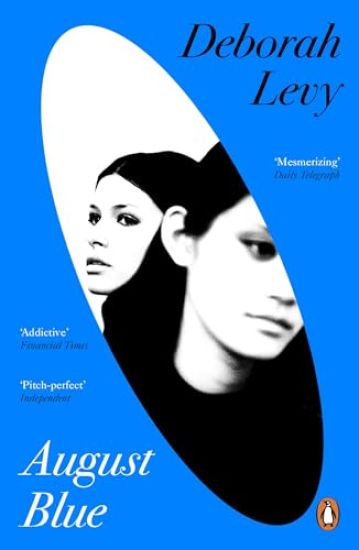
August Blue

August Blue

Deborah Levy

PENGUIN BOOKS LTD
2024
pokkari
A SUNDAY TIMES BESTSELLERBOOK OF THE YEAR 2023 ACCORDING TO FINANCIAL TIMES, GUARDIAN, INDEPENDENT, TIME MAGAZINE'Levy's lyrical, pitch-perfect prose is an exploration of our reasons for living, the forces that drive us and the inner music that controls the rhythms of our dance through life and love' IndependentThe mesmerising new novel from the twice Booker-shortlisted author of Hot Milk and Swimming HomeAt the height of her career, concert pianist Elsa M. Anderson - former child prodigy, now in her thirties - walks off the stage in Vienna, mid-performance.Now she is in Athens, watching as another young woman, a stranger but uncannily familiar - almost her double - purchases a pair of mechanical dancing horses at a flea market. Elsa wants the horses too, but there are no more for sale. She drifts to the ferry port, on the run from her talent and her history.So begins a journey across Europe, shadowed by the elusive woman who bought the dancing horses.A dazzling portrait of melancholy and metamorphosis, August Blue uncovers the ways in which we seek to lose an old story, find ourselves in others and create ourselves anew.'Deborah Levy writes like a dream and I mean that quite literally' Stuart Kelly, The Scotsman'A virtuosic novel of identity and breakdown . . . [it] flickers constantly between comedy and darkness. You know you'll read August Blue again' M John Harrison, GuardianSunday Times bestseller, May 2023
Every Tub Must Sit on Its Own Bottom

Every Tub Must Sit on Its Own Bottom

Deborah G. Plant

University of Illinois Press
1995
sidottu
"Plant's study is sorely needed at this point in the evolving critical assessment of Hurston. It is a paradigm for the study of individual African American women writers." -- Alice Deck, University of Illinois at Urbana-Champaign In a ground-breaking study of Zora Neale Hurston, Deborah Plant takes issue with current notions of Hurston as a feminist and earlier impressions of her as an intellectual lightweight who disregarded serious issues of race in American culture. Instead, Plant calls Hurston a "writer of resistance" who challenged the politics of domination both in her life and in her work. One of the great geniuses of the Harlem Renaissance, Hurston stands out as a strong voice for African-American women. Her anthropological inquiries as well as her evocative prose provide today's readers with a rich history of African American folk culture, a folk culture through which Hurston expressed her personal and political strategy of resistance and self-empowerment. Through readings of Hurston's fiction and autobiographical writings, Plant offers one of the first book-length discussions of Hurston's personal philosophy of individualism and self-preservation. From a discussion of Hurston's preacher father and influential mother, whose guiding philosophy is reflected in the title of this book, to the influence of Spinoza and Nietzsche, Plant puts into perspective the driving forces behind Hurston's powerful prose. This fresh look at one of the most important writers of the twentieth century is sure to shape future study of Hurston and her work.
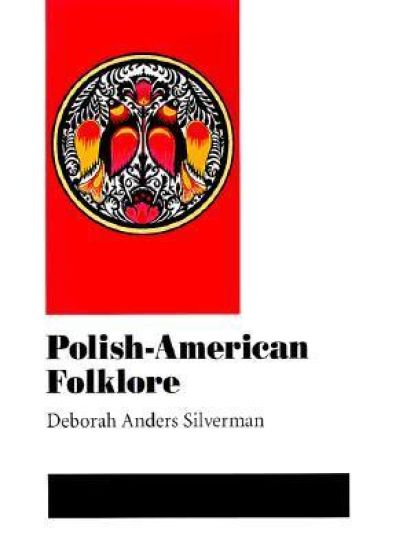
Polish-American Folklore

Polish-American Folklore

Deborah Silverman

University of Illinois Press
2000
sidottu
Integrating vivid photographs, firsthand observations, and interviews against a rich backdrop of ethnic practices and traditions, Deborah Anders Silverman explores how Polish Americans are creatively adapting the rural peasant folklore of the old country to life in multicultural, urban America. Silverman surveys rituals of courtship, marriage, coming of age, and funerals, also noting those customs that have been rediscovered after falling into disuse. She follows the trail of folk stories and delves into folk music and dance, particularly the polka, providing a detailed discussion of texts, contexts, and performance practices. She also describes birthing practices, home remedies, superstitions, folk blessings, and miracle cures. In addition, she offers a wealth of information on foodways and on the origins and celebration of holy days, from Christmas Eve vigils to the Dyngus Day festivals of the Easter season. Polish-American Folklore reveals a community that preserves distinctive traditions even though geographically dispersed in a new homeland. Polish Americans retain ties to their ethnicity though ethnic media, social clubs, churches, group events, and the Internet. This "Polonia without walls" is united by a resilient, dynamic, family-oriented culture that attracts not only Polish immigrants and their descendants but also newcomers from other ethnic and racial groups. By including first-person commentary from a wide range of Polish American individuals and families, from first-generation immigrants to non-Polish in-laws who embrace Polish foods, music, and traditions, Silverman brings to life a thriving ethnic subculture that values equally its Polish roots and its American harvest.
Coalfield Jews

Coalfield Jews

Deborah R. Weiner

University of Illinois Press
2006
sidottu
The stories of vibrant eastern European Jewish communities in the Appalachian coalfieldsCoalfield Jews explores the intersection of two simultaneous historic events: central Appalachia’s transformative coal boom (1880s-1920), and the mass migration of eastern European Jews to America. Traveling to southern West Virginia, eastern Kentucky, and southwestern Virginia to investigate the coal boom’s opportunities, some Jewish immigrants found success as retailers and established numerous small but flourishing Jewish communities. Deborah R. Weiner’s Coalfield Jews provides the first extended study of Jews in Appalachia, exploring where they settled, how they made their place within a surprisingly receptive dominant culture, how they competed with coal company stores, interacted with their non-Jewish neighbors, and maintained a strong Jewish identity deep in the heart of the Appalachian mountains. To tell this story, Weiner draws on a wide range of primary sources in social, cultural, religious, labor, economic, and regional history. She also includes moving personal statements, from oral histories as well as archival sources, to create a holistic portrayal of Jewish life that will challenge commonly held views of Appalachia as well as the American Jewish experience.
Lost in the USA

Lost in the USA

Deborah Gray White

University of Illinois Press
2017
sidottu
Remembered as an era of peace and prosperity, turn-of-the-millennium America was also a time of mass protest. But the political demands of the marchers seemed secondary to an urgent desire for renewal and restoration felt by people from all walks of life. Drawing on thousands of personal testimonies, Deborah Gray White explores how Americans sought better ways of living in, and dealing with, a rapidly changing world. From the Million Man, Million Woman, and Million Mom Marches to the Promise Keepers and LGBT protests, White reveals a people lost in their own country. Mass gatherings offered a chance to bond with like-minded others against a relentless tide of loneliness and isolation. By participating, individuals opened a door to self-discovery that energized their quests for order, autonomy, personal meaning, and fellowship in a society that seemed hostile to such deeper human needs. Moving forward in time, White also shows what marchers found out about themselves and those gathered around them. The result is an eye-opening reconsideration of a defining time in contemporary America.
Chicago Católico

Chicago Católico

Deborah E. Kanter

University of Illinois Press
2020
sidottu
Today, over one hundred Chicago-area Catholic churches offer Spanish language mass to congregants. How did the city's Mexican population, contained in just two parishes prior to 1960, come to reshape dozens of parishes and neighborhoods? Deborah E. Kanter tells the story of neighborhood change and rebirth in Chicago's Mexican American communities. She unveils a vibrant history of Mexican American and Mexican immigrant relations as remembered by laity and clergy, schoolchildren and their female religious teachers, parish athletes and coaches, European American neighbors, and from the immigrant women who organized as guadalupanas and their husbands who took part in the Holy Name Society. Kanter shows how the newly arrived mixed memories of home into learning the ways of Chicago to create new identities. In an ever-evolving city, Mexican immigrants and Mexican Americans’ fierce devotion to their churches transformed neighborhoods such as Pilsen.The first-ever study of Mexican-descent Catholicism in the city, Chicago Católico illuminates a previously unexplored facet of the urban past and provides present-day lessons for American communities undergoing ethnic integration and succession.
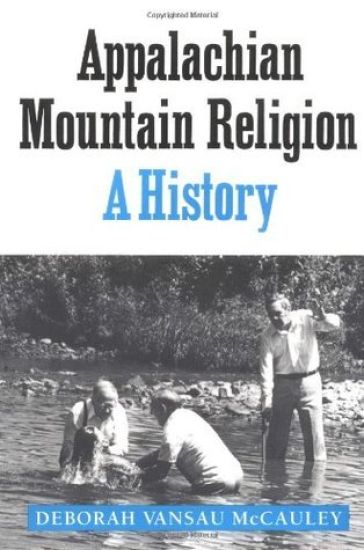
Appalachian Mountain Religion

Appalachian Mountain Religion

Deborah McCauley

University of Illinois Press
1995
nidottu
"A monumental achievement. . . . Certainly the best thing written on Appalachian Religion and one of the best works on the region itself. Deborah McCauley has made a winning argument that Appalachian religion is a true and authentic counter-stream to modern mainstream Protestant religion." -- Loyal Jones, founding director of the Appalachian Center at Berea CollegeAppalachian Mountain Religion is much more than a narrowly focused look at the religion of a region. Within this largest regional and widely diverse religious tradition can be found the strings that tie it to all of American religious history. The fierce drama between American Protestantism and Appalachian mountain religion has been played out for nearly two hundred years; the struggle between piety and reason, between the heart and the head, has echoes reaching back even further--from Continental Pietism and the Scots-Irish of western Scotland and Ulster to Colonial Baptist revival culture and plain-folk camp-meeting religion. Deborah Vansau McCauley places Appalachian mountain religion squarely at the center of American religious history, depicting the interaction and dramatic conflicts between it and the denominations that comprise the Protestant "mainstream." She clarifies the tradition histories and symbol systems of the area's principally oral religious culture, its worship practices and beliefs, further illuminating the clash between mountain religion and the "dominant religious culture" of the United States. This clash has helped to shape the course of American religious history. The explorations in Appalachian Mountain Religion range from Puritan theology to liberation theology, from Calvinism to the Holiness-Pentecostal movements. Within that wide realm and in the ongoing contention over religious values, the many strains of American religious history can be heard.
Coalfield Jews

Coalfield Jews

Deborah R. Weiner

University of Illinois Press
2006
nidottu
The stories of vibrant eastern European Jewish communities in the Appalachian coalfieldsCoalfield Jews explores the intersection of two simultaneous historic events: central Appalachia’s transformative coal boom (1880s-1920), and the mass migration of eastern European Jews to America. Traveling to southern West Virginia, eastern Kentucky, and southwestern Virginia to investigate the coal boom’s opportunities, some Jewish immigrants found success as retailers and established numerous small but flourishing Jewish communities. Deborah R. Weiner’s Coalfield Jews provides the first extended study of Jews in Appalachia, exploring where they settled, how they made their place within a surprisingly receptive dominant culture, how they competed with coal company stores, interacted with their non-Jewish neighbors, and maintained a strong Jewish identity deep in the heart of the Appalachian mountains. To tell this story, Weiner draws on a wide range of primary sources in social, cultural, religious, labor, economic, and regional history. She also includes moving personal statements, from oral histories as well as archival sources, to create a holistic portrayal of Jewish life that will challenge commonly held views of Appalachia as well as the American Jewish experience.
Lost in the USA

Lost in the USA

Deborah Gray White

University of Illinois Press
2017
nidottu
Remembered as an era of peace and prosperity, turn-of-the-millennium America was also a time of mass protest. But the political demands of the marchers seemed secondary to an urgent desire for renewal and restoration felt by people from all walks of life. Drawing on thousands of personal testimonies, Deborah Gray White explores how Americans sought better ways of living in, and dealing with, a rapidly changing world. From the Million Man, Million Woman, and Million Mom Marches to the Promise Keepers and LGBT protests, White reveals a people lost in their own country. Mass gatherings offered a chance to bond with like-minded others against a relentless tide of loneliness and isolation. By participating, individuals opened a door to self-discovery that energized their quests for order, autonomy, personal meaning, and fellowship in a society that seemed hostile to such deeper human needs. Moving forward in time, White also shows what marchers found out about themselves and those gathered around them. The result is an eye-opening reconsideration of a defining time in contemporary America.