This book investigates selected aspects of the grammatical development of Emirati Arabic, the variety of Gulf Arabic spoken in the United Arab Emirates and closely related to the varieties spoken in the rest of the Gulf States. While the acquisition of Arabic as a second language has been widely studied, first language acquisition of different Arabic dialects has received much less attention. Ntelitheos addresses this disparity by presenting a number of systematic studies on the acquisition of Emirati Arabic grammar based on a two-year longitudinal corpus of six children. He discusses the acquisition of the nominal domain, including definiteness and possession; the acquisition of verbal functional structure and agreement; and the acquisition of word order and negation in the syntactic domain. In addition, he defines several developmental stages for Emirati Arabic, based on established diagnostic tests. The discussion is framed within a general survey of the relevant literature in Arabic acquisition studies and combines new empirical data with rigorous discussion of several long-standing theoretical problems in the broader field of child language development.
The Chaos Team was formed and funded by the New Knights Templar to confront the nefarious forces of evil in the 21st Century. The TEAM responds to current events and resolves them in ways they only can do. This Caper book addresses the Benghazi Episode and the ISI Gambit, the hijacked Malaysian jetliner.
Templar Series is a compilation of all three Templar novels, The Templar Solution, The Templar Rendition, The Smoke of Satan and is a prelude to a new organization, CHAOS, that continues the Templar fight into the 21st Century.
This new book advances a fresh philosophical account of the relationship between the legislature and courts, opposing the common conception of law, in which it is legislatures that primarily create the law, and courts that primarily apply it. This conception has eclectic affinities with legal positivism, and although it may have been a helpful intellectual tool in the past, it now increasingly generates more problems than it solves. For this reason, the author argues, legal philosophers are better off abandoning it. At the same time they are asked to dismantle the philosophical and doctrinal infrastructure that has been based on it and which has been hitherto largely unquestioned. In its place the book offers an alternative framework for understanding the role of courts and the legislature; a framework which is distinctly anti-positivist and which builds on Ronald Dworkin’s interpretive theory of law. But, contrary to Dworkin, it insists that legal duty is sensitive to the position one occupies in the project of governing; legal interpretation is not the solitary task of one super-judge, but a collaborative task structured by principles of institutional morality such as separation of powers which impose a moral duty on participants to respect each other’s contributions. Moreover this collaborative task will often involve citizens taking an active role in their interaction with the law.
This is the first book to offer an extensive cosmopolitan, cross-cultural insight into the perennial controversy over the use of improperly obtained evidence in criminal trials. It challenges the conventional view that exclusionary rules are idiosyncratic of Anglo-American law, and highlights the ‘constitutionalisation’ and ‘internationalisation’ of criminal evidence and procedure as a cause of rapprochement (or divergence) beyond the Anglo-American and Continental law divide.Analysis focuses on confessional evidence and evidence obtained by search and seizure, telephone interceptions and other means of electronic surveillance. The laws of England and Wales, France, Greece and the United States are systematically compared and contrasted throughout this study, but, where appropriate, analysis extends to other Anglo-American and Continental legal systems. The book reviews exclusionary rules vis-à-vis the operation of judicial discretion, and explores the normative justifications that underpin them. It attempts to reinvigorate the idea of excluding evidence to protect constitutional or human rights (the rights thesis), arguing that there is significant scope for Anglo-American and Continental legal systems to place a renewed emphasis on it, particularly in relation to confessional evidence obtained in violation of custodial interrogation rights; we can locate an emerging rapprochement, and unique potential for European Court of Human Rights jurisprudence to build consensus in this respect. In marked contrast, remaining divergence with regard to evidence obtained by privacy violations means there is little momentum to adopt a reinvigorated rights thesis more widely.Longlisted for the Inner Temple Book Prize 2022.
Rescue from Evil, a CHAOS II, novella written about current events woven into a fictional narrative about a mission to rescue Hostages held by ISIS in Syria conducted by a clandestine organization, CHAOS, along with volunteers from U.S. Special Forces. The heroes of CHAOS, the Major, Sailor, Doc and the Commander risk their lives in this daring rescue.
CHAOS II is written in the same fictional narrative about real events, the rescue of various hostages held by ISIS in north east Syria, Rescue from Evil, and about the drug Cartels operating with impunity in Mexico, Dealers of Evil. In CHAOS II, the evil doers are the same, Radical Islam. Both stories involve a cooperative clandestine operation between the Intelligence Services of the United States and a private group operating clandestinely under the name of CHAOS. CHAOS is a spin off a group funded by the Templar wealth to fight socialism in the 21st Century.
Marina Bonnaserra has survived a lot in her short life, including a violent sexual assault as a teenager. Left with physical and emotional scars at times almost too much for her to bear, she chose administrative nursing as a profession to help her cope, but from a distance. Marina realizes that her life as a SINK lacks any deeper meaning, and that her relation with the one man in her life lacks depth. Prodded by a series of piercing comments, she considers having a child to fill the void in her life. Knowing that the only man in her life is non-committal, and against fatherhood, she explores in vitro fertilization. In the very impersonal corporate world of IVF, Marina is stimulated to produce eggs, rapidly assigned an anonymous sperm donor, and awaits implantation. She soon discovers that not all of her fertilized eggs can be accounted for, leading her to a quest against IVF corporate greed to locate her own "products of conception." Both the IVF procedure and the IVF center may pose a risk to her pregnancy and to her health.. In the end, can her one passion protect her from her one obsession?
Edgar Allan Poe (January 19, 1809 - October 7, 1849) was an American writer, editor, and literary critic. Poe is best known for his poetry and short stories, particularly his tales of mystery and the macabre. Widely regarded as a central figure of Romanticism in the United States and American literature as a whole, he was one of the country's earliest practitioners of the short story. Poe is generally considered the inventor of the detective fiction genre and is further credited with contributing to the emerging genre of science fiction. He was the first well-known American writer to try to earn a living through writing alone, resulting in a financially difficult life and career. Born in Boston, Poe was the second child of two actors. His father abandoned the family in 1810, and his mother died the following year. Thus orphaned, the child was taken in by John and Frances Allan, of Richmond, Virginia. Although they never formally adopted him, Poe was with them well into young adulthood. Tension developed later as John Allan and Edgar repeatedly clashed over debts, including those incurred by gambling, and the cost of secondary education for the young man. Poe attended the University of Virginia for one semester but left due to lack of money. Poe quarreled with Allan over the funds for his education and enlisted in the Army in 1827 under an assumed name. It was at this time his publishing career began, albeit humbly, with an anonymous collection of poems, Tamerlane and Other Poems (1827), credited only to "a Bostonian". With the death of Frances Allan in 1829, Poe and Allan reached a temporary rapprochement. Later failing as an officer's cadet at West Point and declaring a firm wish to be a poet and writer, Poe parted ways with John Allan. Poe switched his focus to prose and spent the next several years working for literary journals and periodicals, becoming known for his own style of literary criticism. His work forced him to move among several cities, including Baltimore, Philadelphia, and New York City. In Baltimore in 1835, he married Virginia Clemm, his 13-year-old cousin. In January 1845 Poe published his poem, "The Raven", to instant success. His wife died of tuberculosis two years after its publication. For years, he had been planning to produce his own journal, The Penn (later renamed The Stylus), though he died before it could be produced. On October 7, 1849, at age 40, Poe died in Baltimore; the cause of his death is unknown and has been variously attributed to alcohol, brain congestion, cholera, drugs, heart disease, rabies, suicide, tuberculosis, and other agents. Poe and his works influenced literature in the United States and around the world, as well as in specialized fields, such as cosmology and cryptography. Poe and his work appear throughout popular culture in literature, music, films, and television. A number of his homes are dedicated museums today. The Mystery Writers of America present an annual award known as the Edgar Award for distinguished work in the mystery genre.
Edgar Allan Poe ( January 19, 1809 - October 7, 1849) was an American writer, editor, and literary critic. Poe is best known for his poetry and short stories, particularly his tales of mystery and the macabre. Widely regarded as a central figure of Romanticism in the United States and American literature as a whole, he was one of the country's earliest practitioners of the short story. Poe is generally considered the inventor of the detective fiction genre and is further credited with contributing to the emerging genre of science fiction. He was the first well-known American writer to try to earn a living through writing alone, resulting in a financially difficult life and career. Born in Boston, Poe was the second child of two actors. His father abandoned the family in 1810, and his mother died the following year. Thus orphaned, the child was taken in by John and Frances Allan, of Richmond, Virginia. Although they never formally adopted him, Poe was with them well into young adulthood. Tension developed later as John Allan and Edgar repeatedly clashed over debts, including those incurred by gambling, and the cost of secondary education for the young man. Poe attended the University of Virginia for one semester but left due to lack of money. Poe quarreled with Allan over the funds for his education and enlisted in the Army in 1827 under an assumed name. It was at this time his publishing career began, albeit humbly, with an anonymous collection of poems, Tamerlane and Other Poems (1827), credited only to "a Bostonian". With the death of Frances Allan in 1829, Poe and Allan reached a temporary rapprochement. Later failing as an officer's cadet at West Point and declaring a firm wish to be a poet and writer, Poe parted ways with John Allan. Poe switched his focus to prose and spent the next several years working for literary journals and periodicals, becoming known for his own style of literary criticism. His work forced him to move among several cities, including Baltimore, Philadelphia, and New York City. In Baltimore in 1835, he married Virginia Clemm, his 13-year-old cousin. In January 1845 Poe published his poem, "The Raven", to instant success. His wife died of tuberculosis two years after its publication. For years, he had been planning to produce his own journal, The Penn (later renamed The Stylus), though he died before it could be produced. On October 7, 1849, at age 40, Poe died in Baltimore; the cause of his death is unknown and has been variously attributed to alcohol, brain congestion, cholera, drugs, heart disease, rabies, suicide, tuberculosis, and other agents. Poe and his works influenced literature in the United States and around the world, as well as in specialized fields, such as cosmology and cryptography. Poe and his work appear throughout popular culture in literature, music, films, and television. A number of his homes are dedicated museums today. The Mystery Writers of America present an annual award known as the Edgar Award for distinguished work in the mystery genre.
Edgar Allan Poe ( January 19, 1809 - October 7, 1849) was an American writer, editor, and literary critic. Poe is best known for his poetry and short stories, particularly his tales of mystery and the macabre. Widely regarded as a central figure of Romanticism in the United States and American literature as a whole, he was one of the country's earliest practitioners of the short story. Poe is generally considered the inventor of the detective fiction genre and is further credited with contributing to the emerging genre of science fiction. He was the first well-known American writer to try to earn a living through writing alone, resulting in a financially difficult life and career. Born in Boston, Poe was the second child of two actors. His father abandoned the family in 1810, and his mother died the following year. Thus orphaned, the child was taken in by John and Frances Allan, of Richmond, Virginia. Although they never formally adopted him, Poe was with them well into young adulthood. Tension developed later as John Allan and Edgar repeatedly clashed over debts, including those incurred by gambling, and the cost of secondary education for the young man. Poe attended the University of Virginia for one semester but left due to lack of money. Poe quarreled with Allan over the funds for his education and enlisted in the Army in 1827 under an assumed name. It was at this time his publishing career began, albeit humbly, with an anonymous collection of poems, Tamerlane and Other Poems (1827), credited only to "a Bostonian". With the death of Frances Allan in 1829, Poe and Allan reached a temporary rapprochement. Later failing as an officer's cadet at West Point and declaring a firm wish to be a poet and writer, Poe parted ways with John Allan. Poe switched his focus to prose and spent the next several years working for literary journals and periodicals, becoming known for his own style of literary criticism. His work forced him to move among several cities, including Baltimore, Philadelphia, and New York City. In Baltimore in 1835, he married Virginia Clemm, his 13-year-old cousin. In January 1845 Poe published his poem, "The Raven", to instant success. His wife died of tuberculosis two years after its publication. For years, he had been planning to produce his own journal, The Penn (later renamed The Stylus), though he died before it could be produced. On October 7, 1849, at age 40, Poe died in Baltimore; the cause of his death is unknown and has been variously attributed to alcohol, brain congestion, cholera, drugs, heart disease, rabies, suicide, tuberculosis, and other agents. Poe and his works influenced literature in the United States and around the world, as well as in specialized fields, such as cosmology and cryptography. Poe and his work appear throughout popular culture in literature, music, films, and television. A number of his homes are dedicated museums today. The Mystery Writers of America present an annual award known as the Edgar Award for distinguished work in the mystery genre.
Edgar Allan Poe (January 19, 1809 - October 7, 1849) was an American writer, editor, and literary critic. Poe is best known for his poetry and short stories, particularly his tales of mystery and the macabre. Widely regarded as a central figure of Romanticism in the United States and American literature as a whole, he was one of the country's earliest practitioners of the short story. Poe is generally considered the inventor of the detective fiction genre and is further credited with contributing to the emerging genre of science fiction. He was the first well-known American writer to try to earn a living through writing alone, resulting in a financially difficult life and career. Born in Boston, Poe was the second child of two actors. His father abandoned the family in 1810, and his mother died the following year. Thus orphaned, the child was taken in by John and Frances Allan, of Richmond, Virginia. Although they never formally adopted him, Poe was with them well into young adulthood. Tension developed later as John Allan and Edgar repeatedly clashed over debts, including those incurred by gambling, and the cost of secondary education for the young man. Poe attended the University of Virginia for one semester but left due to lack of money. Poe quarreled with Allan over the funds for his education and enlisted in the Army in 1827 under an assumed name. It was at this time his publishing career began, albeit humbly, with an anonymous collection of poems, Tamerlane and Other Poems (1827), credited only to "a Bostonian". With the death of Frances Allan in 1829, Poe and Allan reached a temporary rapprochement. Later failing as an officer's cadet at West Point and declaring a firm wish to be a poet and writer, Poe parted ways with John Allan. Poe switched his focus to prose and spent the next several years working for literary journals and periodicals, becoming known for his own style of literary criticism. His work forced him to move among several cities, including Baltimore, Philadelphia, and New York City. In Baltimore in 1835, he married Virginia Clemm, his 13-year-old cousin. In January 1845 Poe published his poem, "The Raven", to instant success. His wife died of tuberculosis two years after its publication. For years, he had been planning to produce his own journal, The Penn (later renamed The Stylus), though he died before it could be produced. On October 7, 1849, at age 40, Poe died in Baltimore; the cause of his death is unknown and has been variously attributed to alcohol, brain congestion, cholera, drugs, heart disease, rabies, suicide, tuberculosis, and other agents. Poe and his works influenced literature in the United States and around the world, as well as in specialized fields, such as cosmology and cryptography. Poe and his work appear throughout popular culture in literature, music, films, and television. A number of his homes are dedicated museums today. The Mystery Writers of America present an annual award known as the Edgar Award for distinguished work in the mystery genre.
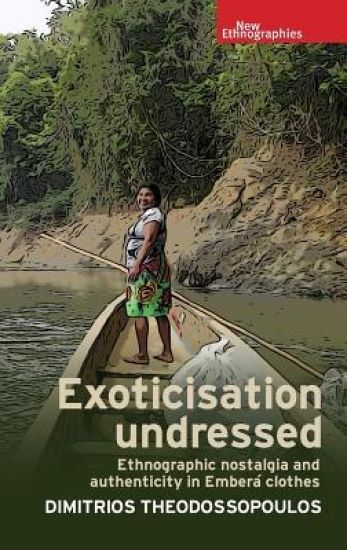
Exoticisation undressed is an innovative ethnography that makes visible the many layers through which our understandings of indigenous cultures are filtered and their inherent power to distort and refract understanding. The book focuses in detail on the clothing practices of the Emberá in Panama, an Amerindian ethnic group, who have gained national and international visibility through their engagement with indigenous tourism. The very act of gaining visibility while wearing indigenous attire has encouraged among some Emberá communities a closer identification with an indigenous identity and a more confident representational awareness. The clothes that the Emberá wear are not simply used to convey messages, but also become constitutive of their intended messages. By wearing indigenous-and-modern clothes, the Emberá-who are often seen by outsiders as shadows of a vanishing world-reclaim their place as citizens of a contemporary nation. Through reflexive engagement, Exoticisation undressed exposes the workings of ethnographic nostalgia and the Western quest for a singular, primordial authenticity, unravelling instead new layers of complexity that reverse and subvert exoticisation.
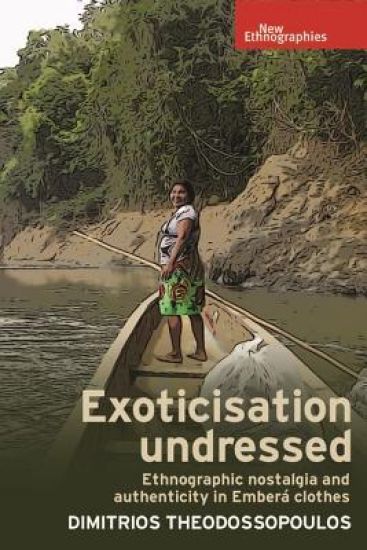
Exoticisation Undressed is an innovative ethnography that makes visible the many layers through which our understandings of indigenous cultures are filtered and their inherent power to distort and refract understanding. The book focuses in detail on the clothing practices of the Emberá in Panama, an Amerindian ethnic group, who have gained national and international visibility through their engagement with indigenous tourism. The very act of gaining visibility while wearing indigenous attire has encouraged among some Emberá communities a closer identification with an indigenous identity and a more confident representational awareness. The clothes that the Emberá wear are not simply used to convey messages, but also become constitutive of their intended messages. By wearing indigenous-and-modern clothes, the Emberá-who are often seen by outsiders as shadows of a vanishing world-reclaim their place as citizens of a contemporary nation.
Without any doubt, one of the European regions that has never ceased to trouble the Westerner traveller is the Balkan Peninsula, which functioned as a terra incognita within the British travel canon, and served as the transit point to the Ottoman Empire or the Old Grecian world. At a time when Anglo-Saxonism occupied a prevalent position in British political discourse, the Balkan Peninsula came to epitomise all the negative qualities of the Orient that British travellers were anxious to apply to alien countries that were far removed from the nation-building agenda of the Empire. As such, classified as the fringe of the Orient, Serbia was persistently depicted as a politically unstable region, inhabited by primitive ethnic groups that could possibly threaten the viability of the British imperialist interests in European Turkey. In the light of the Serbian national struggle to promote the idea of a South-Slavic Union or forge an identity against the Austrian and Ottoman Empires, some British travellers undertook a journey to all the Balkan states where Serbians formed the majority of the population to demonise the War of Liberation of the Balkan states against the Ottoman yoke, treating it as visible evidence of Russian Expansionism.This book concentrates on dystopian British imagology of Serbia as a travel destination, including travel accounts produced from 1717 until 1911, a year prior to the outbreak of the First World War. The travel texts incorporated into this volume shed light on all the conceptualisations of the Balkans, addressing the sociopolitical conditions that sparked the national awakening of Serbia.