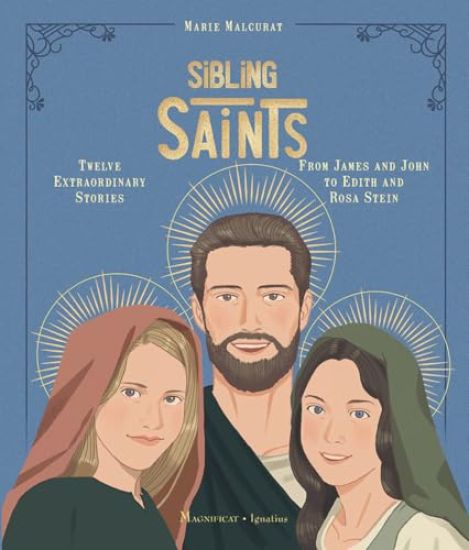
Through lively stories, comic strips, historical background, and prayers, get to know these brothers and sisters, models of faith and holiness: James and John; Lazarus, Martha, and Mary; Cosmas and Damian; Donatian and Rogatian; Ambrose, Marcellina, and Satyrus; Benedict and Scholastica; Cyril and Methodius, Bernard and Humbeline; Louis and Isabelle of France; The Martin Sisters; Elizabeth of the Trinity and Margaret; and Edith and Rosa Stein.
Gabriel Garc a M rquez's most political novel is the tragic story of General Sim n Bol var, the man who tried to unite a continent. Bol var, known in six Latin American countries as the Liberator, is one of the most revered heroes of the western hemisphere; in Garc a M rquez's brilliant reimagining he is magnificently flawed as well. The novel follows Bol var as he takes his final journey in 1830 down the Magdalena River toward the sea, revisiting the scenes of his former glory and lamenting his lost dream of an alliance of American nations. Forced from power, dogged by assassins, and prematurely aged and wasted by a fatal illness, the General is still a remarkably vital and mercurial man. He seems to remain alive by the sheer force of will that led him to so many victories in the battlefields and love affairs of his past. As he wanders in the labyrinth of his failing powers-and still-powerful memories-he defies his impending death until the last. The General in His Labyrinth is an unforgettable portrait of a visionary from one of the greatest writers of our time.
A tour of France, presented through the writings of thirty-three British and American authors, past and present, including Peter Mayle, Mark Twain, Edith Wharton, M. F. K. Fisher, Paul Theroux, and Ernest Hemingway, celebrates the country's food, people, cultures, and areas of interest. Original. 20,000 first printing.
The true story of the intimate relationship that gave birth to the Farnsworth House, a masterpiece of twentieth-century architecture--and disintegrated into a bitter feud over love, money, gender, and the very nature of art. "An intimate portrait . . . alive with architectural intrigue."--Architect Magazine In 1945, Edith Farnsworth asked the German architect Mies van der Rohe, already renowned for his avant-garde buildings, to design a weekend home for her outside of Chicago. Edith was a woman ahead of her time--unmarried, she was a distinguished medical researcher, as well as an accomplished violinist, translator, and poet. The two quickly began spending weekends together, talking philosophy, Catholic mysticism, and, of course, architecture over wine-soaked picnic lunches. Their personal and professional collaboration would produce the Farnsworth House, one of the most important works of architecture of all time, a blindingly original structure made up almost entirely of glass and steel. But the minimalist marvel, built in 1951, was plagued by cost overruns and a sudden chilling of the two friends' mutual affection. Though the building became world famous, Edith found it impossible to live in, because of its constant leaks, flooding, and complete lack of privacy. Alienated and aggrieved, she lent her name to a public campaign against Mies, cheered on by Frank Lloyd Wright. Mies, in turn, sued her for unpaid monies. The ensuing lengthy trial heard evidence of purported incompetence by an acclaimed architect, and allegations of psychological cruelty and emotional trauma. A commercial dispute litigated in a rural Illinois courthouse became a trial of modernist art and architecture itself. Interweaving personal drama and cultural history, Alex Beam presents a stylish, enthralling narrative tapestry, illuminating the fascinating history behind one of the twentieth century's most beautiful and significant architectural projects.
A seventh grade prankster is determined to escape the all-girls academy where he's the only boy--by getting expelled--in this "spectacular debut" (Kirkus Reviews) that's perfect for "fans of Jerry Spinelli's Crash and Loser" (Booklist). Seventh grader Jeremy Miner has a girl problem. Or, more accurately, a girls problem. 475 of them to be exact. That's how many girls attend his school, St. Edith's Academy. Jeremy is the only boy left after the school's brief experiment in co-education. And he needs to get out. But his mother--a teacher at the school--won't let him transfer, so Jeremy takes matters into his own hands: he's going to get expelled. Together with his best friend Claudia, Jeremy unleashes a series of hilarious pranks in hopes that he'll get kicked out with minimal damage to his permanent record. But when his stunts start to backfire, Jeremy has to decide how far he's willing to go and whom he's willing to knock down to get out the door.
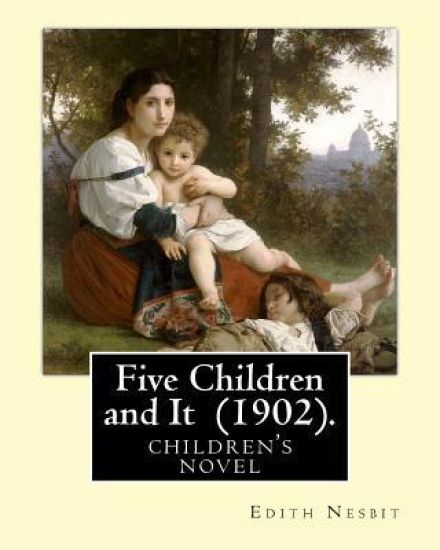
Five Children and It is a children's novel by English author E. Nesbit. Plot: Like Nesbit's The Railway Children, the story begins when a group of children move from London to the countryside of Kent. The five children - Cyril, Anthea, Robert, Jane, and their baby brother, known as the Lamb - are playing in a gravel pit when they uncover a rather grumpy, ugly, and occasionally malevolent Psammead or sand-fairy, who has the ability to grant wishes. He persuades the children to take one wish each day to be shared among them, with the caveat that the wishes will turn to stone at sunset. This, apparently, used to be the rule in the Stone Age, when all that children wished for was food, the bones of which then became fossils. The five children's first wish is to be "as beautiful as the day". The wish ends at sunset and its effects simply vanish, leading the Psammead to observe that some wishes are too fanciful to be changed to stone. All the wishes go comically wrong. The children wish to be beautiful, but the servants do not recognise them and shut them out of the house. They wish to be rich, then find themselves with a gravel-pit full of gold spade guineas that no shop will accept as they are no longer in circulation, so they can't buy anything. A wish for wings seems to be going well, but at sunset the children find themselves stuck on top of a church bell tower with no way down, getting them into trouble with the gamekeeper who must take them home (though this wish has the happy side-effect of introducing the gamekeeper to the children's housemaid, who later marries him). Robert is bullied by the baker's boy, then wishes that he was bigger - whereupon he becomes eleven feet tall, and the other children show him at a travelling fair for coins. They also wish themselves into a castle, only to learn that it is being besieged, while a wish to meet real Red Indians ends with the children nearly being scalped.............. Edith Nesbit (married name Edith Bland; 15 August 1858 - 4 May 1924) was an English author and poet; she published her books for children under the name of E. Nesbit. She wrote or collaborated on more than 60 books of children's literature. She was also a political activist and co-founded the Fabian Society, a socialist organisation later affiliated to the Labour Party. Nesbit was born in 1858 at 38 Lower Kennington Lane in Kennington, Surrey (now part of Greater London), the daughter of an agricultural chemist, John Collis Nesbit, who died in March 1862, before her fourth birthday. Her sister Mary's ill health meant that the family travelled around for some years, living variously in Brighton, Buckinghamshire, France (Dieppe, Rouen, Paris, Tours, Poitiers, Angoul me, Bordeaux, Arcachon, Pau, Bagn res-de-Bigorre, and Dinan in Brittany), Spain and Germany, before settling for three years at Halstead Hall in Halstead in north-west Kent, a location which later inspired The Railway Children (this distinction has also been claimed by the Derbyshire town of New Mills). At eighteen, Nesbit met the bank clerk Hubert Bland in 1877. Seven months pregnant, she married Bland on 22 April 1880, though she did not immediately live with him, as Bland initially continued to live with his mother. Their marriage was a stormy one. Early on Nesbit discovered that another woman believed she was Hubert's fiancee and had also borne him a child.... Harold Robert Millar (1869 - 1942) was a prominent and prolific Scottish graphic artist and illustrator of the late nineteenth and early twentieth centuries.
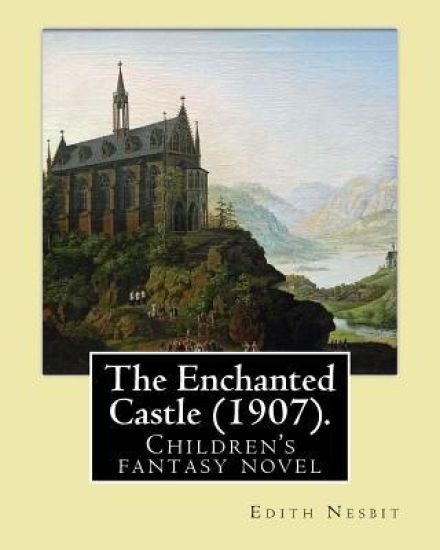
The Enchanted Castle is a children's fantasy novel by Edith Nesbit first published in 1907. PLOT: The enchanted castle of the title is a country estate in the West Country seen through the eyes of three children, Gerald, James and Kathleen, who discover it while exploring during the school holidays. The lake, groves and marble statues, with white towers and turrets in the distance, make a fairy-tale setting, and then in the middle of the maze in the rose garden they find a sleeping fairy-tale princess. The "princess" tells them that the castle is full of magic, and they almost believe her. She shows them the treasures of the castle, including a magic ring she says is a ring of invisibility, but when it actually turns her invisible she panics and admits that she is the housekeeper's niece, Mabel, and was just play-acting. The children soon discover that the ring has other magical powers. 1] The Enchanted Castle was written for both children and adults. It combines descriptions of the imaginative play of children, reminiscent of The Story of the Treasure Seekers, with a magic more muted than in her major fantasies such as The Story of the Amulet. Edith Nesbit (married name Edith Bland; 15 August 1858 - 4 May 1924) was an English author and poet; she published her books for children under the name of E. Nesbit. She wrote or collaborated on more than 60 books of children's literature. She was also a political activist and co-founded the Fabian Society, a socialist organisation later affiliated to the Labour Party. Nesbit was born in 1858 at 38 Lower Kennington Lane in Kennington, Surrey (now part of Greater London), the daughter of an agricultural chemist, John Collis Nesbit, who died in March 1862, before her fourth birthday. Her sister Mary's ill health meant that the family travelled around for some years, living variously in Brighton, Buckinghamshire, France (Dieppe, Rouen, Paris, Tours, Poitiers, Angoul me, Bordeaux, Arcachon, Pau, Bagn res-de-Bigorre, and Dinan in Brittany), Spain and Germany, before settling for three years at Halstead Hall in Halstead in north-west Kent, a location which later inspired The Railway Children (this distinction has also been claimed by the Derbyshire town of New Mills). At eighteen, Nesbit met the bank clerk Hubert Bland in 1877. Seven months pregnant, she married Bland on 22 April 1880, though she did not immediately live with him, as Bland initially continued to live with his mother. Their marriage was a stormy one. Early on Nesbit discovered that another woman believed she was Hubert's fiancee and had also borne him a child. A more serious blow came later when she discovered that her good friend, Alice Hoatson, was pregnant with Hubert's child. She had previously agreed to adopt Hoatson's child and allow Hoatson to live with her as their housekeeper. After she discovered the truth, they quarrelled violently and she suggested that Hoatson and the baby should leave; her husband threatened to leave Edith if she disowned the baby and its mother. Hoatson remained with them as a housekeeper and secretary and became pregnant by Bland again 13 years later. Edith again adopted Hoatson's child. Nesbit's children were Paul Bland (1880-1940), to whom The Railway Children was dedicated; Iris Bland (1881-1950s); Fabian Bland (1885-1900); Rosamund Bland (1886-1950), to whom The Book of Dragons was dedicated; and John Bland (1898-1971) to whom The House of Arden was dedicated. Her son Fabian died aged 15 after a tonsil operation; Nesbit dedicated a number of books to him: Five Children and It and its sequels, as well as The Story of the Treasure Seekers and its sequels. Nesbit's adopted daughter Rosamund collaborated with her on the book Cat Tales.... Harold Robert Millar (1869 - 1942) was a prominent and prolific Scottish graphic artist and illustrator of the late nineteenth and early twentieth centuries. He is best known for his illustrations of children's books and fantasy literature.
In the Eleventh Century England was a bright jewel on the edge of the continent; wealthy, sophisticated and desired by all who knew of it. The constant threat of invasion hovered over the Earls and Thegns who bent their knee to its king. Everyone wanted their slice of power and they guarded it with guile and ruthlessness. Their stories are told, in the Chronicles and sagas, names known to every schoolchild; Edward the Confessor, King Harold and William The Conqueror. But what of the women? What of those shadowy figures who flit across the pages of history, just beyond the reach of knowing? Without the strength, wealth and connections of these wives history might have been so different. And how can anyone understand the minds of the great lords whose lives collided so shatteringly in 1066 without a little insight into the women who supported them through it all. None of these women is more difficult to know than Edith Swannhesa, handfasted wife to Harold of Wessex and one of the most beautiful women in England. She stands in history's shadow, only in the spotlight on the terrible killing feild of Hastings, where she alone had to identify the fallen body of the man she must have shared so much of her life with, mother to his children and condemned by the victors to be reviled as nothing more than his mistress. The only other tantalising glimpse of her is as the possible founder of the Shrine of Walsingham. She must have been a woman of wealth and power in her own right, and a perfect partner for a great Earl from a large and troublesome clan. Theirs is a love story; long standing and tragic in its ending but much more than that. It is the story of the status of women in Anglo Saxon England, when women held wealth and land in their own right and had the freedom to decide and manage their own futures. Edith must have made her own choices, must have decided to stay with Harold whichever way the tides of politics washed them: even when he married another to try to keep the nation together. Such a woman would be strong, independent, fierce, loving, generous of spirit and brave enough to give up all she held dear for the safety of the nation and its king. This is the story of how her tale might have woven itself, using what little is known of her and the family she and Harold were part of. It is the story of a land in fear for the future and a king willing to gamble everything he had to keep England safe. It is the story of Edith Swannhesa and her love, Harold ll of England
Neridah. Le chateau de la Reine Edith / par Wilfrid de Fonvielle; ouvrage illustre de 40 vignettes dessinees par SahibDate de l'edition originale: 1879Collection: Bibliotheque rose illustreeCe livre est la reproduction fidele d'une oeuvre publiee avant 1920 et fait partie d'une collection de livres reimprimes a la demande editee par Hachette Livre, dans le cadre d'un partenariat avec la Bibliotheque nationale de France, offrant l'opportunite d'acceder a des ouvrages anciens et souvent rares issus des fonds patrimoniaux de la BnF.Les oeuvres faisant partie de cette collection ont ete numerisees par la BnF et sont presentes sur Gallica, sa bibliotheque numerique.En entreprenant de redonner vie a ces ouvrages au travers d'une collection de livres reimprimes a la demande, nous leur donnons la possibilite de rencontrer un public elargi et participons a la transmission de connaissances et de savoirs parfois difficilement accessibles.Nous avons cherche a concilier la reproduction fidele d'un livre ancien a partir de sa version numerisee avec le souci d'un confort de lecture optimal. Nous esperons que les ouvrages de cette nouvelle collection vous apporteront entiere satisfaction.Pour plus d'informations, rendez-vous sur www.hachettebnf.fr
This book examines and elucidates the concept of spirit in Stein’s philosophical work, particularly the role it plays in her philosophical anthropology and her understanding of intersubjectivity and community. Although she draws from and synthesizes the ideas of thinkers such as Husserl, Dilthey, and Conrad-Martius, Stein’s approach is distinctive and uniquely suited to comprehensively addressing these topics and questions. Despite the significance of the notion of spirit, however, very little Stein scholarship focuses directly on examining it, and there has never been an attempt to trace its development over the whole of Stein’s corpus. This book fills this lacuna by undertaking a comprehensive study of Stein’s understanding of spirit. The author argues that the key to understanding Stein’s notion of spirit is to understand it as expressive, and in so doing to recognize expression as a fundamental characteristic of the human person. This view of the person as expressive provides an understanding of the person as an embodied being that lives in the world and shares it with other embodied beings, but in this very living and sharing, moves beyond the material bounds of embodiment and constitutes the world as a world of meaning and value. The notion of expression is not only crucial to making sense of Stein’s own account of spirit, but furthermore, provides a way of understanding the person as inextricably bound up in community without compromising the individual. In going out toward others in spiritual expression, one not only forms community with the other; one also becomes more oneself. Thus, Stein’s understanding of spirit as fundamentally expressive helps make sense of what it means to be an individual human being and what it means to be a part of the human community. This volume appeals to students and scholars working in phenomenology.
Puedo ser feliz siendo madre? Si elijo mi profesi n o mis metas personales por encima de la maternidad me sentir plena como mujer? Inquietudes como estas asaltan el coraz n femenino. La capacidad de acoger y gestar la vida es sin duda un don que cuestiona, desaf a y pone a las mujeres en la dif cil tarea de decidir sobre el rumbo de su existencia. Este libro presenta un di logo filos fico entre dos pensadoras que reflexionaron en torno al tema. La primera de ellas es Elisabeth Badinter, una intelectual francesa apasionada por el Siglo de las Luces, referente del feminismo franc s contempor neo. La escritora comprende la maternidad como una nueva forma de esclavitud y el instinto maternal como un mito que carga a la mujer de obligaciones exteriormente impuestas. La segunda es Edith Stein, una intelectual alemana de la primera mitad del siglo XX, jud a conversa al cristianismo, monja carmelita descalza, santa de la Iglesia Cat lica. La autora se pregunta a la luz de la fe en Cristo el significado de ser mujer para afirmar que en el n cleo de la feminidad se encuentra la maternidad. El enriquecedor di logo entre estas mujeres intelectuales muestra que la resoluci n de las cuestiones propias del coraz n femenino abarca temas tan complejos como la fundamentaci n de la realidad, el significado de ser humano, el sentido de la libertad, el origen de la diferencia.
This is the first publication in English providing a profound and detailed understanding of the spirituality of Saint Bridget of Sweden, Saint Catherine of Siena and Edith Stein (Saint Teresa Benedict of the Cross). Philosopher Elodie Boublil reflects on the feminine theology of these saints to show its relevance for today's world and the Church. Beyond their European anchorage, the testimony of these three women is a 'proclamation of hope'. They bear witness to Christ-Way (Bridget from Sweden), Truth (Catherine of Siena) and Life (Edith Stein/Teresa Benedict of the Cross)-and to the Holy Spirit which shaped their hearts. Through their lives and teachings the co-patronesses of Europe remind us of the urgent necessity to reopen a path to interiority to better serve others, showing thereby the unity of contemplation and action. These women embodied the 'culture of the encounter' and the spirit of fraternity that Pope Francis calls for and the universal call to holiness made by the Vatican II Council.