
Kirjahaku
Etsi kirjoja tekijän nimen, kirjan nimen tai ISBN:n perusteella.
1000 tulosta hakusanalla Ernest Hello
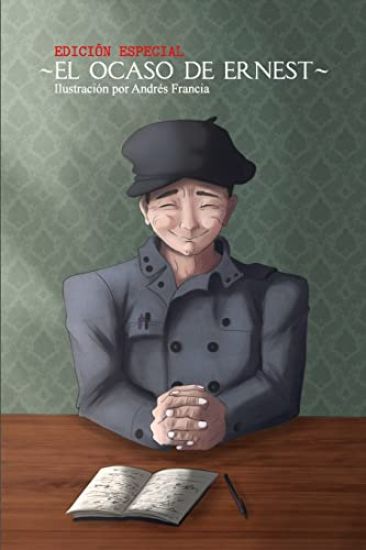
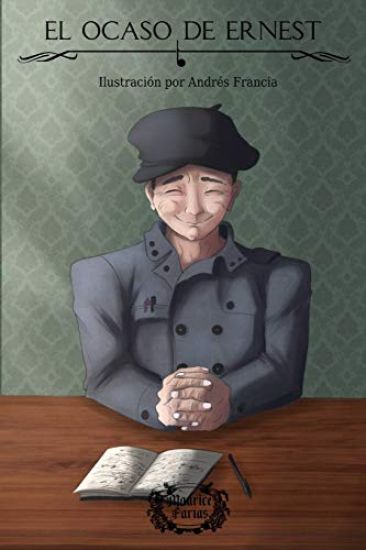
El Ocaso de Ernest plantea una problem tica: Salvar a la propia familia. Tras la enfermedad de un ser querido, Amanda y Jeffrey Lang deben volver a un peque o pueblo de Canad donde aguarda su hermana mayor y el padre de la familia, Ernest Lang, quien ha comenzado a distinguir la realidad de una manera distinta, da ando a sus hijos y amigos m s cercanos, generando un quiebre en la familia. Esta edici n especial nos devuelve al peque o pueblo de Canad donde Ernest y sus hijos transitar n la enfermedad y la separaci n de sus seres queridos, esta vez, con una profundidad m s pulida y extendida. A pesar de ser una breve extensi n de la historia original, los hechos narrados en esta obra son totalmente can nicos con el "Universo Ernest." Esta historia toma lugar luego de los sucesos narrados en el cuento, Alondra: La viejita del piso de arriba. Tambi n de la autor a de Maurice Far as.
Historic Photos of Ernest Hemingway
Turner Publishing Company
2009
sidottu
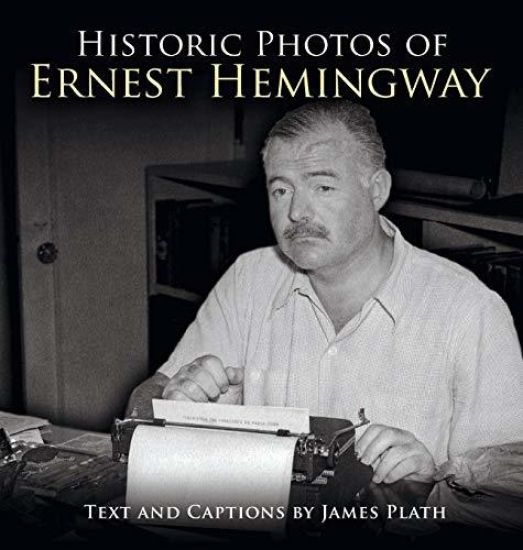
When Ernest Hemingway won the 1954 Nobel Prize for Literature, presenters called him "one of this epoch’s great molders of style,” praising his vivid dialogue and journalistic eye for "robust details to accumulate and take on momentous significance.”But even the Swedish Academy could not separate Hemingway the writer from Hemingway the adventurer. They also cited his "manly love of danger and adventure, with a natural admiration for every individual who fights the good fight in a world of reality overshadowed by violence and death.”From the 1920s until his death in 1961, "Papa” Hemingway was a larger-than-life literary figure whose everyday exploits became legendary. He was a friend of celebrities, a war correspondent, journalist, renowned big-game hunter, record-setting saltwater angler, and hard-drinking brawler whose reputation preceded him.Though Hemingway was and remains an American icon, he was also first and foremost a human being, as these striking black-and-white photos remind.

A lonely man obsessed with the past, find himself on the adventure of a lifetime. When a freak accident leaves him lost in a foreign land, he must turn too a familiar face for help. Little does the man know, that the familiar face turns out to be an historical figure he most admires.
Ernest Frost is an introvert who lives a simple life. He works in a cubicle, he follows up his work day with some time in either the gym working out or at the park running. He then goes home, watches TV, eats dinner, and goes to bed. Things take a turn for the worse when he is kidnapped, by a group of clowns.Ernest Frost is not only kidnapped by a group of clowns, he is told point blank he is kidnapped for a reason and now must play a game. He is put in various rooms in a place he does not know and must escape each room from specific clowns or he will die. Will he escape, will he find out why he was specifically taken by this group of clowns, will he find out where he is, and most importantly, will he survive and escape his captors.

A Book for Ernest is set in an Orwellian/Huxleyan environment where human value is determined by the shallowest of metaphysical categories. As the protagonist - a prisoner to both his cell and his ethos - awaits his voluntary execution, he encounters an unlikely soulmate who challenges his popular yet disturbing convictions. When this dark but thought-provoking novella climaxes in an unprecedented act of self-denial, the reader is left pondering two questions: is happiness best measured by pleasure, and....who cares anyways?
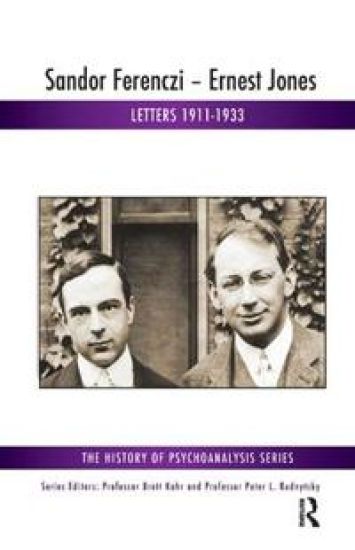
The author's correspondence presented here is an important document of the early history of psychoanalysis. It spans more than two decades, and addresses many of the relevant issues of the psychoanalytic movement between 1911-1933, such as Freud's relation to Stekel, Adler and Jung; the First World War, the debates of the 1920s regarding the theoretical and technical ideas of Rank and Ferenczi; problems of leadership, structure, and finding a centre for the psychoanalytical movement; as well as issues related to telepathy and lay analysis. It includes thirty-seven letters and six postcards, as well as original documents waiting to be found for eight decades; these belong to the 'private', personal history of psychoanalysis and help to decode diverse aspects of the experience preserved in these documentary memories of former generations.
All sorts of creatures appear in books - rabbits, dogs, mice, and even ladybirds - but there are no earwigs! Ernest decides to put this right, with surprising and hilarious results . . .
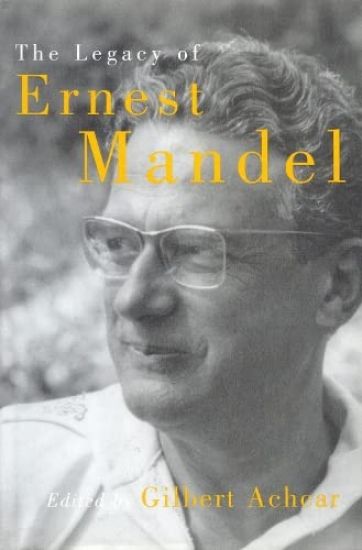
Ernest Mandel (1923-1995) was a member of a very rare breed: a theorist of activist Marxism. Leader of the international Trotskyist movement, lifelong revolutionary, and scholar of world renown, Mandel was one of those few individuals who combined the roles of political leader with intellectual work that commands the respect of the academy. This work presents a critical appraisal of the vast range of Mandel's theoretical work. The authors assess his contributions to political and economic theory; his humanist and optimistic variety of Marxism; his crucial contribution to the analysis of the dynamic of capitalism in the late twentieth century; his analyses of the bureaucracy in the workers' movement; his conception of the problems involved in the transition to socialism; and the specific relationship that this man-who came close to perishing in the Nazi concentration camps-had to the question of the Holocaust. Finally, this volume also includes a bibliography of Mandel's works as well as two previously unpublished pieces by him, one on the Holocaust, the other on the foundations of his unrepentant commitment to Marxism.Contributors include Robin Blackburn, Norman Geras, Michael Lowy, Charles Post, Francisco Louca, Michel Husson, Jesus Albarracin, Pedro Montes, and Catherine Samary.
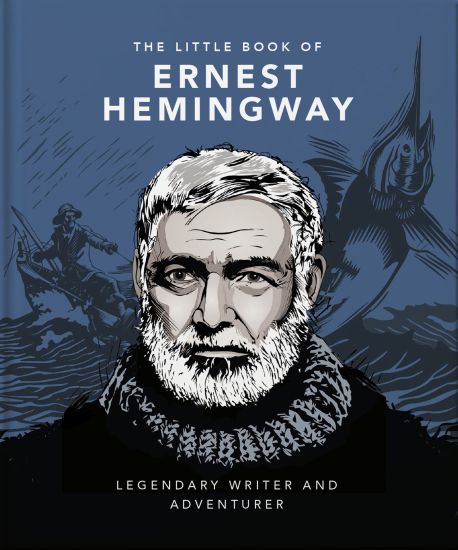
The Little Book of Ernest Hemingway
HEADLINE PUBLISHING GROUP
2023
sidottu
The writer who changed America's literary landscape.One of the great novelists of the 20th century, Ernest Hemingway's spare, precise prose captivated critics and readers alike, while his swaggering personality made him a star beyond the literary scene. The author's world was full of daring and danger: he drove an ambulance during the First World War, had a love of bullfighting and boxing, and rushed to see action in the Spanish Civil War. His travels and adventures fuelled his art, while his troubled and often chaotic life was central to his creativity. Packed full of insightful quotes and fascinating facts about Hemingway's life and work, this little book creates an intriguing portrait of the complex man behind the writer.Sample Quotes: 'But man is not made for defeat... A man can be destroyed but not defeated.' - The Old Man and The Sea, 1952'Always do sober what you said you'd do drunk. That will teach you to keep your mouth shut.' - Hemingway, in a personal letter to the publisher, Charles Scribner IV'But life isn't hard to manage when you've nothing to lose.' - A Farwell to Arms, 1929Sample Facts: While serving as an ambulance driver during the First World War, Hemingway was badly wounded by mortar fire. He managed to help an Italian soldier reach safety, an action that earned him an Italian Silver Medal of Valour.Hemingway was an avid hunter and fisherman. His zeal for both pursuits worked their way into his fiction, such as the prize-winning novel The Old Man and the Sea and the acclaimed short story 'The Short Happy Life of Francis Macomber'.
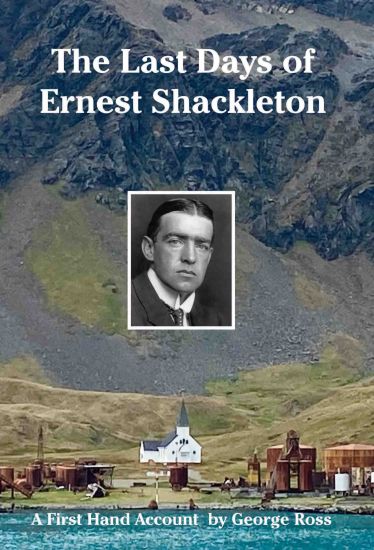
The Last Days of Ernest Shackleton, is a unique and fully illustrated account of Shackleton's death and burial in South Georgia from the personal point of view of a seaman on the Quest Expedition by the name of George Ross. George joined the Quest Expedition, at a place called Leith Harbour, in South Georgia, with the position donkey-man (a person in charge of a ships engine room) and he explains in detail the daily running of the ship after Shackleton's death as a first hand account from a below decks crew members point of view. Along with George's first hand account the book covers both the funeral arrangements, the Shetland Pallbearers, a short history of Shackleton's Scouts, and the speeches at the unveiling of the Shacketon memorial. This along with photos, maps, paintings and drawings of the expedition, crew, ship, Grytviken church, funeral and grave. To finish off the book the book contains an interview with the late Ernest Shackleton where he explains in his own words how his life at sea started and how he would like to be remembered.
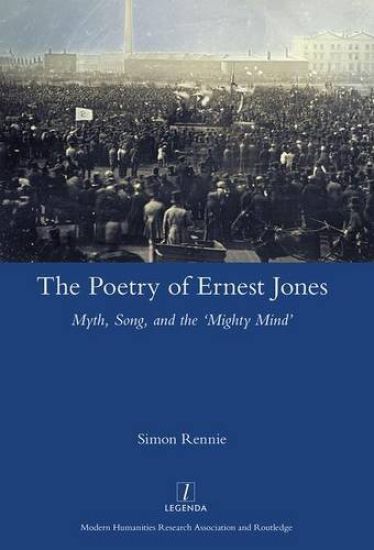
As the last leader of the Chartist movement, Ernest Charles Jones (1819-69) is a significant historical figure, but he is just as well-known for his political verse. His prison-composed epic The New World lays claim to being the first poetic exploration of Marxist historical materialism, and his caustic short lyric ‘The Song of the Low’ appears in most modern anthologies of Victorian poetry. Despite the prominence of Jones’s verse in Labour history circles, and several major inclusions in critical discussions of working-class Victorian literature, this volume represents the first full-length study of his poetry. Through close analysis and careful contextualization, this work traces Jones’s poetic development from his early German and British Romantic influences through his radicalization, imprisonment, and years of leadership. The poetry of this complex and controversial figure is here fully mapped for the first time.

An Analysis of Ernest Gellner's Nations and Nationalism
Dale Stahl
Macat International Limited
2017
nidottu
To the dismay of many commentators – who had hoped the world was evolving into a more tolerant and multicultural community of nations united under the umbrellas of supranational movements like the European Union – the nationalism that was such a potent force in the history of the 20th-century has made a comeback in recent years. Now, more than ever, it seems important to understand what it is, how it works, and why it is so attractive to so many people. A fine place to start any such exploration is with Ernest Gellner's seminal Nations and Nationalism, a ground-breaking study that was the first to flesh out the counter-intuitive – but enormously influential – thesis that modern nationalism has little if anything in common with old-fashioned patriotism or loyalty to one's homeland. Gellner's intensely creative thesis is that the nationalism we know today is actually the product of the 19th-century industrial revolution, which radically reshaped ancient communities, encouraging emigration to cities at the same time as it improved literacy rates and introduced mass education. Gellner connected these three elements in an entirely new way, contrasting developments to the structures of pre-industrial agrarian economies to show why the new nationalism could not have been born in such communities. He was also successful in generating a typology of nationalisms in an attempt to explain why some forms flourished while others fizzled out. His remarkable ability to produce novel explanations for existing evidence marks out Nations and Nationalism as one of the most radical, stimulating – and enduringly influential – works of its day.

An Analysis of Ernest Gellner's Nations and Nationalism
Dale Stahl
Macat International Limited
2017
sidottu
To the dismay of many commentators – who had hoped the world was evolving into a more tolerant and multicultural community of nations united under the umbrellas of supranational movements like the European Union – the nationalism that was such a potent force in the history of the 20th-century has made a comeback in recent years. Now, more than ever, it seems important to understand what it is, how it works, and why it is so attractive to so many people. A fine place to start any such exploration is with Ernest Gellner's seminal Nations and Nationalism, a ground-breaking study that was the first to flesh out the counter-intuitive – but enormously influential – thesis that modern nationalism has little if anything in common with old-fashioned patriotism or loyalty to one's homeland. Gellner's intensely creative thesis is that the nationalism we know today is actually the product of the 19th-century industrial revolution, which radically reshaped ancient communities, encouraging emigration to cities at the same time as it improved literacy rates and introduced mass education. Gellner connected these three elements in an entirely new way, contrasting developments to the structures of pre-industrial agrarian economies to show why the new nationalism could not have been born in such communities. He was also successful in generating a typology of nationalisms in an attempt to explain why some forms flourished while others fizzled out. His remarkable ability to produce novel explanations for existing evidence marks out Nations and Nationalism as one of the most radical, stimulating – and enduringly influential – works of its day.

No Tears For Ernest Creech: The Death of a Coal Miner in the Hills of Appalachian
Loretta Creech; Annette Creech-Frank
ReadersMagnet LLC
2022
nidottu
Loretta Creech was born in Hazard Kentucky, a small town in the center of Eastern Kentucky. "I love the people of Eastern Kentucky and can honestly say I am proud to be a hillbilly." She now lives in Lexington Kentucky where she has lived since leaving Eastern Kentucky University in 1972 where she met and married a boy from the central Kentucky region. She has two wonderful sons from her marriage. "Writing has always been my hobby and I grew up listening to the stories of the mountains. This was my first published book but I am working on another. My first book "No Tears for Ernest Creech" is a true story of the death of my father in 1965, killed during a picket strike in leatherwood, Ky. My mother, Gladys, passed away in 2011 without knowing who took the life of her husband leaving her to raise her ten children on her own. This book was written for her because I saw the hardships she endured through the years after my father's death trying to raise her last children alone.

Amusements in mathematics Henry Ernest Dudeney (1917)
Iacob Adrian
Createspace Independent Publishing Platform
2017
nidottu
Amusements in mathematics By Henry Ernest Dudeney (1917) edition illustrated
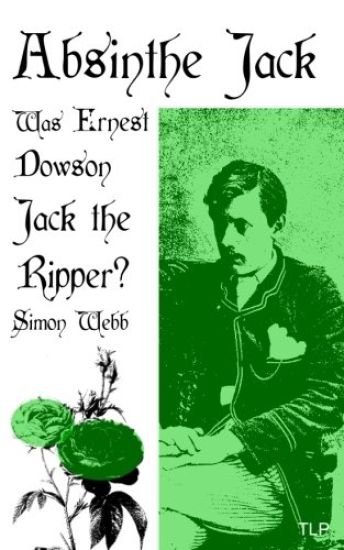
Absinthe Jack: Was Ernest Dowson Jack the Ripper?
Simon Webb
Createspace Independent Publishing Platform
2017
nidottu
Aesthete, decadent poet, misogynist and violent drunk, Ernest Dowson has been long-listed as a Jack the Ripper suspect for nearly twenty years. Simon Webb's new book takes a fresh look at the evidence, and examines the possibility that Dowson's consumption of epic quantities of absinthe may have turned him from a woman-hating brawler into the terror of Whitechapel.
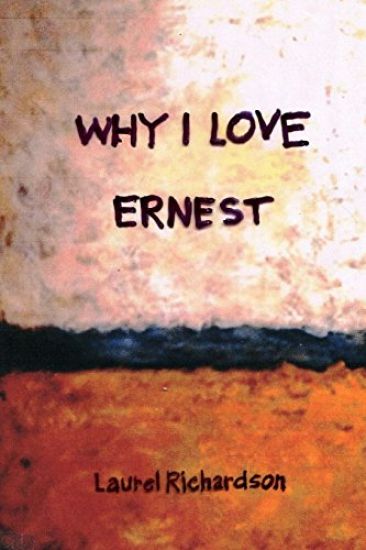
This collaboration in words and pictures brings forth a love letter that is culturally and artistically unique. "INTRODUCTORY "In 2008, when Ernest's seventieth birthday was approaching, I wanted to do something special to mark the occasion. I surreptitiously took photos, wrote vignettes, and brought the compilation to Office Max for a "specialist" to figure out how to put the whole thing together. The "specialist" created a spiral-bound book. When I presented it to Ernest on his birthday, he cried. He said it was the nicest present he had ever received. How could I not love a guy who cries with appreciation for my handiwork? "At the start of 2018, I suggested to Ernest that he make a book with photographs of some of his paintings as gifts for our friends, children, and grandchildren. He demurred. "A month later he came to me with a book mock-up based on the spiral-bound gift. He had changed out some of the paintings ("Those older ones are so primitive."), corrected my grammatical hiccups, and had prepared it to be published with a true spine "He was too modest to publish a book of his art but was willing to share with me the creation of this book, revised and expanded, in honor of his Eightieth. "Have I said that I love this guy?" Laurel Richardson
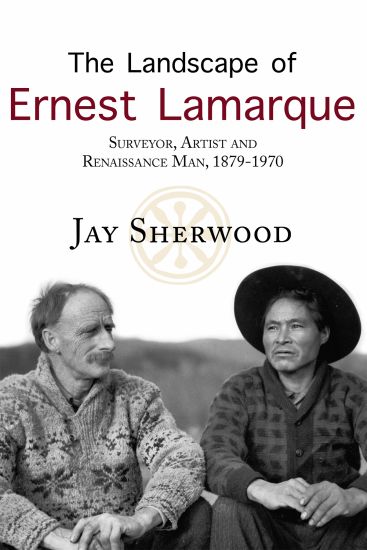
At the age of sixteen, Ernest Lamarque travelled from England to North America, to begin a life as a Victorian adventurer. Born in 1879 and orphaned at age twelve, he would go on to become an artist, a writer and a surveyor, creating some of the earliest visual records of the people of remote regions of Canada. At seventeen, Lamarque started working as a clerk at Hudson's Bay Company posts in Saskatchewan, Alberta, British Columbia and the Northwest Territories. He recorded his adventures through paintings, sketches and photographs, which would later become invaluable historical resources - the artwork and photography he created during his three years at the Ile-a-la-Crosse district, for example, are among the earliest visual records of the Metis of the area. As one of British Columbia's best-known surveyors, he located a route across northern BC during the Bedaux Expedition. He also travelled along and photographed the historic First Nations Davie Trail as part of his work on the location of the initial Alaska Highway. In 1914, Lamarque participated in the important D.A. Thomas coal transportation survey in northern Alberta that was halted by the start of World War I. THE LANDSCAPE OF ERNEST LAMARQUE reveals remote regions of western Canada and its people and places through the eyes of a self-taught man. Utilizing unpublished artwork, photographs and written accounts, author Jay Sherwood tells the story of Lamarque's varied, unusual and interesting life.