Kirjojen hintavertailu. Mukana 11 342 296 kirjaa ja 12 kauppaa.

Kirjahaku

Etsi kirjoja tekijän nimen, kirjan nimen tai ISBN:n perusteella.

1000 tulosta hakusanalla FREEDOM DIVIDEND

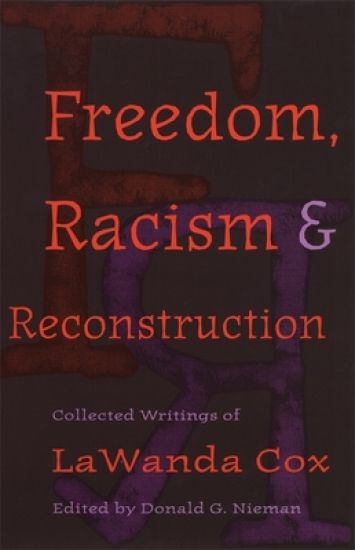
Freedom, Racism, and Reconstruction

Freedom, Racism, and Reconstruction

University of Georgia Press
2016
pokkari
LaWanda Cox is widely regarded as one of the most influential historians of Reconstruction and nineteenth-century race relations. Imaginative in conception, forcefully argued, and elegantly written, her work helped reshape historians' understanding of the age of emancipation. Freedom, Racism, and Reconstruction brings together Cox's most important writings spanning more than forty years, including previously published essays, excerpts from her books, and an unpublished essay.Now retired from Hunter College and the Graduate Center of the City University of New York, Cox gave Donald G. Nieman her full cooperation on this project. The result is a cohesive book of refreshing and sophisticated analysis that illuminates a pivotal era in American history. It not only serves as a lasting testament to a highly original scholar but also makes available to readers a remarkable body of scholarship that remains required reading for anyone who wishes to understand the age of emancipation and the historian's craft.
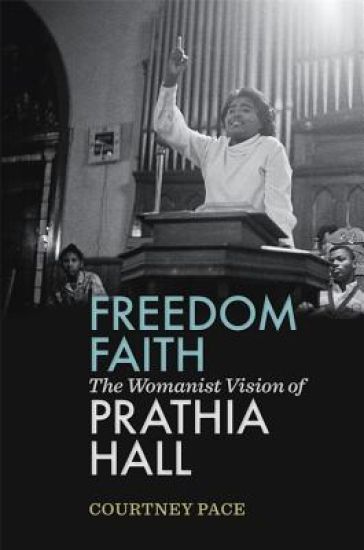
Freedom Faith

Freedom Faith

Courtney Pace

University of Georgia Press
2019
sidottu
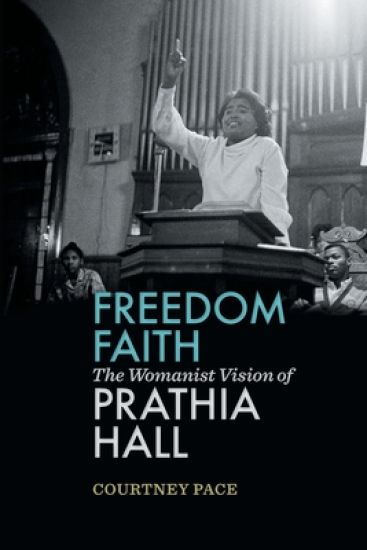
Freedom Faith is the first full-length critical study of Rev. Dr. Prathia Laura Ann Hall (1940–2002), an undersung leader in both the civil rights movement and African American theology. Freedom faith was the central concept of Hall’s theology: the belief that God created humans to be free and assists and equips those who work for freedom. Hall rooted her work simultaneously in social justice, Christian practice, and womanist thought.Courtney Pace examines Hall’s life and philosophy, particularly through the lens of her civil rights activism, her teaching career, and her ministry as a womanist preacher. Moving along the trajectory of Hall’s life and civic service, Freedom Faith focuses on her intellectual and theological development and her radiating influence on such figures as Dr. Martin Luther King Jr., Marian Wright Edelman, and the early generations of womanist scholars. Hall was one of the first women ordained in the American Baptist Churches, USA, was the pastor of Mt. Sharon Baptist Church in Philadelphia, and in later life joined the faculty at the Boston University School of Theology as the Martin Luther King Chair in Social Ethics. In activism and ministry, Hall was a pioneer, fusing womanist thought with Christian ethics and visions of social justice.
Freedom Is a Place

Freedom Is a Place

Ron J. Smith

University of Georgia Press
2020
pokkari
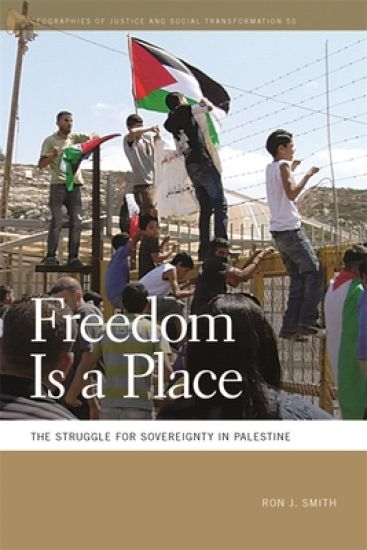
Freedom Is a Place gives readers a snapshot of everyday life in the 1967 oPt (occupied Palestinian territories). A project of subaltern geopolitics, it helps both new and seasoned scholars of the region better understand occupation: its purpose, varied manifestations, and on-the-ground functions. This personal study brings to light how large-scale geopolitics play havoc with the lives of ordinary people and how people resist and endure.Using data collected over a decade of fieldwork, Ron J. Smith situates the everyday realities of the occupation within the larger project of Zionism. He explores the attempts to codify a temporary condition like occupation into permanency. Smith insists that occupation be understood as a changing process, not a singular event, and to explain its longevity, he argues that we must uncover the particular geographical and political dynamism at hand.Through careful use of interviews and participant observation, Smith reveals how the varied practices of occupation transform daily life into a prison. He also helps bring to light everyday narratives illustrating how people mobilize claims to freedom and sovereignty to maintain life under occupation. Freedom Is a Place uncovers how lessons from Israel’s seventy-plus-years occupation are used by other states to oppress restive populations. At the same time, Smith identifies how these lessons also can be mobilized to create new spaces and strategies toward achieving liberation.
Freedom Is a Place

Freedom Is a Place

Ron J. Smith

University of Georgia Press
2020
sidottu
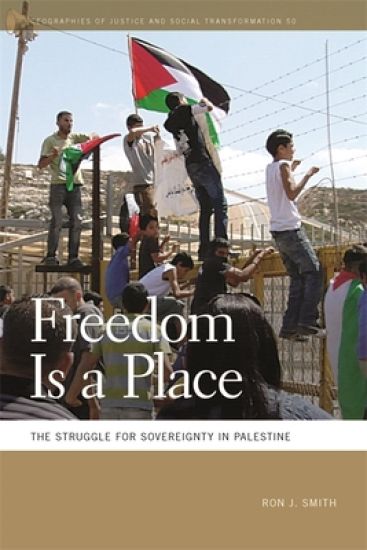
Freedom Is a Place gives readers a snapshot of everyday life in the 1967 oPt (occupied Palestinian territories). A project of subaltern geopolitics, it helps both new and seasoned scholars of the region better understand occupation: its purpose, varied manifestations, and on-the-ground functions. This personal study brings to light how large-scale geopolitics play havoc with the lives of ordinary people and how people resist and endure.Using data collected over a decade of fieldwork, Ron J. Smith situates the everyday realities of the occupation within the larger project of Zionism. He explores the attempts to codify a temporary condition like occupation into permanency. Smith insists that occupation be understood as a changing process, not a singular event, and to explain its longevity, he argues that we must uncover the particular geographical and political dynamism at hand.Through careful use of interviews and participant observation, Smith reveals how the varied practices of occupation transform daily life into a prison. He also helps bring to light everyday narratives illustrating how people mobilize claims to freedom and sovereignty to maintain life under occupation. Freedom Is a Place uncovers how lessons from Israel’s seventy-plus-years occupation are used by other states to oppress restive populations. At the same time, Smith identifies how these lessons also can be mobilized to create new spaces and strategies toward achieving liberation.
Freedom Faith

Freedom Faith

Courtney Pace

University of Georgia Press
2021
nidottu
Freedom Faith is the first full-length critical study of Rev. Dr. Prathia Laura Ann Hall (1940–2002), an undersung leader in both the civil rights movement and African American theology. Freedom faith was the central concept of Hall’s theology: the belief that God created humans to be free and assists and equips those who work for freedom. Hall rooted her work simultaneously in social justice, Christian practice, and womanist thought.Courtney Pace examines Hall’s life and philosophy, particularly through the lens of her civil rights activism, her teaching career, and her ministry as a womanist preacher. Moving along the trajectory of Hall’s life and civic service, Freedom Faith focuses on her intellectual and theological development and her radiating influence on such figures as Dr. Martin Luther King Jr., Marian Wright Edelman, and the early generations of womanist scholars. Hall was one of the first women ordained in the American Baptist Churches, USA, was the pastor of Mt. Sharon Baptist Church in Philadelphia, and in later life joined the faculty at the Boston University School of Theology as the Martin Luther King Chair in Social Ethics. In activism and ministry, Hall was a pioneer, fusing womanist thought with Christian ethics and visions of social justice.
Freedom of Information

Freedom of Information

Shannon Martin E.

Peter Lang Publishing Inc
2008
nidottu
The Freedom of Information Act was signed into law during the last half of the twentieth century to ensure public access to government documents. In this book, Shannon E. Martin details the history that led to the law’s enactment and the resulting discoveries in government repositories over the past fifty years. In light of the ongoing national security war on terror, this is a timely and historical overview of the accessibility of government-held information.
Freedom of Information

Freedom of Information

Shannon Martin E.

Peter Lang Publishing Inc
2008
sidottu
The Freedom of Information Act was signed into law during the last half of the twentieth century to ensure public access to government documents. In this book, Shannon E. Martin details the history that led to the law’s enactment and the resulting discoveries in government repositories over the past fifty years. In light of the ongoing national security war on terror, this is a timely and historical overview of the accessibility of government-held information.
Freedom in Our Lifetime

Freedom in Our Lifetime

Anton Muziwakhe Lembede

Ohio University Press
1996
sidottu
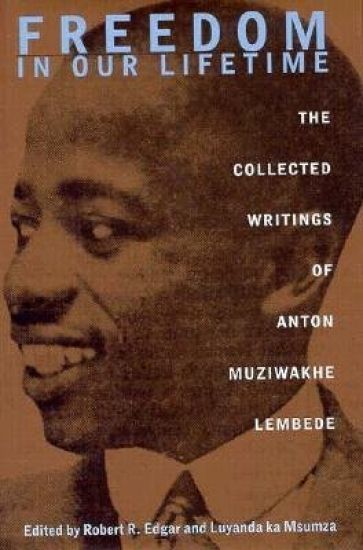
When a group of young political activists met in 1944 to launch the African National Congress Youth League, it included the nucleus of a remarkable generation of leaders who forged the struggle for freedom and equality in South Africa for the next half century: Nelson Mandela, Oliver Tambo, Walter Sisulu, Jordan Ngubane, Ellen Kuzwayo, Albertina Smith, A. P. Mda, Dan Tloome, and David Bopape. It was Anton Lembede, however whom they chose as their first president. Lembede, who had just begun practicing law in Johannesburg, was known for his sharp intellect, fiery personality, and unwavering commitment to the struggle at hand. The son of farm laborers from the district of Georgedale, Natal, Lembede had worked tirelessly to put himself through school and college, and then to qualify for the bachelor of laws degree. When he began law practice in 1943, he had also earned the respect of his fellows, not only for his intellectual achievements (which were many), but also for his dedication to the cause of freedom in South Africa. "I am," he explained, "Africa's own child." His untimely death in 1947 at the age of 33 sent a wave of grief through the Congress Youth, who had looked to him for moral as well as political leadership. With the publication of Freedom In Our Lifetime, the editors acknowledge Lembede's early contribution to the freedom movement, in particular his passionate and eloquent articulation of the African-centered philosophy he called "Africanism."
Freedom and Tenure in the Academy
Questions of academic freedom--from hate speech to the tenure structure-continue to be of great urgency and perennial debate in American higher education. Originally published as a special issue of Law and Contemporary Problems (Summer 1990), this volume draws together leading scholars of law, philosophy, and higher education to offer a fresh assessment of the founding principles of academic freedom and to define this crucial topic for the 1990s.The original 1940 Statement of Principles on Academic Freedom and Tenure, which has been influential in determining institutional practices for the last half century, has required continual redefinition since its initial declaration. The volume begins with two overview articles: the most complete examination of the 1940 Statement ever provided (shedding light on some of its most troublesome clauses) and a historical review of the extent to which academic freedom has been accepted into domestic constitutional law. Subsequent articles address a range of issues related to academic freedom: the relationship between tenure and academic freedom; tenure and labor law; ideology and faculty selection; freedom of expression and the arts on campus; the boundaries defining hate speech and offensive expression; the clash between institutional and individual claims of academic freedom; and the practices of religious colleges in the United States.Contributors. Ralph S. Brown, Matthew W. Finkin, Jordan E. Kurland, Michael W. McConnell, Walter P. Metzger, Robert M. O'Neil, David M. Rabban, Rodney A, Smolla, Janet Sinder, Judith Jarvis Thomson, William W. Van Alstyne
Freedom's Empire

Freedom's Empire

Laura Doyle

Duke University Press
2008
sidottu
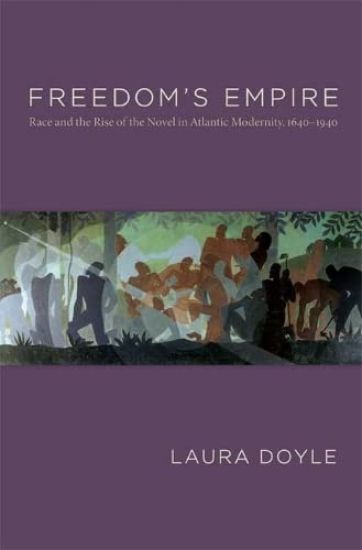
In this pathbreaking work of scholarship, Laura Doyle reveals the central, formative role of race in the development of a transnational, English-language literature over three centuries. Identifying a recurring freedom plot organized around an Atlantic Ocean crossing, Doyle shows how this plot structures the texts of both African-Atlantic and Anglo-Atlantic writers and how it takes shape by way of submerged intertextual exchanges between the two traditions. For Anglo-Atlantic writers, Doyle locates the origins of this narrative in the seventeenth century. She argues that members of Parliament, religious refugees, and new Atlantic merchants together generated a racial rhetoric by which the English fashioned themselves as a “native,” “freedom-loving,” “Anglo-Saxon” people struggling against a tyrannical foreign king. Stories of a near ruinous yet triumphant Atlantic passage to freedom came to provide the narrative expression of this heroic Anglo-Saxon identity-in novels, memoirs, pamphlets, and national histories. At the same time, as Doyle traces through figures such as Friday in Robinson Crusoe, and through gothic and seduction narratives of ruin and captivity, these texts covertly register, distort, or appropriate the black Atlantic experience. African-Atlantic authors seize back the freedom plot, placing their agency at the origin of both their own and whites’ survival on the Atlantic. They also shrewdly expose the ways that their narratives have been “framed” by the Anglo-Atlantic tradition, even though their labor has provided the enabling condition for that tradition.Doyle brings together authors often separated by nation, race, and period, including Aphra Behn, Eliza Haywood, Olaudah Equiano, Nathaniel Hawthorne, Harriet Wilson, Pauline Hopkins, George Eliot, and Nella Larsen. In so doing, she reassesses the strategies of early women novelists, reinterprets the significance of rape and incest in the novel, and measures the power of race in the modern English-language imagination.
Freedom's Empire

Freedom's Empire

Laura Doyle

Duke University Press
2008
pokkari
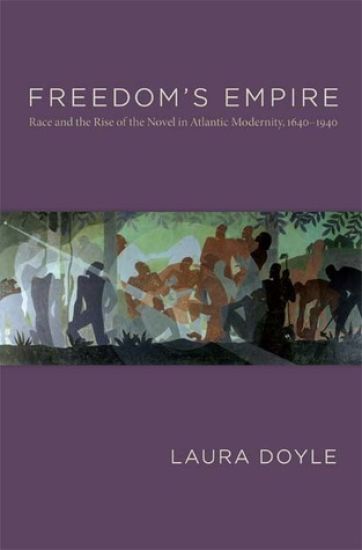
In this pathbreaking work of scholarship, Laura Doyle reveals the central, formative role of race in the development of a transnational, English-language literature over three centuries. Identifying a recurring freedom plot organized around an Atlantic Ocean crossing, Doyle shows how this plot structures the texts of both African-Atlantic and Anglo-Atlantic writers and how it takes shape by way of submerged intertextual exchanges between the two traditions. For Anglo-Atlantic writers, Doyle locates the origins of this narrative in the seventeenth century. She argues that members of Parliament, religious refugees, and new Atlantic merchants together generated a racial rhetoric by which the English fashioned themselves as a “native,” “freedom-loving,” “Anglo-Saxon” people struggling against a tyrannical foreign king. Stories of a near ruinous yet triumphant Atlantic passage to freedom came to provide the narrative expression of this heroic Anglo-Saxon identity-in novels, memoirs, pamphlets, and national histories. At the same time, as Doyle traces through figures such as Friday in Robinson Crusoe, and through gothic and seduction narratives of ruin and captivity, these texts covertly register, distort, or appropriate the black Atlantic experience. African-Atlantic authors seize back the freedom plot, placing their agency at the origin of both their own and whites’ survival on the Atlantic. They also shrewdly expose the ways that their narratives have been “framed” by the Anglo-Atlantic tradition, even though their labor has provided the enabling condition for that tradition.Doyle brings together authors often separated by nation, race, and period, including Aphra Behn, Eliza Haywood, Olaudah Equiano, Nathaniel Hawthorne, Harriet Wilson, Pauline Hopkins, George Eliot, and Nella Larsen. In so doing, she reassesses the strategies of early women novelists, reinterprets the significance of rape and incest in the novel, and measures the power of race in the modern English-language imagination.
Freedom not Yet

Freedom not Yet

Kenneth Surin

Duke University Press
2010
sidottu
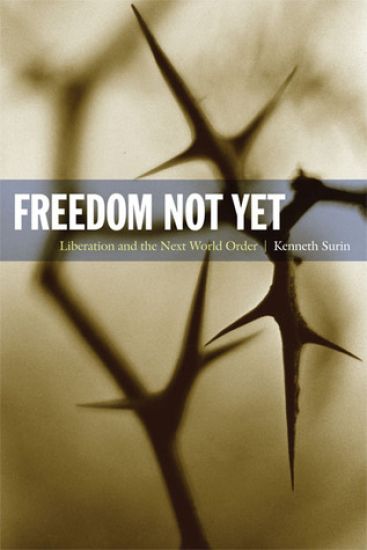
The neoliberal project in the West has created an increasingly polarized and impoverished world, to the point that the vast majority of its citizens require liberation from their present socioeconomic circumstances. The marxist theorist Kenneth Surin contends that innovation and change at the level of the political must occur in order to achieve this liberation, and for this endeavor marxist theory and philosophy are indispensable. In Freedom Not Yet, Surin analyzes the nature of our current global economic system, particularly with regard to the plight of less developed countries, and he discusses the possibilities of creating new political subjects necessary to establish and sustain a liberated world.Surin begins by examining the current regime of accumulation-the global domination of financial markets over traditional industrial economies-which is used as an instrument for the subordination and dependency of poorer nations. He then moves to the constitution of subjectivity, or the way humans are produced as social beings, which he casts as the key arena in which struggles against dispossession occur. Surin critically engages with the major philosophical positions that have been posed as models of liberation, including Derrida’s notion of reciprocity between a subject and its other, a reinvigorated militancy in political reorientation based on the thinking of Badiou and Zizek, the nomad politics of Deleuze and Guattari, and the politics of the multitude suggested by Hardt and Negri. Finally, Surin specifies the material conditions needed for liberation from the economic, political, and social failures of our current system. Seeking to illuminate a route to a better life for the world’s poorer populations, Surin investigates the philosophical possibilities for a marxist or neo-marxist concept of liberation from capitalist exploitation and the regimes of power that support it.
Freedom not Yet

Freedom not Yet

Kenneth Surin

Duke University Press
2010
pokkari
The neoliberal project in the West has created an increasingly polarized and impoverished world, to the point that the vast majority of its citizens require liberation from their present socioeconomic circumstances. The marxist theorist Kenneth Surin contends that innovation and change at the level of the political must occur in order to achieve this liberation, and for this endeavor marxist theory and philosophy are indispensable. In Freedom Not Yet, Surin analyzes the nature of our current global economic system, particularly with regard to the plight of less developed countries, and he discusses the possibilities of creating new political subjects necessary to establish and sustain a liberated world.Surin begins by examining the current regime of accumulation-the global domination of financial markets over traditional industrial economies-which is used as an instrument for the subordination and dependency of poorer nations. He then moves to the constitution of subjectivity, or the way humans are produced as social beings, which he casts as the key arena in which struggles against dispossession occur. Surin critically engages with the major philosophical positions that have been posed as models of liberation, including Derrida’s notion of reciprocity between a subject and its other, a reinvigorated militancy in political reorientation based on the thinking of Badiou and Zizek, the nomad politics of Deleuze and Guattari, and the politics of the multitude suggested by Hardt and Negri. Finally, Surin specifies the material conditions needed for liberation from the economic, political, and social failures of our current system. Seeking to illuminate a route to a better life for the world’s poorer populations, Surin investigates the philosophical possibilities for a marxist or neo-marxist concept of liberation from capitalist exploitation and the regimes of power that support it.
Freedom with Violence

Freedom with Violence

Chandan Reddy

Duke University Press
2011
sidottu
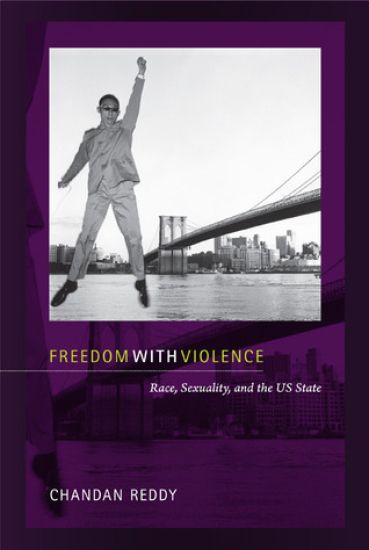
In Freedom with Violence, Chandan Reddy develops a new paradigm for understanding race, sexuality, and national citizenship. He examines a crucial contradiction at the heart of modernity: the nation-state’s claim to provide freedom from violence depends on its systematic deployment of violence against peoples perceived as nonnormative and irrational. Reddy argues that the modern liberal state is organized as a “counterviolence” to race even as, and precisely because, race persists as the condition of possibility for the modern subject. Rejecting liberal notions of modernity as freedom from violence or revolutionary ideas of freedom through violence, Reddy contends that liberal modernity is a structure for authorizing state violence. Contemporary neoliberal societies link freedom to the notion of legitimate (state) violence and produce narratives of liberty that tie rights and citizenship to institutionalized violence. To counter these formulations, Reddy proposes an alternative politics of knowledge grounded in queer of color critique and critical ethnic studies. He uses issues that include asylum law and the military’s “don’t ask, don’t tell” policy to illustrate this major rethinking of the terms of liberal modernity.
Freedom with Violence

Freedom with Violence

Chandan Reddy

Duke University Press
2011
pokkari
In Freedom with Violence, Chandan Reddy develops a new paradigm for understanding race, sexuality, and national citizenship. He examines a crucial contradiction at the heart of modernity: the nation-state’s claim to provide freedom from violence depends on its systematic deployment of violence against peoples perceived as nonnormative and irrational. Reddy argues that the modern liberal state is organized as a “counterviolence” to race even as, and precisely because, race persists as the condition of possibility for the modern subject. Rejecting liberal notions of modernity as freedom from violence or revolutionary ideas of freedom through violence, Reddy contends that liberal modernity is a structure for authorizing state violence. Contemporary neoliberal societies link freedom to the notion of legitimate (state) violence and produce narratives of liberty that tie rights and citizenship to institutionalized violence. To counter these formulations, Reddy proposes an alternative politics of knowledge grounded in queer of color critique and critical ethnic studies. He uses issues that include asylum law and the military’s “don’t ask, don’t tell” policy to illustrate this major rethinking of the terms of liberal modernity.
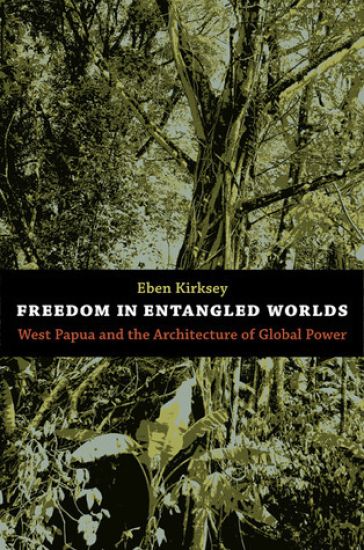
Freedom in Entangled Worlds

Freedom in Entangled Worlds

Eben Kirksey

Duke University Press
2012
sidottu
Eben Kirksey first went to West Papua, the Indonesian-controlled half of New Guinea, as an exchange student in 1998. His later study of West Papua's resistance to the Indonesian occupiers and the forces of globalization morphed as he discovered that collaboration, rather than resistance, was the primary strategy of this dynamic social movement. Accompanying indigenous activists to Washington, London, and the offices of the oil giant BP, Kirksey saw the revolutionaries' knack for getting inside institutions of power and building coalitions with unlikely allies, including many Indonesians. He discovered that the West Papuans' pragmatic activism was based on visions of dramatic transformations on coming horizons, of a future in which they would give away their natural resources in grand humanitarian gestures, rather than watch their homeland be drained of timber, gold, copper, and natural gas. During a lengthy, brutal occupation, West Papuans have harbored a messianic spirit and channeled it in surprising directions. Kirksey studied West Papua's movement for freedom while a broad-based popular uprising gained traction from 1998 until 2008. Blending ethnographic research with indigenous parables, historical accounts, and narratives of his own experiences, he argues that seeking freedom in entangled worlds requires negotiating complex interdependencies.
Freedom in Entangled Worlds

Freedom in Entangled Worlds

Eben Kirksey

Duke University Press
2012
pokkari
Eben Kirksey first went to West Papua, the Indonesian-controlled half of New Guinea, as an exchange student in 1998. His later study of West Papua's resistance to the Indonesian occupiers and the forces of globalization morphed as he discovered that collaboration, rather than resistance, was the primary strategy of this dynamic social movement. Accompanying indigenous activists to Washington, London, and the offices of the oil giant BP, Kirksey saw the revolutionaries' knack for getting inside institutions of power and building coalitions with unlikely allies, including many Indonesians. He discovered that the West Papuans' pragmatic activism was based on visions of dramatic transformations on coming horizons, of a future in which they would give away their natural resources in grand humanitarian gestures, rather than watch their homeland be drained of timber, gold, copper, and natural gas. During a lengthy, brutal occupation, West Papuans have harbored a messianic spirit and channeled it in surprising directions. Kirksey studied West Papua's movement for freedom while a broad-based popular uprising gained traction from 1998 until 2008. Blending ethnographic research with indigenous parables, historical accounts, and narratives of his own experiences, he argues that seeking freedom in entangled worlds requires negotiating complex interdependencies.
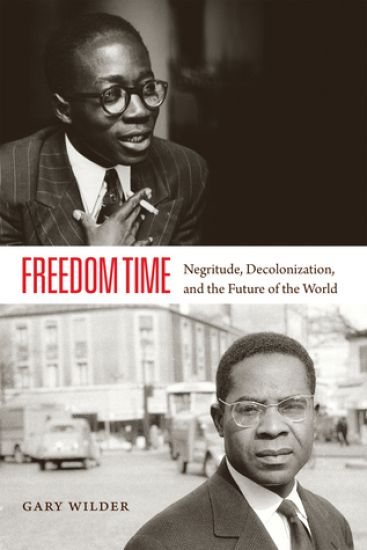
Freedom Time

Freedom Time

Gary Wilder

Duke University Press
2015
sidottu
Freedom Time reconsiders decolonization from the perspectives of Aimé Césaire (Martinique) and Léopold Sédar Senghor (Senegal) who, beginning in 1945, promoted self-determination without state sovereignty. As politicians, public intellectuals, and poets they struggled to transform imperial France into a democratic federation, with former colonies as autonomous members of a transcontinental polity. In so doing, they revitalized past but unrealized political projects and anticipated impossible futures by acting as if they had already arrived. Refusing to reduce colonial emancipation to national independence, they regarded decolonization as an opportunity to remake the world, reconcile peoples, and realize humanity’s potential. Emphasizing the link between politics and aesthetics, Gary Wilder reads Césaire and Senghor as pragmatic utopians, situated humanists, and concrete cosmopolitans whose postwar insights can illuminate current debates about self-management, postnational politics, and planetary solidarity. Freedom Time invites scholars to decolonize intellectual history and globalize critical theory, to analyze the temporal dimensions of political life, and to question the territorialist assumptions of contemporary historiography.
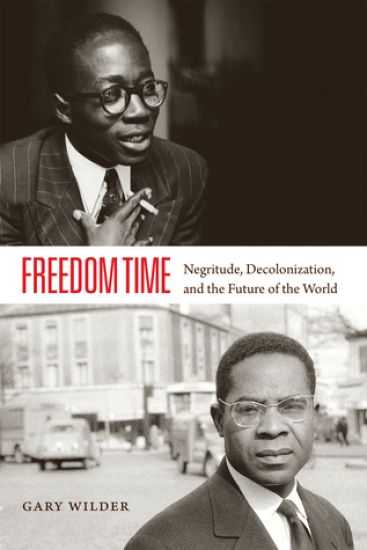
Freedom Time

Freedom Time

Gary Wilder

Duke University Press
2015
pokkari
Freedom Time reconsiders decolonization from the perspectives of Aimé Césaire (Martinique) and Léopold Sédar Senghor (Senegal) who, beginning in 1945, promoted self-determination without state sovereignty. As politicians, public intellectuals, and poets they struggled to transform imperial France into a democratic federation, with former colonies as autonomous members of a transcontinental polity. In so doing, they revitalized past but unrealized political projects and anticipated impossible futures by acting as if they had already arrived. Refusing to reduce colonial emancipation to national independence, they regarded decolonization as an opportunity to remake the world, reconcile peoples, and realize humanity’s potential. Emphasizing the link between politics and aesthetics, Gary Wilder reads Césaire and Senghor as pragmatic utopians, situated humanists, and concrete cosmopolitans whose postwar insights can illuminate current debates about self-management, postnational politics, and planetary solidarity. Freedom Time invites scholars to decolonize intellectual history and globalize critical theory, to analyze the temporal dimensions of political life, and to question the territorialist assumptions of contemporary historiography.