Kirjojen hintavertailu. Mukana 11 342 296 kirjaa ja 12 kauppaa.

Kirjahaku

Etsi kirjoja tekijän nimen, kirjan nimen tai ISBN:n perusteella.

1000 tulosta hakusanalla Geoffrey H. Block

Ancient Worlds, Modern Reflections

Ancient Worlds, Modern Reflections

Geoffrey Lloyd

Clarendon Press
2006
nidottu
Geoffrey Lloyd engages in a wide-ranging exploration of what we can learn from the study of ancient civilisations that is relevant to fundamental problems, both intellectual and moral, that we still face today. How far is it possible to arrive at an understanding of alien systems of belief? Is it possible to talk meaningfully of 'science' and of its various constituent disciplines, 'astronomy', 'geography', 'anatomy', and so on, in the ancient world? Are logic and its laws universal? Is there one ontology - a single world - to which all attempts at understanding must be considered to be directed? When we encounter apparently very different views of reality, how far can that be put down to a difference in conceptions of what needs explaining, or of what counts as an explanation, or to different preferred modes of reasoning or styles of inquiry? Do the notions of truth and belief represent reliable cross-cultural universals? In another area, what can ancient history teach us about today's social and political problems? Are the discourses of human nature and of human rights universally applicable? What political institutions do we need to help secure equity and justice within nation states and between them? Lloyd sets out to answer all these questions, and to convince us that the science and culture of ancient Greece and China provide precious resources to advance modern debates.
The Economy of Esteem

The Economy of Esteem

Geoffrey Brennan; Philip Pettit

Oxford University Press
2005
nidottu
However much people want esteem, it is an untradable commodity-- there is no way that you can buy the good opinion of another or sell to others your good opinion of them. And yet esteem is allocated in society according to systematic determinants: people's performance, publicity, and presentation relative to others will help to fix how much esteem they enjoy and how much disesteem they avoid. In turn, rational individuals are bound to compete with one another, however tacitly, in the attempt to increase their chances of winning esteem and avoiding disesteem. And this competition shapes the environments in which they each pursue esteem, setting relevant comparators and benchmarks, and determining the cost that a person must bear for obtaining a given level of esteem. Hidden in the multifarious interactions and exchanges of social life, then, there is a quiet force at work -- a force as silent and powerful as gravity -- which molds the basic form of people's relationships and associations. This force was more or less routinely invoked in the writings of classical theorists like Aristotle and Plato, Locke and Montesquieu, Mandeville and Hume and Madison. Although Adam Smith himself gave it great credence, however, the rise of economics proper coincided with a sudden decline in the attention devoted to the economy of esteem. What had been a topic of compelling interest for earlier authors fell into relative neglect throughout the nineteenth and twentieth centuries. This book is designed to reverse the trend. It begins by outlining the psychology of esteem and the way the working of that psychology can give rise to an economy. It then shows how a variety of social patterns that are otherwise anomalous come to make a lot of sense within an economics of esteem. And it looks, finally, at the ways in which the economy of esteem may be reshaped to improve overall social outcomes. While making connections with older patterns of social theorising, it offers a novel orientation for contemporary thought about how society works and how it may be made to work. It puts the economy of esteem firmly on the agenda of economics and social science and of moral and political theory.
Guilt by Association

Guilt by Association

Geoffrey S. Smith

Oxford University Press Inc
2014
sidottu
Guilt by Association explores the creation, publication, and circulation of heresy catalogues by second- and early third-century Christians. Polemicists made use of these religious blacklists, which include the names of heretical teachers along with summaries of their unsavory doctrines and nefarious misdeeds, in order to discredit opponents and advocate their expulsion from the "authentic" Christianity community. The heresy catalogue proved to be an especially effective literary technology in struggles for religious authority and legitimacy because it not only recast rival teachers as menacing adversaries, but also reinforced such characterizations by organizing otherwise unaffiliated teachers into coherent intellectual, social, and scholastic communities that are established and sustained by demonic powers. This study focuses especially on the earliest Christian heresy catalogues, those found within the works of Justin, Irenaeus, Hegesippus, and the authors the Testimony of Truth and the Tripartite Tractate. By focusing upon the heresy catalogue, Guilt by Association not only accounts for the emergence of the Christian heresiological tradition; it also sheds new light upon the socio-rhetorical aims of the Pastoral Epistles, the circulation of early Christian literature, the emergence of a distinct Christian identity, and the origins of Gnosticism.
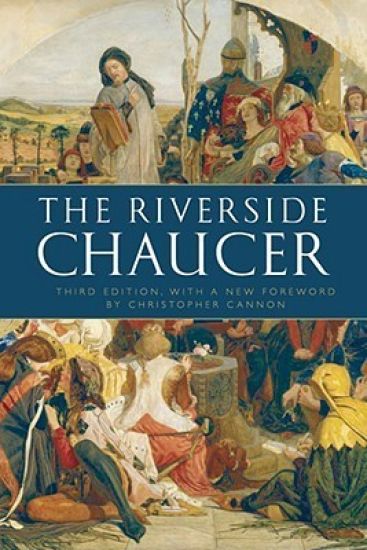
The Riverside Chaucer

The Riverside Chaucer

Geoffrey Chaucer; Larry D. Benson

Oxford University Press
2008
nidottu
The third edition of the definitive collection of Chaucer's Complete Works, reissued with a new foreword by Christopher Cannon. Since F. N. Robinson's second edition of the The Works of Geoffrey Chaucer was published in 1957, there has been a dramatic increase in Chaucer scholarship. This has not only enriched our understanding of Chaucer's art, but has also enabled scholars, working for the first time with all the source-material, to recreate Chaucer's authentic texts. For the third edition, an international team of experts completely re-edited all the works, added glosses to appear on the page with the text, and greatly expanded the introductory material, explanatory notes, textual notes, bibliography, and glossary. In short, the Riverside Chaucer is the fruit of many years' study - the most authentic and exciting edition available of Chaucer's Complete Works.
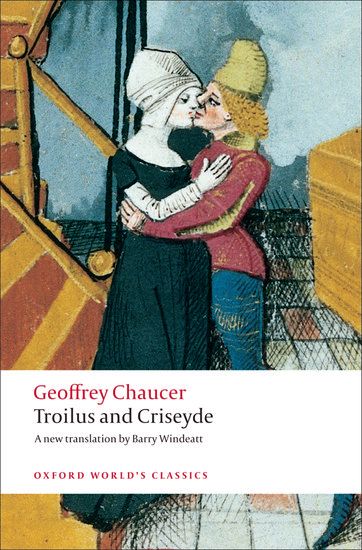
Troilus and Criseyde

Troilus and Criseyde

Geoffrey Chaucer

Oxford University Press
2008
nidottu
`Now listen with good will, as I go straight to my subject matter, in which you may hear the double sorrows of Troilus in his love for Criseyde, and how she forsook him before she died' Like Romeo and Juliet, or Tristan and Iseult, the names of Troilus and Criseyde will always be united: a pair of lovers whose names are inseparable from passion and tragedy. Troilus and Criseyde is Chaucer's masterpiece and was prized for centuries as his supreme achievement. The story of how Troilus and Criseyde discover love and how she abandons him for Diomede after her departure from Troy is dramatically presented in all its comedy and tragic pathos. With its deep humanity and penetrating insight, Troilus and Criseyde is now recognized as one of the finest narrative poems in the English language. This is a new translation into contemporary English of Chaucer's greatest single poem which can be read alongside the Middle English original, or as an accurate and readable version in its own right. ABOUT THE SERIES: For over 100 years Oxford World's Classics has made available the widest range of literature from around the globe. Each affordable volume reflects Oxford's commitment to scholarship, providing the most accurate text plus a wealth of other valuable features, including expert introductions by leading authorities, helpful notes to clarify the text, up-to-date bibliographies for further study, and much more.
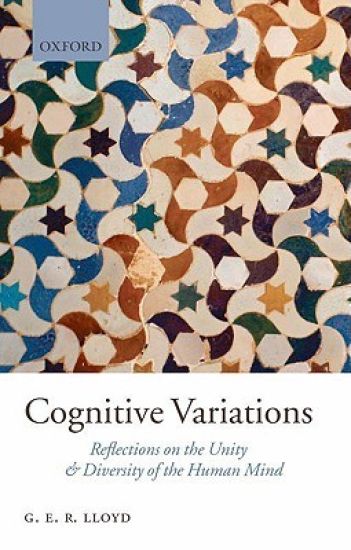
Cognitive Variations

Cognitive Variations

Geoffrey Lloyd

Oxford University Press
2009
nidottu
Sir Geoffrey Lloyd presents a cross-disciplinary study of the problems posed by the unity and diversity of the human mind. On the one hand, as humans we all share broadly the same anatomy, physiology, biochemistry, and certain psychological capabilities - the capacity to learn a language, for instance. On the other, different individuals and groups have very different talents, tastes, and beliefs, for instance about how they see themselves, other humans and the world around them. These issues are highly charged, for any denial of psychic unity savours of racism, while many assertions of psychic diversity raise the spectres of arbitrary relativism, the incommensurability of beliefs systems and their mutual unintelligibility. Lloyd surveys a fascinating range of subjects, examining where different types of arguments, scientific, philosophical, anthropological and historical can take us. He discusses colour perception, spatial cognition, animal and plant taxonomy, the emotions, ideas of health and well-being, concepts of the self, agency and causation, varying perceptions of the distinction between nature and culture, and reasoning itself. To avoid the pitfalls of misleading dichotomies (especially between cross-cultural universalism and cultural relativism) he pays due attention to the multidimensionality of the phenomena to be apprehended and to the diversity of manners, or styles, of apprehending them. The weight to be given to different factors, physical, biological, psychological, cultural, ideological, varies as between different subject-areas and sometimes even within a single area. He uses recent work in social anthropology, linguistics, cognitive science, neurophysiology, and the history of ideas to redefine the problems and clarify how our evident psychic diversity can be reconciled with our shared humanity.
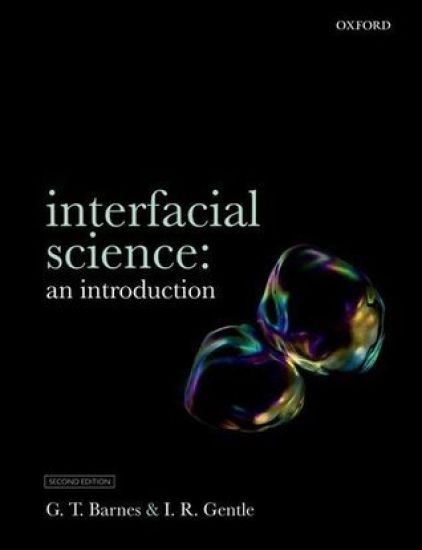
Interfacial Science: An Introduction

Interfacial Science: An Introduction

Geoffrey Barnes; Ian Gentle

Oxford University Press
2011
nidottu
Interfacial science impacts on our lives in diverse and surprising ways. Without it, we would face bubble bath without the bubbles, detergents which don't clean, cappuccinos without the froth. It has also fuelled some of the most ground-breaking and thought-provoking advances in research in recent times, from biosciences to nanotechnology. Introduction to Interfacial Science offers an engaging insight into the study of the physical and chemical properties of interfaces, how they behave, why they behave as they do, and how this behaviour can be harnessed and exploited in novel and exciting ways. Interfacial Science: An Introduction is an accessible text introducing readers to the chemistry of interfaces, a subject of increasing relevance and popularity due to the emergence of nanoscience. Opening with an overview of the key principles of capilliarity and adsorption, the book goes on to explore liquid/gas, solid/gas, and liquid/liquid interfaces, before examining biological interfaces, one of the most stimulating areas of current research. With the careful explanation of essential mathematical and physical concepts, and description of real world applications of the material presented, the book helps the student to build confidence in, and see the relevance of, the topics covered. Striking a careful balance between the highly mathematical treatments of the subject by more specialist texts, and the rudimentary treatment offered by general physical chemistry texts, Interfacial Science: An Introduction offers a breadth and depth of treatment which is perfect for any advanced undergraduate course on this exciting, dynamic subject. Online Resource Centre The Online Resource Centre to accompany Interfacial Science: An Introduction features the following resources for registered adopters of the text: - Downloadable figures - Solutions manual, containing worked solutions to the exercises appearing in the textbook - Protocols for around five laboratory experiments, appearing as MS Word documents, for lecturers to modify to suit their own particular setups
The Oxford Handbook of Business History

The Oxford Handbook of Business History

Geoffrey Jones; Jonathan Zeitlin

Oxford University Press
2009
nidottu
This Handbook provides a state-of-the-art survey of research in business history. Business historians study the historical evolution of business systems, entrepreneurs and firms, as well as their interaction with their political, economic, and social environment. They address issues of central concern to researchers in management studies and business administration, as well as economics, sociology and political science, and to historians. They employ a range of qualitative and quantitative methodologies, but all share a belief in the importance of understanding change over time. The Oxford Handbook of Business History has brought together leading scholars to provide a comprehensive, critical, and interdisciplinary examination of business history, organized into four parts: Approaches and Debates; Forms of Business Organization; Functions of Enterprise; and Enterprise and Society. The Handbook shows that business history is a wide-ranging and dynamic area of study, generating compelling empirical data, which has sometimes confirmed and sometimes contested widely-held views in management and the social sciences. The Oxford Handbook of Business History is a key reference work for scholars and advanced students of Business History, and a fascinating resource for social scientists in general.
Russian History

Russian History

Geoffrey Hosking

Oxford University Press
2012
nidottu
Spanning the divide between Europe and Asia, Russia is a multi-ethnic empire with a huge territory, strategically placed and abundantly provided with natural resources. But Russia's territory has a harsh climate, is cut off from most maritime contact with the outside world, and has open and vulnerable land frontiers. It has therefore had to devote much of its wealth to the armed forces, and the sheer size of the empire has made it difficult to mobilise resources and to govern effectively, especially given the diversity of its people. In this Very Short Introduction, Geoffrey Hosking discusses all aspects of Russian history, from the struggle by the state to control society, the transformation of the empire into a multi-ethnic empire, Russia's relationship with the West/Europe, the Soviet experience, and the post-Soviet era. ABOUT THE SERIES: The Very Short Introductions series from Oxford University Press contains hundreds of titles in almost every subject area. These pocket-sized books are the perfect way to get ahead in a new subject quickly. Our expert authors combine facts, analysis, perspective, new ideas, and enthusiasm to make interesting and challenging topics highly readable.
The Canterbury Tales

The Canterbury Tales

Geoffrey Chaucer

Oxford University Press
2011
nidottu
'Whoever best acquits himself, and tells The most amusing and instructive tale, Shall have a dinner, paid for by us all...' In Chaucer's most ambitious poem, The Canterbury Tales (c. 1387), a group of pilgrims assembles in an inn just outside London and agree to entertain each other on the way to Canterbury by telling stories. The pilgrims come from all ranks of society, from the crusading Knight and burly Miller to the worldly Monk and lusty Wife of Bath. Their tales are as various as the tellers, including romance, bawdy comedy, beast fable, learned debate, parable, and Eastern adventure. The resulting collection gives us a set of characters so vivid that they have often been taken as portraits from real life, and a series of stories as hilarious in their comedy as they are affecting in their tragedy. Even after 600 years, their account of the human condition seems both fresh and true. This new edition of David Wright's acclaimed translation includes a new critical introduction and invaluable notes by a leading Chaucer scholar. ABOUT THE SERIES: For over 100 years Oxford World's Classics has made available the widest range of literature from around the globe. Each affordable volume reflects Oxford's commitment to scholarship, providing the most accurate text plus a wealth of other valuable features, including expert introductions by leading authorities, helpful notes to clarify the text, up-to-date bibliographies for further study, and much more.
Blood, Sweat, and Toil

Blood, Sweat, and Toil

Geoffrey G. Field

Oxford University Press
2011
sidottu
Blood, Sweat, and Toil is the first scholarly history of the British working class in the Second World War. It integrates social, political, and labour history, and reflects the most recent scholarship and debates on social class, gender, and the forging of identities. Geoffrey G. Field examines the war's impact on workers in the varied contexts of the family, military service, the workplace, local communities, and the nation. Previous studies of the Home Front have analysed the lives of civilians, but they have neglected the importance of social class in defining popular experience and its centrality in public attitudes, official policy, and the politics of the war years. Contrary to accounts that view the war as eroding class divisions and creating a new sense of social unity in Britain, Field argues that the 1940s was a crucial decade in which the deeply fragmented working class of the interwar decades was "remade," achieving new collective status, power, and solidarity. He criticizes recent revisionist scholarship that has downplayed the significance of class in British society. Extensively researched, using official documents, diaries and letters, the records of trade unions, and numerous other institutions, Blood, Sweat, and Toil traces the rapid growth of trade unionism, joint consultation, and strike actions in the war years. It also analyses the mobilization of women into factories and the uniformed services and the lives of men conscripted into the army, showing how these experiences shaped their social attitudes and aspirations. Using opinion polls and other evidence, Field traces the evolution of popular political attitudes from the evacuation of 1939 and the desperate months of late 1940 to the election of 1945, opposing recent claims that the electorate was indifferent or apathetic at the war's end but also eschewing blanket assumptions about popular radicalization. Labour was an active agent in fashioning itself as both a national progressive party and the representative of working-class interests in 1945; far from a mere passive beneficiary of anti-Tory feeling, it gave organizational form to the idealism and the demand for significant change that the war had generated.
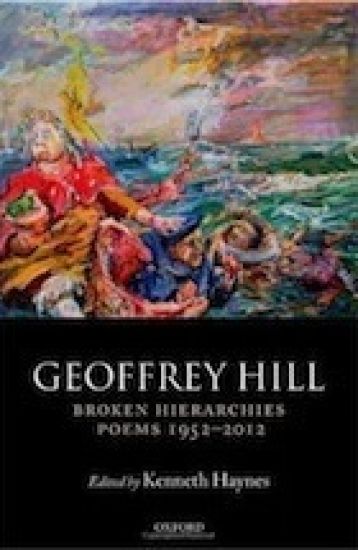
Broken Hierarchies

Broken Hierarchies

Geoffrey Hill

Oxford University Press
2013
sidottu
Broken Hierarchies collects twenty books of poems by Geoffrey Hill, written over sixty years, and presents them in their definitive form. Four of these books (Ludo, Expostulations on the Volcano, Liber Illustrium Virorum, and Al Tempo de' Tremuoti) have never before appeared in print, and three of them (Hymns to Our Lady of Chartres, Pindarics, and Clavics) have been greatly revised and expanded.
Beauty Imagined

Beauty Imagined

Geoffrey Jones

Oxford University Press
2011
nidottu
The global beauty business permeates our lives, influencing how we perceive ourselves and what it is to be beautiful. The brands and firms which have shaped this industry, such as Avon, Coty, Estée Lauder, L'Oréal, and Shiseido, have imagined beauty for us. This book provides the first authoritative history of the global beauty industry from its emergence in the nineteenth century to the present day, exploring how today's global giants grew. It shows how successive generations of entrepreneurs built brands which shaped perceptions of beauty, and the business organizations needed to market them. They democratized access to beauty products, once the privilege of elites, but they also defined the gender and ethnic borders of beauty, and its association with a handful of cities, notably Paris and later New York. The result was a homogenization of beauty ideals throughout the world. Today globalization is changing the beauty industry again; its impact can be seen in a range of competing strategies. Global brands have swept into China, Russia, and India, but at the same time, these brands are having to respond to a far greater diversity of cultures and lifestyles as new markets are opened up worldwide. In the twenty first century, beauty is again being re-imagined anew.
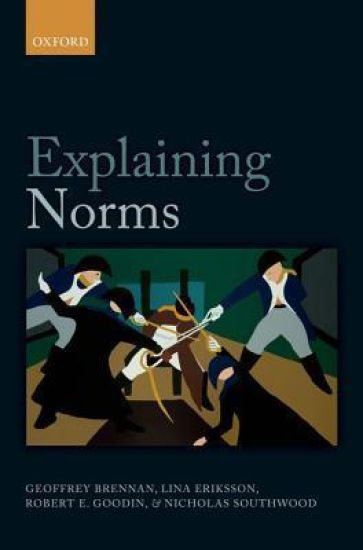
Explaining Norms

Explaining Norms

Geoffrey Brennan; Lina Eriksson; Robert E. Goodin; Nicholas Southwood

Oxford University Press
2013
sidottu
Norms are a pervasive yet mysterious feature of social life. In Explaining Norms, four philosophers and social scientists team up to grapple with some of the many mysteries, offering a comprehensive account of norms: what they are; how and why they emerge, persist and change; and how they work. Norms, they argue, should be understood in non-reductive terms as clusters of normative attitudes that serve the function of making us accountable to one another--with the different kinds of norms (legal, moral, and social norms) differing in virtue of being constituted by different kinds of normative attitudes that serve to make us accountable in different ways. Explanations of and by norms should be seen as thoroughly pluralist in character. Explanations of norms should appeal to the ways that norms help us to pursue projects and goals, individually and collectively, as well as to enable us to constitute social meanings. Explanations by norms should recognise the multiplicity of ways in which norms may bear upon the actions we perform, the attitudes we form and the modes of deliberation in which we engage: following, merely conforming with, and even breaching norms. While advancing novel and distinctive positions on all of these topics, Explaining Norms will also serve as a sourcebook with a rich array of arguments and illustrations for others to reassemble in ways of their own choosing.
Blood, Sweat, and Toil

Blood, Sweat, and Toil

Geoffrey G. Field

Oxford University Press
2013
nidottu
Blood, Sweat, and Toil is the first scholarly history of the British working class in the Second World War. It integrates social, political, and labour history, and reflects the most recent scholarship and debates on social class, gender, and the forging of identities. Geoffrey Field examines the war's impact on workers in the varied contexts of the family, military service, the workplace, local communities, and the nation. Extensively researched, using official documents, diaries and letters, the records of trade unions and numerous other institutions, Blood, Sweat, and Toil traces the rapid growth of trade unionism, joint consultation, and strike actions in the war years. It also analyses the mobilization of women into factories and the uniformed services and the lives of men conscripted into the army, showing how these experiences shaped their aspirations and their social and political attitudes. Previous studies of the Home Front have analysed the lives of civilians, but they have neglected the importance of social class in defining popular experience and its centrality in public attitudes, official policy, and the politics of the war years. Contrary to accounts that view the war as eroding class divisions and creating a new sense of social unity in Britain, Field argues that the 1940s was a crucial decade in which the deeply fragmented working class of the interwar decades was 'remade', achieving new collective status, power, and solidarity. Employing a contingent, non-teleological conception of class identity and indicating the plural and shifting mix of factors that contributed to workers' social consciousness, he criticizes recent revisionist scholarship that has downplayed the significance of class in British society.
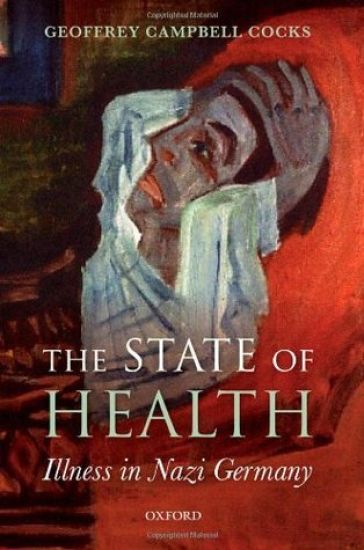
The State of Health

The State of Health

Geoffrey Campbell Cocks

Oxford University Press
2012
sidottu
The State of Health: Illness in Nazi Germany explores and analyses the experience of illness in German society under National Socialism. As is well known, the Nazis mobilised medicine for purposes of 'racial' cultivation and extermination. What has been much less understood is that the experience of health and illness in the Third Reich also marked a crucial juncture in the history of the modern self and body in Germany and the West. The secular and material bourgeois self was a product of the industrial and commercial society Germany had become before Hitler. The peculiarly rapid pace of social change in Germany, combined with a series of military, political, and economic disasters after 1914, created an environment of heightened sensitivity and anxiety concerning the relationship between individual and community. This historical environment also aggravated concerns about health and illness of the morbid, mortal, and sexual body and mind in which the modern self was lodged. The racialist policies of the Third Reich worsened popular anxiety over illness and health. And while Nazism exploited popular longings for 'national community,' the modern self of material pleasure, appetite, and desire too would be prop as well as problem for the Hitler regime. Drawing from the rich historical literature on modern Germany and the Third Reich, as well as on previously unexamined primary sources from over forty archives, The State of Health documents vital continuities and discontinuities in the history of modern Germany and the West, up to and beyond the Nazi years. In exploring the social, medical, and discursive spaces of health and illness in the Third Reich, Geoffrey Cocks illuminates significant and fateful experiences in peace and war with medicine, doctors, and drugs; work; collaboration; constraint and agency; self and other; persecution, enslavement, and extermination; gender and sexuality; pain, injury, madness, and death; and historical memory and amnesia.
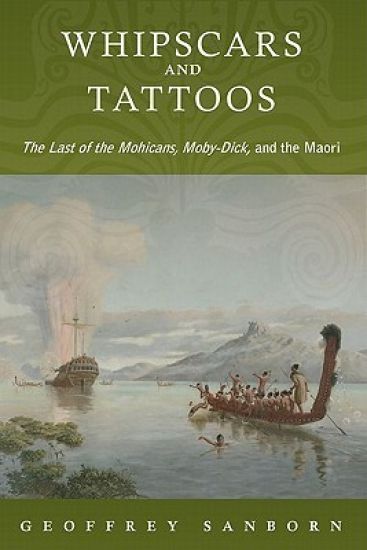
Whipscars and Tattoos

Whipscars and Tattoos

Geoffrey Sanborn

Oxford University Press Inc
2011
sidottu
In this original study, Geoffrey Sanborn presents a fresh interpretation of the villanous Magua in James Fenimore Cooper's The Last of the Mohicans (1826) and of the dignified harpooner Queequeg in Herman Melville's Moby-Dick (1851). Through careful historical research, Sanborn has determined that both authors relied heavily on contemporary accounts of the indigenous natives of New Zealand, the Maori, to develop their iconic characters. Cooper drew heavily on the account of Te Aara in John Liddiard Nicholas's Narrative of a Voyage to New Zealand (1817) while Melville studied the personal history of Te Pehi Kupe in George Lillie Craik's The New Zealanders (1830) to flesh out his characterization of Queequeg. A close reading of the historical evidence and the source material supports this compelling line of argumentation. At the same time, this isn't a simple source study nor an act of explanatory historical recovery. The conception of the Maori is sophisticated and paradoxical, a portrait of violent but nonetheless idealized masculinity in which dignity depends on the existence of fiercely defiant pride. This lens allows Sanborn to present a radically different view of these fictional characters as well as underscoring the imaginative projection that went into reporting on the Maori themselves. Magua is no longer a stereotypical "bad Indian" or "ignoble savage," but rather a non-white "gentleman," an argument that supports Sanborn's contention that throughout his career Cooper prioritizes status equivalence over racial difference. Queequeg is similarly re-imagined, a move that allows Sanborn to explicate scenes in Moby-Dick that are often dodged by other critics because they do not fit with the standard interpretations of the character. The study as a whole provides a vivid example of the fascinating interplay between fiction and non-fiction in the nineteenth century.
Teaching the I Ching (Book of Changes)

Teaching the I Ching (Book of Changes)

Geoffrey Redmond; Tze-Ki Hon

Oxford University Press Inc
2014
sidottu
Chinese traditional culture cannot be understood without some familiarity with the I Ching, yet it is one of the most difficult of the worlds ancient classics. Assembled from fragments with many obscure allusions, it was the subject of ingenious, but often conflicting, interpretations over nearly three thousand years. Teaching the II Ching (Book of Changes) offers a comprehensive study at a time when interest in Asian philosophy and the culture of China is on the rise. Still widely read in China, it has become a countercultural classic in the West. Recent scholarship has radically altered our understanding of this foundational work. Geoffrey Redmond and Tze-Ki Hon present an up-to-date survey of recent studies including reconstruction of the early meanings, excavated manuscripts, the New Culture Movement, and the Cultural Revolution. To facilitate introducing the classic to students, the necessary background is provided for university teachers and students, even non-China specialists. The teaching approaches described will foreground the otherness of the classic, yet engage the interests of twenty-first-century students. Rather than dismissing the texts popular association with divination, they explain why this mode of human thought has persisted for millennia. Thus, Redmond and Hon mediate between the two extreme views of the classic: a source of timeless ancient wisdom on the one hand, and a historical curiosity on the other. Teaching the I Ching (Book of Changes) makes this important classic accessible to a broad readership, thus providing a crucial service for those interested in China, early civilization, and world religion. Now anyone with a serious interest can understand a text that continues to have a decisive influence on Chinese and world culture three thousand years after its original composition.
Rule and Ruin

Rule and Ruin

Geoffrey Kabaservice

Oxford University Press Inc
2012
sidottu
As the 2012 elections approach, the Republican Party is rocketing rightward away from the center of public opinion. Republicans in Congress threaten to shut down the government and force a U.S. debt default. Tea Party activists mount primary challenges against Republican officeholders who appear to exhibit too much pragmatism or independence. Moderation and compromise are dirty words in the Republican presidential debates. The GOP, it seems, has suddenly become a party of ideological purity. Except this development is not new at all. In Rule and Ruin, Geoffrey Kabaservice reveals that the moderate Republicans' downfall began not with the rise of the Tea Party but about the time of President Dwight Eisenhower's farewell address. Even in the 1960s, when left-wing radicalism and right-wing backlash commanded headlines, Republican moderates and progressives formed a powerful movement, supporting pro-civil rights politicians like Nelson Rockefeller and William Scranton, battling big-government liberals and conservative extremists alike. But the Republican civil war ended with the overthrow of the moderate ideas, heroes, and causes that had comprised the core of the GOP since its formation. In hindsight, it is today's conservatives who are "Republicans in Name Only." Writing with passionate sympathy for a bygone tradition of moderation, Kabaservice recaptures a time when fiscal restraint was matched with social engagement; when a cohort of leading Republicans opposed the Vietnam war; when George Romney--father of Mitt Romney--conducted a nationwide tour of American poverty, from Appalachia to Watts, calling on society to "listen to the voices from the ghetto." Rule and Ruin is an epic, deeply researched history that reorients our understanding of our political past and present. Today, moderates are marginalized in the GOP and progressives are all but nonexistent. In this insightful and elegantly argued book, Kabaservice contends that their decline has left Republicans less capable of governing responsibly, with dire consequences for all Americans.
The War on Terror and the Laws of War

The War on Terror and the Laws of War

Geoffrey S. Corn; Jr. Schoettler; Dru Brenner-Beck; Victor M. Hansen; Dick Jackson; Eric Talbot Jensen; Michael W. Lewis; Jr. Dunlap

Oxford University Press Inc
2015
sidottu
Many years after the United States initiated a military response to the terrorist attacks of September 11th, 2001, the nation continues to prosecute what it considers an armed conflict against transnational terrorist groups. Understanding how the law of armed conflict applies to and regulates military operations executed within the scope of this armed conflict against transnational non-state terrorist groups is as important today as it was in September 2001. In The War on Terror and the Laws of War seven legal scholars, each with experience as military officers, focus on how to strike an effective balance between the necessity of using armed violence to subdue a threat to the nation with the humanitarian interest of mitigating the suffering inevitably associated with that use. Each chapter addresses a specific operational issue, including the national right of self-defense, military targeting and the use of drones, detention, interrogation, trial by military commission of captured terrorist operatives, and the impact of battlefield perspectives on counter-terror military operations, while illustrating how the law of armed conflict influences resolution of that issue. This Second Edition carries on the critical mission of continuing the ongoing dialogue about the law from an unabashedly military perspective, bringing practical wisdom to the contentious topic of applying international law to the battlefield.