
Kirjahaku
Etsi kirjoja tekijän nimen, kirjan nimen tai ISBN:n perusteella.
1000 tulosta hakusanalla Graham

A Study Guide for Graham Greene's The Power and the Glory
Cengage Learning Gale
Gale, Study Guides
2017
pokkari

A Study Guide for Graham Greene's "The Third Man"
Cengage Learning Gale
Gale, Study Guides
2017
pokkari
A Study Guide for Graham Greene's The Heart of the Matter
Cengage Learning Gale
Gale, Study Guides
2017
pokkari
A Study Guide for Graham Greene's The Third Man
Cengage Learning Gale
Gale, Study Guides
2017
pokkari


English Synonymes Classified and Explained; With Practical Exercises, Designed For Schools and Private Tuition. by G. F. Graham. Edited, With An introduction and Illustrative Authorities, by Henry Reed.
George Frederick Graham
University of Michigan Library
2006
pokkari

The Power Of Faith, Exemplified In The Life And Writings Of The Late Mrs. Isabella Graham (1843)
Isabella Marshall Graham
KESSINGER PUBLISHING, LLC
2008
sidottu
The Address Of The Honorable William. A. Graham On The Mecklenburg Declaration Of Independence Of The 20th Of May, 1775 (1875)
William Alexander Graham
KESSINGER PUBLISHING, LLC
2008
sidottu

Distant Homes: Or The Graham Family In New Zealand (1862)
Mrs. J. E. Aylmer
KESSINGER PUBLISHING, LLC
2008
nidottu
Remains Of William S. Graham
William Sloan Graham; Ellee D. Graham
KESSINGER PUBLISHING CO
2008
pokkari

Letters Of The Late Isabella Graham Of New York
Isabella Marshall Graham; James Marshall
KESSINGER PUBLISHING CO
2008
pokkari
Letters Of The Late Isabella Graham Of New York
Isabella Marshall Graham; James Marshall
KESSINGER PUBLISHING CO
2008
muu
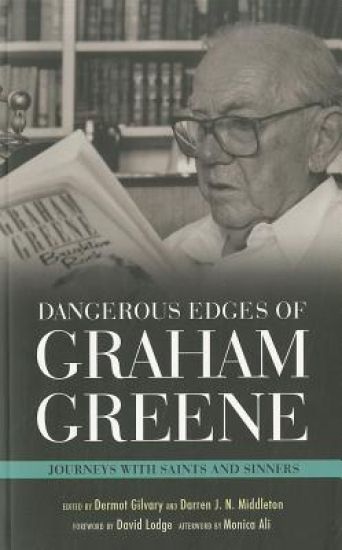
Dangerous Edges of Graham Greene
Continuum Publishing Corporation
2011
nidottu
Informative, broad-ranging, this title sheds new light on the life and literary art of one of the last century's most celebrated authors. The first volume to be authorized by the Graham Greene Birthplace Trust, "Dangerous Edges of Graham Greene" brings together writers, journalists and scholars to investigate as well as to assess Greene's prolific oeuvre and intense personal interests. Here the reader may explore everything from Greene's Vienna at the time of the filming of "The Third Man" to his sometimes fraught relationship with Evelyn Waugh, from Greene's unconventional fictional treatment of women to his "believing skepticism". While Greene often informed friends that "a ruling passion gives to a shelf of novels the unity of a system", critics of his literary art have found it extraordinarily difficult to define the content of this "ruling passion". Perhaps this is because Greene's own character seems so paradoxical, ironic even. Moreover, in believing that sin contains within itself the seeds of saintliness, he consistently loiters on what Robert Browning calls "the dangerous edge of things". In exploring this "dangerous edge", this book covers the full breadth of Greene's life and literary career.
This is a complete and up-to-date reference guide to the published writings of Graham Greene, from his literary writings to published letters and interviews. A comprehensive reference guide to the published writings of Graham Greene, this book surveys not only Greene's literary work - including his fiction, poetry and drama - but also his other published writings. Accessibly organised over five central sections, the book provides the most up-to-date listing available of Greene's journalism, his published letters and major interviews. "The Writings of Graham Greene" also includes a bibliography of major secondary writings on Greene and a substantial and fully cross-referenced index to aid scholars and researchers working in the field of 20th Century literature.

Ghosts of the Graham Mansion: Paranormal Tales From Wythe County Virginia's Haunted
Shawny Darby; Thomas D. Perry
Createspace Independent Publishing Platform
2012
nidottu

Frank Porter Graham (1886–1972) was one of the most consequential white southerners of the twentieth century. Born in Fayetteville and raised in Charlotte, Graham became an active and popular student leader at the University of North Carolina. After earning a graduate degree from Columbia University and serving as a marine during World War I, he taught history at UNC, and in 1930, he became the university's fifteenth president. Affectionately known as "Dr. Frank," Graham spent two decades overseeing UNC's development into a world-class public institution. But he regularly faced controversy, especially as he was increasingly drawn into national leadership on matters such as intellectual freedom and the rights of workers. As a southern liberal, Graham became a prominent New Dealer, negotiator, and briefly a U.S. senator. Graham's reputation for problem solving through compromise led him into service under several presidents as a United Nations mediator, and he was outspoken as a white southerner regarding civil rights. Brimming with fresh insights, this definitive biography reveals how a personally modest public servant took his place on the national and world stage and, along the way, helped transform North Carolina.

Frank Porter Graham (1888 – 1972) was one of the most consequential white southerners of the twentieth century. Born in Fayetteville and raised in Charlotte, Graham became an active and popular student leader at the University of North Carolina. After earning a graduate degree from Columbia University and serving as a marine during World War I, he taught history at UNC, and in 1930, he became the university's fifteenth president. Affectionately known as "Dr. Frank," Graham spent two decades overseeing UNC's development into a world-class public institution. But he regularly faced controversy, especially as he was increasingly drawn into national leadership on matters such as intellectual freedom and the rights of workers. As a southern liberal, Graham became a prominent New Dealer and negotiator and briefly a U.S. senator. Graham's reputation for problem solving through compromise led him into service under several presidents as a United Nations mediator, and he was outspoken as a white southerner regarding civil rights.Brimming with fresh insights, this definitive biography reveals how a personally modest public servant took his place on the national and world stage and, along the way, helped transform North Carolina.
Over a 60-year career, Graham Greene was a prolific writer. While his published works established him as one of the great writers of the twentieth century, much of his writing was never to see the light of day and has been gathered together in a number of archives across the UK, Ireland, USA and Canada The second volume of The Works of Graham Greene is a comprehensive guide to the archives of Greene's writing. The book details archival holdings of unpublished novels, short stories, plays, film scripts, journals, poetry, fragments of writing, and letters, as well as manuscripts and typescripts of published works. Analysing and contextualising the unpublished work, the book is fully cross-referenced throughout and includes a substantial index as well as practical guidance for students, scholars and researchers on accessing and making the most of each of the archives.
For centuries, particular readings of the biblical text have shaped the course of Western history. Scripture, used as a political totem for those in power, gives divine weight to political agendas. This trajectory is particularly evident in the fiery career of Billy Graham, "America's evangelist." Graham's rhetoric, steeped in his political appropriation of Scripture, ultimately motivated the insertion of "under God" into the pledge of allegiance: his message of national repentance made its way to President Dwight Eisenhower, who converted it into legislation and changed history. America became self-consciously a nation under God, over against the world. One Nation under Graham investigates how one man's interpretation of the biblical books of Daniel and Revelation has impacted how the United States sees itself on a global and cosmic scale. Jonathan Redding argues that Graham rode the wave of American xenophobia to rebrand evangelical patriotism as essential to national stability and cosmic balance. A survey of Graham's influences reveals that, while Graham was far from the only Christian leader to preach gloom and doom, he was one of the first to make the theme publicly and profoundly American. Graham's influence and drive to make America a nation "under God" ensured that, with the recitation of the American pledge, his reading of Scripture would endure. Redding further shows the continued capacity of "under God" to equip contemporary leadership to leverage Christian faith for personal gain with a political base.Graham's response to major political and global events created a thoroughly American apocalyptic lens that continues to be used to give life and potency to biblical interpretations. In the same way that Daniel and Revelation warned of the dangers of unchecked political power and misplaced priorities, One Nation under Graham uses Graham's interpretations to urge all of us to consider under whom we serve and under what flag we kneel.