New Zealand’s first elected woman prime minister; nine years in power through the foreshore and seabed, Afghanistan and Iraq, Corngate and Speedgate; head of the UN Development Program and ranked among the most powerful women in the world. Helen Clark’s public life is well known. But what about the inside stories? During 2012–2013, documentary-makers Claudia Pond Eyley and Dan Salmon interviewed a host of participants about the life of Helen Clark: Clark herself and her family, political friends and enemies, journalists and lobbyists, civil servants and diplomats. The resulting transcripts from those interviews, woven together here into a compelling narrative, offer a brilliantly multi-faceted, inside account of Helen Clark’s life and career. From her father George Clark to friend Cath Tizard, Richard Prebble to Mike Moore, Winston Peters to Jim Anderton, Jacinda Ardern to John Key, Helen Clark and her contemporaries bring to life the tumultuous life and times of one of our most important political leaders. Through the words of the players themselves, sometimes raw, sometimes angry, we find ourselves taken inside the major political developments of the last fifty years. This is a frank, revealing account of Helen Clark and her world.
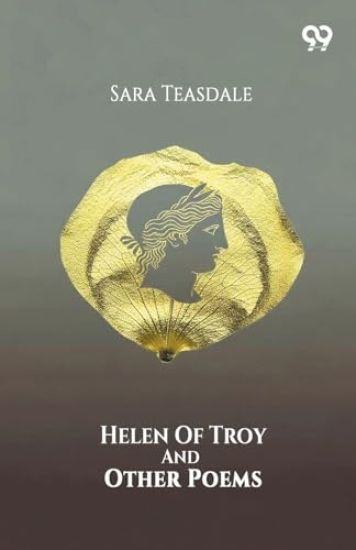
Helen of troy and other poems is a lyrical and emotionally resonant collection that explores the intricate relationship between love, beauty, and sorrow. Drawing from classical figures like Helen of Troy, Sappho, and Guenevere, the poems reflect the poet's deep introspection and fascination with the emotional weight carried by iconic women throughout history and myth. These characters become vessels through which timeless themes of desire, regret, and emotional vulnerability are examined. Love is portrayed as both tender and tormenting - a force capable of uplifting or undoing the self. The poem centered on Helen offers a sorrowful reflection on the cost of beauty and its unintended consequences, while others echo similar sentiments of longing and internal conflict. The collection's strength lies in its fusion of personal emotion with mythological resonance, as it navigates the fleeting nature of passion and the scars it leaves behind. Through delicate yet powerful language, the work invites readers to contemplate the emotional costs of love and the universal experience of yearning that transcends time.
Helen's babies is a light-hearted narrative that explores the humorous trials of unexpected guardianship and the boundless energy of childhood. The story follows a bachelor whose calm routine is disrupted when he takes on the responsibility of caring for his sister's two spirited young sons. What begins as a reluctant favor turns into a chaotic yet endearing adventure filled with mischief, laughter, and self-discovery. Through a series of lively incidents, the book captures the unpredictable charm of youth and the transformation of an adult learning patience, affection, and humor in the face of constant challenges. The narrative uses wit and gentle irony to highlight the contrast between adult orderliness and the imaginative freedom of children. As the experience unfolds, the caretaker begins to find joy in the very chaos that once exasperated him, discovering deeper connections and a renewed sense of empathy. Blending comedy with tenderness, the story celebrates family bonds and the innocent wisdom that often hides behind childish misbehavior.
Helen Keller by Sudharma Reghunadh, published by Maxlive Media Solutions Pvt Ltd, stands as a beacon of knowledge and inspiration. With its insightful content and engaging narrative style, this book transcends genres, offering something valuable for every reader.
This female Mad Men-like story chronicles the legendary Cosmopolitan magazine editor's rise to power as both a cultural icon and trailblazer who redefined what it means to be an American woman. In the mid-Sixties, Helen Gurley Brown, author of the groundbreaking Sex and the Single Girl, took over the ailing Cosmopolitan magazine and revamped it into one of the most successful brands in the world. At a time when magazines taught housewives how to make the perfect casserole, Helen reimagined Cosmo and womanhood itself, championing the independent, ambitious, man-loving single woman. Though she was married, to Hollywood producer David Brown, no one embodied the idea of the Cosmo Girl more than the Ozarks-born Helen, who willed, worked, and-yes-occasionally slept her way to the top, eventually becoming one of the most influential media players in the world. Drawing on new interviews with Helen's friends and former colleagues as well as her personal letters, Enter Helen brings New York City vibrantly to life during the Sexual Revolution and the Women's Movement and features a cast of characters including Hugh Hefner, Nora Ephron, and Gloria Steinem. It is the cinematic story of an icon who bucked convention, defined her own destiny, and became a controversial model for modern feminism, laying the groundwork for television shows like Sex and the City and Girls. "Bad Feminist" or not, Helen Gurley Brown got people talking-about sex, work, reproductive choices, and having it all-forever changing the conversation.
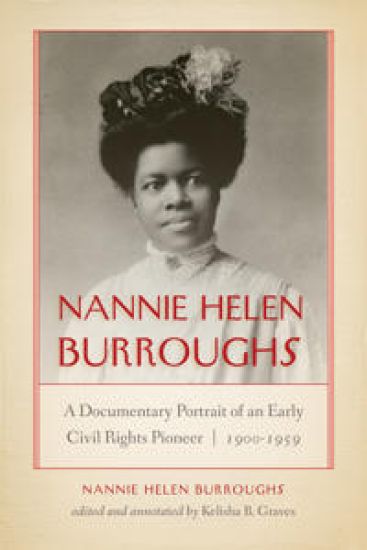
This volume brings together the writings of Nannie Helen Burroughs, an educator, civil rights activist, and leading voice in the African American community during the first half of the twentieth century. Nannie Helen Burroughs (1879–1961) is just one of the many African American intellectuals whose work has long been excluded from the literary canon. In her time, Burroughs was a celebrated African American (or, in her era, a "race woman") female activist, educator, and intellectual. This book represents a landmark contribution to the African American intellectual historical project by allowing readers to experience Burroughs in her own words. This anthology of her works written between 1900 and 1959 encapsulates Burroughs's work as a theologian, philosopher, activist, educator, intellectual, and evangelist, as well as the myriad of ways that her career resisted definition. Burroughs rubbed elbows with such African American historical icons as W. E. B. DuBois, Booker T. Washington, Anna Julia Cooper, Mary Church Terrell, and Mary McLeod Bethune, and these interactions represent much of the existing, easily available literature on Burroughs's life. This book aims to spark a conversation surrounding Burroughs's life and work by making available her own tracts on God, sin, the intersections of church and society, black womanhood, education, and social justice. Moreover, the volume is an important piece of the growing movement toward excavating African American intellectual and philosophical thought and reformulating the literary canon to bring a diverse array of voices to the table.
This volume brings together the writings of Nannie Helen Burroughs, an educator, civil rights activist, and leading voice in the African American community during the first half of the twentieth century. Nannie Helen Burroughs (1879–1961) is just one of the many African American intellectuals whose work has long been excluded from the literary canon. In her time, Burroughs was a celebrated African American (or, in her era, a "race woman") female activist, educator, and intellectual. This book represents a landmark contribution to the African American intellectual historical project by allowing readers to experience Burroughs in her own words. This anthology of her works written between 1900 and 1959 encapsulates Burroughs's work as a theologian, philosopher, activist, educator, intellectual, and evangelist, as well as the myriad of ways that her career resisted definition. Burroughs rubbed elbows with such African American historical icons as W. E. B. DuBois, Booker T. Washington, Anna Julia Cooper, Mary Church Terrell, and Mary McLeod Bethune, and these interactions represent much of the existing, easily available literature on Burroughs's life. This book aims to spark a conversation surrounding Burroughs's life and work by making available her own tracts on God, sin, the intersections of church and society, black womanhood, education, and social justice. Moreover, the volume is an important piece of the growing movement toward excavating African American intellectual and philosophical thought and reformulating the literary canon to bring a diverse array of voices to the table.
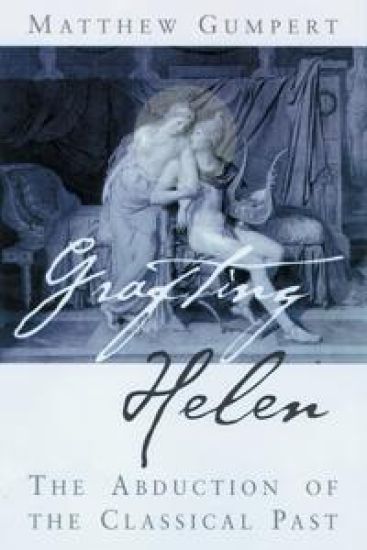
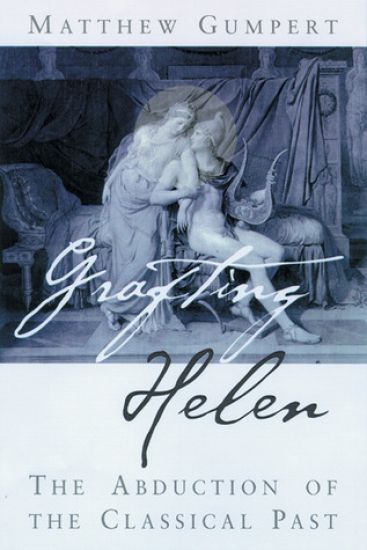
Classicism = cultural embezziement? History is a love story: a tale of desire and jealousy, abandonment and fidelity, abduction and theft, rupture and reconciliation. This contention is central is central to Grafting Helen, Matthew Gumpert's original and dazzling meditation on Helen of Troy as a crucial emblem for much of Western thought and literature. Grafting Helen looks at ""classicism"" - the privileged thetorical language for describing cultural origins in the West - as a protracted form of cultural embezzlement. No coin of the realm has been more valuable, more circulated, more coveted, or more counterfeited than the one that bears the face of Helen of Troy. Gumpert uncovers Helen as the emblem for the past as something to be stolen, appropriated, imitated, extorted, and coverted once again. Tracing the figure of Helen from its classical origins through the Middle Ages, the French Renaissance, and the modern era, Gumpert suggests that the relation of current Western culture to the past is not like the act of coveting; it is the act of coveting, he argues, for it relies on the same strategies, the same defenses, the same denials, and the same delusions.
Classicism = cultural embezziement? History is a love story: a tale of desire and jealousy, abandonment and fidelity, abduction and theft, rupture and reconciliation. This contention is central is central to Grafting Helen, Matthew Gumpert's original and dazzling meditation on Helen of Troy as a crucial emblem for much of Western thought and literature. Grafting Helen looks at ""classicism"" - the privileged thetorical language for describing cultural origins in the West - as a protracted form of cultural embezzlement. No coin of the realm has been more valuable, more circulated, more coveted, or more counterfeited than the one that bears the face of Helen of Troy. Gumpert uncovers Helen as the emblem for the past as something to be stolen, appropriated, imitated, extorted, and coverted once again. Tracing the figure of Helen from its classical origins through the Middle Ages, the French Renaissance, and the modern era, Gumpert suggests that the relation of current Western culture to the past is not like the act of coveting; it is the act of coveting, he argues, for it relies on the same strategies, the same defenses, the same denials, and the same delusions.
This up-to-date edition offers a detailed literary and cultural analysis of Euripides' Helen, a work which arguably embodies the variety and dynamism of fifth-century Athenian tragedy more than any other surviving play. The story of an exemplary wife (not an adulteress) who went to Egypt (not to Troy), Euripides' 'new Helen' skilfully transforms and supplants earlier currents of literature and myth. The Introduction elucidates Euripides' treatment of Helen and sets the play in its wider intellectual context. It also discusses questions of genre and reception, rejecting such descriptions as 'tragicomedy' or 'romantic tragedy', and showing how later artists have responded to Euripides' unorthodox heroine and her phantom double. The Commentary's notes on language and style are intended to make Helen fully accessible to readers of Greek at all levels, while the edition as a whole is designed for use by anyone with an interest in Greek tragedy.
This up-to-date edition offers a detailed literary and cultural analysis of Euripides' Helen, a work which arguably embodies the variety and dynamism of fifth-century Athenian tragedy more than any other surviving play. The story of an exemplary wife (not an adulteress) who went to Egypt (not to Troy), Euripides' 'new Helen' skilfully transforms and supplants earlier currents of literature and myth. The Introduction elucidates Euripides' treatment of Helen and sets the play in its wider intellectual context. It also discusses questions of genre and reception, rejecting such descriptions as 'tragicomedy' or 'romantic tragedy', and showing how later artists have responded to Euripides' unorthodox heroine and her phantom double. The Commentary's notes on language and style are intended to make Helen fully accessible to readers of Greek at all levels, while the edition as a whole is designed for use by anyone with an interest in Greek tragedy.